

“Success is not final, failure is not fatal : it is the courage to continue that counts.”
Introduction
Dr. Adnaan Ahmed is a healthcare professional whose journey reflects ambition, discipline, adaptability, and a deep commitment to quality-driven healthcare systems. Born in Kolkata, West Bengal, he grew up in a modest family environment where ethical values were treated as the true foundation of life. His parents instilled the foundational principle that personal integrity and moral character must precede academic or professional achievement. This early lesson remained central to his personality and later shaped the way he understood people, responsibility, leadership, and service.
His academic foundation began with a Bachelor of Commerce with Honors in Accounting from Calcutta University, Kolkata. In the early stage of his life, he imagined a future in finance, banking, or related fields. However, life gradually directed him through different professional experiences, where quality, compliance, reporting, claims, process improvement, and data analysis became important parts of his work. These early roles may not have been planned as steps toward healthcare leadership, yet each one quietly prepared him for the larger responsibilities that awaited him.
When he entered Dr. Sulaiman Al Habib Medical Group in Saudi Arabia, his role first connected with the business services and claims side of healthcare. Over time, he began to feel that healthcare was the field where he truly belonged. What began as employment slowly became a purpose. He moved into healthcare quality and pursued an MBA in Healthcare Management from Alagappa University, Chennai. He is currently advancing his research as a Ph.D. scholar in Healthcare Quality Management at Amity University, while consistently enhancing his expertise through specialized professional certifications, advanced institutional training, and peer-reviewed research.
With more than 22 years of professional experience, including over 18 years in the healthcare sector, Dr. Ahmed has built strong expertise in quality improvement, patient safety, risk management, healthcare policies, performance improvement, accreditation readiness, and hospital commissioning. His work has been associated with national and international healthcare standards, including JCI, CBAHI, CAP, AABB, HIMSS, Planetree, and other accreditation frameworks. He has contributed to preparing hospitals for accreditations and has been associated with the commissioning and operation of multiple tertiary hospitals in Saudi Arabia.
What makes his journey meaningful is not only the scale of his professional contribution but also the philosophy behind his work. He believes quality is not about blame or punishment. It is about education, correction, standardization, and continuous improvement. He sees healthcare leadership as teamwork, where leaders bring together people from different departments, cultures, and professional backgrounds under one mission and one vision.
This biography presents the story of a man whose path was not fixed from the beginning yet became purposeful through experience, effort, and learning. It reflects the journey of Dr. Adnaan Ahmed, a professional who grew with every responsibility and turned each stage of life into preparation for a larger contribution to healthcare.
“Education is the most powerful weapon which you can use to change the world.”
Phase 1: Kolkata Roots and the Making of an Ambitious Mind

The personal and professional trajectory of Dr. Adnaan Ahmed began on January 1981 in Kolkata, West Bengal, in the eastern part of India. His early life was shaped not by privilege or luxury, but by values, discipline, family support, and a quiet desire to do well in whatever came before him. He grew up in a modest lower middle-income family, where life carried its own struggles, yet those struggles never removed warmth from the home. The environment around him was simple, practical, and grounded, but within that simplicity, he received something far more lasting than comfort. He received direction and guidance. He received the belief that a person’s true worth begins with character before achievements.
From childhood, he carried an ambitious spirit. He was not someone who approached life casually. Whether he was studying, playing cricket, or simply participating in the activities of his younger years, he had the habit of giving his best. He described himself as someone who always wanted to achieve and perform well in whatever he did. This did not mean that he was perfect in every area. He was honest about his limitations too. Music, singing, and dancing were not his strengths, and he never tried to present himself otherwise. Yet in sports, he found a space where his energy, enthusiasm, and competitive spirit came alive. He played often with friends and saw himself as a good performer there. These early experiences revealed an important part of his personality: he understood both his strengths and weaknesses, but he never allowed weakness in one area to reduce his confidence in another.
As a student, he considered himself capable yet moderate for much of his early academic life. His strongest academic performance came later, especially during his master’s program and the studies that followed. This honesty about his journey makes his story more relatable. His path was not built on the image of a child who was always academically outstanding from the very beginning. Instead, it was built on gradual growth, self awareness, and the determination to improve with time. In many ways, this became one of the early patterns of his life. He did not need every beginning to be perfect. He needed the willingness to keep moving, keep learning, and keep building himself whenever life opened a new direction in front of him.
The values given by his parents formed the deepest foundation of his early years. They taught him that before becoming professionally successful or academically strong, a person must first become a good human being. For them, a life was not only measured by career, income, or recognition but also by how one behaved with others. They taught him how to be a good son, a good brother, a good friend, and above all, a good person. These lessons were not abstract ideas given in passing. They became part of the way he understood relationships, responsibility, and personal conduct. Their influence stayed with him so strongly that even at the age of forty-four, he continued to consult them whenever he faced challenges or found himself stuck in important decisions.
His family circumstances were not free from difficulty. Like many moderate-income families, they had to manage life carefully, and struggle was a familiar part of their reality. Yet one thing remained constant: his parents supported him in whatever he wanted to do. Their support did not come from abundance but from belief. They stood with him, guided him, and gave him the confidence that his ambitions deserved space. This kind of support gave him emotional security, even when material security was limited. It taught him that strength does not always arrive in the form of wealth. Occasionally, it arrives through the steady presence of people who believe in you before the world does.
“The best way to predict your future is to create it.”
Phase 2 : Education, Responsibility, and the First Turn Toward Work

After the values and ambitions of his early years, the next important stage in the journey of Dr. Adnaan Ahmed began with education, responsibility, and the quiet pressure of building a future with limited resources. His academic path was not shaped by luxury or by the freedom to wait for the perfect opportunity. It was shaped by practical need, family commitment, and the awareness that he had to begin standing on his feet at the right time. This phase of his life became the bridge between the student he had been and the professional he was slowly becoming.
He completed his Bachelor of Commerce with Honors in Financial Accounting from Calcutta University, Kolkata, between 2000 and 2003. This field of study naturally aligned him with numbers, accounts, finance, and structured thinking. It also reflected an early professional direction that was different from the healthcare leadership path he would later follow. At that point in his life, he connected his expectations to finance. Since his bachelor’s degree was in accountancy with a specialization in finance, he wanted to build a career in the financial sector. He thought of possibilities such as the stock market, banking, or an MBA in Finance. These were not vague thoughts. They represented the kind of professional future he initially imagined for himself.
Yet life often tests ambition through circumstance. When he was in the final year of graduation, he began seeking employment. This was not merely an act of career exploration. It was also connected to the responsibility he felt toward his family. Coming from a middle-class background, he understood that continuing education without earning was not easy. He wanted to support his family, and this need drove him to search for employment. During that period, he was also doing odd jobs in Kolkata, but he was looking for a full-time opportunity that could give him stability and direction.
This early decision reveals an important part of his character. He did not wait for life to become ideal before taking action. He did not allow the gap between aspiration and reality to make him passive. He had dreams of higher education in finance, but he also understood the need to work. That balance between ambition and responsibility became one of the earliest signs of his maturity. He was willing to begin wherever an opportunity opened, even if it was not exactly the path he had first imagined.
His first major professional opportunity came when he joined EXL Services Pvt. Ltd. in Pune, India, as a Quality Compliance Analyst. He worked there from January 2004 to April 2007. This was a significant step because it moved him from the world of academic preparation into the discipline of professional performance. The role placed him in an environment where quality, compliance, monitoring, reporting, and process improvement mattered. Although his academic background was in commerce and finance, this position introduced him to the field of quality in a practical way.
At EXL Services Pvt. Ltd., his responsibilities included monitoring claims on a regular basis and ensuring that proper and relevant sample sizes were maintained for transaction monitoring. He was also responsible for providing regular feedback to claim executives on their performance and for supporting improvements in quality scores. These responsibilities may seem technical on the surface, but for a young professional, they required discipline, attention to detail, consistency, and fairness. He had to observe work carefully, identify patterns, understand deviations, and communicate feedback in a manner that could lead to improvement.
“You may not control all the events that happen to you, but you can decide not to be reduced by them.”
Phase 3 : Across Industries: Quality as the Constant Foundation
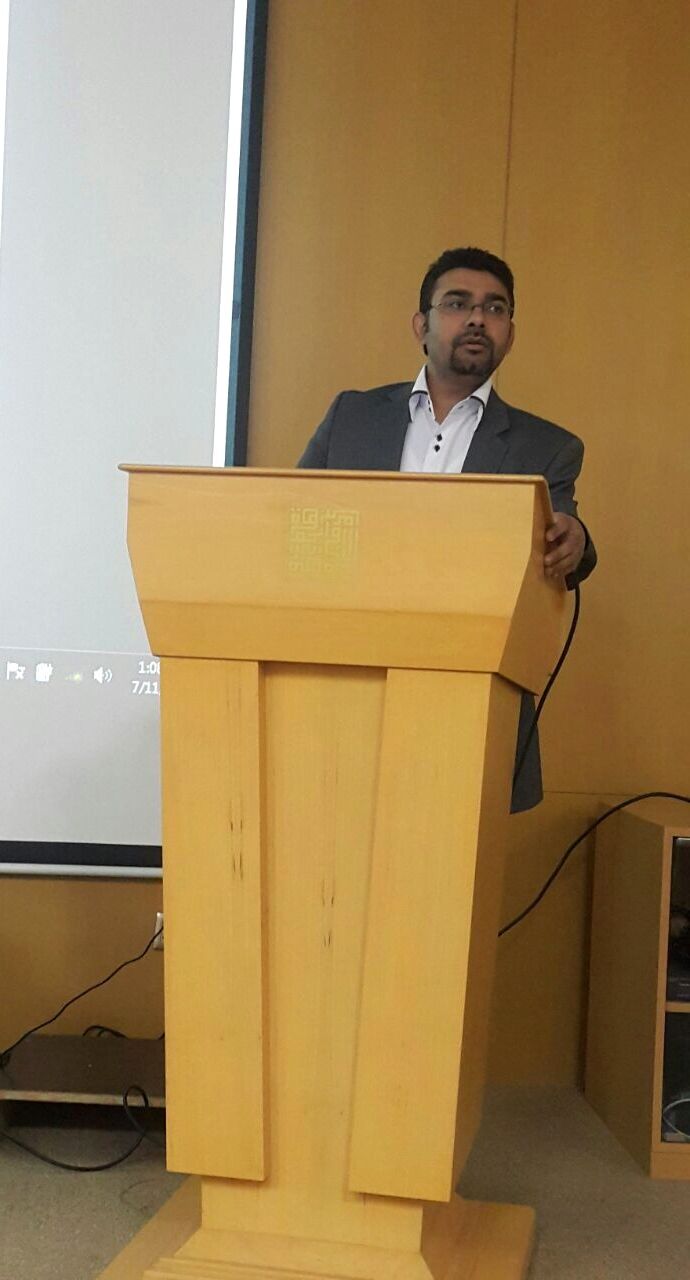
The early professional journey of Dr. Adnaan Ahmed did not move in a straight line. It passed through different industries, different cities, and different responsibilities before he eventually found the field that would define his long-term identity. At that stage of life, he was not following a fixed map toward healthcare leadership. He was a young professional trying to earn, grow, support himself, and find his place in a competitive world. What remained constant through these changing surroundings was not the industry, but the nature of his work. Whether the setting was insurance, banking, real estate, or later healthcare, quality, compliance, process discipline, reporting, and performance improvement continued to be a thread connecting one chapter to the next.
After beginning his career in quality-related work in Pune, he started understanding the professional value of structured monitoring, data analysis, process correction, and compliance. The experience gave him a working language that was different from textbook learning. He had studied commerce and accounting, and in his early mind, finance seemed like a natural field. Yet work slowly showed him that numbers were useful not only in accounts or banking but also in quality, audits, reports, risk control, and organizational improvement. His comfort with numbers helped him understand processes with clarity. It also allowed him to see work not only as a daily activity but also as measurable performance.
During these early years, he was still exploring professional possibilities. He later acknowledged that until he entered healthcare, much of his movement was spontaneous. It was not yet a carefully designed career plan. It was more about finding good work, earning money, and taking the opportunities that came his way. This honesty gives depth to his journey. He did not begin as someone who already knew exactly where life would take him. Instead, he moved through available openings, learned from each place, and allowed each experience to add something to his professional understanding.
His exposure also extended to the banking sector. He worked for Emirates Bank for about eight or nine months, connecting again with the financial field that had once interested him. This experience aligned with his earlier attraction toward finance and banking, yet it did not become the final direction of his career. It became one more stage in his wider search for professional stability and growth. The banking environment added to his exposure, but it did not create the sense of belonging that he would later find elsewhere. Still, it was part of the journey that helped him understand different organizational systems and the importance of accuracy, control, and process discipline.
Note of Thanks
Dr. Adnaan Ahmed extends his heartfelt gratitude to all those who have supported, guided, and encouraged him throughout his life and professional journey. His deepest gratitude goes to his parents, brother, sisters, friends and families who have given him the values, sacrifices and unwavering belief that have built the foundation of his character. The early days’ teachings helped him understand that becoming a good human being is more important than professional success alone, and their guidance continues to remain a source of strength in his decision-making.
He also expresses sincere gratitude to his wife and children, whose presence, understanding, and support have stood beside him through the different stages of his personal and professional life. Their encouragement has added balance and strength to his journey.
He extends distinctive, heartfelt recognition to Dr. Sulaiman Al Towyan, whose enduring trust, steadfast belief, and continuous encouragement have been instrumental in shaping his career trajectory and inspiring him to pursue excellence. He is equally grateful to Mr. Akram Al Ajmi, whose unwavering operational support, strategic insights, and practical problem-solving have consistently empowered him. Furthermore, he expresses his deepest appreciation to Mr. Abdullah Al Turki for his exemplary, visionary leadership, which has not only served as a masterclass in governance but has also set a profound standard for driving high impact healthcare initiatives.
Dr. Ahmed also proudly acknowledges his colleagues and friends, Dr. Abdul Hameed Chagla and Dr. Zuber Shaikh. Their exceptional mentorship and intellectual guidance during his formative years in healthcare quality management laid the vital foundational framework for his career, instilling in him a lifelong commitment to clinical excellence and patient safety.
Dr. Ahmed is thankful to his mentors, seniors, colleagues, and team members who contributed directly or indirectly to his growth in the healthcare sector. He acknowledges the opportunities, trust, and responsibilities given to him during his years of service, especially within Dr. Sulaiman Al Habib Medical Group. He also appreciates every individual who worked with him in quality, patient safety, accreditation, and hospital planning commissioning, as each contribution became part of a shared journey toward excellence.
thanks,
– Dr. Adnaan Ahmed