“The measure of a life is not in the comfort one gains, but in the sacrifices one makes for the strength of a nation.”
Introduction
He was barely twelve when he finished high school—an age when most children are just discovering their passions, but for him, it was a milestone that hinted at the brilliance to unfold. Yet, the real spark lay not just in his early academic triumph, but in the choices shaped by his unwavering sense of purpose. Born on 10 April 1941 in the modest village of Dibai, Bulandshahar, UP, Dr. Grish Mohan Gupta arrived into a nation poised for transformation. That same restless energy that propelled India toward freedom seemed to pulse within him, guiding every decision.
Years later, when India faced real threats on its borders, Dr. Gupta gave up a comfortable life abroad—Green Card and all—to return to his homeland. He crafted a border fencing system entirely in India, not just saving lives, but helping redefine self-reliance. And decades on, at this age, most of us would pause—but for him, education was just beginning. He earned his MBA from IIM Sambalpur at the age of 84 and is now eyeing a third PhD, proving that age truly is nothing but a number.
Dr. Grish Mohan Gupta’s story begins on 10 April 1941, in the modest town of Dibai, Bulandshahar, Uttar Pradesh—during the final years of British rule in India, when a nation was stirring with dreams of independence. Into that era was born a child blessed with extraordinary intellect and unwavering determination.
Even as a young boy, his brilliance couldn’t be ignored. He cleared his school’s entrance exams for Classes 1, 2, and 3 all at once. His headmaster, recognizing that this was no ordinary child, placed him directly into Class 5. By twelve, he had completed high school—an achievement that would have humbled most. Yet, his youth was both gift and obstacle; he was initially considered too young for university admission. Rather than discouraging him, this moment taught him patience and the power of quiet resolve.
His academic journey led him to Aligarh Muslim University, where he studied Mechanical Engineering, and then to Delhi Cloth Mills where he got seven promotions in fourteen years to become the youngest General Manager.
In the year 1979, he found himself settled in the United States, with a stable, prestigious career and even a Green Card. But as turmoil grew on the India-Pakistan border and the crisis in Punjab intensified, his conscience wouldn’t be silenced. In a deeply personal and patriotic act, he returned to India trading comfort for conviction. Once back, he developed the Punched Tape Concertina Coil—a high-security fencing system designed and manufactured entirely within India, without foreign technology. That innovation became vital in safeguarding the nation’s borders during a period of serious unrest.
“True genius is not only measured in the classroom, but in the ability to face obstacles with resilience and to turn the simplest moments into lasting symbols of character.”
Phase 1: Foundations of Brilliance
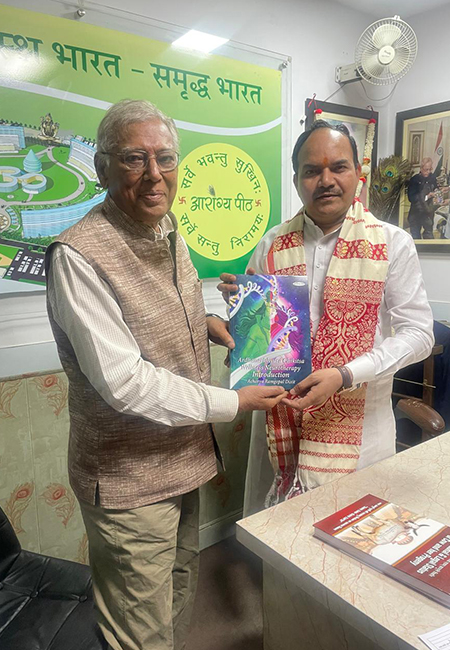
Dr. Grish Mohan Gupta was only twelve when he walked out of his high school—an age when most children are still discovering their curiosities, yet for him, it marked the end of one chapter and the beginning of an extraordinary journey. That early triumph wasn’t a coincidence; it was a quiet announcement that the boy from Dibai—a modest village in Bulandshahar, Uttar Pradesh, born on 10 April 1941, amid the fervor of a nation inching toward independence—was destined for something far greater.
From the moment his parents took him to school, his brilliance was unmistakable. In one sitting, he cleared entrance exams not only for Class 1 but also for Classes 2 and 3. The headmaster, equally baffled and awed, made an unexpected decision: this exceptionally gifted child didn’t belong in his age group. So, Grish was leapfrogged directly into Class 5. That decision would alter the course of his life.
For a child whose mind was already years ahead, adaptation came naturally. He excelled in every subject, not merely keeping pace, but shining brighter than most. In rural India’s 1950s landscape—where resources were scarce and educational opportunities limited—he achieved something few could imagine: by twelve, he had graduated high school. But even as he held the certificate in his hand, eligibility issues meant he couldn’t immediately proceed to university. That moment could have been a setback. Instead, it planted the seeds of resilience and patience that would define him.
His own family circumstances made the journey even harder. His mother, deeply protective, once told him that if he went to study at Aligarh Muslim University, he might turn non vegetarian. In protest, she lay down across the doorway, saying he would have to cross over her body if he wished to go. Determined, Grish quietly went inside, broke open the piggy bank in which he saved pocket money, gathered all his coins, and—despite his mother’s refusal to support his education—walked past her resolve to chase his dream.
“I’m convinced that about half of what separates the successful entrepreneurs from the non-successful ones is pure perseverance.”
Phase 2: The Making of a Professional Visionary
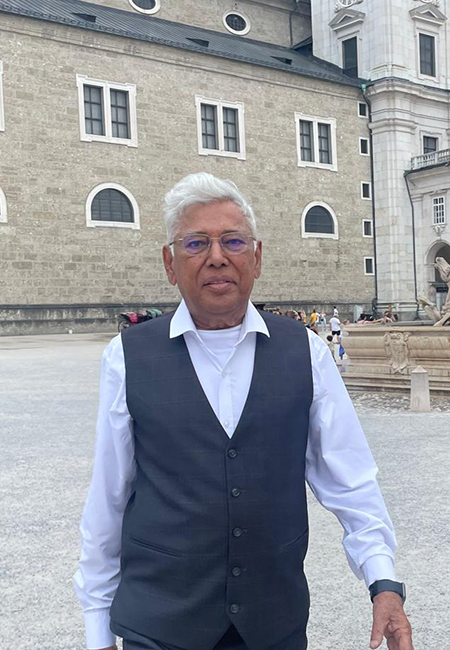
The professional rise of Dr. Grish Mohan Gupta stands as a testament to resilience, ingenuity, and the ability to accomplish the impossible. From the very beginning, Grish’s life was defined by an innate refusal to settle for less than meaningful—starting not in a comfortable office or lab, but in the dusty guest house of a cement factory.
When he stepped into his first professional role, at nearly eighteen, it was with both pride and youthful idealism. Yet, the reality was starkly different. At the Dalmia Cement Factory, his surroundings were bleak: cement dust lay thick even on the bedsheets, a fine gray veil that clung to every surface, and his lungs. Each inhalation felt stifled—an early lesson that prestige alone could not sustain a spirit built for more. Though the position carried weight in the newly independent India, Grish realized it didn’t align with his vision. His decision to leave—a bold move for someone so young—spoke volumes about his refusal to compromise the long-term clarity of purpose for short-term gain.
Not long after, another opportunity presented itself—this time under brutal, unrelenting heat at Hind Lamp, Shikohabad. The oppressive sun turned every day into a test of endurance. But Grish’s sensitivity to alignment was greater than any need for security. He recognized that this path, too, didn’t match his deeper aspirations for growth and service. Again, he chose to step away.
These early exits might have appeared rash to some. Yet, they were far from impulsive. They were manifestations of a character deeply focused on meaningful contribution. Rather than accept a path misaligned with his dreams, he chose the uncertainty of leaving, trusting that his purpose would open a road worth walking. These moments were more than mere career transitions—they were formative crucibles. In walking away, he affirmed that an authentic life would need alignment between his values and his work. They revealed his capacity to make courageous decisions early, with none of the anchors of a settled career to soften the weight.
“Opportunities don’t happen. You create them.”
Phase 3: Innovating for National Security
That morning, as the dawn light spilled across the pages of his newspaper, Dr. Grish Mohan Gupta paused. The headline was chilling: six terrorists, crossing from Pakistan, had breached the border. Lives were at risk, fear gripped communities, and the reality of India’s vulnerability felt too close to ignore. For someone whose days were shaped by innovation and purpose, this wasn’t just news—it was a calling.
The image of a newspaper article thus became a turning point, weaving together his intellect, empathy, and patriotism in powerful alignment. In that moment, he saw his role not merely as an engineer, but as a protector of home and nation.
Earlier, in the United States during a casual visit to the Pentagon, he had noticed an electrified fence adorned with stark “Don’t Touch” warnings—an unspoken gesture of deterrence, not just defense. That flicker of recognition—a barrier that spoke as much as it shielded—stayed with him. He realized India deserved something of its own that would blend deterrence, innovation, and indigenous pride.
More than infrastructure, he envisioned a fence—born from Indian hands—that echoed the nation’s resilience and growing self-reliance. No foreign technology. No proprietary components. Just smart, locally-crafted ingenuity protecting every stretch of border.
Fueled by that vision, Dr. Gupta threw himself into research, prototype development, and unrelenting experimentation. In his mind, every twisted coil and machined part echoed the hopes of a safer, stronger India.
The result? The Punched Tape Concertina Coil (PTCC)—a high-security fencing system conceived, designed, and manufactured entirely within India. It was more than a technical marvel—it was a declaration. India could protect itself with its ingenuity. It was a shield, a promise, and a milestone.
Note of Thanks
The journey of compiling and presenting the biography of Dr. Grish Mohan Gupta has been both an honor and a responsibility. To capture the life of a man whose story intertwines with the progress of industries, the safeguarding of a nation, and the inspiration of generations is no small task. At every step, I have been reminded that such an endeavor is never accomplished in isolation—it is the collective effort, generosity, and goodwill of many that has brought this work to life.
First and foremost, I extend my deepest gratitude to Dr. Grish Mohan Gupta himself. His openness in sharing not only the milestones of his career but also the challenges, sacrifices, and philosophies that shaped his journey made this biography authentic and meaningful. Through his candid reflections and willingness to revisit the triumphs and trials of his remarkable life, he gave this narrative a heart and soul that facts alone could never convey.
I owe a sincere debt of appreciation to his family, whose constant support and encouragement have been the foundation of his extraordinary career. Their anecdotes, insights, and reflections illuminated the more personal dimensions of his journey, helping to portray him not only as a visionary leader and innovator but also as a husband, father, mentor, and friend. It is often in the quiet strength of family life that great leaders find the courage to persevere, and their contributions have been invaluable in revealing this truth.
My thanks also go to his colleagues, associates, and mentees, past and present, who shared stories that highlighted his leadership, creativity, and generosity of spirit. Their cooperation added depth to this biography, providing perspectives that emphasized his influence not only in boardrooms and factories but also in the lives of those who had the privilege to work alongside him. The respect and admiration they hold for Dr. Gupta reaffirm the profound impact he has made as a professional and as a human being.
I am equally grateful to the mentors and contemporaries who guided, challenged, and encouraged him throughout his career. Their presence in his life, whether through formal associations or informal moments of inspiration, served as catalysts in his development and progress. This biography, in many ways, is a celebration not only of Dr. Gupta’s individual genius but also of the ecosystem of guidance and support that shaped his path.
Finally, I wish to acknowledge the many individuals who, in ways both big and small, contributed to the completion of this work. From those who provided archival material and technical details to those who simply offered words of encouragement when the task felt daunting, each contribution has been a thread in the tapestry of this biography.
To all who supported, inspired, and believed in the telling of this story, I offer my heartfelt thanks. This biography is as much a tribute to your collective faith and encouragement as it is to the extraordinary life of Dr. Grish Mohan Gupta.
Thank You
– Dr. Grish Mohan Gupta