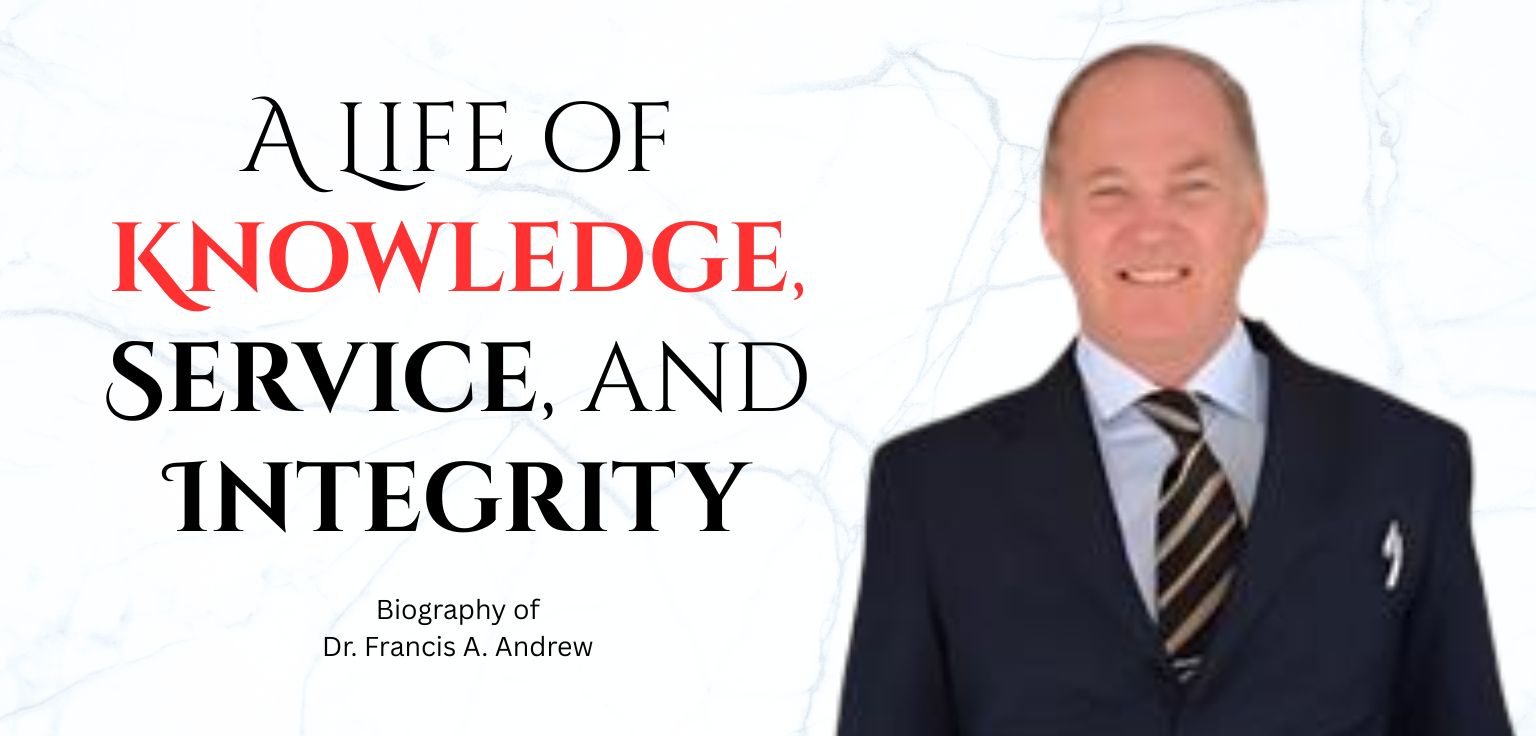
Dr. Francis A. Andrew

"Education is the most powerful weapon which you can use to change the world.”

Introduction

A biography is more than just a list of events; it’s a story that combines experiences, values, struggles, and successes to show what a person’s life was really like. This work aims to not only tell the story of Dr. Francis Adrian Andrew’s life but also to shed light on the values and passions that have guided him through many years, continents, and fields of study. It’s not just the story of a teacher or a scholar; it’s the story of a man whose life shows how powerful and life-changing education can be.

Dr. Francis Andrew was born in 1957 in Aberdeen, Scotland, where he grew up surrounded by cultural and intellectual richness. The traditions of Scotland and the universal truths he discovered in literature, poetry, and history deeply influenced his early years. From a young age, his passion for language and learning set him apart—he memorized Robert Burns’s poems, took part in plays, and began to view school not as a duty but as a meaningful outlet for artistic and moral expression.

This simple, deeply human foundation would be his guide for the rest of his life.

This biography’s goal is to not only show off his professional achievements but also to show the personal traits that drove his work: determination, humility, kindness, and a desire to learn. It aims to give readers a close look at how one man could change the lives of thousands of people in many countries—often in cultures very different from his own—by devoting himself to the art of teaching.

ChatGPT said:

Dr. Francis started his career in Sudan and then moved to Saudi Arabia, Jordan, and Oman. Along the way, he faced challenges and opportunities that tested his character at every stage of his career. He taught in classrooms that didn’t have many resources but had many students who wanted to learn. He managed language schools, balancing administrative responsibilities with constant supervision of his students. He didn’t want to be in charge; he just had integrity, discipline, and knowledge that made people trust his judgement.

The story in this biography shows how a life based on education can go beyond borders. Dr. Francis, a British citizen and Roman Catholic, spent most of his career in the Middle East, which has very different cultural, religious, and social dynamics than where he was born. Instead of being an outsider, he was accepted, respected, and admired. He was successful not only because he was proficient at language and methods but also because he respected the dignity of every student and coworker he met.

His contributions outside of the classroom are just as important. Dr. Francis is a thinker, a writer, and a reviewer. He has written books on a wide range of topics, including science fiction, history, teaching, and even astrobiology. His work with people like Professor Chandra Wickramasinghe shows that he is open-minded and willing to work with people from different fields.
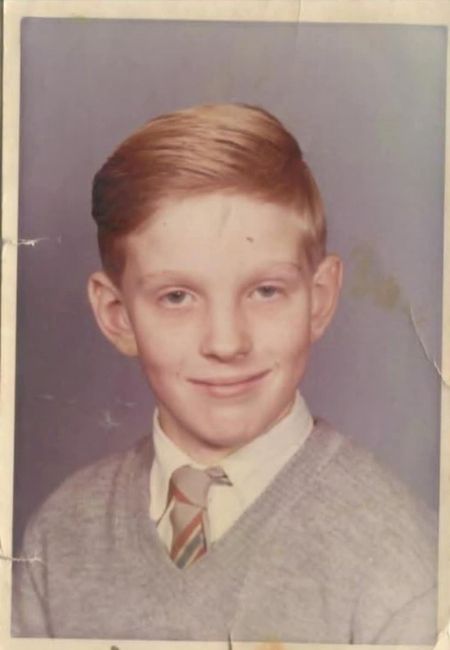
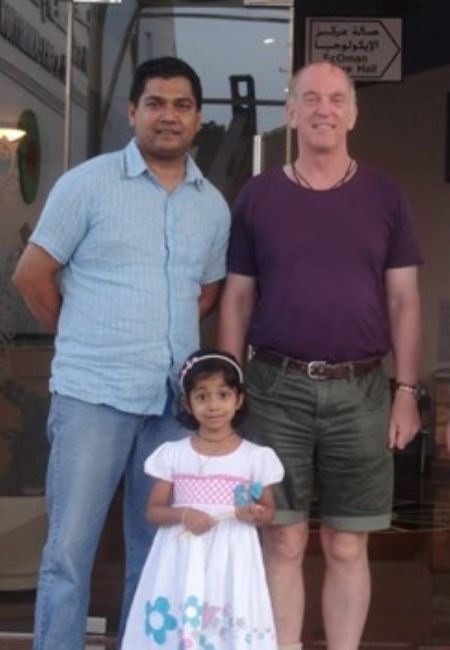
“The child is the father of the man.”

Phase 1: Childhood and Early Schooling in Scotland

Dr. Francis A. Andrew

Dr. Francis Adrian Andrew’s story doesn’t start in the busy halls of academia or the faraway places where he would later make a name for himself. It starts in the quiet rhythms of Aberdeen, Scotland, where he was born on June 29, 1957. His childhood, though outwardly modest, was a great place for his imagination, curiosity, and lifelong love of learning to grow.

Dr. Francis was the kind of kid who didn’t see learning as a chore but as a way to see new places. He started school at St. Joseph’s, where he went through the first four grades. Those years weren’t just about maths or grammar; they were the building blocks of discipline and mental order. He then went to the Holy Family School, where he finished grades five to seven. This is where his love of writing began to grow. He went to St. Peter’s for high school, where the boy who used to read poems at the kitchen table started to take on bigger roles.

One of the first signs that he was different was his love of Scottish poetry, especially the poems of Robert Burns. Dr. Francis found happiness in memorising poems, saying them out loud, and enjoying their rhythms at a time when many kids were busy with short-lived activities. He didn’t just see Burns as a poet; he saw him as a cultural anchor, the voice of Scotland’s heart, and through his words, Dr. Francis felt a stronger connection to his roots. He started to memorise Burns’s poetry as a quiet ritual. This gave him the confidence to speak and made him realise that words could touch people’s hearts.

He was also very interested in drama when he was young. He joined the amateur dramatics club at school, where he acted in short plays and loved telling stories. The plays weren’t very complicated—nothing like Shakespearean plays—but they gave him a stage to try out different voices, characters, and ideas. These experiences gave him a sense of performance that would later show up in his teaching style, which was confident, clear, and interesting.

“Study the past if you would define the future.”

Phase 2: University of Aberdeen: T he Shaping of a Historian

Dr. Francis A. Andrew

Dr. Francis Adrian Andrew didn’t just start a degree when he entered the University of Aberdeen in 1977. He was starting a journey of intellectual growth that would affect every part of his life after that. For a young man from Aberdeen, the University was a place where things stayed the same and grew. It was in a place that was familiar to him, but it opened up many new possibilities. He didn’t choose to get a Master of Arts (Honours) in History by chance or on a whim; it was a natural progression from his childhood interests.

From the beginning, Dr. Francis took university life very seriously, which surprised some of his classmates. Many students loved the freedom of university, but Francis saw it as a job. He wasn’t just signed up; he was invested. He didn’t just study dates, events, or kings in history; he studied people, societies, and the patterns that connect the past to the present and the future.

He met mentors at Aberdeen who would change the way he thought in a big way. Professor John Hargreaves, a well-known scholar of African history, and Dr. Roy Bridges, who is known for his work on East African history, were two of them.

These men were more than just teachers; they were intellectual guides who helped Dr. Francis develop his natural curiosity and improve his academic discipline. Hargreaves, who knew a lot about West African history, helped Dr. Francis see things from a different perspective than European stories. Bridges, who knows a lot about East Africa, added to the idea that history should be seen from many angles, each of which shows a different truth.

Their influence made Dr. Francis want to study history and live it as a conversation. He read a lot and spent a lot of time in the university library. The library’s shelves, which were full of books about African, European, and Asian history, became like a second home for him. He loved the feel of books in his hands, the smell of old pages, and the thrill of finding new arguments. 

“The journey of a thousand miles begins with a single step.”

Phase 3: First Steps Abroad: Teaching in Sudan

Dr. Francis A. Andrew

Dr. Francis Adrian Andrew graduated from the University of Aberdeen in 1981 with an Honours degree in History. At that moment, he faced a critical decision. He could have stayed in Scotland to do more research at the graduate level or to follow a more traditional academic path in the UK. But there was something deeper inside him that wanted to leave the familiar places of Aberdeen, experience new cultures, and live by the values he learnt as a child. His professors pushed him to work abroad, and he was interested in history and languages. This led him to take his first big chance: teaching in Sudan.

Dr. Francis started his teaching career in 1981 at Khartoum Old Higher Secondary School for Boys. It wasn’t straightforward to move from Scotland to Sudan. For a young man in his twenties, going to Khartoum was like stepping into a world that was very different from the cool, organised world of northern Europe. The heat of Sudan, the lively streets, and the rhythm of daily life made him realise right away that he was no longer just a student of history; he was living it.

It was challenging but rewarding to teach English to high school students in Sudan. A lot of his students came from poor families and wanted to learn English so they could have more chances. Dr. Francis was full of energy and creativity in his classes. He knew that language was more than just a way to talk to people; it was also a way to learn about other cultures and ideas. He taught more than just grammar and vocabulary; he added history, literature, and moral lessons to his lessons, which helped his students understand the world better.

These early teaching experiences changed Dr. Francis’s life. He was no longer just reading about teaching methods in books; he was using them in real classrooms to shape young minds. Every day, he changed how he taught to meet the needs of his students. He used the resilience and adaptability he learnt in school to deal with problems like not having enough resources, cultural differences, and the demands of living in a foreign country.

Note of Thanks

It has been both an honour and a great responsibility to write about the life of Dr. Francis Adrian Andrew. No biography can fully show how deep a life lived with such dedication, perseverance, and quiet strength was. But many people have added to this work.

First, we want to thank Dr. Francis Andrew for being so open about his memories, experiences, and thoughts, which made this book possible. His honesty and patience in telling even the smallest details made these pages feel real and warm.

We also want to thank his coworkers and friends, especially Colin Cornwell and Dr. Roger Ledsham, whose testimonials show how much respect he has earned in both academic and professional circles.

His words show he was a man respected for his intelligence, kindness, and honesty.

Lastly, we should thank him for inspiring so many students in Sudan, Saudi Arabia, Jordan, and Oman.

This biography is, above all, a tribute to service and the idea that education is a calling that crosses borders and lasts for generations. Thank you to everyone who follows in his footsteps.They are the real heirs to his legacy.

Thanks
Dr. Francis A. Andrew