“Never be afraid to stand with the minority when the minority is right, for the minority which is right will one day be the majority.”
Introduction
Dr. Euros Jones Evans is a well-known figure in Welsh education and community life. His work and dedication have shaped the lives of many students, teachers, and leaders over the years. His parents, the Reverend Thomas Jones Evans and Dorothy Ann, taught him a set of values that would last a lifetime. Their lives showed him faith, honesty, and service. These ideas were the basis for the life he built, which was not only about doing his job well but also about preserving culture, advocating for language, and growing spiritually.
It was in the classroom that he first started his journey as a teacher. It quickly became clear that he was good at it and could connect with his students. Dr. Euros showed early on that he could motivate and engage students in a way that made learning about language, literature, and other subjects both challenging and fun. He never just taught people to memorize things; instead, he tried to make them curious, confident, and loving of learning for the rest of their lives. These traits would later define his larger contributions as a leader and innovator in Welsh education.
Dr. Euros held many important positions during his career, each one building on the others to make a big and lasting difference. As Head of Department and Chief Examiner, he improved his administrative skills and his understanding of how to teach. He knew very well what teachers were up against and what they could do to help. His work on national projects, especially the National Curriculum Working Group, gave him the power to change policy and practice on a much larger scale than just individual schools. In this situation, he was hired as the National Curriculum Expert Trainer for Welsh, a job that seemed like it had been in the works for his whole career.
It was not easy to take on the duties of Expert Trainer. Dr. Euros was in charge of delivering two language models: Welsh as a first language and Welsh as a second language. This was different from what his English counterparts had to do. He felt a huge weight of responsibility, but he took it on with determination, vision, and a strong sense of purpose. In the years that followed, he traveled all over Wales to give training sessions, create curriculum units, and help teachers deal with the problems that came up with the National Curriculum. His work changed everything: teachers who had been scared of the new rules started to use the language with new confidence and creativity. Students, in turn, learned in a way that was more interesting, easier to understand, and more inspiring, which helped keep the Welsh language alive across generations.
Dr. Euros’ work went beyond just creating new courses. He also wrote books like Gwybodaeth am Iaith (Knowledge about Language), which helped teachers learn more about how language works so they could help their students improve their communication skills. His focus on details, dedication to high standards, and comprehensive approach to language education ensured that his work would have a lasting impact on how Welsh is taught. His contributions also strengthened the cultural importance of the language, helping it remain a meaningful part of daily life in communities across Wales.
“Train up a child in the way he should go: and when he is old, he will not depart from it.”
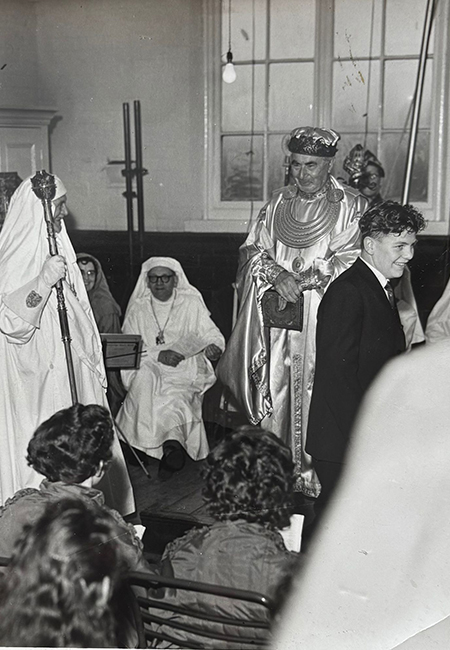
PHASE 1: Early Life and Influences
“Better than a thousand days of diligent study is one day with a great teacher.”
PHASE 2: The Professional and Enlightened Teacher
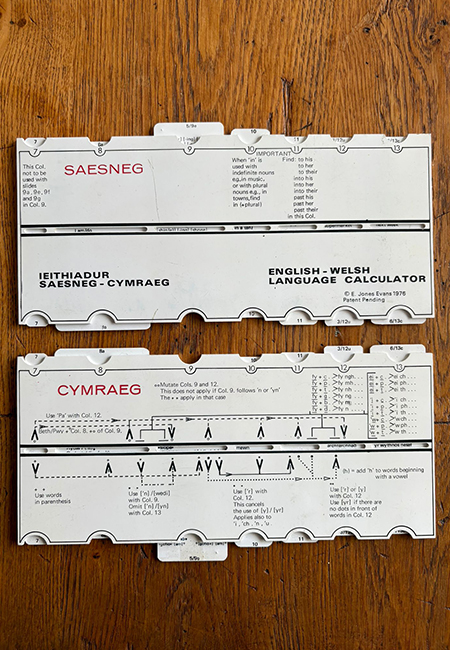
Throughout his distinguished career as a teacher and educationalist, Dr. Euros became known not only for his expertise but also for his deep commitment to reimagining how Welsh as a second language could be taught. His own school experiences—where his struggles with English were met with little empathy—shaped a lifelong determination to ensure that second-language learners received fairness, encouragement, and respect.
Dr. Euros began his teaching career at Aberdare Boys’ Grammar School in September 1968, the first of four secondary schools in which he would have the privilege of serving over the next twenty-one years. While at college, his ideal vision had been to teach Welsh as a first language, sharing with pupils the richness and beauty of its literature. That dream, however, was deferred: at Aberdare, Welsh was taught only as a second language, and it would be another eleven years before he was able to fulfil his original calling.
In the early years of his teaching career, he quickly discovered that existing resources for teaching Welsh were scarce and uninspiring. Rather than accept these limitations, he began developing his own materials and approaches. Over time, this evolved into a unique philosophy: second-language teaching should not be about rote learning or exam preparation alone, but about making the language come alive.
He often reflected on the Welsh word for male teacher, athro. This word comes from the old Celtic root altruo, meaning “foster father.” To him, this etymology illuminated the true role of a teacher: not merely a pedagogue who dispenses knowledge, but a mentor who nurtures, encourages, and guides. In his view, teaching is a vocation that demanded both intellectual leadership and genuine care for the learner as a whole person.
“Creativity is intelligence having fun.”
PHASE 3: Personal Challenges and Creative Pursuits
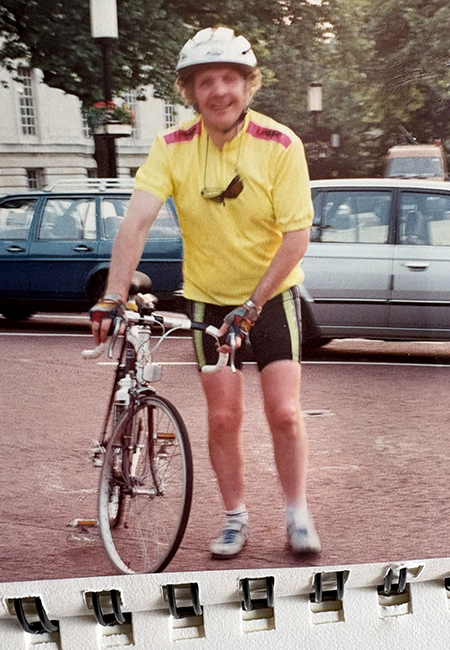
Beyond his teaching and ministerial duties, Dr. Euros always sought ways to remain active, creative, and connected to his community. At the age of forty-two, he bought his first brand new bicycle and soon discovered a remarkable gift for long-distance cycling.
One particularly memorable challenge came when he set himself the ambitious goal of cycling from Rhyl in North Wales to Swansea—a distance of 171 miles—in a single day, all to raise funds for a cancer treatment machine. Dr. Euros not only completed the gruelling ride but also raised £2,000 in the process, a testament both to his physical stamina and to his generous and determined spirit.
Alongside his sporting pursuits, Dr. Euros nurtured a deep love for literature and poetry, particularly the works of local poets. Inspired by their talent, he took it upon himself to collect, edit, and publish their works, ensuring that these voices reached a wider audience. The first of these was Gweddillion a Cherddi Eraill by Dafydd Hopcyn, who had lost his health early in life and sadly passed away before seeing his work published. Dr. Euros ensured that Dafydd’s poems would not be forgotten.
He also championed the work of Gwilym Herbert Williams, a miner who had little formal education but composed poems of remarkable quality. Dr. Euros recognised the potential in his writing and collected his poems into a volume titled Siwrne Lawn. Through these efforts, Dr. Euros preserved local literary heritage, supported emerging talent, and demonstrated his lifelong commitment to creativity, education, and the encouragement of others.
Note of Thanks
We extend our deepest gratitude to Dr. Euros Jones-Evans. His life has been an example of faith, hard work, and love. The Reverend Thomas Jones Evans and Dorothy Ann, who died, taught him important values that he has carried on. His journey has been made easier by the unwavering love of his wife, Pat, who has been his rock for more than 50 years, through good times and bad.
We would like to thank his daughters, Eleri Mai and Eiry Wyn, for their unwavering love and friendship, which have always been a source of strength. We would also like to thank his beloved grandchildren, Ffion Eleri, Lowri Elan, Ioan Morgan Anderson, Megan Wyn, and Erin Medi Bellis, whose presence continues to bring him great joy. He also wants to thank his sons-in-law, Gary Morgan Anderson and Daniel Bellis, for always being there for him, and his brothers, Dafydd Iago, Geraint Meredydd, and Iestyn, whose examples shaped his early years.
He is also thankful to all the students whose lives he was able to change and to the faithful Christian community with whom he shared his ministry and the Gospel for more than fifty years. They make up the tapestry of lives that Dr. Euros Jones-Evans has touched, lifted, and inspired. He leaves behind a legacy of service, wisdom, and lasting love.
Thanks
Dr. Euros Jones Evans