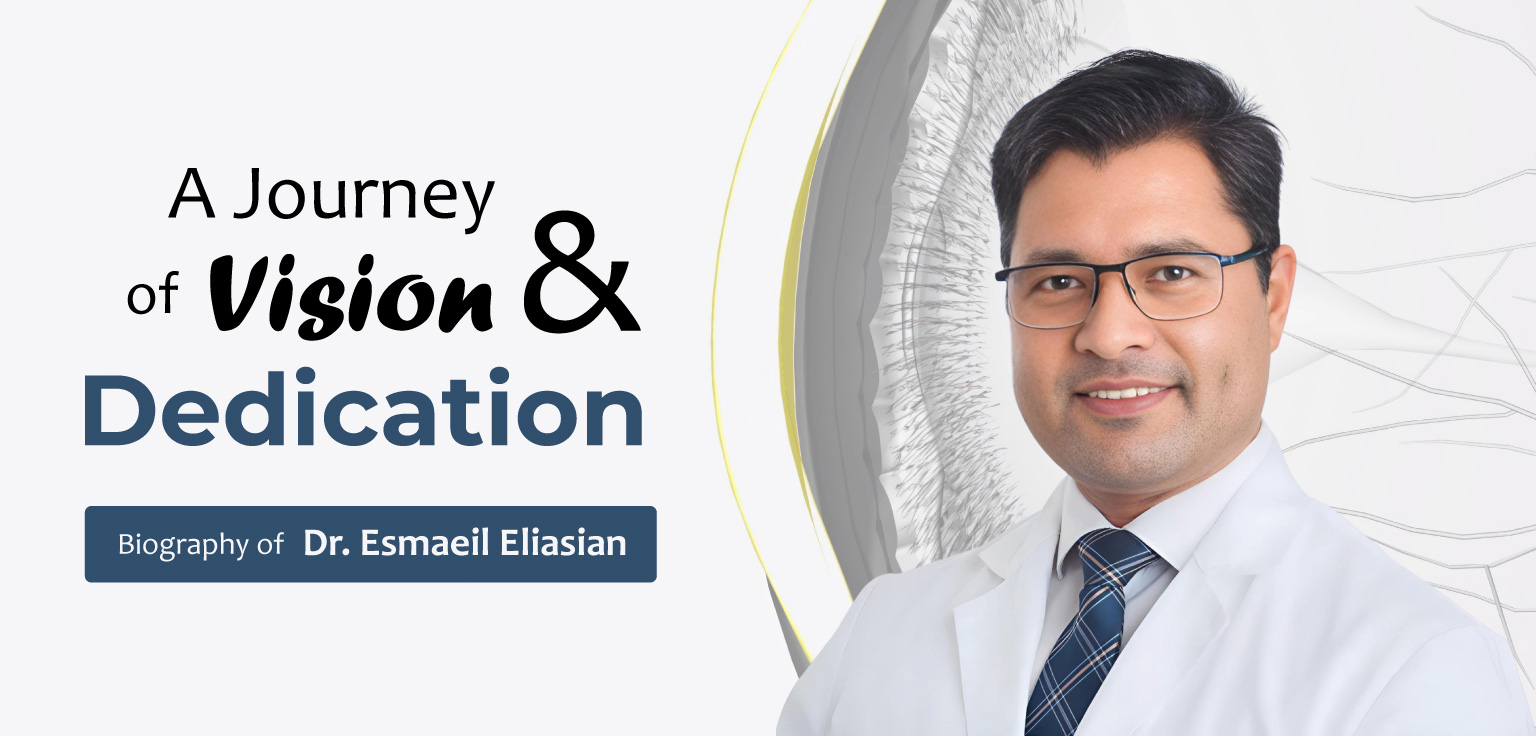
"Go as far as you can see; when you get there, you’ll be able to see further."
Introduction
Every life is a story, but some stories are written with an uncommon clarity of purpose. The life of Dr. Esmaeil Eliasian is one such story—a journey that begins in the small city of Gonbade Kavoos, Iran, and travels across continents, cultures, and disciplines to reach a place where skill meets compassion, and personal dreams merge with the service of humanity.
At first glance, his path may seem like a straightforward tale of professional success: a young man pursues higher education, changes his field of study, earns a medical degree, specializes in ophthalmology, and opens his own practice. But to stop there would be to overlook the heart of his journey—the countless moments of perseverance, the quiet sacrifices, the adaptation to new languages and environments, and the steadfast belief that every challenge carries within it the seed of possibility.
The story of Dr. Eliasian is, in many ways, a story of vision—not just the kind measured by charts and lenses, but the deeper vision that allows a person to imagine a future beyond the limits of their current circumstances. As a child, he could not have foreseen the exact shape his career would take, yet his early dedication to education and his willingness to serve others hinted at the professional and personal life he would one day build.
When he transitioned from economics to medicine, it was not an abandonment of one pursuit but the embracing of a truer calling. This change required courage—the courage to start again, to challenge himself in new ways, and to step into the rigorous and demanding world of medical science in a foreign country. The University of Cologne became the crucible in which his skills, discipline, and resilience were tested and refined.
Through his years of training—first as a student, then as a resident under respected mentors—he developed not only technical expertise but also a philosophy of care grounded in empathy. His patients were never simply “cases” to be treated; they were people with fears, hopes, and lives that extended far beyond the examination room. This belief would become the cornerstone of his professional identity.
Opening his own ophthalmology practice in Düren in 2024 was not just the culmination of his efforts, but the beginning of a new chapter—a place where he could fully integrate his medical knowledge, cultural understanding, and commitment to personalized care. Here, he could create an environment where patients felt heard, respected, and confident in the treatment they received.
This biography invites you to walk alongside Dr. Eliasian on his journey—to experience the formative years in Gonbade Kavoos, the challenges of adapting to a new country, the determination required to master a complex medical specialty, and the satisfaction of seeing a vision for life come into focus.
Phase 1 : Roots in Gonbade Kavoos
“A journey of a thousand miles begins with a single step.”

The story of Dr. Esmaeil Eliasian begins in the heart of Golestan Province, in the historic and culturally vibrant city of Gonbade Kavoos. On June 22, 1981, as the warm summer sun bathed the land in golden light, the Eliasian family welcomed their son into the world. The city, with its ancient roots and the majestic Gonbad-e Qabus Tower watching over it, would become the cradle of his earliest dreams and the silent witness to the values that would shape his destiny.
Gonbade Kavoos was no ordinary hometown—it was a meeting point of traditions, where Persian elegance and Turkish warmth blended into a rich cultural mosaic. The streets carried the scent of fresh bread from local bakeries, the melodies of folk songs during festivals, and the quiet dignity of a community bound by shared history. Within this environment, Dr. Esmaeil’s formative years unfolded, deeply influenced by the dual heritage that gave him both a profound sense of identity and an openness to the diversity of the world beyond.
At home, the values of perseverance, humility, and respect for knowledge were not merely taught—they were lived. His parents instilled in him the belief that one’s circumstances were not limits, but beginnings. The quiet encouragement they offered, the sacrifices they made, and the example they set became the invisible foundation stones upon which he would later build his life.
From 1988 to 1996, young Esmaeil walked the dusty yet familiar paths to primary school, a place where his innate curiosity became evident to teachers and classmates alike. Even then, he showed the hallmarks of someone destined for a life of service—patience, empathy, and a remarkable attention to detail. His notebooks were filled not only with lessons but with sketches, reflections, and questions—small signs of a mind that did not settle for the surface but sought to understand the “why” behind everything.
His high school years (1996–2000) marked a period of self-discovery and widening horizons. While many of his peers were content with the predictable rhythm of student life, Dr. Esmaeil felt the gentle pull of something larger. The High School Diploma he earned at the turn of the millennium was more than an academic milestone—it was the key to unlocking the next chapter of his journey. It symbolized readiness, not just for higher studies, but for stepping beyond the familiar landscapes of his childhood.
Yet, looking back, the most profound gift of these early years was not a certificate or a grade, but a spark—an almost intangible inner calling. Though he could not yet name it, it was there, quietly growing within him: the desire to bring light and clarity into the lives of others. The same light that filtered through the windows of his childhood home, warming the wooden floors, would one day be reflected in the eyes of the patients whose vision he would restore.
Phase 2 : Service Before Self
“The best way to find yourself is to lose yourself in the service of others.”
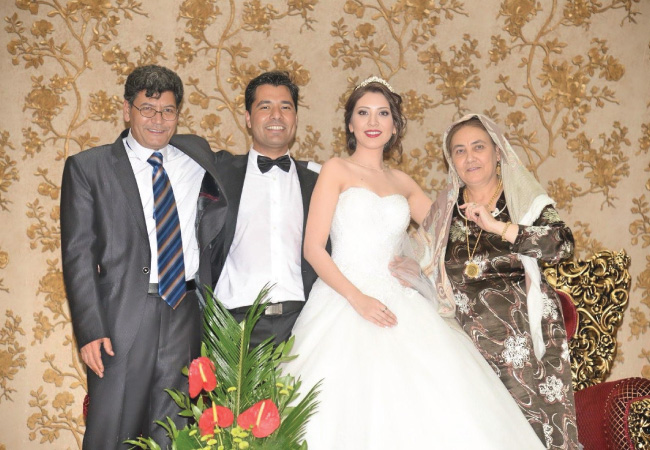
When the ink on his high school diploma was barely dry, Dr. Esmaeil faced a decision that would shape his values for a lifetime. While many of his peers immediately pursued higher education or sought the comfort of stable jobs, Dr. Esmaeil took a different path. He turned his gaze outward—toward the needs of others, toward the responsibilities that transcend personal ambition.
In the year 2000, he began his Zivildienst—a civil service commitment that spanned two formative years, from 2000 to 2002. This was not simply an obligation; it was a conscious choice to contribute to society in a way that demanded time, energy, and heart.
His service placed him in environments where human vulnerability was visible and real. Whether it was assisting the elderly with their daily routines, helping individuals with disabilities navigate challenges, or supporting local community initiatives, Dr. Esmaeil approached each task with humility. He learned to listen—truly listen—to the fears, joys, and silent struggles of others.
The work was often physically exhausting and emotionally taxing. Some days began before sunrise and ended long after the city had gone quiet. Yet, Dr. Esmaeil never saw it as a sacrifice. Instead, he viewed each moment as an investment—an opportunity to grow into the person he aspired to be.
During these two years, he began to understand the quiet power of presence—how simply being there for someone in their moment of need can have a profound impact. He saw how patience could ease tension, how a kind word could lift a heavy spirit, and how empathy could build bridges where there once were walls.
This period also taught him discipline in the truest sense—not just the discipline to work hard, but the discipline to care consistently, even when no one was watching. It was here that he cultivated the habits of reliability, responsibility, and compassion—habits that would later become the cornerstones of his medical career.
Looking back, Dr. Esmaeil would often reflect on these years as a bridge between youthful dreams and a purposeful life. His service in Zivildienst did more than fill a chapter in his biography; it anchored his philosophy of “service before self,” a principle he would carry with him into every patient consultation, every decision, and every life he touched as a physician.
Phase 3 : A Scholar’s Path Across Continents
“Education is the most powerful weapon which you can use to change the world.”
Dr. Esmaeil Eliasian’s life was never meant to be confined to the familiar boundaries of his birthplace. By the early 2000s, he had already cultivated a hunger for knowledge that could not be satisfied by routine learning. This restless curiosity first found a home in the halls of the University of Gorgan, where, from 2003 to 2005, he pursued studies in economics.
In lecture rooms filled with charts, graphs, and the hum of analytical debates, Dr. Esmaeil immersed himself in understanding the pulse of societies through numbers—how supply and demand shaped lives, how economic theories translated into real-world struggles, and how policies could either lift communities or hold them back. These years gave him a powerful analytical framework, a way to look at systems and see not only what they were, but what they could become.
Yet, somewhere between the pages of macroeconomic models and the equations of microeconomic behaviour, another, deeper calling began to stir. It was not the language of profit margins and fiscal policy that truly moved him, but the quiet, human stories behind them—the child who needed healthcare, the worker who endured chronic pain without treatment, the elderly man whose quality of life depended on medical intervention. Numbers could measure economies, but they could not heal a body or comfort a soul.
By 2006, the whisper of this calling had grown too loud to ignore. With a courage known only to those willing to rebuild their lives from the ground up, Dr. Esmaeil made a bold and life-altering decision: to leave Iran and begin anew in Germany—a country whose medical education was renowned worldwide for its rigor, discipline, and precision.
Arriving at the University of Cologne, Dr. Esmaeil stepped into a world that was as intellectually demanding as it was culturally unfamiliar. His first battle was with language—German, a tongue that demanded perfect precision in both grammar and pronunciation. He dedicated countless hours to mastering it, often rising before dawn to review medical terminology and returning home long after nightfall with pages of meticulous notes.
The rigors of medical education were unlike anything he had experienced before. While economics had taught him the patterns of trade and finance, medicine demanded a different kind of discipline—long hours in anatomy labs, endless memorization of biochemical pathways, and the emotional weight of learning about illnesses that touched the deepest vulnerabilities of human life.