“There is no greater agony than bearing an untold story inside you.”
Introduction
The story of Dr. Dulumoni Goswami is not simply the story of one individual; it is the unfolding of courage, resilience, and the quiet defiance of expectations. To understand her journey is to understand what it means to find light in darkness, to carve meaning out of trials, and to transform pain into purpose.
Born in 1977 in Delhi, Dr. Goswami entered the world with roots stretching between the bustling life of the capital and the serene yet traditional landscapes of Assam. Her father’s transferable job ensured that her early years were marked by transitions—new towns, new schools, new beginnings. While this might have unsettled another child, for her, it built adaptability. It gave her the strength to adjust, the patience to observe, and the courage to start afresh. These qualities would later become the pillars of her work as a healer and teacher.
Her mother, balancing work and home, became one of her first examples of strength. From her mother, she learned that sacrifice is not weakness but love expressed in action. From her father, she learned that quiet encouragement often makes dreams possible. Her grandparents, too, left indelible marks. At moments when illness and duty pulled the family in many directions, she found herself moving between the city and her ancestral village in Nalbari, Assam. These movements were more than changes of address—they were lessons in survival, teaching her the rhythms of both urban and rural life.
Childhood was not without its challenges. Language barriers emerged as she moved from English-medium schools in Delhi to Assamese-medium institutions in her village. What should have been smooth years of learning became exercises in resilience. Yet she pressed on. In these early shifts, her determination began to shine. She was not content to remain bound by circumstances. Instead, she sought knowledge in every form she could find—through textbooks, through observation, and through her own curiosity.
The arts became her first outlet of self-expression. Dance, particularly Bharatanatyam, captivated her young spirit. It was not merely performance; it was prayer in motion, discipline given form. Her father quietly encouraged this passion, even when societal norms whispered against it. In the village, dance was sometimes seen through the lens of prejudice, a pursuit unsuited for a girl’s reputation. But where others saw stigma, she saw rhythm, beauty, and devotion. This silent rebellion against narrow thinking planted within her a belief that authenticity mattered more than approval.
Education remained central. By 1994, she had completed her schooling, and by 1996, her higher secondary studies. Alongside her academic journey, she nurtured talents in drama, music, and dance. Yet society and family responsibilities often pulled her in different directions. Marriage proposals came early, and in 2001 she entered married life, stepping into the roles of wife and, soon after, mother.
“Children are the living messages we send to a time we will not see.”
Phase 1: Roots of Innocence: Early Life and Childhood
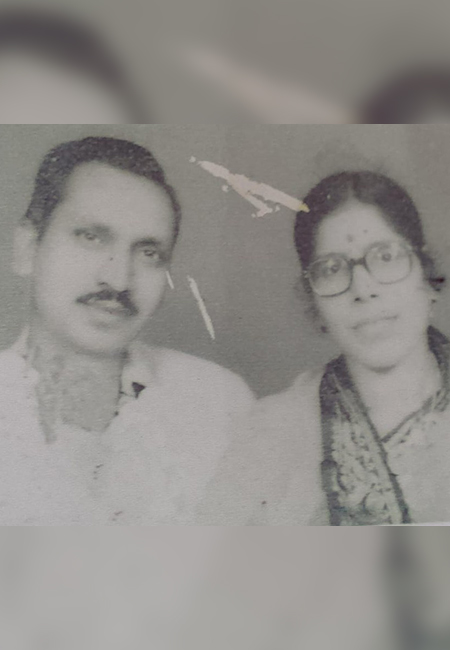
Dr. Dulumoni Goswami’s childhood began on 13 August 1981 in Delhi’s Laxmibai Nagar, where she was born to Shri Nab Kumar Goswami and Smt. Manju B. Her father served as an Army Officer, and her mother worked as a Manager with Usha Company. Although the family lived in Delhi, their true roots lay in the serene village of Tihu in Nalbari district, Assam—a place rich in culture, values, and ancestral memories.
Due to her father’s transferable service, Dr. Dulumoni spent her early years away from Assam, growing up in the vibrant yet demanding environment of Delhi. Her childhood home was filled with discipline, warmth, and responsibility. With her mother managing both work and home and her father committed to national service, the children learned early how to support and protect one another. As siblings, they shared a strong, unbreakable bond and cared for each other with maturity beyond their age.
Life took a difficult turn when her grandfather passed away, urging the entire family to return to their ancestral village in Assam. Soon after, her youngest sibling was born, and the family’s financial situation began to weaken. In the joint family system, very few stood by them. Her father bore every responsibility alone, while her mother, though not highly educated, became the emotional backbone of the household. Her strength and patience shaped young Dulumoni’s character, inspiring her to stay courageous and truthful, no matter the circumstances.
Despite hardships, her father always encouraged her. He would tell her, “You are strong; you can do anything.” Although the world often judged daughters differently, he reminded her repeatedly that girls are never less capable than boys. His belief became her greatest motivation. Even during financial struggles, she continued her education with sincerity and dedication, earning recognition and awards that made her family proud.
“Education is the most powerful weapon which you can use to change the world.”
Phase 2: Learning Beyond Boundaries: Education and Cultural Roots
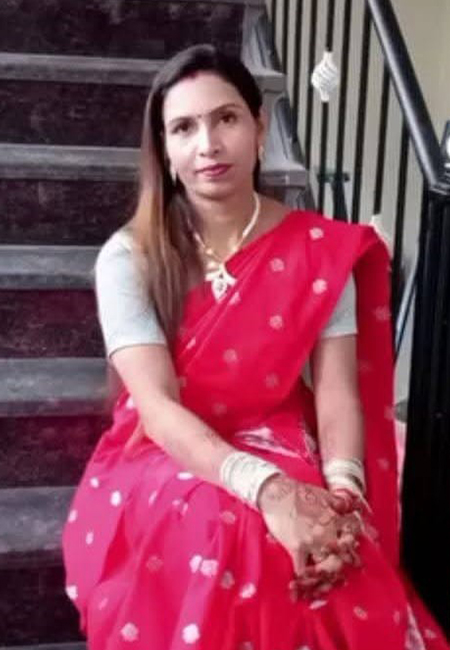
It is not a simple story of schools and degrees that tells the story of Dr. Dulumoni Goswami’s education. It is a story about being strong, moving between worlds, and holding on to the past while searching for change. Her academic journey is shaped by both the textbooks she studied and the lessons she learnt outside of school, such as how to be proud of her culture, stand up to prejudice, and balance her duties with her dreams.
Dr. Goswami went to school in Delhi, where she was born. Her father’s job required frequent moves, forcing young Dulumoni to adapt to unfamiliar environments. She went to school in English-speaking schools when she was very young. During those years, she picked up language and learning quickly, showing that she was smart and curious from an early age. But this was just the start. There were other lessons waiting for her in life that she wouldn’t always find in her schoolbooks.
When her grandmother got very sick, the family had to make the difficult choice to go back to Assam, where they were born and raised in the Nalbari district. For young Dulumoni, this meant leaving behind the comfort of Delhi’s classrooms and going to school in her village, where classes were taught in Assamese. The change wasn’t just in school; it was also in how I felt. Language became a problem for her, making it challenging for her to learn in a language that wasn’t her first. It could have been a setback, but it turned into a lesson in how to be strong. She had a hard time at first, but she worked hard to fit in and eventually found her place in classrooms that felt strange. Being able to switch between different media, cultural norms, and ways of learning would become one of her most important traits.
She was very determined during her school years in Nalbari. She finished her high school education in 1994, which indicated that hard work pays off. In 1996, two years later, she finished her higher secondary education. She chose subjects that showed how curious she was about many things.
“The strength of a woman is not determined by the effects of her adversities; rather, it is defined by her resilience in refusing to let those adversities define her identity and character.”
Phase 3: The Tapestry of Duty: Marriage, Family, and Responsibilities
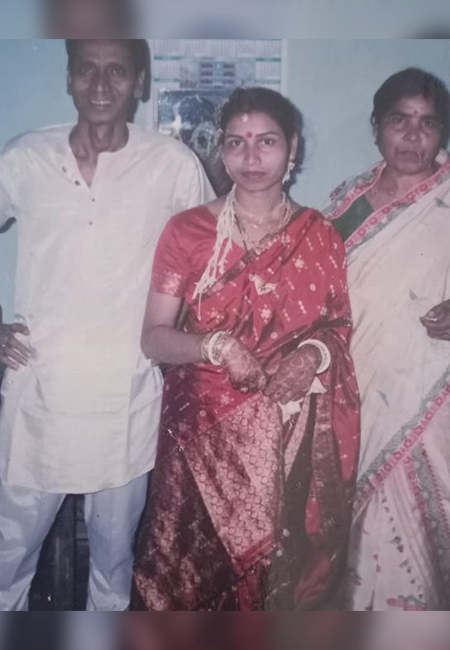
People often say that marriage is the joining of two lives, but in reality, it is also the joining of duties, roles, and expectations. Dr. Dulumoni Goswami believed that marriage didn’t end her dreams; it just changed how they looked. She got married in 2001 when she was twenty-four years old. She brought with her the resilience lessons she had learnt as a child.
In many ways, the first few years of her marriage were just like the rest of her life. She had to become used to new rhythms again when she became a wife and then a mother, just like she had to when she switched schools and ways of learning as a child. Marriage put her in a joint family system where tradition often made it hard for people to make their own choices. Her cultural background taught her to be patient and obedient, which were values she was expected to live by. She did these tasks with grace, never complaining and never letting her dreams get in the way of the peace in her home.
In 2002, she had her first daughter, which made her happy and gave her a lot of work to do. For Dr. Goswami, being a mother was more than just a job; it was a big change. The little hands that held hers made her feel like she had a purpose that was bigger than herself. Days were full of feeding, not sleeping, and doing chores around the house. But her heart grew fuller even with the routine. She saw her daughter as more than just a child; she saw her as a teacher and a mirror that showed her strengths and weaknesses.
But these were also years of giving things up. Her love of dance, which had once made her stand out as a performer, was slowly pushed to the back. The rehearsals, the performances on stage, and the applause all became memories that she kept in her heart. She had to do household chores, and society’s expectations didn’t leave much room for her to do things she liked. The demands of family life now limited her ability to freely explore her talents. Still, she saw the situation as a part of her journey, not a loss.
Note of Thanks
In bringing this biography of Dr. Dulumoni Goswami to life, deep gratitude is extended to the many people, seen and unseen, who have shaped her journey and made the telling of this story possible.
First and foremost, heartfelt thanks go to Dr. Goswami herself, for opening her heart and allowing her life to be shared in these pages. It takes immense courage to revisit memories of struggle, to relive the moments of pain, and to speak openly of vulnerabilities. Yet she chose to do so not for her recognition, but for the benefit of those who might see in her story a reflection of their lives. Her sincerity and trust have been the foundation of this work.
Gratitude also flows to her parents, whose values and sacrifices created the soil from which her resilience grew. Their encouragement during her early years, their quiet faith in her abilities, and their steady presence shaped her character. Special thanks must be given to her grandparents as well, who offered guidance, care, and the cultural grounding that has stayed with her throughout her life.
To her husband and daughters, this note of thanks carries a particularly tender acknowledgement. Their companionship, love, and patience have been at the core of her strength. Her daughters, in particular, have been her greatest teachers. Through their joys and struggles, they awakened the healer’s heart in her. The moments of challenge that they endured together became the turning points of her life, and her gratitude to them is endless.
Acknowledgement must also be given to her extended family, who, even in their scepticism, became part of her journey. Their doubts and questions were silent motivators, pushing her to persist, to prove, and to continue walking the path of healing with conviction.
To her mentors and guides in the healing sciences—those who taught her Reiki, numerology, astrology, Vastu, and other modalities—she owes a debt of gratitude. Her growth was facilitated by their teachings, encouragement, and wisdom, which allowed her to acquire knowledge that she subsequently shared with thousands.
A special note of thanks is also reserved for her students. Each of them has contributed to her legacy, not only by learning from her but also by validating her work with their trust and testimonies. Their belief in her methods, their willingness to practise what they learned, and their expressions of gratitude gave her the strength to continue even in the most difficult times. They are both her responsibility and her reward.
Finally, thanks are extended to the countless individuals who crossed her path—friends, well-wishers, neighbours, and strangers—each one leaving behind lessons, encouragement, or inspiration. In many ways, every person who touched her life, whether in support or in challenge, became part of the story told here.
This biography, therefore, is not just a record of one life; it is a collective creation. And in closing, the deepest thanks go to the universe itself—for its unseen guidance, for its quiet blessings, and for reminding us through Dr. Goswami’s life that every struggle holds the seed of transformation.
Thank You
Dr. Dulumoni Goswami