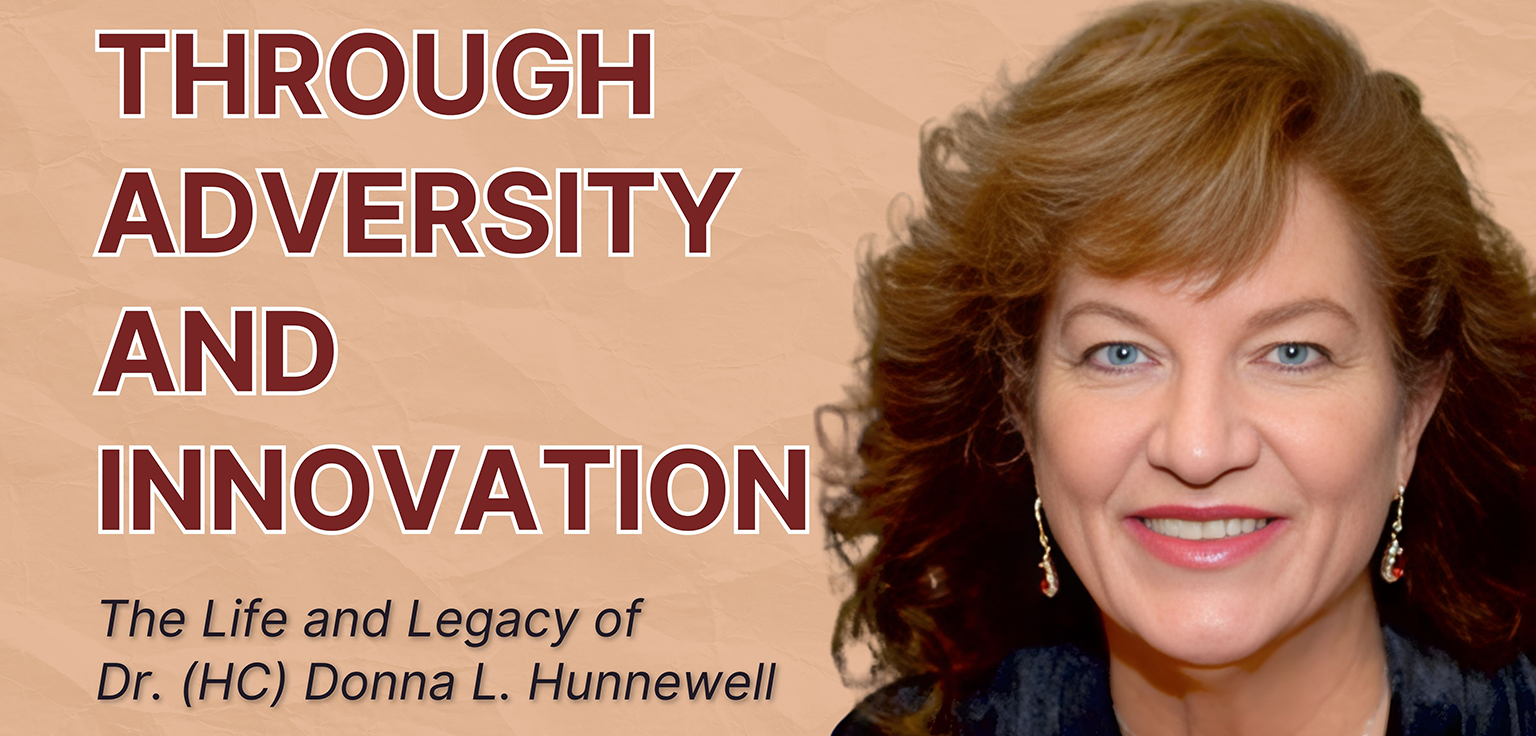
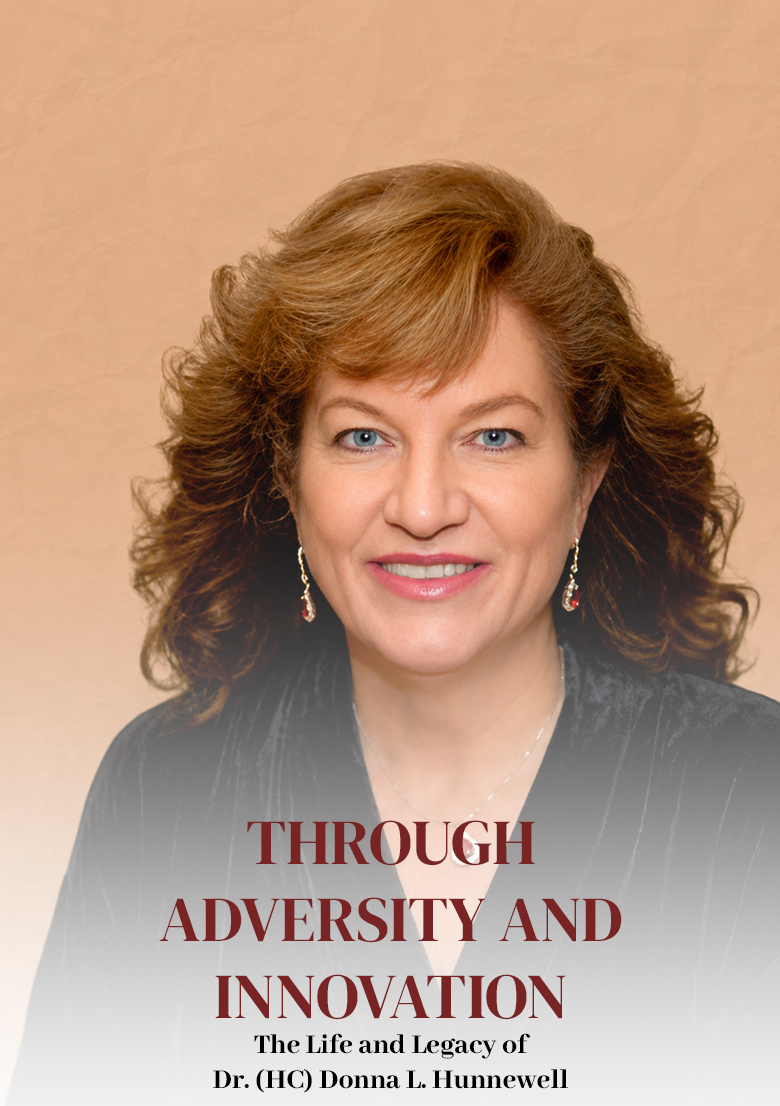
"The only limit to our realization of tomorrow is our doubts of today."
Introduction
Few people begin a new chapter of public service at an age when most are expected to slow down; Dr. Donna L. Hunnewell did precisely the opposite. At the age of 59, she entered civilian service with the United States Air Force, not as a sudden change in direction but as a natural continuation of a journey shaped by endurance, adaptability, and a constant dedication to responsibility. It stands as a defining moment not because it was unexpected, but because it reflected the same pattern that had marked every stage of her life: stepping forward when circumstances demanded competence, resolve, and clarity.
The life chronicled in this biography is not one defined by linear progress or predictable milestones. It is the story of a woman forged in complexity, raised in economic and emotional hardship, and shaped by environments where survival depended on self-reliance and determination. Growing up in Baltimore during the economic strain of the 1970s, Dr. Donna L. Hunnewell learned early that stability could not be assumed and that opportunity often had to be created rather than granted. Those formative years instilled in her a work ethic rooted in necessity and an instinct to take responsibility long before adulthood demanded it.
Education became both an escape and a declaration of independence. Through discipline and persistence, she pursued rigorous academic training in biology, committing herself to one of the most demanding paths available at the time. Her years at Loyola University, Baltimore, were defined not by comfort, but by intensity, academic pressure, financial constraints, and an uncompromising drive to succeed. This period established a foundation of intellectual rigor and emotional endurance that would later allow her to move confidently into highly technical and male-dominated professional spaces.
Her professional life unfolded across fields that required precision, courage, and adaptability. In industries where few women were present and fewer were welcomed, Dr. Donna L. Hunnewell built expertise not through protection, but through mastery. Her work in electron microscopy, imaging systems, and system integration placed her at the intersection of science and application, where theory met consequence. At organizations such as Carl Zeiss Medical Microscopes, she did not simply represent technology; she helped shape solutions, and develop techniques to support researchers whose work pushed the boundaries of medical and scientific knowledge. While these experiences required technical fluency, they also necessitated resilience in environments where one had to repeatedly earn credibility.
Later, at FLIR Systems, her role expanded beyond systems into education and defense. Training military personnel, engineers, and specialists across global settings required an ability to translate complexity into clarity. Her work supporting infrared technologies and defense applications demonstrated a capacity to operate under pressure, adapt across cultures, and deliver results where failure was not an option. These years reinforced a central theme of her life: competence paired with accountability.
“Character cannot be developed in ease and quiet. Only through experience of trial and suffering can the soul be strengthened.”
Phase 1: Origins in Hard Times

The story of Dr. Donna L. Hunnewell begins in a time and place defined by uncertainty. Born as Donna Peters and raised in Baltimore, Maryland, her early years unfolded during the economic and social strain of the 1970s, a decade marked by recession, fuel shortages, and national anxiety. It was not an easy era to grow up in, and for a young girl observing the world closely, it was impossible to miss how quickly stability could disappear. Gasoline was rationed by odd and even days, jobs were fragile, and conversations about survival were common. This atmosphere of tension shaped her earliest understanding of responsibility and resilience.
Her family lived under the constant pressure of the times. With two older brothers who could be drafted into the Vietnam War at any moment, fear was not abstract; it was present and personal. The continual threat of loss reinforced the belief that nothing should be taken for granted. In this environment, Dr. Donna L. Hunnewell learned early that endurance was not optional. It was a way of living.
Her parents were hardworking, blue-collar individuals who believed deeply in self-sufficiency. Her father, a machinist by trade, maintained a machine shop in the basement of their home. It was there that she absorbed her first lessons in problem-solving, precision, and patience. She learned by watching, observing her father and brothers fix, build, and repair whatever broke. Often, she stood nearby holding a flashlight, quietly absorbing the logic of how things fit together and how solutions were constructed from effort rather than instruction. This exposure instilled a practical intelligence that would later surface in unexpected ways throughout her life.
Her mother worked relentlessly as well, contributing to a household where both parents held multiple jobs to ensure their children could one day attend college, an aspiration that was far from common in Baltimore during that period. Education was not discussed as a luxury, but as a necessity, a tool that could create options where few existed. At the same time, her father and mother were deeply involved in church-based charity work. As a result, Dr. Donna L. Hunnewell was drawn into event planning and community service from an early age, helping decorate halls, organize gatherings, and support initiatives designed to serve others. What seemed ordinary then would later reveal itself as an early education in logistics, coordination, and leadership.
“I can be changed by what happens to me. But I refuse to be reduced by it.”
Phase 2 : Responsibility Before Childhood
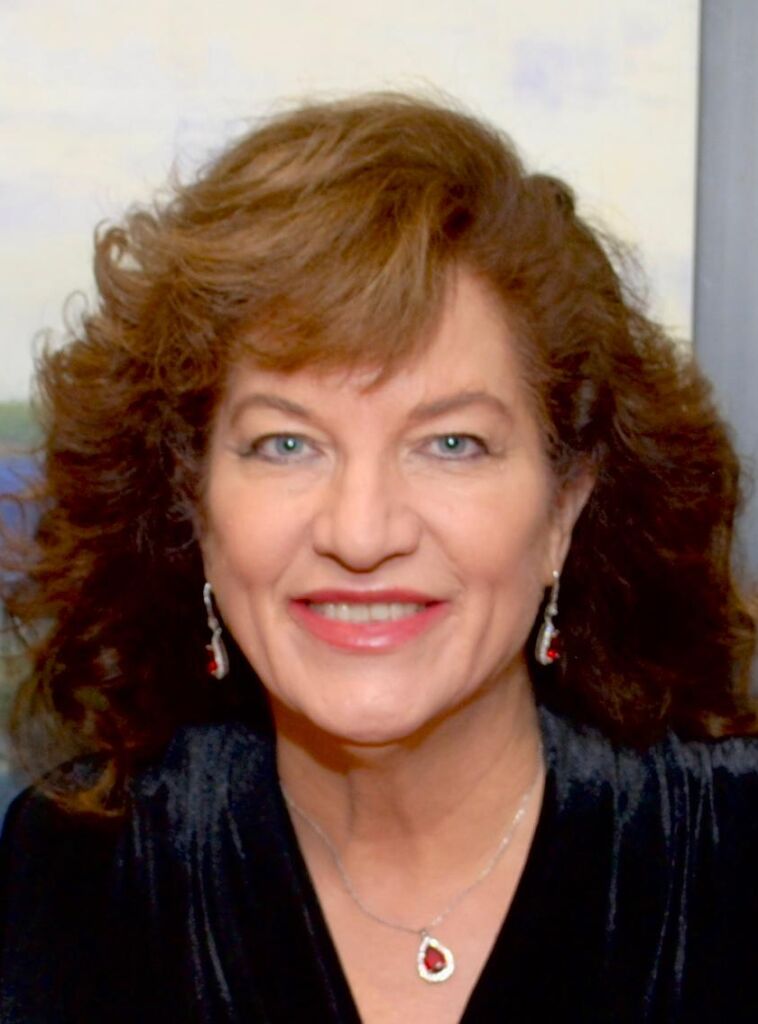
If Phase One forged awareness, Phase Two forged endurance. For Dr. Donna L. Hunnewell, childhood did not unfold within the usual boundaries of protection and guidance. Instead, it demanded responsibility long before adulthood, shaping a strength that was neither taught nor chosen but required for survival. These years were defined by contradiction: visible comfort masking deprivation, structure existing alongside neglect, and expectation placed upon a child who was never allowed the luxury of dependence.
Within her family home, scarcity was not always economic in appearance, but it was deeply real in practice. Despite her mother’s independent wealth, daily life was governed by artificial poverty. Food security was uncertain, basic necessities were withheld, and emotional care was inconsistent. Her mother’s schizophrenia created an environment where logic shifted without warning and stability could not be relied upon. While her brothers were provided for, Dr. Donna L. Hunnewell learned early that she would need to provide for herself. This imbalance was not merely material; it was psychological, and it created an urgency that would follow her throughout life.
From a young age, she assumed responsibility for the household. Cooking, cleaning, grocery shopping, ironing, and managing daily routines fell to her while both parents worked long hours. She ran the home not as a chore, but as a necessity. By the time she reached high school, she was not only maintaining a household but excelling academically, participating in athletics, and leading her peers. Responsibility did not pause for achievement; it expanded alongside it.
She was a latchkey child from the age of five, walking alone to the bus stop, returning to an empty house, and learning to manage hours of solitude before anyone came home. These were not isolated moments but a daily rhythm. Independence was not encouraged; it was assumed. The absence of guidance forced her to rely on observation, instinct, and self-discipline. She learned to anticipate needs before they became crises, a habit that would later define her professional life.
“One child, one teacher, one book, and one pen can change the world.”
Phase 3 : Education as Defiance and Direction
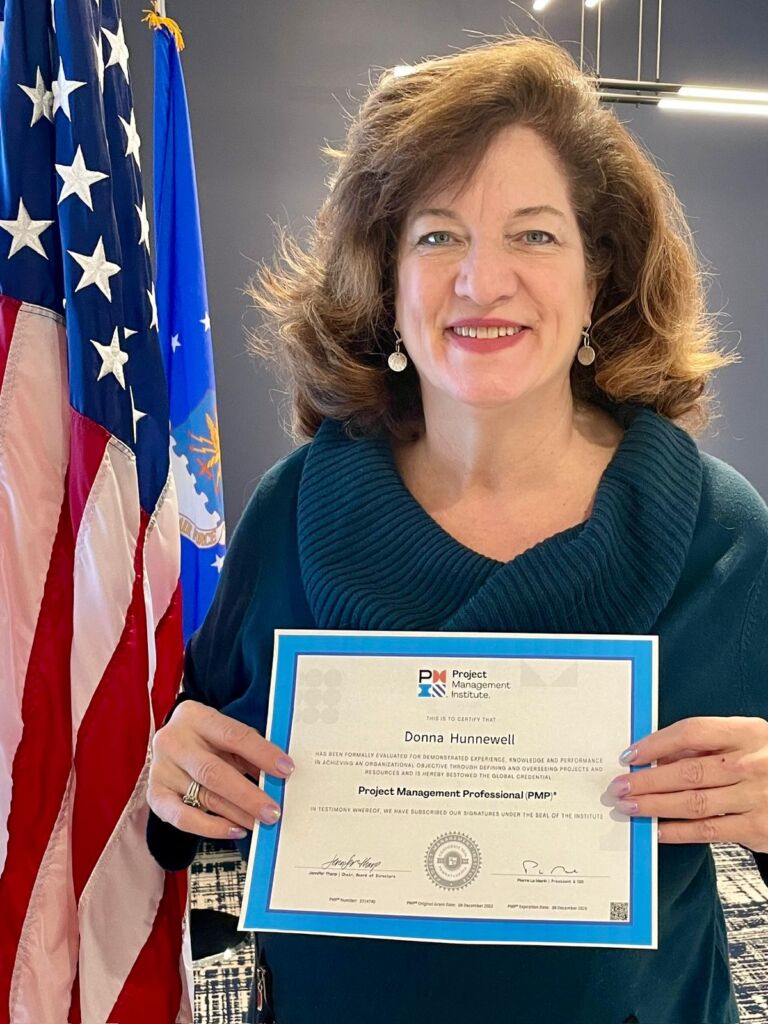
For Dr. Donna L. Hunnewell, education was never a passive pursuit. It was an act of defiance, a deliberate strategy to escape limitation, and a declaration that circumstance would not dictate outcome. By the time she entered her teenage years, she understood with clarity that remaining in Baltimore meant accepting a life constrained by instability and narrowed opportunity. Learning became her chosen path forward, not because it was easy, but because it was the hardest option available, and therefore the most powerful.
High school served as a pivotal moment in her life. After years in volatile public schools shaped by social unrest, she finally found space to pursue both academic rigor and physical challenge. She entered high school determined to take advantage of every opportunity offered, refusing to be sidelined by expectation or tradition. Her academic commitment was extraordinary. She completed an extra year of study by graduating with seven extra credits, all in science, beyond the required minimum. This achievement was not symbolic; it was strategic. Science represented precision, credibility, and mobility, qualities she believed would open doors otherwise closed to women of her background.
Alongside academics, athletics became a defining force. Dr. Donna L. Hunnewell was part of the first generation shaped by Title IX, a transformative moment in American education that required equal access to sports for girls. The law may have existed on paper, but its implementation was contested daily on fields and courts. As a varsity lacrosse goalie for three years, along with participation in volleyball and other sports, she encountered open hostility simply for participating. Girls who played sports were ridiculed, questioned, and subjected to assumptions about their identity and worth. Yet she persisted, not out of rebellion alone, but out of conviction. She wanted to play, and she believed that wanting was enough.
Note of Thanks
This biography stands as a reflection of a life shaped by perseverance, service, and an unwavering commitment to purpose. In acknowledging the journey of Dr. Donna L. Hunnewell, it is important to extend gratitude to the people, moments, and circumstances that, whether gentle or challenging, contributed to the person she became.
Thanks are owed to the teachers, mentors, colleagues, and collaborators who recognized ability where others saw difference and who valued competence over convention. Each professional environment, from laboratories to classrooms, from community spaces to public institutions, offered lessons that refined judgment, resilience, and clarity. These experiences collectively strengthened a belief in knowledge as a tool for service rather than status.
Deep appreciation is reserved for family, whose presence shaped priorities and redefined success. Parenthood, caregiving, and loss revealed forms of strength that no title could confer, and these roles grounded every later achievement in empathy and responsibility. Gratitude is also extended to the communities served along the way, whose trust and courage gave meaning to effort and direction for action.
Finally, acknowledgment is given to every challenge that demanded adaptation and resolve. Each obstacle required growth, and each moment of uncertainty sharpened purpose. This life story is not written in a vacuum; rather, it is written in relation to people, systems, and the unwavering conviction that, when guided by integrity, contribution leaves a lasting impression that goes beyond mere recognition.
Thanks,
– Dr. Donna L. Hunnewell