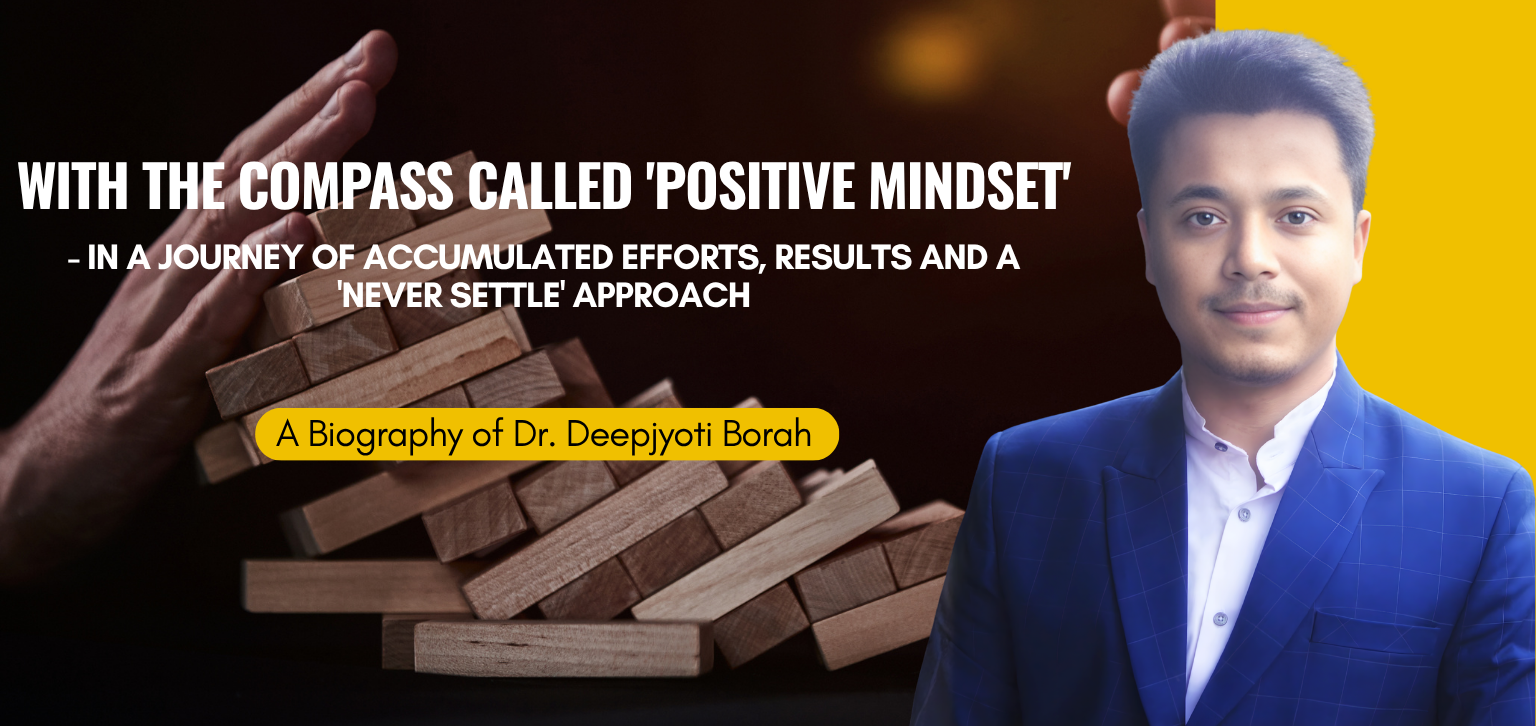
“There are no secrets to success. It is the result of preparation, hard work, and learning from failure.”
Dedication
From Dr. Deepjyoti Borah
First of all, I would like to thank Nishi Garg for gracefully writing my biography, which beautifully captures the essence, shades, and aspects of my life so far. As I read through its phases, I can vividly recall the learnings of my past years and the memories my life holds. This biography is truly a summarized version of my journey, reflecting the spirit of the title assigned to it. Thank you once again.
My biography is lovingly dedicated to my grandfather, whose healing hands and unwavering faith shaped my earliest understanding of service and courage. Your quiet strength and hope guided me through every result day and milestone thereafter. This work is a humble tribute to the dreams you held for me and the love that stood waiting at the school gate.
To my grandmother, whose devotion to teaching and community life showed me that learning must lead to action. Your care turned knowledge into responsibility and made service feel as natural as breathing.
To my parents, my first teachers of discipline, humility, and compassion — your steady example taught me to value education, honor people, and do the right thing even when no one is watching. Every lesson you lived became a compass for my journey and a promise to carry forward.
To my father, whose artistic and creative spirit filled our home with craft and purpose — you taught me that creativity is work done with love, that patience can shape beauty, and that a steady hand can build what the heart imagines.
To my mother, whose kindness and strength lit the way through every challenge — your faith quieted fear and turned effort into confidence. The calm I carry began with you.
To my beloved wife, whose partnership, wisdom, and grace steady me through trials and triumphs — you are the quiet courage beside me, the voice that reminds me to choose integrity, and the heart that makes every success meaningful.
To my sister, a constant companion whose support has been a source of comfort and joy — your belief strengthened my resolve and made every step forward lighter and brighter.
To my extended family, whose affection and guidance have been both shelter and springboard — your encouragement and honest counsel have kept me grounded and grateful.
“Success usually comes to those who are too busy to be looking for it.”
Phase 1: Memories of Humble roots
Dr. Deepjyoti Borah entered the world as a six and a half months premature child, a tiny life carried forward by quiet faith and careful hands that never left his side. He landed in a cultured and respected family, in a culturally rich village of Jorhat district of Assam, which is also the land known for many famous personalities from this state. His family was small in its core and large in its embrace, with father, mother, and a sister two years younger growing up within a joint family where grandparents and two uncles shared one premise. The setting was not merely a household but a living classroom in harmony, where daily rhythms taught how people stay together, share burdens, and pass on customs that make a child feel rooted. The nearness of many elders made safety feel like a circle, and each face in that circle had a lesson that would slowly become character.
From the first memories, education felt like a value rather than a demand. His grandmother worked as a schoolteacher and later added social work and local level administration to her path, turning duty into action and action into habit. His grandfather stood alone in the village as the medical professional a radiologist who lifted himself from poverty and used skill to relieve pain in others. Their stories were often told at home without pride and without drama just as proof that a life can start small and still carry far. Those stories found a place within him early and stayed.
Another presence in the home held a special place in these beginnings. A young woman, deaf and dumb, who had been abandoned elsewhere, was adopted by his grandfather and raised as family. She was fondly known as “Akori Jethai”, a gentle soul who became his first caretaker and an inseparable companion through his early years. This was an important part of his life. From the initial days of crawling to standing on his own feet, and through the playful, worry-free days of childhood, this lady remained beside him like a shadow. She embodied a human bond that needed no words — only gestures filled with warmth, understanding, and affection. Her silence never created distance; rather, it deepened a connection built on unspoken empathy.
The care he received was not institutional but profoundly human — woven with patience, warmth, and the belief that even the smallest child can grow into purpose when surrounded by steady love that does not require a voice. This atmosphere turned vulnerability into strength and made gratitude a daily practice long before he even knew the meaning of the word. Growing up with Akori Jethai taught him that empathy is not something learned — it is something lived. It was through her quiet strength and nurturing presence that he developed a deep sense of compassion, love, care, emotion, and determination — values that would later become the foundation of his character and the guiding force of his life.
The village where he grew up felt semi urban in its connections and purely rural in its textures. He learned the pace of days where neighbors were not strangers and where visits often began with concern and ended with relief. On weekends he would move beside his elders like a quiet shadow, watching the work of service unfold. If someone arrived distressed and unsure where to go for checkups, his grandfather would help right there at home with what he could offer. A free injection could mean comfort, and comfort could mean hope. The child watching learned that help is not a plan on paper but a choice in a moment. He learned that skill matters, but presence matters first.
“Opportunities don’t happen. You create them.”
Phase 2 : Rising with steady courage
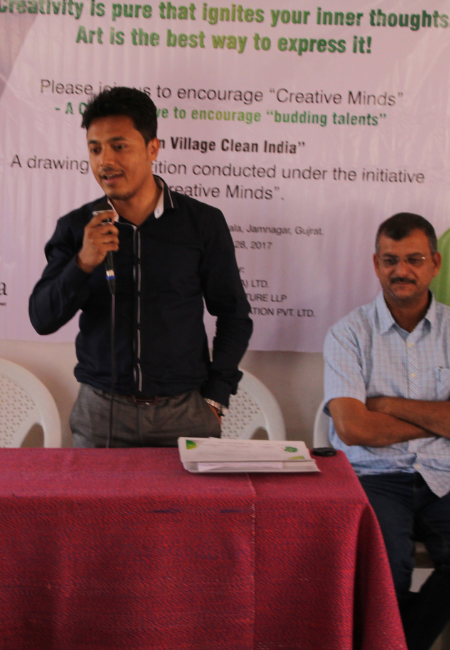
Dr. Deepjyoti Borah grew in a home where making things by hand was normal and where ideas could take shape on a table, on a wall, or on a sheet of paper at a moment’s notice. He watched his father transform bamboo into useful beauty that felt both sturdy and graceful, similarly various forms of arts & crafts using waste materials such as waste paper, metals, clothes etc. He was intrigued by the engineering scales and other gadgets that his father often worked with, he was highly motivated in crafting things and expressing his creativity through drawing and sketching since his early childhood. That atmosphere of nurturing creativity, building and shaping gave him an early sense that creativity is not a rare gift but a daily practice.
He began to carry a small pouch of watercolors, shaded pencils, and crayons, ready to sketch whenever a landscape or a scene pulled at his attention. In markets, fields, or quiet corners during family outings, he would sit and translate what he saw into strokes and lines. The first lesson of these hours was patience. The second was presence. He learned that attention is the way a picture finds its form.
School events became a natural extension of this habit. If there was an opportunity to participate, he stepped in without hesitation. Painting, drawing, and any creative contest felt like invitations to learn in public. Sometimes the room was noisy and sometimes it was hushed, but he found a focus that blocked out distraction. Recognition followed, and with it a growing reputation as a child who could be counted on to enter and deliver. At one point he earned a certificate in a national painting competition where he represented his school at state level, which felt like a quiet confirmation that his hours of practice were turning into something others could see. Still, he kept returning to the work itself rather than the applause around it. He noticed that the joy did not come from a certificate. It came from the moment when a picture started to look alive. And interestingly and coincidently his subject of that drawing competition was “Environmental Pollution”; which he fondly recalls today as his professional life addresses this as one of the core subjects of his working.
“The secret of success is to do the common thing uncommonly well.”
Phase 3 : Crossing barriers and lifting results
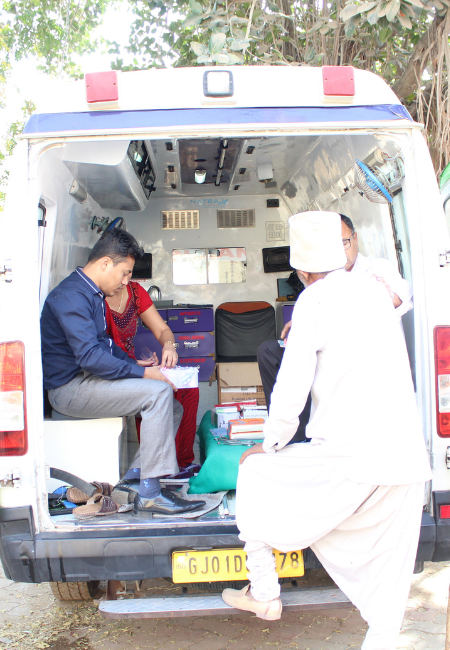
Dr. Deepjyoti Borah stepped into his middle school years with a resolve that felt new in its clarity. The playful courage he had built in art rooms and on playgrounds began to migrate into his study table, and from Class VI onward his approach to learning changed from occasional bursts to steady, repeatable practice. He learned to break long lessons into short segments and to close each one with a simple check of understanding. The change was not dramatic to the eye, but it was decisive within. Where earlier he had coasted on curiosity and participation, he now began to rely on routine. Each small cycle of reading, recalling, and revising made the next one easier, and this rhythm slowly lifted his results to the top of the class. He came to see that excellence is a craft made of quiet repetitions.
This turning point was anchored by a new respect for attention. He had already learned in drawing that focus brings lines to life, and he now applied the same focus to problem sets. He would read with a pencil in hand, marking key ideas, and then speak to them back in simple words to ensure they were truly his. Instead of waiting for inspiration, he kept appointments with his books. This habit reduced anxiety before tests because preparation was already underway long before dates were announced. The method was simple, but the discipline behind it was the real gain.
Alongside this, he practiced the art of orderly notes. Pages became clean maps rather than cluttered fields. Headings were short. Points were numbered. Examples were placed exactly where they clarified a rule or a step. This order made revision fast and made confidence natural. When peers asked how he managed to remember so much, his answer was not talent but design. He designed his study to help memory do its work, in fact he developed his own model and style of writing answer sheets that met not only the required norms of examination standards but also examples of improvised method of writing. His method was well appreciated by his teachers who had been (still are) the constant inspiration and guide in his life.
Note of Thanks
Writing the biography of Dr. Deepjyoti Borah has been a deeply meaningful and uplifting experience. It is an honor to share the journey of a life shaped by resilience, creative discipline, and a steady commitment to learning, service, and measurable impact. Heartfelt gratitude goes to Dr. Deepjyoti Borah for the trust placed in this work and for the example of consistency and integrity that shines through every chapter of his story.
This biography would be incomplete without acknowledging the strength and grace of his family. Their values created the foundation on which discipline, humility, and compassion could grow. Their steadfast support, from early childhood through demanding professional years, nurtured a spirit of responsibility and quiet excellence. The lessons received at home became guiding lights that continue to influence his choices and the outcomes he seeks for others.
Warm appreciation is extended to the mentors, colleagues, and collaborators who walked with him across projects, programs, and evolving markets. Their guidance and belief enabled new possibilities, especially during transitions that demanded courage, careful judgment, and sustained effort. Their partnership helped transform knowledge into systems, and systems into results that communities and organizations can trust.
Sincere thanks to the organizations and clients across regions and sectors that opened doors for meaningful work. These opportunities did more than advance a career. They created pathways for real change in sustainability, carbon mechanisms, and social impact, while building relationships rooted in accountability and shared purpose. Each engagement added clarity to what good practice looks like and how it can be repeated with confidence.
Gratitude is also due to the many individuals who shared reflections on his character, leadership, and contribution, their insights added texture and truth, reminding us that influence is measured not only in numbers and milestones, but also in trust earned quietly over time. Their voices illuminated how his methods empower others to act with clarity and to carry forward the work in their own circles.
A special word of thanks to the teachers, students, founders, and practitioners who engaged with his lectures, workshops, and mentoring. Their questions, energy, and dedication gave life to the tools and checklists offered. Their willingness to try, refine, and teach others is a testament to the multiplying power of shared learning. It is a privilege to witness how guidance turns into action and how action turns into impact.
Finally, to every reader, may this biography serve as both reflection and invitation. It celebrates a path where early care became lifelong responsibility, where creativity trained attention, and where standards protected truth. It affirms that progress grows from honest routines, that integrity is the strongest currency in complex work, and that leadership is best expressed as service. If these pages encourage renewed patience in preparation, renewed courage in transitions, and renewed commitment to measurable good, then their purpose is fulfilled.
With gratitude for every hand that helped shape this story and for every heart it may inspire, this note closes in the same spirit that guided the writing throughout. Honor the roots. Do the work. Measure what matters. Share what endures.
Thanks,
– Dr. Deepjyoti Borah