“Education is not the filling of a pail, but the lighting of a fire.”

Dedication

This biography is for every teacher who sees potential where others see limits and every student who finds strength in being curious. It is a heartfelt tribute to the many people whose lives began in small classrooms, where lessons were taught not just on blackboards but also on hearts.

Dr. Cordella Pantin’s story is, above all, a celebration of perseverance. It is about a young girl from Tobago who turned problems into opportunities and tough times into lessons. Her journey serves as a reminder that real education isn’t just about books and grades; it’s about awakening minds and helping each student see the potential they have.

This work is a loving tribute to her late husband, Mr. Fitzroy Pantin, whose constant support and shared dreams were the quiet strength that helped her reach her goals. It is also dedicated to her students, coworkers, and other teachers, whose trust, laughter, and strength have shaped her path and strengthened her belief that learning is a lifelong journey.

We hope this story inspires everyone to have their own “aha” moments, to teach with kindness, to learn with joy, and to live with purpose, just like Dr. Pantin does every day.

“The roots of education are bitter, but the fruit is sweet.”

Phase 1: Roots in Tobago: Childhood and Family Values

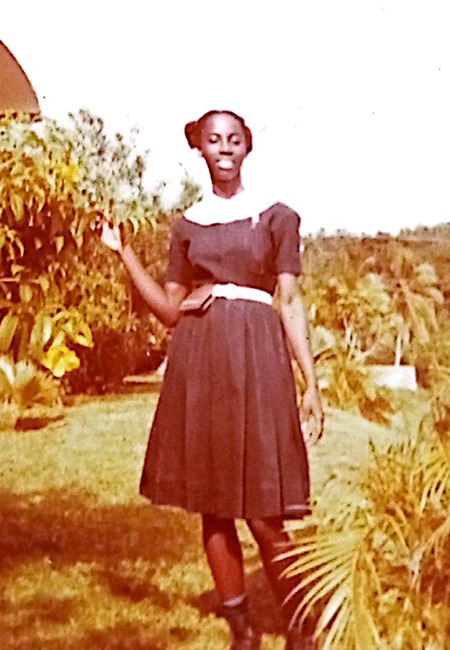
On January 14, 1966, Dr. Cordella McPherson was born at Scarborough County Hospital in Tobago, a calm place where the sound of palm trees rustling and the sea’s rhythmic murmur mix. Her parents were humble and worked laboriously. They taught her that faith and hard work were the most important things in life. Her family lived simply in the King Street, which was located in the small village of Delaford, on the eastern coast of the island. They were thrilled because they lived in a community, were spiritual, and felt like they were all responsible for each other.

Dr. Cordella’s early years in Tobago offered a variety of experiences and sights. The hills were lush and green, and the horizons were blue, but there were many people who engaged themselves in things like, sowing, baking, home-industry, fishing, etc. Despite the simplicity of these places, a solid foundation for a meaningful life was forming. The rhythms of rural life taught her how to be disciplined long before she went to school.

The Church and her home were her first classrooms. She learned by helping her mother with chores in the morning, listening to stories of faith and resilience at night, and laughing with her five siblings.

She learned to listen, watch, and change early because she was one of the youngest siblings. She was the fifth child out of six, four girls and two boys. The family revolved around her mother. She was a strong woman who ran the house while her father worked in another country to support them. Dr. Cordella learned how to be patient and strong by watching her mother handle many tasks with grace and patience. Her mother was creative and managed to do with what she had when her father’s money didn’t come on time. Not only did Dr. Cordella learn from her how to stay alive, but she also developed the ability to turn problems into lessons. Her mother always believed that it was easier to grow in tough conditions. Thus, she insisted she mastered doing all different things while living a humble life.

“I never teach my pupils; I only attempt to provide the conditions in which they can learn.”

Phase 2 : The Young Learner: Overcoming Educational Challenges

Every teacher experiences a moment when learning ceases to be challenging and begins to be an enlightening experience. That change began for Dr. Cordella Pantin at a young age, as she cultivated strength and curiosity. What seemed like a never-ending series of tests at first was actually the process of becoming a teacher who would one day change how other people learn.

Dr. Cordella knew by the late 1970s, when she started high school, that success was based on how long we could do something, not how fast. At Delaford, she became simple, humble, and strong when needed. But her new surroundings posed different kinds of problems. The academic world moved faster, had higher standards, and was much less forgiving towards people who learned in different ways.

Dr. Cordella gained one of the most important lessons of her life at Roxborough Government Secondary School: that the world doesn’t always adapt to different ways of learning. The system wanted everyone to be the same. The smartest students were the ones who could remember things perfectly, say the answers word for word, and never question what the teacher wrote on the board. This system was too rigid for a student like Cordella, whose mind works best when it is moving, seeing, and doing things.

She remembered being fascinated and overwhelmed as she sat in class and watched lines of equations or historical dates appear on the board. Her teachers were strict and smart, but they didn’t give her much room to try new things. People expected her to learn and repeat information, not question it or experience it. She felt awful about herself after the fight, not because she wasn’t smart, but because her intelligence spoke a different language.

There was a quiet determination in the long nights at home. She would light a kerosene lamp and read her lessons over and over again, the flame flickering against the pages of her old notebooks. 
“A good teacher can inspire hope, ignite imagination, and instil a love of learning.”

Phase 3 : The Educator Emerges: Teaching as a Calling

Dr. Cordella Pantin’s story as a teacher is not one of sudden brilliance but of steady light that lasts through storms and helps others find their way when their own paths get dark. Upon entering a classroom as a teacher, everything in her life began to align. In the holy act of teaching, she found meaning in every struggle she had as a child, every test she took as a student, and every prayer she said when she was unsure.

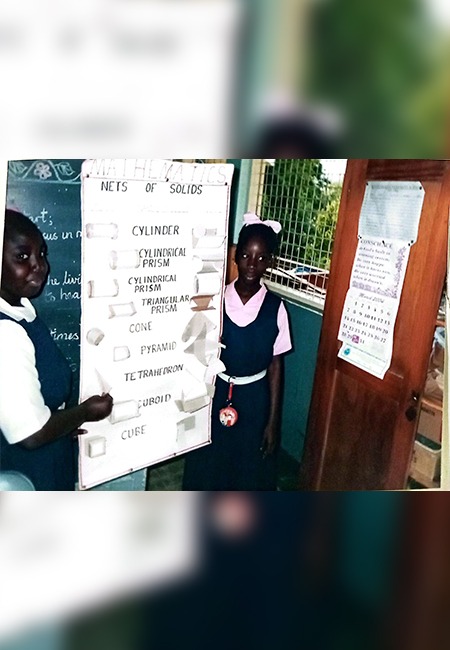
In 1990, after years of hard work in school and personal growth, she went back to the Harmon School of Seventh-day Adventists in Rockley Vale, Tobago, where she had once grown and changed. Now, she was no longer a student seeking to understand the world; she was the one entrusted with shaping young minds. She taught maths and religious education to students in Forms One through Three. She brought with her not only knowledge but also empathy, which is the rare ability to remember how it felt to learn in a different way.

She walked into the classroom she knew well, where she was now in charge of the chalkboard, and stopped for a moment. The faint smell of chalk dust and old wood brought back memories of her school days, when her mind fought with numbers and her heart longed for understanding. It was in this mix of the old and the new that she really found her identity as a teacher. She promised that none of her students would ever feel as invisible as she had.

Dr. Cordella didn’t see teaching as a job; she saw it as a chance to learn. Every student was a world waiting to be found for her. She told stories to help people understand things; played games to make math easier; and used light humour to calm them down. She thought that learning should make you joyful, not scared. Her students loved how energetic she was. She walked around the room with a purpose, encouraging them to think, try new things, and use their imaginations. She viewed arithmetic as a rhythm rather than something rigid, and she considered failure an opportunity instead of a setback.

Note of Thanks

Dr. Cordella Pantin wants to thank everyone who has been there for her on her journey through life, faith, and school. Harrington Joseph McPherson, her father, taught her practical lessons and encouraged her from a young age. For example, he taught her how to spell her name in his special way. These lessons became the basis for her discipline and determination. She will always be grateful to her mother, Gloria Roach McPherson, for her unwavering faith and her constant reminder to “keep going until you achieve it.” These words gave her strength even when things got tough.

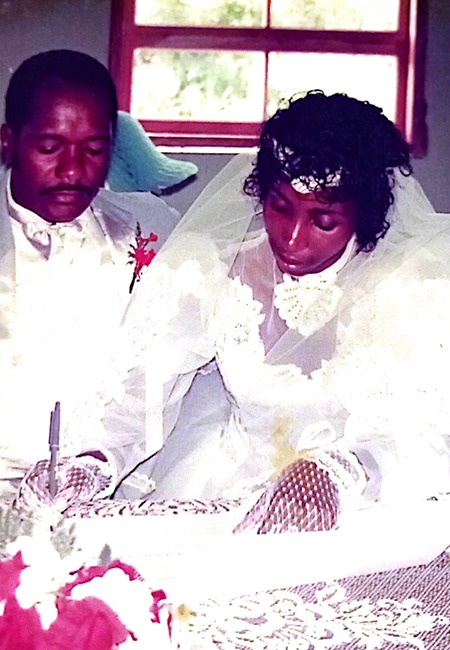
She remembers her late husband, Mr. Fitzroy Pantin, with deep love and affection. He was her rock and her constant support for thirty-eight years of love, friendship, and partnership. His faith in her abilities, his quiet wisdom, and his constant support gave her the strength to face obstacles and continue her work in education with even more enthusiasm.

She also thanks her siblings and friends, especially Emerlie, Edison, Frank, Delka, Florence, and Andre, who travelled with her and gave her support, laughter, and faith. Each one had a unique part to play in helping her get through the ups and downs of life.

Dr. Pantin gives thanks and praise to the Most High above all else. His divine guidance and grace have lit up every step of her path. None of these things would have happened without Him.

She has been humble, persistent, and blessed by God on her journey. Now that she thinks about all the people who have helped her grow, she feels thankful, inspired, and ready to keep giving back to the following generations.

Thank You
– Dr. Cordella Pantin