If there’s one message I’d offer the next generation, it’s this: learn your craft, respect its depth, and never lose your sense of connection to people, to purpose, to principles. Don’t let a screen replace a conversation. Don’t let speed replace care. And don’t let success be louder than character. Because in the end, your real value isn’t in what you built it’s in what you made possible.”
Introduction
This biography traces the professional and personal journey of Dr. Bernd Rieger, a man whose career has spanned multiple industries, countries, and decades — yet has always remained grounded in precision, integrity, and purposeful innovation.
Across more than 40 years, Dr. Bernd Rieger has built a rare profile: one that bridges the technical rigor of engineering and quality management with the soft skills of leadership, adaptability, and cross-cultural communication. His work has left a measurable impact in high-stakes environments such as the pharmaceutical, medical device, automotive, and cleanroom monitoring sectors — where quality is not a concept but a non-negotiable necessity. From the earliest days of his career assessing structural damage for insurance claims at Deutsche Bank, to leading complex regulatory and quality operations across Switzerland and Spain, his approach has always been defined by clarity of thought and consistency of standards.
Yet, this book does not only document a succession of roles or a catalogue of qualifications. It seeks to uncover the person behind the processes — the man whose decisions were often made quietly, thoughtfully, and with long-term vision. His resume reflects a wide spectrum of knowledge: Six Sigma Black Belt certification, the implementation of ISO 13485 and 17025 systems, cleanroom design, corporate restructuring, GMP training, and more. But what distinguishes Dr. Rieger is not only the depth of his expertise — it is the manner in which he has applied it, always with ethical clarity, resilience, and a forward-looking mindset.
In parallel with his professional journey, Dr. Rieger has sustained a lifelong commitment to the creative arts. For over four decades, he has actively contributed to the music industry as a sound engineer, video producer, and mentor to emerging musicians — building bridges between logic and expression. This duality of purpose, rare in today’s specialized world, adds texture and humanity to his life story.
At a time when industries are evolving rapidly, and the human element of leadership is more essential than ever, the career of Dr. Bernd Rieger serves as both a blueprint and a reflection. It is a record of what is possible when competence meets character, and when technical leadership is matched with cultural and emotional intelligence.
This biography is presented not merely as a retrospective, but as a case study in meaningful, long-term contribution. It is intended for readers who value thoughtful progression over rapid ascent, substance over visibility, and legacy over recognition.
In documenting the life and work of Dr. Bernd Rieger, we acknowledge not only his technical accomplishments, but the lasting values that have shaped them: responsibility, humility, discipline, and quiet impact.
"I was born into a world rebuilding itself from ruins—what my parents lost to war, they gave back to me as strength, resilience, and the freedom to dream."
Phase 1: Roots Beneath Rubble
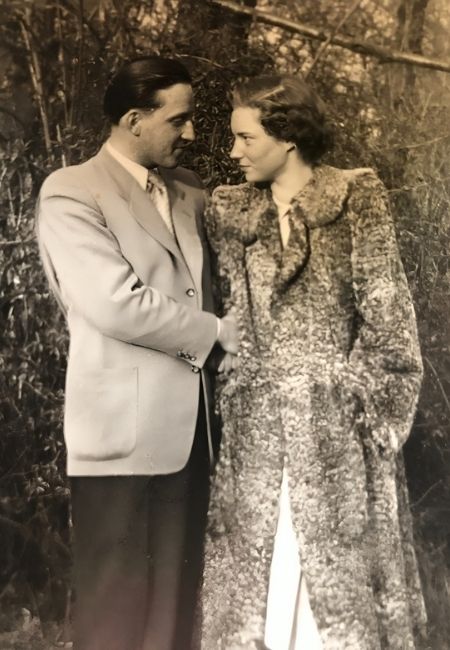
The story of Dr. Bernd Rieger begins in the heart of post-war Europe, in the city of Wuppertal, Germany, where he was born on the 1st of June, 1959. It was a time of fragile hope and quiet endurance—a Germany still trembling under the weight of its recent history. Rubble from collapsed buildings stood as mute witnesses to a devastating past. Families like his were not just rebuilding homes and cities, but rebuilding belief—in themselves, in peace, and in the promise of a different future.
His parents, Gerd Leschus and Hildegard Leschus, had both lived through the Second World War. Their youth had been consumed by sirens, scarcity, and the deep uncertainty that war brings. Gerd, his father, had been just seventeen when he was drafted into the war. Seventeen—the age when most boys are dreaming of futures, he was thrown into a world where survival eclipsed ambition. When the war ended, he returned not as a carefree young man, but as an adult shaped by loss, hardship, and necessity. The years that should have been devoted to study, exploration, and possibility had been spent instead navigating trenches and turmoil.
Yet in the years that followed, both Gerd and Hildegard did what so many survivors did—they chose to live. In 1955, they married, binding their shared experience of war into a union that would become the foundation of a new life. Just four years later, their first son, Bernd, was born (his brother Dirk in 1961). He entered a world that was still healing, still fractured, but deeply determined.
From a very early age, Dr. Bernd Rieger was surrounded not only by love but by a deep sense of resilience. His family’s home, like many others in Wuppertal, was flanked by remnants of bombed buildings. Entire neighbourhoods still carried the architectural scars of air raids. And in the streets, the uniforms of British and American soldiers were a common sight, as the Allied occupation of the region continued until 1966.
"Learning never ends—not at graduation, not with a degree. It’s the quiet discipline of growing, adapting, and using knowledge to serve something greater than yourself.”
Phase 2: The Academic Odyssey
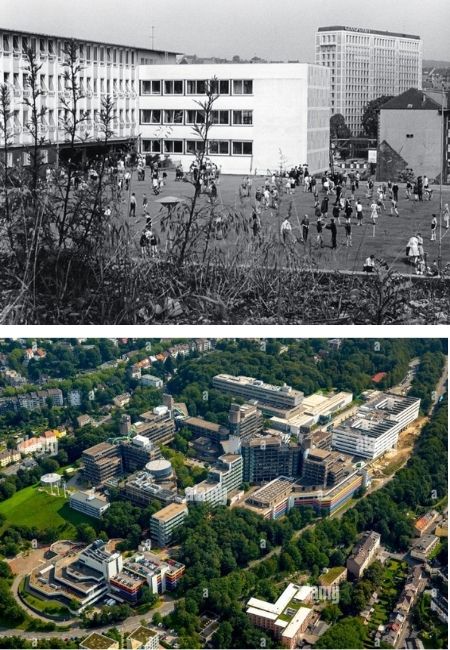
Education was never just a process for Dr. Bernd Rieger—it was a transformation. A journey that led him from the industrial neighbourhoods of Wuppertal to university halls, international innovation projects, and eventually, to boardrooms across the globe. But like many meaningful journeys, it did not begin with certainty. It began with questions, distractions, and the surprising guidance of a mentor who saw potential where others might have seen only hesitation.
Dr. Bernd Rieger began his formal education in April 1965 at a primary school in his hometown of Wuppertal, Germany. Those early years were marked by simplicity and structure. Germany, then in the throes of post-war regeneration, took education seriously—as both a civic duty and a national investment. Children were expected to participate in building a better future, and young Bernd was no exception.
In July 1969, he transitioned into a Gymnasium—a prestigious academic secondary school, considered the most rigorous track in the German education system. Unlike other forms of schooling, Gymnasium was designed to prepare students for university-level study. It was not just about knowledge—it was about developing the discipline to think critically, argue logically, and apply knowledge across disciplines.
Dr. Bernd Rieger spent ten formative years at this institution, graduating in 1979 with the Abitur, Germany’s highest school-leaving qualification. He describes those years as intense and formative, not just academically but socially and emotionally. Unlike many of his peers who chose vocational paths or early employment, Bernd had the privilege and burden of high expectations. His parents had built a life of stability after the war, and they hoped their son would step beyond the limits imposed on them by history.
"Life’s first Phases aren’t always written with clarity—but they often hold the raw truth that shapes everything that comes after."
Phase 3: The Unconventional Beginning
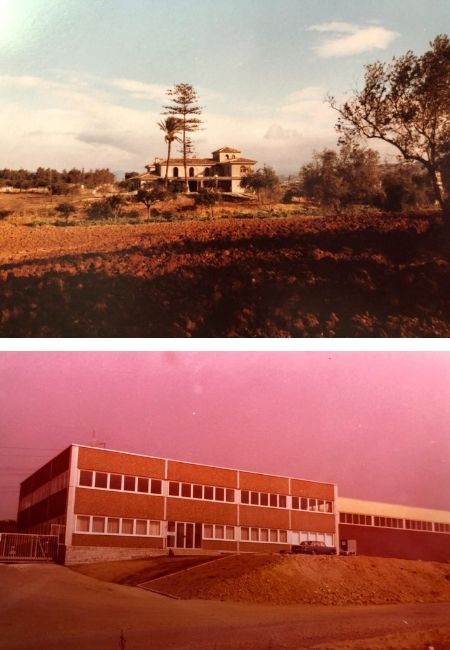
When most young engineers imagine the start of their careers, they envision laboratories, drafting tables, or assembly lines. But for Dr. Bernd Rieger, his first professional Phase unfolded far above the ground— in a helicopter, circling disaster zones.
Fresh out of university, having chosen a path paved more with equations and technical drawings than crisis response, Dr. Bernd Rieger began his career not in a factory or a design office, but at Deutsche Bank’s insurance arm, Deutscher Herold, in Germany. It was an unconventional setting for an engineer, but it introduced him to the crucial intersection of technical acumen and real-world urgency.
At that time, the bank wasn’t just handling financial portfolios—it also carried responsibility for large-scale insurance assessments. Whenever a natural catastrophe or an industrial accident occurred—a raging storm, a widespread fire, or a collision involving fleets—authorities needed quick, reliable damage evaluations. Not in weeks. Not even in days. But within hours.
And so, Dr. Bernd Rieger became part of a highly specialized team of 3 to 5 experts, dispatched by helicopter to disaster sites. His job was to rapidly assess and estimate the financial damage on-site so the police and insurance companies could inform the public and initiate emergency actions. Imagine a collapsed office block, a burned-out auto yard, or a flooded town—each requiring immediate calculations of millions in potential losses. His estimates, sometimes done under tremendous pressure and with minimal data, would become the benchmark for insurance coverage and public communication. In this high-stakes environment, Dr. Bernd Rieger honed a rare skill: the ability to combine speed with precision, under pressure, while maintaining a broad perspective on risk and value. These early experiences would influence his entire career, instilling in him a problem-solving mindset deeply rooted in real-world consequences.
Note of Thanks
If a life could be summarized by lines on a résumé, then books would not need to be written. But lives like that of Dr. Bernd Rieger resist summaries. They demand reflection. They deserve contemplation. Because beneath the achievements, behind the roles and projects, beyond even the music and the memories, lies something quieter — the slow, steady shaping of a man who never stopped growing.
And now, looking back at it all — not as a career, not as a chronology, but as a life — there is room to ask: What was it all for?
The answer is as unpretentious as the man himself: to be useful, to be kind, to leave things better than he found them.
There’s a certain kind of clarity that only comes after sixty years of living with eyes open. Dr. Bernd Rieger has seen the world change — not once, but many times. He grew up in a Germany still healing from war, where progress was something, you earned, not expected. He entered adulthood in a world without smartphones, without the internet, where connection was analogue, and trust was built slowly — over handshakes, long conversations, and showing up when it mattered. And now, in an age of automation and instant everything, he has not become bitter — only more certain of what truly matters.
His message is not complicated. Speak to each other. Look up from your screens. Touch life with your hands. Remember the past. Respect the quiet. Create something — even if no one applauds.
It’s easy to miss the soul of a person like Dr. Bernd Rieger if all you do is read his biography. You’ll find terms like “cleanroom validation,” “ISO compliance,” “automated quality systems” — and you might think he lived in a world of structure, rules, and systems. And yes, he did. But he didn’t serve those systems. He used them. He shaped them with conscience. Because he knew that behind every syringe, every safety protocol, every laboratory standard, there was a person. A patient. A family. A life. And that meant something.
What defined his professional world wasn’t perfection. It was responsibility.
And in parallel, he lived a second life — just as vital, just as committed. The studio. The music. The photographs. The friendships. The concerts. The weddings. The laughter. That part wasn’t formalized in annual reports or industry reviews. But it is where much of his soul resides. And perhaps, in some ways, it’s where his legacy will echo loudest.
Because a thousand bands passed through his doors. A thousand concerts bore his imprint. Hundreds of music videos, photographs, and moments — all touched, quietly, by his patience, his ear, his presence. There are artists today who remember the man behind the mixer more than their own performance.
Because he believed in them before they knew how to believe in themselves.
What’s rare about Dr. Bernd Rieger is not that he succeeded in two parallel careers. It’s that he lived both with the same integrity, the same curiosity, the same care. Whether he was leading an audit for a pharmaceutical company or recording a teenage garage band, the principle was the same: do your best, listen deeply, and honor the people in front of you.
He doesn’t chase the spotlight. He never did. His story was never about fame or titles. It was about being present, being prepared, and being real — in every room he entered, in every project he touched, in every person he worked with.
Thanks
Dr. Bernd Rieger