"Progress is not always defined by the resources one possesses, but by the resolve one carries, the patience one practices, and the belief one refuses to surrender."
Introduction
The story of Dr. Atul Verma unfolds as a deeply human narrative shaped by perseverance, self-discovery, and steady determination. Born on 5th November 1981 in Nawanshahr, Punjab, his early life was rooted in simplicity, modest means, and an environment far removed from the conveniences that later generations would consider ordinary. His upbringing, guided by his father, Darshan Kumar Verma, and mother, Usha Rani, took place during a period when technology was largely absent and access to academic resources was limited. Yet, within these constraints emerged the seeds of resilience that would quietly define his character.
Growing up in a small town meant navigating a world where opportunities were not always visible and guidance was not always available. Educational resources were scarce, exposure to career pathways was minimal, and even access to books required effort and patience. However, it was within this very landscape of limitations that determination began to take form. Early encounters with competitive examinations and engineering aspirations sparked an enduring curiosity about building a future through technical education. What began as a distant idea gradually matured into a personal mission, despite uncertainties and structural challenges.
Academic life presented its own share of obstacles. The decision to pursue the non-medical stream during his 10+2 education brought him face to face with demanding subjects such as Physics and Chemistry, areas where initial struggles were both real and discouraging. Yet, amid these difficulties, one subject emerged as a powerful source of confidence: Mathematics. Time and again, his performance in mathematics reflected clarity, discipline, and exceptional precision, with repeated instances of achieving 100% marks. This consistent excellence did more than enhance academic results; it cultivated self-belief and provided a stable anchor during periods of uncertainty.
Securing admission to the Dr. B. R. Ambedkar National Institute of Technology, Jalandhar, formerly Regional Engineering College, marked a defining milestone. This achievement represented more than entry into a prestigious institution; it symbolized persistence rewarded after navigating limited exposure and scarce preparatory support. Yet, this transition also introduced new challenges, particularly financial constraints and the realities of adjusting to a competitive academic environment. Rather than retreating, these pressures encouraged practical adaptation, shaping a mindset grounded in responsibility and self-reliance.
One of the most distinctive aspects of Dr. Atul Verma’s journey is the early emergence of professional initiative. At an age when many remain dependent on structured systems, he began earning independently. His interaction with a Coca-Cola agency revealed both opportunity and capability, as he applied his strong command of Microsoft Excel to design an automated business template addressing operational inefficiencies.
“In a small town, even simple things train you to value what matters and to waste nothing.”
Phase 1: Nawanshahr—Scarcity, Simplicity, and Early Adaptability
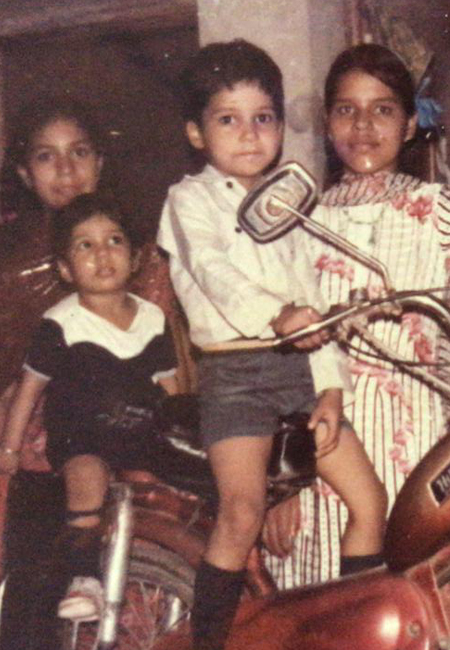
The story of Mr. Atul Verma begins in the quiet town of Nawanshahr in Punjab, where he was born on 5 November 1981. During those years, life moved at a rhythm that was slower and more grounded than what many experience today. Nawanshahr was not a place defined by rapid change or endless distractions. Instead, it was a town where routines were simple, communities were close-knit, and people lived with an understanding that resources were limited but relationships were strong. The environment did not encourage excess or haste. Rather, it quietly taught individuals to value what they had and to find meaning in ordinary moments.
There was no internet to provide instant information and no smartphone to fill every moment with activity. Entertainment and curiosity were satisfied through conversations, observation, and simple experiences. When questions arose, they were answered through patience and exploration rather than quick digital searches.
One of the memories that captures the essence of that childhood is remarkably simple yet meaningful. A vendor would occasionally sell a small spicy red chili for fifty paise. It was not an extravagant purchase, nor was it considered a luxury in the conventional sense. Yet, for a child, even such a small item carried a sense of joy and excitement. That moment reflected a broader lesson about scarcity and appreciation. When resources are limited, even modest pleasures hold value. You begin to understand the difference between what is truly needed and what is merely desired.
Such experiences quietly shaped an important habit that later became visible in professional life. Learning to respect resources at a young age creates discipline in decision-making. It encourages careful thinking about time, effort, and money. Rather than taking things for granted, one begins to understand their value. For Mr. Atul Verma, these early lessons from a small-town environment laid the foundation for a mindset that respected efficiency and avoided unnecessary waste.
“Mathematics did not just improve marks; it trained a way of thinking, step by step, error by error.”
Phase 2 : Mathematics—The Discipline of Repetition
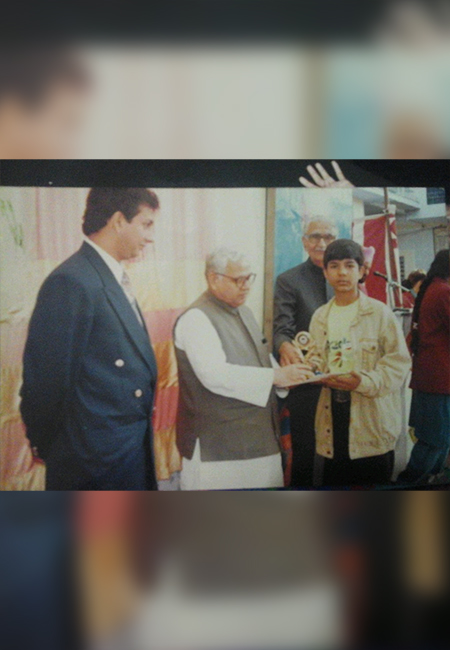
As Mr. Atul Verma continued his schooling in Nawanshahr, certain subjects began shaping the way he approached learning. Among them, mathematics stood out not just as a subject, but as a discipline that influenced how he thought, practiced, and improved. For many students, mathematics is often seen as something that depends on natural ability. Some believe a person either understands numbers easily or struggles with them. His experience, however, was different. It was never about effortless brilliance. It was about consistency and repeated practice.
During those school years, mathematics gradually became a daily exercise in discipline. Solving a problem once was rarely enough. The same type of problem would be solved again, checked carefully, and solved once more to confirm accuracy. If an error appeared, it was corrected, and the process began again. This cycle of repetition was not dramatic, but it was meaningful. Through that quiet, steady work, a valuable habit was taking shape.
Practice built familiarity, familiarity built confidence, and confidence slowly became reliability. Mathematics trained the mind to stay patient even when answers did not come quickly. Instead of rushing toward guesses, the focus remained on method and structure. Accuracy became more important than speed. The satisfaction of solving a problem came not from finishing fast, but from knowing that each step had been checked and verified.
Such habits often seem ordinary during school, yet they quietly strengthen the mind’s ability to stay focused and systematic. In many ways, this process resembles the thinking later required in professional life, where errors must be minimized and results must be dependable. The early seeds of that mindset were planted through regular mathematics practice.
Mathematics also encouraged structured thinking. A difficult question might first appear confusing, but once it was divided into smaller steps, the path to the solution became clearer. Each step led logically to the next.
“Sometimes you choose a platform, not a fantasy.”
Phase 3 : REC/NIT Jalandhar—Choosing Stability and a Platform
The period of engineering counseling marked an important turning point in the academic journey of Mr. Atul Verma. After years of preparation, discipline, and persistence, the entrance examination had finally opened the path to engineering education. The next step, however, was equally significant. Choosing the right institution was not only about prestige or excitement; it was about long-term direction. For a student coming from a small-town background with limited resources, practicality mattered more than idealized expectations.
During the counseling process, he chose Regional Engineering College (REC) Jalandhar, now known as Dr. B. R. Ambedkar National Institute of Technology (NIT) Jalandhar. This was not an emotional or impulsive choice. It was based on a careful assessment of stability and opportunity. At that time, REC Jalandhar was recognized as a strong technical institution with a dependable placement record and a disciplined academic environment. For a young student focused on building a secure professional future, these factors carried greater value than romantic notions about college life.
This choice also reflected a mindset that would later influence many of his professional decisions. Education was not seen merely as the pursuit of a degree, but as a platform that could create meaningful outcomes. A strong institution could offer exposure, discipline, and career opportunities that would support long-term growth. By choosing REC Jalandhar, Mr. Atul Verma was selecting a system where effort had a fair chance of turning into results.
The campus environment marked a major transition from the familiar life of Nawanshahr. The institution brought together students from diverse backgrounds, each carrying different ambitions and academic strengths. Like many young students entering engineering college, he stepped into an atmosphere filled with both excitement and uncertainty. The shift from school to a demanding technical environment required quick adjustment. New subjects, challenging coursework, and a competitive culture began shaping both academic and personal growth.
Note of Thanks
The journey of Dr. Atul Verma, as reflected throughout this biography, is deeply interwoven with the presence, encouragement, and support of individuals whose roles extend far beyond simple association. This note stands as a sincere acknowledgement of those enduring influences that quietly strengthened his path, shaped his decisions, and sustained his determination across various stages of life.
At the heart of this gratitude lies Sheena Bansal, whose unwavering belief, perspective, and encouragement have remained a defining source of strength. Her role within his journey represents more than companionship; it embodies partnership, clarity, and resilience. Through moments of uncertainty, professional transitions, and aspirations for growth, her steadfast support provided both confidence and direction. The stability, motivation, and shared vision that characterize their journey together remain among the most meaningful pillars of his progress.
Equally significant is the presence of their daughter, Bhavisha, whose life symbolizes inspiration, purpose, and the evolving promise of future generations. Her growth and opportunities reflect the enduring value of perseverance, discipline, and thoughtful effort, principles deeply rooted within the family’s shared experiences.
With deep respect, Dr. Atul Verma also acknowledges his parents, Darshan Kumar Verma and Usha Rani, whose early support, sacrifices, and commitment to education laid the essential foundations of his life. Their guidance, offered within the realities of their time, provided stability and the enduring encouragement necessary to pursue learning and progress.
This biography therefore stands not only as a narrative of individual effort but also as a reflection of the collective encouragement, belief, and support that shaped the journey of Dr. Atul Verma.
Thanks,
– Dr. Atul Verma