“I didn’t choose technology. In many ways, it chose me. What I chose—was to never let go once it did.”
Introduction
In the heart of Region Four, Guyana, nestled between quiet streets and close-knit communities, a young boy named Ashton Sooklall was unknowingly beginning a journey that would transform the digital landscape of his nation. Raised in the small village of Good Hope, where neighbors knew one another by name and looked after each other’s children, Ashton’s upbringing was rooted in humility, respect, and the power of connection—values that would later mirror the very networks he would build.
The son of Ronald and Sandra Sooklall, Ashton was not born into privilege, but into purpose. His father, a skilled welder and devoted fisherman, and his mother, a gentle yet determined woman committed to education, taught him early that character builds more than any career ever could. Alongside his three sisters—Ramona, Melissa, and Fiona—and a brother, Ashton’s childhood was filled with laughter, discipline, and shared responsibility, setting the emotional foundation for a life of relentless learning and service.
His early schooling, though typical by academic standards, was significant for one crucial reason—it planted the seed of curiosity. But it wasn’t until a seemingly ordinary event in 2008 that his destiny took shape. Ramona, his elder sister, enrolled both of them in an IT course at Computer World. It was a decision Ashton didn’t even know was being made for him. And yet, it became the pivotal moment that would shape the rest of his life.
He completed the course, but unlike many who take it as a skill, Ashton took it as a mission. With no prior exposure to computers or coding, he dove headfirst into the world of circuits and systems. What began as a simple class soon became a lifelong commitment to technology, problem-solving, and national digital advancement.
From repairing computers for local councils to configuring servers for multinational oil companies, Ashton’s rise was rapid, but never reckless. His early professional years were spent as an industrial electrician at Guyana Sugar Corporation, where he learned to fix PLC software machines originally maintained by foreign engineers. Instead of waiting for help from overseas, he studied the system, shadowed the experts, took notes, and taught himself. By the time the factory closed, Ashton had already outgrown its confines.
Over the years, Ashton worked with institutions like the Regional Democratic Council, The Guyana Oil Company, and Teleperformance, gaining expertise in network engineering, cybersecurity, database management, and infrastructure design. He didn’t just troubleshoot networks—he rebuilt them, secured them, scaled them, and trained others to do the same. With each role, he added a new layer to his skill set, and more importantly, a new way to serve his country.
In 2021, Ashton joined Muneshwers Limited, and within a year, became its IT Manager, overseeing a 10-person team and more than 1,500 devices. His leadership went beyond job descriptions—he implemented cybersecurity awareness programs, introduced automated systems, and mentored young professionals, all while juggling his responsibilities as a husband, father, consultant, and small business owner.
“You don’t need a city skyline to dream big. Sometimes, all it takes is a village, a father’s hands, and a mother’s hope.”
Phase 1: Humble Roots on the East Coast – A Childhood of Unity and Discovery
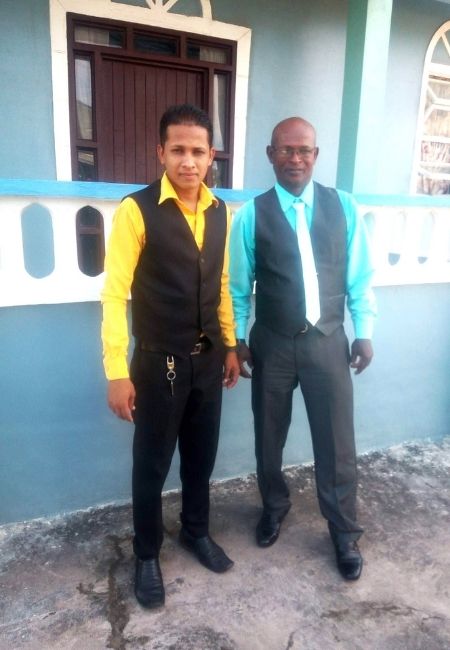
On the East Coast of Guyana, tucked within Region Four, lies the village of Good Hope, a place where the air carries more than ocean breeze—it carries tradition, respect, and a sense of belonging. It was here, among close-knit neighbors, modest homes, and unspoken rules of community care, that Ashton Sooklall’s story began.
He was born into a home that radiated structure and warmth. His father, Ronald Sooklall, was a welder by profession and a fisherman by passion. His mother, Sandra Sooklall, brought equal strength to the household—not through physical labor, but through her relentless commitment to educating and nurturing her children. In Ashton’s words, “My mom didn’t just take us to school. She walked us into the future.”
Ashton was one of five siblings—three sisters and one brother—and together, they formed a unit of camaraderie, competition, and shared ambition. They attended the same nursery and primary schools, walked the same dusty roads, and shared the same classroom benches. These early years, though modest, were foundational in shaping Ashton’s outlook on life.
Life in Good Hope wasn’t about material abundance. It was about the richness of human connection. Everyone in the village knew each other. It wasn’t uncommon for elders to discipline someone else’s child, or for a neighbor to share a warm meal when times were tough. In this environment, Ashton absorbed the importance of accountability, humility, and community trust—principles that would echo throughout his professional journey decades later.
“In our village, you couldn’t hide. Everyone knew your name. So, you learned to live with integrity—not for recognition, but because it was expected.”
“They called in experts from across the world. I watched, listened, and became one myself.”
Phase 2: Sparks of Innovation – From Welding Factories to PLC Mastery
In every life, there is a moment where observation becomes transformation—where watching becomes doing. For Dr. Ashton Sooklall, this moment arrived during his years at the Guyana Sugar Corporation, where at just 17 years old, he stood amidst towering machinery, humming PLC systems, and the legacy of British industrial engineering. It wasn’t just a job—it was a gateway to mastery.
He began as an industrial electrician, an entry-level role that was both demanding and highly technical. It involved managing large-scale mechanical systems in one of Guyana’s prominent sugar factories—Leonora and Enmore (LBI). The equipment operated through Programmable Logic Controllers (PLC)—intricate computer systems that automated processes. When these failed, the company would halt operations and fly in British specialists to conduct repairs. This was both costly and time-consuming.
But Ashton was not content with watching passively. While others waited for help, he studied the process. He observed each diagnostic step, listened during troubleshooting, and took extensive notes. On two occasions, he accompanied the foreign engineers, asking questions, connecting concepts, and quietly building a map of how these systems functioned.
“I didn’t have a degree in automation. But I had something far more powerful—urgency and the will to solve problems others ran from.”
Over time, Ashton began applying what he learned. When a PLC failed and the usual solution was to wait for international aid, Ashton stepped in. Tentatively at first—crosschecking manuals, reviewing his notes, relying on instinct—but then with confidence. His fixes worked. The machines ran. The factory saved time and money. And for the first time, Ashton felt what it meant to be indispensable.
“I didn’t plan to become an IT expert. My sister did—for both of us. Sometimes, destiny begins with someone else’s belief.”
Phase 3: An Accidental Beginning – The IT Journey Ignited by a Sister’s Vision
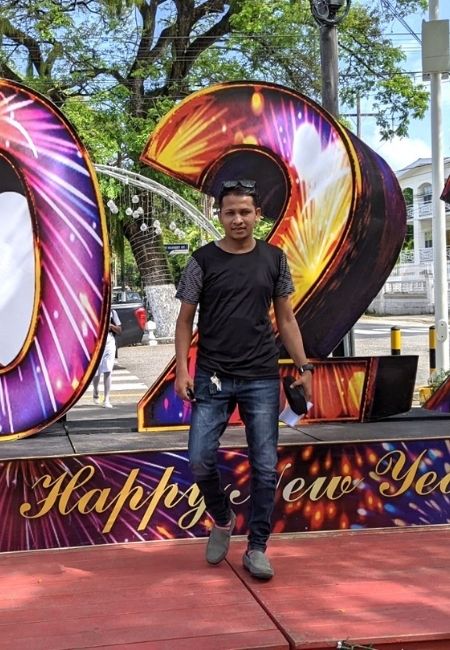
After the sudden closure of the sugar factory where he had spent five formative years, Dr. Ashton Sooklall found himself standing at a professional crossroads. He was a skilled industrial electrician with an emerging interest in automation, but without a clear path forward. The job market was uncertain. The systems he had mastered were now obsolete. And just when the future seemed unclear, a single phone call redirected his entire life.
It was from his sister, Ramona.
“I’ve seen an IT course at Computer World,” she said. “I’ve already signed us both up.”
She hadn’t asked for his opinion. She hadn’t waited for permission. She just acted on intuition—a powerful act of familial foresight that would alter Ashton’s entire career and identity.
“I went along—not out of ambition, but out of respect. But what I discovered in that classroom gave me something no job ever had before: direction.”
The course began in 2008. Ashton entered the classroom with no experience in computers, no formal training in software, and only a vague understanding of what “IT” truly meant. But what he lacked in familiarity, he made up for in instinct. His foundation in electronics and machinery had sharpened his logic, and he quickly began drawing connections between hardware, software, and networks. The computer no longer seemed like a foreign object—it became a playground of possibilities.
As his sister slowly distanced herself from the field, Ashton leaned in deeper. He devoured modules on operating systems, network fundamentals, and technical support. What began as exploration quickly evolved into mastery. And by the time the course ended, he wasn’t just technically certified—he had a new identity.
Note of Thanks
As this biography brings my journey into words, it is only right to pause and extend deep, sincere, and enduring thanks to the many individuals who have shaped, supported, and inspired me across each chapter of my life.
First, to my parents, Ronald and Sandra Sooklall—you are the reason I have never felt the need to chase titles to feel worthy. From my father’s honest labor as a welder and fisherman, to my mother’s unwavering commitment to our education, you gave me more than lessons—you gave me values. Thank you for raising me in a home where humility walked hand-in-hand with strength.
To my sisters—Ramona, Melissa, and Fiona—you’ve each played unique and irreplaceable roles in my development. To Ramona, your decision to enroll us in that 2008 IT course was more than an academic step—it was the spark that ignited a lifelong purpose. To Melissa and Fiona, thank you for being grounding forces during the uncertain phases of my growth. Your quiet strength helped me stay centered.
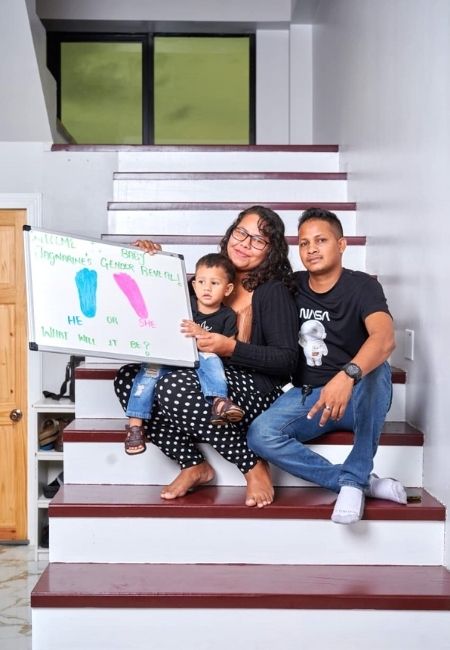
To my wife, Mignotte Sooklall, the anchor of my heart and the steady hand behind every long night and every hard decision—thank you for your patience, your partnership, and your belief in my path, even when the hours were long and the future unclear. You’ve made our home a sanctuary and our marriage a mirror of everything I stand for.
To my children—Kayla, Kaelyn, and Ethan—you are the heartbeat of everything I do. I work hard not just so you can dream big, but so you can see what dedication looks like up closely. Watching you troubleshoot your own gadgets, ask curious questions, and try before you seek help has shown me that the values I carry are already passing on. Thank you for making me a proud father.
To my friend Khemraj Persaud, thank you for walking beside me in both growth and doubt. You’ve reminded me that friendship can be mentorship, and that encouragement shared at the right time can alter the course of a career.
To every team member I’ve mentored, to every student I’ve spoken to, and to every professional who allowed me to guide or be guided—thank you. I am not a self-made man. I am a community-built man. And each of you has contributed to the scaffolding of my success.
To Muneshwers Limited, thank you for trusting me with your digital future. To all my past employers, collaborators, and consulting clients, thank you for believing that a young man from a small village could hold the keys to big solutions. Each opportunity you gave me became a page in this story.
To the people of Guyana, especially the youth who dream in silence because no one has told them they can—this biography is for you. May my journey remind you that your village does not limit you, your background does not define you, and your hunger to grow is your greatest asset.
And finally, to the team behind this biography—thank you for holding space for my story. For asking the right questions, for listening deeply, and for treating my journey with the dignity it deserves “No one rises alone. I am where I am because of grace, guidance, and grit. And my only hope is to now give that back—to my country, my community, and the next child waiting for someone to believe in them.”
Thanks
Dr. Ashton Sooklall