“The true essence of leadership is not just in what you accomplish for yourself, but in the lives you touch and the impact you make.”
Introduction
Dr. Amitabh Kumar, born on May 20, 1968, in Lucknow, has spent his life embodying the principles of dedication, integrity, and public service. His journey is not just about professional success, but also about his deep-rooted desire to serve others and make a positive impact on society.
Raised in Lucknow, Dr. Kumar was deeply influenced by his father, Shyam Narayan Ram, who taught him the importance of hard work and honesty. His mother, Kawal Pati Devi, exhibited incredible strength and resilience, especially when faced with personal hardships. Her influence played a pivotal role in shaping his values of perseverance and service. These values became the foundation of his personal and professional journey.
Dr. Kumar’s academic journey began in Lucknow, where he excelled in his studies and earned the Government of India Merit Scholarship. This prestigious award allowed him to attend one of India’s leading schools in Nainital, Birla Vidya Mandir, where he excelled in academics and developed an affinity for sports, particularly boxing and gymnastics. These activities fostered the discipline and focus that became integral to his character.
Upon completing his education at Birla Vidya Mandir, Dr. Kumar pursued his degree in Sociology at the University of Lucknow. During this period, he became actively involved in student politics and contested the election for the post of Vice President, reflecting his early inclination toward leadership and representative responsibility. His education wasn’t merely academic but was also a training ground for his future role as a leader and public servant.
In 1996, Dr. Kumar joined Indian Railways. Major anniversaries marked his journey within the organization. He initially focused on the promotion of Rajbhasha Hindi, believing that language could be a tool for greater communication and unity within the vast organization. His work in language advocacy earned him several accolades, including the Hindi Pakhwada Award and the Railway Board Hindi Dictation Award. However, Dr. Kumar’s contributions were not just confined to his linguistic work. He quickly proved himself in operational leadership, taking on roles that had a significant impact on both railway operations and the lives of passengers. His innovative approach helped streamline operations and improve the overall efficiency of the services, benefiting thousands of daily commuters.
In early 2014, Dr. Kumar’s career trajectory within Indian Railways continued to evolve, ultimately leading to his appointment as the Divisional Commercial Manager in Lucknow. It was in this role that he gained widespread recognition for his leadership skills, ability to manage large teams, and his commitment to community welfare. He implemented various customer service initiatives and introduced strategic operational improvements that benefitted both the railway staff and the general public. One of his most notable contributions was his efforts to create a better work environment for railway employees while simultaneously improving the service quality for passengers. He served as the Senior Divisional Operations Manager in Firozpur, Punjab, and Lucknow from 2018 to 2024.
“Early life does not merely shape direction; it quietly constructs the strength required to sustain purpose when circumstances grow demanding.”
Phase 1: The Early Roots of Resilience and Purpose
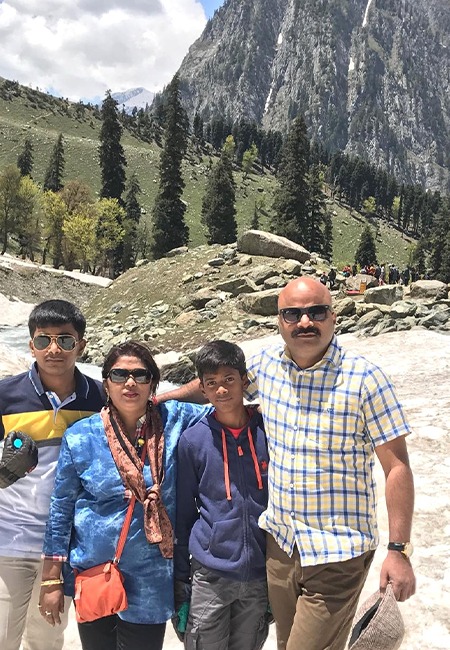
Dr. Amitabh Kumar’s life journey traces its origins to Lucknow, the city where he was born on May 20, 1968. His childhood unfolded within a family environment defined by discipline, ethical clarity, and quiet determination. These early surroundings did not merely provide stability; they became the foundation upon which his character, values, and worldview gradually took shape. The atmosphere of his upbringing nurtured a mindset where responsibility, sincerity, and personal conduct carried enduring significance.
A central influence during these formative years was his father, Shyam Narayan Ram. His presence represented more than parental guidance; it embodied a living example of integrity, consistency, and moral conviction. Observing his father’s approach to life instilled a deep appreciation for credibility earned through actions rather than declarations. From him, Dr. Kumar absorbed the importance of honesty, discipline, and accountability, lessons that would later become deeply embedded within his professional and personal philosophy. The quiet strength of paternal influence cultivated a respect for principled behavior and steadfast commitment.
Equally profound was the influence of his mother, Kawal Pati Devi. Her resilience left a lasting emotional and psychological imprint on his early consciousness. Confronting cancer not once but twice, she demonstrated extraordinary courage, composure, and inner strength. Witnessing her perseverance during moments of intense personal challenge shaped Dr. Kumar’s understanding of endurance and emotional stability. Her fortitude taught him that adversity need not define limitation; instead, it can strengthen resolve and deepen perspective. The lessons drawn from her example nurtured patience, mental steadiness, and an enduring respect for resilience.
Within this nurturing yet disciplined household, education assumed a position of deep importance. Academic pursuit was encouraged not solely as a route to achievement but as a vehicle for personal refinement and intellectual growth.
“Every institution shapes those who serve it, but only discipline determines how deeply those lessons endure.”
Phase 2 : Entry into Public Service and Early Professional Foundations
Dr. Amitabh Kumar’s transition from university life into public service marked the beginning of a long and deeply structured professional journey. In the year 1996, he entered the Indian Railways system, becoming part of one of the country’s most expansive and operationally intricate public institutions. This step represented more than a career decision. It signified his entry into an administrative environment defined by scale, procedural rigor, and continuous public engagement.
His early tenure within the Traffic Department exposed him to the complex realities of railway administration. The department functioned as a critical interface between institutional policies, operational systems, and passenger services. Responsibilities demanded precision, attentiveness, and a consistent adherence to procedural frameworks. Each assignment carried practical implications, reinforcing the necessity of clarity in execution and discipline in judgment. These formative years became an experiential extension of professional education, where theoretical understanding steadily evolved into applied administrative competence.
Within this demanding structure, Dr. Kumar developed a notable sensitivity toward documentation practices and communication clarity. One area where his consistency became particularly visible was the structured application of Rajbhasha Hindi within official processes. In a nationally distributed institution characterized by linguistic diversity, language functioned not merely as a formal requirement but as an instrument of administrative coherence. Accuracy of expression, readability, and terminological precision were essential for institutional effectiveness. His approach reflected a practical recognition of how disciplined communication strengthens organizational coordination.
His sustained engagement with official language practices received repeated acknowledgment under Rajbhasha frameworks. Over different periods of service, certificates and commendations associated with Hindi usage, noting, and drafting practices reflected continuity of effort rather than isolated accomplishment. These recognitions affirmed his commitment to procedural accuracy and clarity within institutional communication systems.
“Responsibility does not merely test endurance. It refines perception, deepens awareness, and reveals the unseen dimensions of duty.”
Phase 3 : Responsibility, Vigilance, and Human Commitment
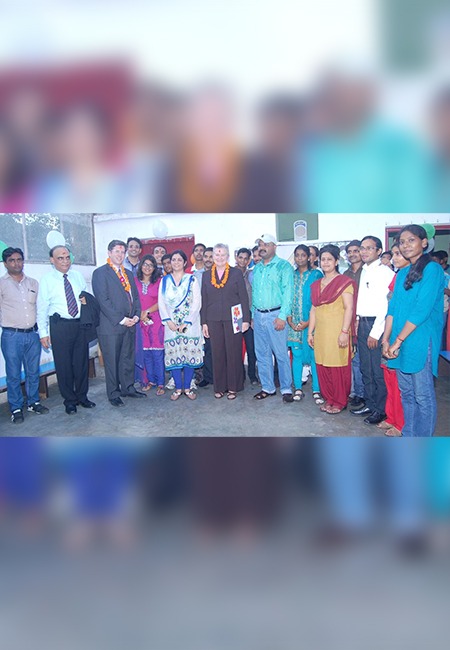
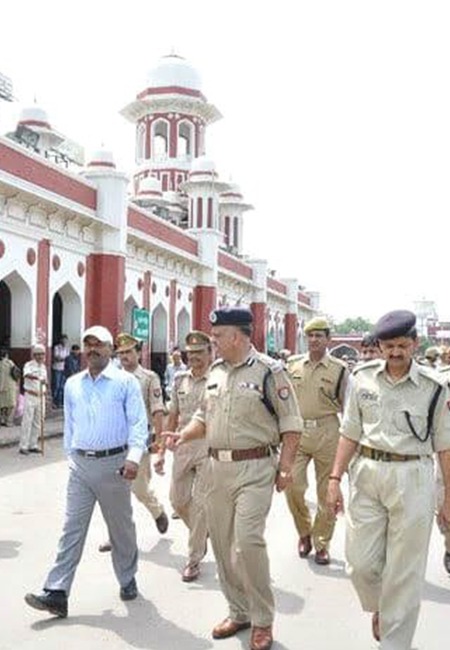
Dr. Amitabh Kumar’s professional journey entered one of its most demanding and transformative stages when he assumed the responsibilities of Station Director at Lucknow Charbagh. The role required sustained alertness, rapid cognitive processing, and a disciplined capacity to manage an operational environment defined by continuous movement and high public interaction. The position placed him at the core of railway administration where precision, responsiveness, and situational awareness were inseparable from daily functioning.
Lucknow station represented a system of extraordinary complexity. Operational coordination involved the management and movement of nearly three hundred trains, each governed by strict schedules, safety protocols, and interdependent logistical mechanisms. The scale of this responsibility demanded unwavering concentration. Every decision required clarity, and even minor deviations carried potential systemic consequences. The environment reinforced the necessity of procedural discipline combined with practical adaptability.
Simultaneously, the station functioned as a vast public interface. With an approximate daily footfall reaching one lakh individuals, the human dimension of the role was immense. Passenger concerns, service requirements, and unpredictable operational challenges emerged constantly. The demands were not intermittent but continuous, shaping a professional landscape where mental steadiness became as critical as administrative competence. Functioning effectively within such a dynamic setting required patience, composure, and an ability to maintain judgment under persistent pressure.
Within this highly active environment, Dr. Kumar’s observations extended beyond procedural obligations. Daily engagement with the station ecosystem gradually revealed a recurring and deeply concerning reality. Among the crowds and ceaseless activity, he encountered vulnerable children navigating uncertain and often unsafe circumstances. Many appeared detached from protective support systems and were visibly exposed to influences that threatened their safety and stability. These instances were not occasional encounters but patterns repeatedly visible within the station premises.
Note of Thanks
Dr. Amitabh Kumar expresses his sincere gratitude to those whose presence, guidance, and support have quietly shaped his journey across different phases of life.
He remains deeply indebted to his late father, Shyam Narayan Ram, whose integrity, discipline, and moral clarity left a permanent imprint upon his character. The example of ethical conduct and personal responsibility that he observed in his father became a lifelong internal compass. Equally profound is his gratitude toward his mother, Mrs. Kawal Pati Devi, whose resilience, especially during her prolonged health struggles, demonstrated courage in its most human form. Her quiet strength instilled emotional steadiness and the ability to remain composed during difficult times.
Dr. Kumar also acknowledges the role of his teachers and mentors who contributed to his academic and professional development. Their guidance helped refine his understanding of responsibility, institutional discipline, and structured leadership. The lessons learned during his years of service were not confined to administrative processes alone but extended to conduct, accountability, and measured decision-making.
He expresses appreciation to the colleagues and teams with whom he worked throughout his career. Administrative functioning within large public systems is never the effort of an individual alone. Collective coordination, shared vigilance, and mutual trust form the foundation of sustained outcomes. The cooperation and professionalism of his associates strengthened both institutional objectives and personal resolve.
Dr. Kumar extends heartfelt gratitude to his family for their patience, encouragement, and steady support. Their understanding during periods of professional intensity and intellectual engagement provided balance and reassurance. Their presence remained a source of strength beyond public visibility.
Finally, he acknowledges every individual whose life intersected with his journey, whether through professional interaction, social engagement, or literary dialogue. Each experience contributed perspective and refinement. For Dr. Kumar, gratitude is not ceremonial expression but recognition of shared influence in the shaping of a life defined by responsibility and purpose.
Thank You
– Dr. Amitabh Kumar