“What you do speaks so loudly that I cannot hear what you say.”
Dedication
Dr. Ajay Patankar’s calm strength has moulded him, and he dedicates this book to her. To his early years, firmly grounded in decency and discipline by his grandparents, Mrs. Sushila and Mr. Yadav Mukadam. He dedicates this biography to his mother, Mrs. Aparna Patankar whose unwavering encouragement enabled him to overcome the challenging times. His wife, Rekha, whose faith and company were constant sources of strength, made his hardwork more inviting and his triumphs more meaningful.
He expresses his appreciation to his close relatives, Mr. Ashok and Mrs. Anagha Mukadam, Mr. Pramod and Mrs. Vanmala Mukadam, and to everyone else who supported him both emotionally and physically. Sagar, Sneha, Tejas, and Shripad Patankar are his cousins, and he salutes them for keeping laughter and family closer.
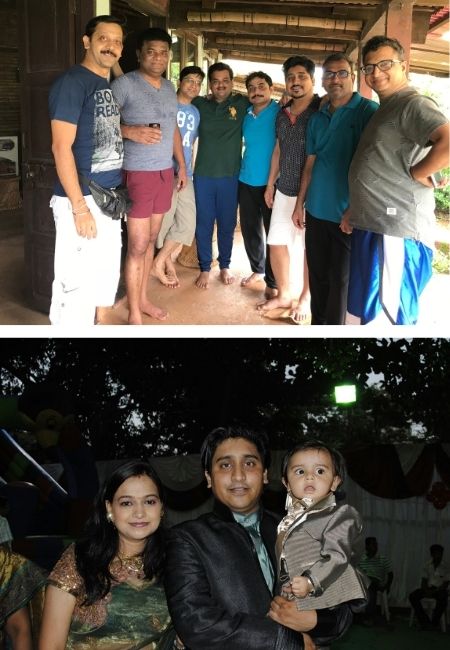
He expresses his gratitude towards his friends who were there for him through thick and thin. He pays his gratitude towards his best friend Sujit Sathe who has been through thick and thin. Friends from school and college who inspired him to take risks and face challenges: Amit, Amrish, Amol, Mandar, Vikram, Nishant, Dinesh, Sushil, Ravi, and Atul. He also dedicates this biography to his office mates: Sumesh, Ravi, Saugat, and Rachit, who worked together to make the arduous task seem easier.
As a token of gratitude for showing immense compassion, he dedicates this work to all his dear friends and family. Their wise guidance, tolerance, and humour shaped his story and character. The love that gave birth to these pages should be remembered and honoured.
“Out of difficulties grow miracles.”
Phase 1: Roots and Resilience
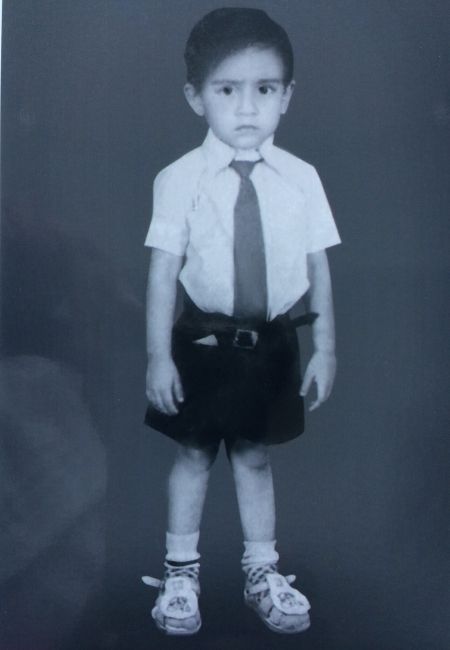
Born into a modest middle-class family, Dr. Ajay is the only son of Mr. and Mrs. Patankar. His early years were shaped by resilience and perseverance. The family’s ancestral utensil business in Bijapur, Karnataka, faced financial difficulties and had to be sold. His mother relocated to Mumbai to live near Dr. Ajay’s grandparents, ensuring stability during a period marked by his father’s frequent absence and family disputes.
Dr. Ajay Patankar grew up quickly. When a family loses its focus, the kids learn how to be serious before they learn how to be easy. When his father died, he was in standard ten. From then on, the home life changed: there were fewer buffers and more decisions to make, and his mother’s quiet strength became the daily weather of home. He watched her patiently pick up every loose thread and tie it together. She was responsible for managing bills, completing paperwork, organising meals, and maintaining stability for the future. Money stayed tight in the years that followed, but school didn’t get any worse. Scholarships came, which were like real bridges built by schools that still believed in merit. They even paid for his fees, which helped him stay on track when things could have gone wrong.
These lessons weren’t easy, but they were kind. He learnt to put his gratitude into action by being careful with books, making the most of his time, and treating help as an obligation rather than a right. He started to use attention as a form of power by listening carefully, finishing what he started, and not taking shortcuts because they cost more later. He was honest because he understood the swift consequences of delaying the truth. Instead of making him feel trapped, the family’s rules gave him a way to manage things: lower the noise, do the next right thing, and keep going.
That method took shape in school, which became the workshop. He was drawn to subjects that challenged his knowledge. Not as a personality trait, but as a way to make things fair, he liked precision.
“Science is organized knowledge; wisdom is organized life.”
Phase 2: Science and Management as Foundation
Dr. Ajay Patankar didn’t come to science because it looked good on his resume. He came to it because it fit his personality. At home, he had already learnt that things happen for a reason and that taking shortcuts doesn’t make things go away. Chemistry gave those feelings a name. He learnt in the lab that being accurate is not a way of thinking but a series of steps: measure honestly, control the conditions, watch with humility, and accept what the experiment shows. That worked for him. He liked doing the same thing twice in the same way and always get the same result. He liked that the discipline needed a clear mind and a steady hand. He liked that in this situation, truth was based on evidence, not arguments.
He went to college in Mumbai and chose the science stream. He received his Bachelor of Science in Chemistry. The certificate would later serve as an anchor in his files, but the true worth of those years lay in the habits they cultivated. He figured out how to plan his days so that he had time to think. He learnt how to keep records that could be checked by both a professor and his own conscience. He learnt to accept small changes without making a big deal out of them because small changes can stop big problems from happening. These might seem like easy things to do. They are also the habits that protect teams and help clients. The degree confirmed the milestone; the training made the man.
He didn’t just coast to that goal. The family’s money situation was still tight. Scholarships had helped in the past, and the idea behind them—treat every chance as an obligation—was still strong. Being thankful for help turned into discipline. He protected his study time, wrote down notes that he could trust, and practised the little things that make a day productive. He learnt to concentrate in noisy places like crowded classrooms and commuter trains. He learnt that being tired isn’t a decision; it’s a sign to stop, reset, and then start again. Those skills would be useful later when there weren’t enough hours in the day to do everything. For now, they were just the tools of a serious student who couldn’t afford to waste time.
“The purpose of a business is to create and keep a customer.”
Phase 3: Building Markets, Learning People
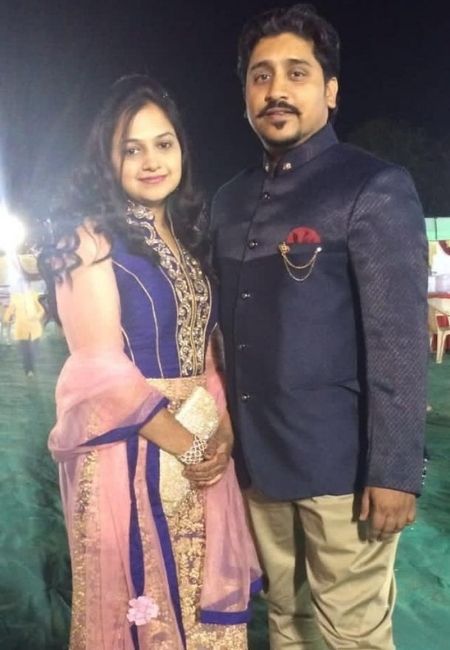
Dr. Ajay Patankar started his first full chapter of work with a mind trained by science and a personality shaped by what he needed to do. He had learnt to respect order and cause and effect in the lab. His family taught him to keep his word and respect time. Distribution would show him how to deal with people. He was a management trainee who was in charge of building a dealer and distribution network for a well-known household brand. He had a lot of freedom and little ceremony. There were areas to map out, relationships to start, and results to make one conversation at a time. He didn’t come with speeches. He came with a pencil, a small notebook, and a plan to listen before he talked.
The first lesson was that markets are like maps of trust. He started with a physical map of the city and its growing outskirts. Then he added a second map that was more important. He found out where shopkeepers felt safe, where deliveries often went wrong, where payment cycles took a long time, where claims tended to get stuck, and where the brand was already gaining traction. He learnt these patterns by walking and riding with his own feet and eyes. He would plan a route that made sense on paper in the morning. He would change it based on what really happened by the end of the day. After weeks of changes, they came up with a plan that worked. A route that worked held a promise. It came on Thursday, just like he said it would. It was closed by the end of the month if he said it would be.
He quickly learnt that the first three deliveries are what make a dealer agreement strong. The first shipment sets a time frame for when things should happen. The second shipment tells you what to expect in terms of communication if there are delays. The third shipment sets an expectation for how problems will be handled when the system fails, which it always does. He learnt to treat those first three cycles like a ceremony. He put a lot of effort into getting it right on the first. He put more emphasis on clarity.
Note of Thanks
Dr. Ajay Patankar sincerely thanks the people who quietly changed his life and work. He is deeply grateful to his mother, whose unwavering stability taught him the art of leadership, and to the loving memory of his father, whose absence instilled in him the value of responsibility from an early age. He is thankful to the teachers and schools that believed in merit and gave him scholarships when money was tight. He’s tried to honour their faith as a duty.
He thanks mentors who gave him time, advice, and tough questions, as well as coworkers who always followed through on plans and did so with style. He owes a lot to the people in operations, compliance, treasury, and legal who kept clients safe by keeping the process safe. He thanks clients who trusted his judgement and let him give honest advice, even when the truth was pricier than easy optimism. He is thankful for the team he has led and learnt from. Their hard work and honesty made his promises stronger.
He thanks the cities that shaped him, like Mumbai’s fast pace and Dubai’s ambition, as well as the many friends and family members who helped him through long days. Finally, he thanks the reader for caring about a life built on simple rules that are always followed: prepare well, speak clearly, and keep one’s word.
Thanks
Dr. Ajay Patankar