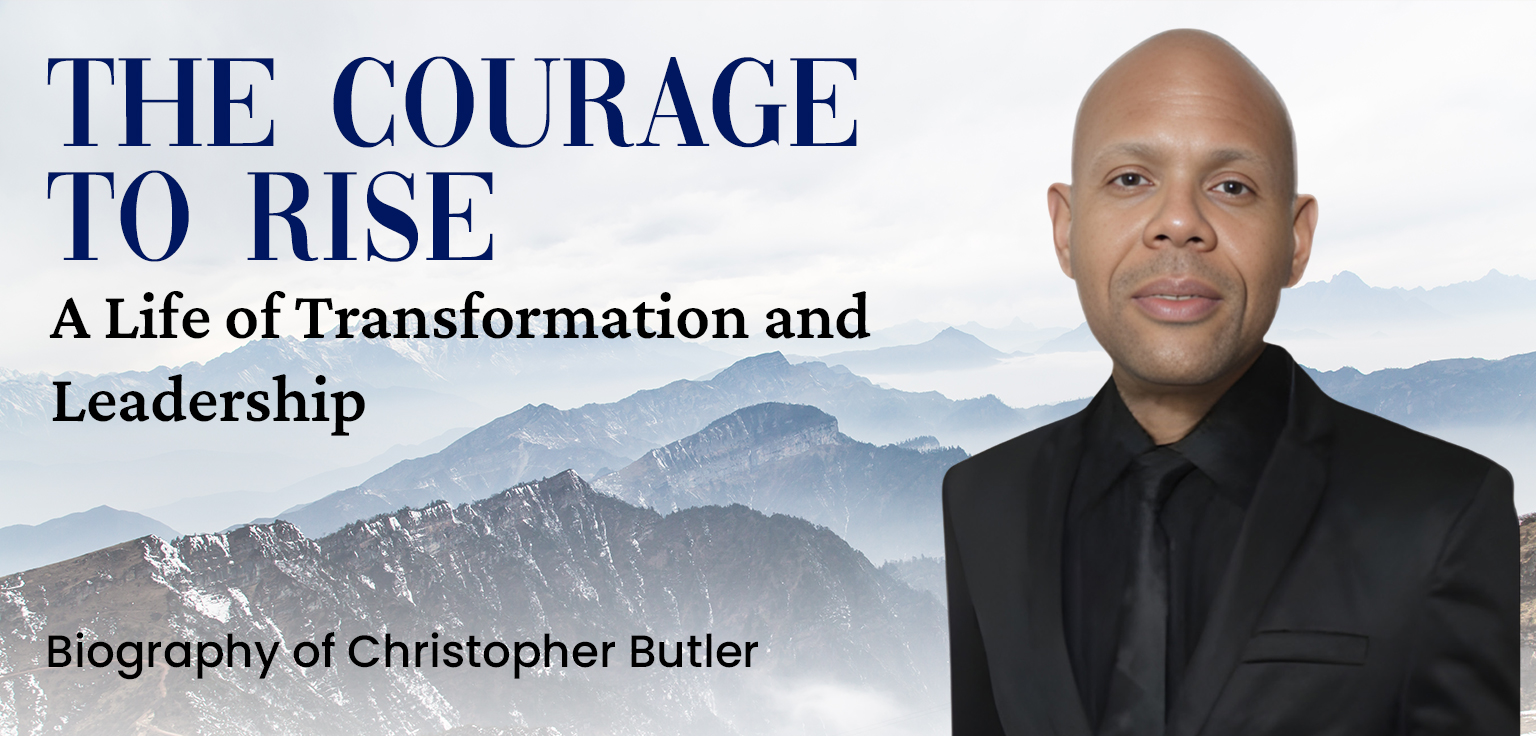
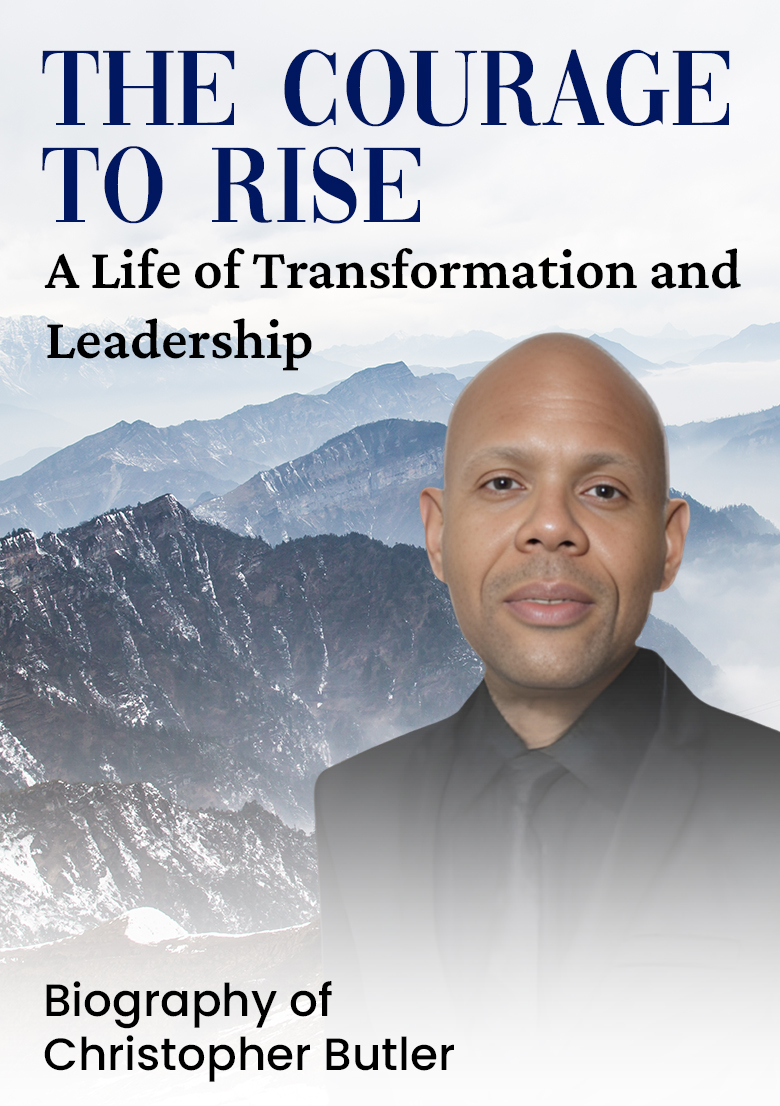
“Greatness is not the absence of struggle, but the refusal to surrender. It is not a destination but a journey of constant reinvention, fueled by a belief that every setback is a stepping stone.”
Dedication
To those who have stumbled, doubted, or faced storms larger than themselves—may these pages remind you that resilience is not perfection, but persistence. This book is dedicated to every life forged in struggle and refined in courage.
“The quiet hours shape us more than the clamorous ones; it is in silence that the spine of resilience is first formed.”
Phase 1: Vision Forged in Quiet Places
The earliest shaping of Christopher Butler did not arrive in shouts or ceremonies but in the quiet spaces where he measured himself against difficulty. Childhood offered no silver scaffolding, no path smoothed in advance. What it did offer was the stern discipline of routine and the whisper that character is not a birthright but a construction.
In small, unseen ways, he trained himself in balance. He discovered that discipline without empathy hardens into cruelty, while empathy without structure dissolves into weakness. Between those poles he carved a middle way—choosing again and again to temper strength with compassion, to marry clarity with care.
Each morning before the world stirred, he found a stillness in which resolve could take shape. In that stillness, he learned the subtle art of endurance—the ability to wait without growing weary, to hold vision steady even when the light faltered.
The lessons came quietly: in the patience of repetition, in the precision of effort, in the humility of starting over. He learned that progress often wears the disguise of monotony. The grind, the routine, the ordinary—these were the chisels that carved his discipline.
And beneath that discipline, a voice began to form—not loud, but certain. It told him that destiny does not come looking for you; it must be built, moment by moment, choice by choice.
“The first step is never grand—it is trembling, uncertain, but it becomes history the moment one refuses to retreat.”
Phase 2 :The First Sparks of Leadership
By 2004, Christopher Butler’s hunger for independence demanded form. Entrepreneurship became his declaration: not merely of earning but of inventing. His first venture was less about profit than proof—that something could be created from nothing, that vision could be given breath.
He stepped into a world unkind to dreamers. There were nights when he sat at a small desk lit by a failing bulb, bills stacked like quiet accusations beside him. Yet, amid that dim light, a fierce illumination burned within—a belief that resilience itself could be a kind of wealth.
The marketplace was a teacher: sharp, unrelenting, and honest. It stripped away illusion and replaced it with insight. Each obstacle taught him precision; each risk, humility. Leadership, he discovered, is not the authority to command but the willingness to be accountable when outcomes falter.
Even in struggle, he felt alive. The sound of the printer, the hum of late-night plans, the smell of coffee cooling beside a ledger—all became the texture of a dream under construction. The first spark had ignited, fragile but real, and he guarded it as one guards flame against wind.
“What appears as collapse is often only the scaffolding of a greater design waiting to be revealed.”
Phase 3 : Setbacks Recast as Blueprints
When the business closed in 2010, the silence was heavier than the loss itself. Yet within that silence, something else began to speak—the understanding that endings are only disguises worn by beginnings.
He refused to view failure as the final word. Instead, he examined it like an architect studying ruins, sketching lessons into the empty spaces. The collapse became classroom and confession both, teaching him that every downfall carries within it a seed—if one has the courage to look closely.
His transition into corporate life was not a retreat but a redirection. In those hallways of fluorescent light and measured targets, he learned to see structure as both challenge and opportunity. The cold logic of metrics never erased the warmth of his human insight; it refined it.
By 2019, faced with dwindling membership and organizational fatigue, he transformed crisis into revival. His data-driven strategy rescued not only numbers but morale. Behind every restored statistic lay a deeper truth: resilience is not rebound—it is reinvention.