“I lost a homeland, changed schools almost every year, and ran into closed doors and things I could not control, yet through it all I never stopped believing I had something worth giving.”
Introduction
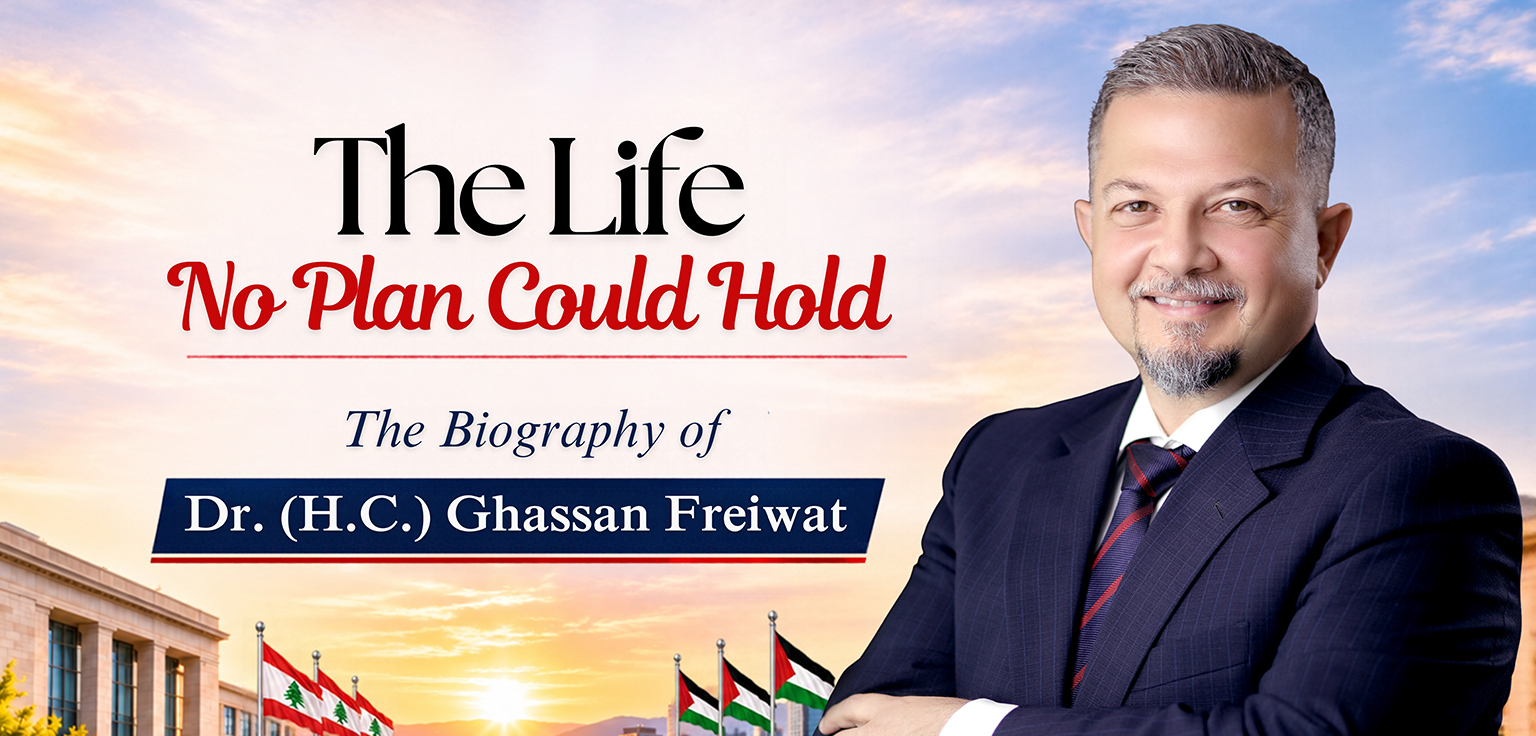
Directing a silent film was unfamiliar work for Dr. Ghassan Freiwat. At a filmmaking workshop with participants from his own age group, he took on the director’s role despite having no previous experience. Working with a team, he had to create a short film whose meaning a panel of judges could understand without dialogue. He welcomed the chance to learn something outside his profession.
That image tells you more about the man than any credential could.
His curiosity has never respected the boundaries of a single field. Engineering taught him how systems hold together. Management taught him how people do. But he kept wandering into literature, into social questions, into the stubborn puzzle of human behaviour, collecting qualifications and shorter certificates along the way, writing articles and poetry, studying subjects that promised no return on investment. He likes to quote a principle he picked up from someone he admired: know something about everything, and everything about one thing. He took both halves seriously.
His curiosity is not idle. He wants to know how things work so he can figure out how to make them work better. A technical problem is an invitation to dig. A struggling business is a set of decisions about people, processes, and direction. What interests him most is the gap between knowing and doing, especially when the old methods stop working and no one has written the new manual yet. Experience has given him convictions. It has not given him the illusion that he has nothing left to learn.
He laughs about the assumptions people make. Tell someone you hold a mechanical engineering degree, and they will hand you their car keys. Mention an industrial engineering specialisation, and someone will assume a fresh graduate can run a factory by Monday. The distinction he draws is simple, and he returns to it often: a qualification is a foundation. Competence is something you build on top of it, brick by brick, through years of actual work. He has never confused the two.
Writing gives him another outlet for his concern with people. He has written about his homeland, belonging, ideologies, faith, social beliefs, civic life, freedom of expression, and the right to decide how to live one’s own life. These interests sit alongside his professional work without being swallowed by it. They show a man willing to wrestle with questions that no spreadsheet can answer.
So this biography follows him through several rooms: the learner who walks into an unfamiliar classroom, the professional who has to make hard calls, the writer who asks how people might live with more freedom and more responsibility, and the mentor, coach and counsellor keen to help, advise and guide others. Each one is real. None of them alone explains him. He wants to participate, to understand, to put what he learns to use. That is the man these pages are after, in his own proportions, without letting either the triumphs or the disappointments take over the whole story.
"We left believing we would return. That return may never happen, but our homeland remains a deep desire, an enduring hope, and a purpose held within our hearts and souls."
Phase 1: A Home They Expected to Return To
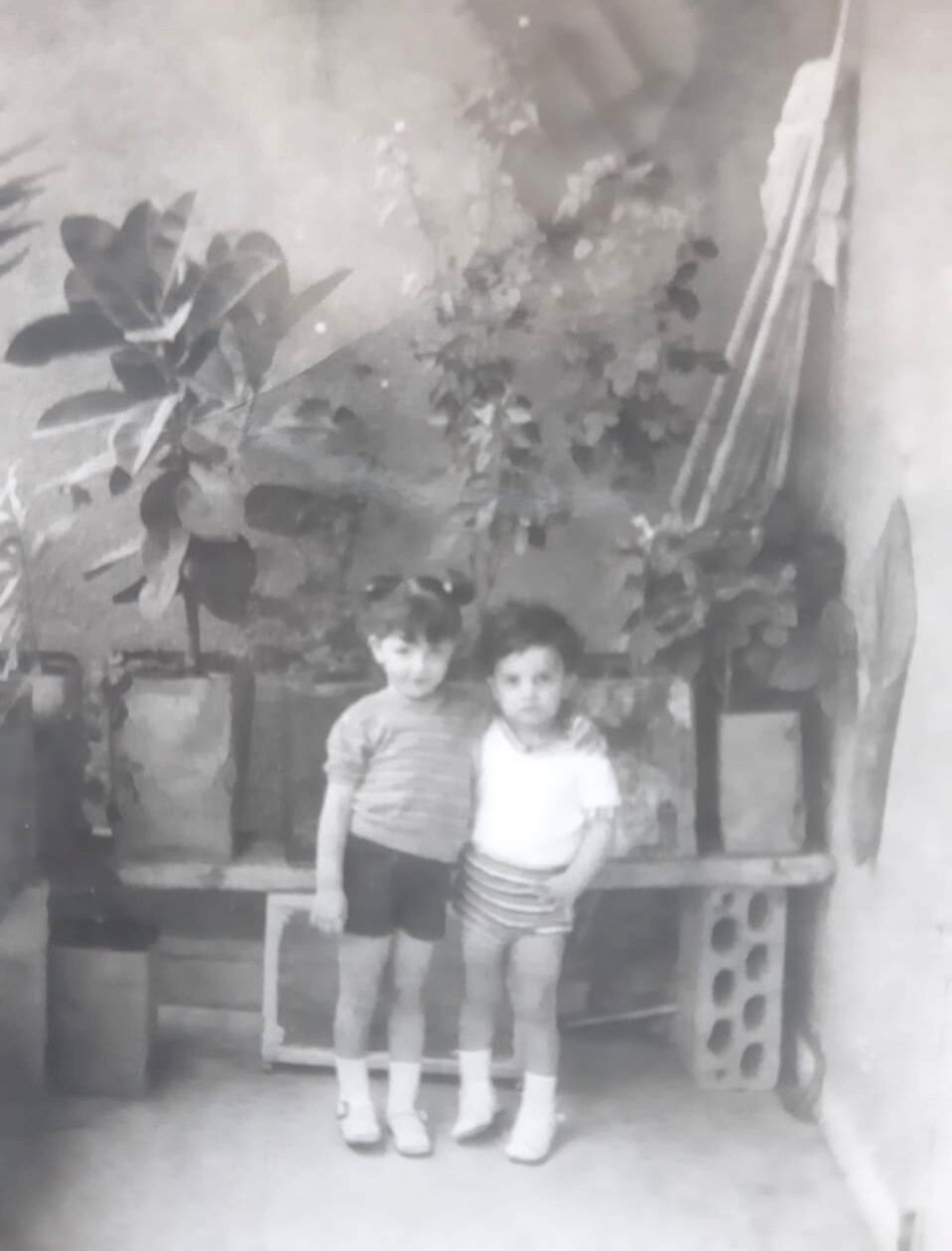
The family left Lebanon the way people leave a room when a fire has started in another part of the building. Quickly, with the assumption that they would come back once the smoke cleared. For the boy who would become Dr. Ghassan Freiwat, this meant packing a childhood into whatever could be carried and driving toward a border. He was leaving the only country he had known, the one where his first memories of school and open fields belonged. The destination was the UAE. Behind them lay everything familiar, and familiarity had stopped being enough.
This was not the first time his family had run. His father, Nour, came from Acre, in northern Palestine. The paternal roots ran deep there, the kind of deep that outlasts generations. But in 1948, during the war, his family would come to call the Nakba; they fled to Lebanon. Nour grew up in one country and married in another. Before his son was even born, the family’s idea of home already stretched across a border, already carried the weight of something lost.
In Lebanon, Nour married Juliette Khouri, a Lebanese woman with her own roots in that soil. Their son arrived in 1968, a child of two places at once. Palestinian on his father’s side. Lebanese on his mother’s. Acre lived in the stories. Lebanon lived in the immediate texture of daily life. When he described where he came from, he never chose between them. He made room for both.
The household was Christian, and eventually there would be five children. His mother was educated, but her work lived inside the home, in the endless labor of raising children and holding a family together. His father worked construction, as a site superintendent, as a general foreman, and as a man who had already worked in several countries by the time his son was old enough to notice. He spoke Arabic, English, and French. One parent gave her time. The other gave his skill and his wages. The children’s early lives organized themselves around these two figures and the rhythm they created.
What Ghassan remembers of Lebanon is green. A school surrounded by landscaped grounds and small stretches of woodland nearby. During breaks, he ran. He describes himself as an active child, full of energy, and lucky enough to have somewhere to put it. These are specific memories. School. Open space. Movement. They preserve something of a childhood that was still intact, still ordinary, before the account turns to what made staying impossible.
He attended his first years of primary school there: first grade, second grade, and part of third. His schooling had already begun, with its own routines and teachers and friendships. The departure interrupted a life in progress. It did not precede his first awareness of the world. It cut into it.
Then war entered that childhood directly. He remembers bullets. Bombs. Roughly a year spent living inside the Lebanese civil conflict before the family left. Among the memories he has shared is this one: a young man’s body in the house where they lived. Shot dead. He does not elaborate, and the memory does not need elaboration. A child encountered death inside the place where his family slept.
“Every new school taught me the same lesson twice: nothing familiar lasts, so I learned to make myself at home quickly, wherever I landed.”
Phase 2 : Starting Again, School After School
A new school was never just a new classroom. It was a new set of faces, a new hierarchy to figure out, and a new hallway to get lost in. For Dr. Ghassan Freiwat, this became the rhythm of growing up in the United Arab Emirates. His father’s work in construction decided where the family lived. When the project changed, the household moved. When the household moved, the school changed with it.
They lived across almost every corner of the Emirates. He switched schools nearly every year, sometimes every other year. Once, he attended two different schools in two different cities within a single academic year. There was no point in assuming that anything familiar would stay familiar. Just as friendships started to take root, just as the daily routine settled into something resembling normal, another move would pull the ground out from under him. Leaving a school usually meant leaving the city too. He remembers it as hard. It was.
And yet, through all that disruption, his academic record barely wavered. He ranked first or second in his class all the way through high school. Placement assessments allowed him to skip ahead two grades, which left him roughly two years younger than most of his classmates. So the schools changed, and sometimes his position within them changed too. But his ability was measured, and he moved forward according to what he already knew.
Study filled much of his time. The UAE of his school years was still building itself, still growing into what it would become, and he remembers fewer opportunities for outdoor recreation than a boy might have wanted. Books and lessons became the center of daily life. Not the whole of it, though. He collected stamps, a hobby that belonged entirely to him, something he could carry from one city to the next. He spent time with neighbors and other families. That mattered too.
The community around him was a patchwork of nationalities. He valued that. People from different countries lived side by side, and he grew up meeting children whose backgrounds looked nothing like his own. A move could scatter his social world, but it also widened it. He understood this exposure as part of his education, something that shaped his personality in ways no classroom could.
He also learned to make himself heard. At school, he took on the morning announcements, standing before a student body he estimates at close to one thousand. He delivered news and information to all of them. For a boy younger than most of his classmates, this was no small thing. It put him in front of the entire school, not just at the top of a grade sheet.
One teacher saw something worth guiding. Ghassan remembers the man’s enthusiasm for education, his genuine concern for whether his students were growing. He offered the same sentence again and again, a sentence that stayed with Ghassan for decades: may his intelligence and brain guide him in the right direction. He associates those words with 1984. They acknowledged what he had. They also asked what he would do with it. He remembered the teacher as a mentor whose concern extended beyond examination results.
Writing gave him another audience. At fourteen, he submitted an article to a UAE newspaper. It ran as the article of the day. Readers had no idea how old he was. Responses came in from people who assumed they were writing to an adult. Their interest told him something important: his words could enter a public conversation on their own merit. His age did not have to decide how they landed.
“I did not want to be the student who only studied. I wanted to be the one others trusted to speak for them when it mattered most.”
Phase 3 : A Voice Among His Fellow Students
At The American University in Cairo, engineering was only part of what occupied him. He had signed up for a demanding degree, but his attention kept wandering toward other questions: how businesses worked, why people behaved the way they did, what lay beyond the technical. The university allowed students to choose electives, and he used that freedom with intention. Psychology, sociology, music, political science. They found space alongside the engineering courses. He wanted an education wide enough to hold everything he was curious about.
His main course was mechanical engineering, with an option in industrial engineering. To that he added a minor in business administration. The reasons were practical and personal at once. He liked numbers. He was drawn to management and leadership. He also understood something that many students learn too late: an engineering degree does not guarantee engineering work. Business offered a second path. Studying it as a minor let him follow an interest while building an alternative.
The extra coursework stretched his time at university. The engineering program required five years. His own attendance lasted about five and a half because of the business component. He accepted that. The choices he made combined specialization with breadth and serious attention to his degree alongside room to learn outside it.
University life also offered ways to participate, and those opportunities depended on the confidence of fellow students. He stood for election to represent the mechanical engineering department in the Student Union. There was campaigning. There was an election. When the students chose him, he became one of two representatives for his department in a union he remembers as roughly thirty members strong.
He entered with the intention of making a difference. That intention took specific shape when he was selected for the union’s five-member High Board, which included the president, the vice president, and three other members. He also became head of the academic committee. The positions gave him a way to bring student concerns into rooms where university representatives could actually consider them.
He wanted the committee to work directly with students. Academic difficulties. Requests to change majors. Health problems. These situations often required someone to explain an individual’s circumstances and argue their case. He took on that role. He calls himself their advocate. He remembers representing students before a university governing body, speaking for people whose problems could not be solved inside a classroom.
His representation of fellow students extended to the written word. He served on the editorial committee of The Voice, a student wall newspaper that gave him another platform to speak on behalf of the student body. He also belonged to two cultural student clubs, participating in university life beyond his academic and representative responsibilities.
In 1989, he received recognition as Best Student Union Member. A strong academic record did not remove the need to understand someone struggling with a course, or someone dealing with a health concern that had nothing to do with grades. The committee became a point of contact, a place where students could seek help. He made that interaction central to its purpose. In 1989, he received recognition as Best Student Union Member.
Note of Thanks
Dr. Ghassan Freiwat begins with Siham. In her, he has a partner with whom he shares the friendship at the heart of their marriage. He acknowledges her place beside him through hopes fulfilled and disappointments they have faced together. He expresses his appreciation for the life they continue to share.
His gratitude extends to his mother, Juliette, his late father, Nour, his siblings, and the wider family. He remembers his mother’s care, unconditional love and dedication in raising five children. He honors his father’s abilities and the pride he took in his work. To his siblings, Carmen, Katia, Souzi, and Mark, and his relatives, he offers thanks for the closeness they maintain despite living in different countries. Their continuing relationships matter deeply to him.
He also acknowledges everyone who has contributed to shaping his personality and understanding. Friends, teachers, colleagues, and others from whom he has learned belong within this appreciation, whether their influence came through sustained guidance or a conversation that remained with him. He does not wish to restrict that gratitude to a list of names. He values what each encounter has added.
Special thanks go to The American University in Cairo, whose place in his education he acknowledges with particular affection. He also expresses appreciation to the University of Liverpool, the University of Cambridge Institute for Sustainability Leadership, UCAM Universidad Católica San Antonio de Murcia, and the other institutions through which he has studied and continued learning.
Finally, he gives thanks for the challenges that have helped shape him. He recognizes their place in the person he has become, alongside the opportunities and encouragement he has received. His appreciation rests with all those who, directly or indirectly, have given him something to learn, someone to care for, or a reason to keep contributing. He remembers their part in his life with gratitude and a sense of responsibility.
thanks,
– Dr. (H.C.) Ghassan Freiwat

AIMLAY is a leading global education platform empowering ACADEMIC and EXPERIENTIAL learners, uniquely focused on recognizing knowledge gained through experience and building a diversified community of doctorates and aspiring researchers.