

“Life becomes meaningful when we help one another, learn from one another, and grow together with truth, love, and purpose. ”
Introduction
The biography of Dr. Jason Butcher begins with a life that was never confined to one fixed path. Born in North Vancouver, British Columbia, Canada, he grew up between different homes, different expectations, and different ways of understanding the world. His parents separated when he was very young, and his childhood moved between the freedom and uncertainty of one environment and the discipline and structure of another. From an early age, he learned that life could hold more than one truth at the same time. One side taught him exploration, imagination, and the courage to pursue what others might doubt. The other taught him time, responsibility, discipline, and the importance of honouring one’s word.
These early years did not make him bitter. They made him observant. Dr. Jason did not speak of the difficult parts Of his life with complaint. He carried them with unusual calm, as though every experience had given him something to understand rather than something to resent. He knew loneliness, movement, and uncertainty, yet he also knew the kindness of people who opened their homes and lives to him. The parents of his friends and members of his extended family became important influences, offering care, steadiness, love, and human warmth during years when stability was not always guaranteed. Through them, he began to recognise the quiet power of community.
That awareness would become one of the strongest threads of his journey. Long before entrepreneurship became a familiar word in modern conversation, Dr. Jason was already living with an entrepreneurial instinct. As a young person, he understood that if he wanted something done, he had to find a way to do it. His father’s work ethic showed him the value of waking early, working with purpose, and completing what needed to be done. His determination showed him the courage to keep reaching for possibilities even when life was not easy. Between those two influences, he developed a personality that could respect Structure without losing imagination.
His early exposure to work began practically. As a teenager, he got involved in the garden industry, learning and taking on responsibility working with people connected to the Vancouver market. Later, his experience broadened into business operations, including involvement in Opening and Operating Subway franchises. Those years taught him the discipline of systems, products, customer experience, and process. He absorbed how successful models worked, not as theory but through direct participation. This practical understanding would later become useful in every field he entered.
The journey then moved into publishing, media, design, and communication. Dr. Jason entered a world where ideas needed form, stories needed structure, and communities needed channels through which they could speak to one another. Publications such as Common Ground and Shared Vision introduced him to alternative health, environmental thinking, and lifestyle conversations at an early stage in those movements. He was also connected with work influenced by environmental awareness and natural health, areas that widened his view of people, well-being, and the planet. For him, publishing was not only a business. It was a way to connect voices, values, and communities.
From there, his curiosity moved naturally into technology and digital innovation. His work included early internet projects, and he also explored ideas that brought together media, communication, and emerging systems. His instinct was not simply to chase technology for its own sake. He looked for ways technology could help people collaborate, trade, communicate, and build. That same instinct would later influence his work in the Cayman Islands, where he launched TraderMedia and BuySell.ky, a local platform for people to buy, sell, and connect directly online.
His time in the Cayman Islands also revealed another side of his personality. After the disastrous hurricane in 2004, Dr. Jason was involved in coordinating recovery, communication, and support. In moments of pressure, his natural response was not withdrawal. It was gathering people, helping them feel safe, and finding practical ways forward. This response reflected what had been forming in him since childhood: the ability to stand between uncertainty and people’s needs, then create connection where there was disorder.
"Life showed him early that every story has two sides, and wisdom begins when a person learns how to stand between them with understanding."
Phase 1: There Was Always Two Sides to Everything

The beginning of Dr. Jason Butcher’s life was shaped by movement, contrast, and a quiet kind of learning that came long before formal ambition could be named. Born in North Vancouver, British Columbia, Canada, he entered a world that would not remain simple or settled for long. His parents separated when he was only two years old, and from that point onwards, his childhood unfolded between two households, two emotional climates, and two very different ways of living. For many children, such movement can feel confusing. For him, it became part of the earliest language of his life.
He grew up with his younger sister, moving back and forth between his mother and father almost every year. That rhythm created an unusual childhood, one where permanence was never fully guaranteed, yet experience was always expanding. In one part of his life, there was freedom, openness, and the permission to explore. In another, there was structure, order, routine, and discipline. He did not grow up seeing life through only one window. He saw it through many, and those early contrasts slowly shaped the way he would later understand people, decisions, and opportunities.
His mother was an entrepreneurial single mother who worked hard to keep life moving. She carried responsibility while trying to make things work, sometimes through different businesses, sometimes through multiple jobs, and often through sheer effort. Her journey wasn’t easy, and some things didn’t work out, but what was clear to her son was her determination to keep going. It was through her, Dr. Jason saw the courage it took to try, even when there was no guarantee. Her life showed him that dreams require movement and that one must sometimes create possibility while standing under pressure.
Life with his mother offered a kind of freedom that left a deep impression on him. It allowed him space to explore, to envision, to move, to experience the world without each Step being controlled. Yet that freedom also came with instability.
He has spoken honestly about the loneliness that could exist within it. At times, there was uncertainty, a lack of food, and the feeling of not always knowing where life was going next. He did not describe these memories with anger. He spoke of them as circumstances, as part of the life he knew at the time. This measured way of looking back reveals something essential about him. He does not turn difficulty into complaint. He turns it into understanding.
His father represented another side of life. He was a heavy-duty mechanic, and through him, Dr. Jason was introduced early to discipline, punctuality, and the dignity of work. Mornings began early. Tasks had to be completed. Words had to be honoured. If something needed to be done, it had to be faced directly. From his father, he learned the importance of being on time, keeping one’s word, and doing what one had said one would do. These lessons became part of his inner structure, giving him a practical sense of responsibility that would later support his work across many industries.
Between these two environments, he learned a lesson that would become central to his life. There is rarely only one side to a story. One person may believe something one way, and another may see it differently. Instead of being trapped by that conflict, he began to develop the ability to stand in the middle and look for the place where people could meet. This was not a business technique learned later in adulthood. It began in the emotional reality of his childhood. He learned to understand differences before he learned to build companies.
That early duality also gave him a certain independence. He realised very young that if he wanted something, or if he wanted to do something, he would often have to figure it out himself. This was not framed as rebellion. It was survival, responsibility, and personal initiative. He became aware that life would not always provide a clear path, so he would need to create one. That instinct would one day grow into entrepreneurship, but in the beginning, it was simply a child learning how to move through uncertain spaces.
“When change became the rhythm of life, he learned not to fear movement but to find steadiness within himself”
Phase 2 : Moving Until Change Became Home
Dr. Jason Butcher’s early environment never settled after the bedrock of his childhood. Life was a series of transitions, and change was not an Occasional event but a constant condition. As he moved between his mother’s and father’s households, the rhythm of his life remained shaped by movement. Over time, this became less of a disruption and more of a pattern through which he began to understand the world. What others might have experienced as instability slowly became his familiar ground.
His schooling years reflected this same continuity of change. He changed schools several times, in different settings, instead of staying in one place long enough to develop a regular routine. Every move came with an adjustment period, not only academically but socially and emotionally. New classrooms brought new expectations, new personalities, new ways of belonging. For many children, consistency in education provides a sense of grounding. For him, grounding came not from stability of place but from his ability to adapt quickly to whatever place he entered.
With each transition, he developed a quiet skill of observation. Before speaking, before forming strong attachments, he would first understand the environment he had entered. He learned to read people, tone, and behaviour with increasing sensitivity. This ability was not taught in classrooms. It was learned through necessity. In unfamiliar spaces, awareness became a form of safety, and listening became a form of intelligence.
Friendship during these years was also shaped by movement. Because he frequently entered new schools, relationships were formed and reformed repeatedly. Yet instead of limiting his connection to peers alone, he naturally extended his attention toward their families. His parents of his friends became significant figures in his life experience. He observed their stability, their routines, their ways of relating to the world around them, and these families often embodied what consistency was, especially when his own environment moved from one rhythm to the next.
Through these interactions, he started to see the importance of structure beyond his immediate circumstances. He saw how families operated when communication was consistent, when roles were clear, and when presence was steady. At the same time, he also experienced the warmth of inclusion. Being welcomed into different homes gave him a sense of belonging that could be forged in many ways. It didn’t always depend on origin or permanence. Sometimes, it depended on openness.
But this constant movement also had emotional implications. Sometimes he felt lonely, not always in a spoken way, but in a very real way. Every time he moved to a new place, he started over in the social sense, building trust again and again, learning how to deal with new dynamics. There were times when basic needs were in question and not knowing what the next day would bring was an everyday feeling. But he never internalized these moments with bitterness. They became part of his internal understanding of resilience.
What stands out in this phase is not the difficulty itself, but his response to it. Dr. Jason did not develop resistance toward change. He developed familiarity with it. He began to understand that environments could shift, people could move, and circumstances could vary, yet one’s internal capacity to respond could remain steady. This internal steadiness became one of his defining traits, even before he had the language to describe it.
“He learned that circumstances may shape a person, but effort decides how far that person is willing to go.”
Phase 3 : The Making of His Own Way
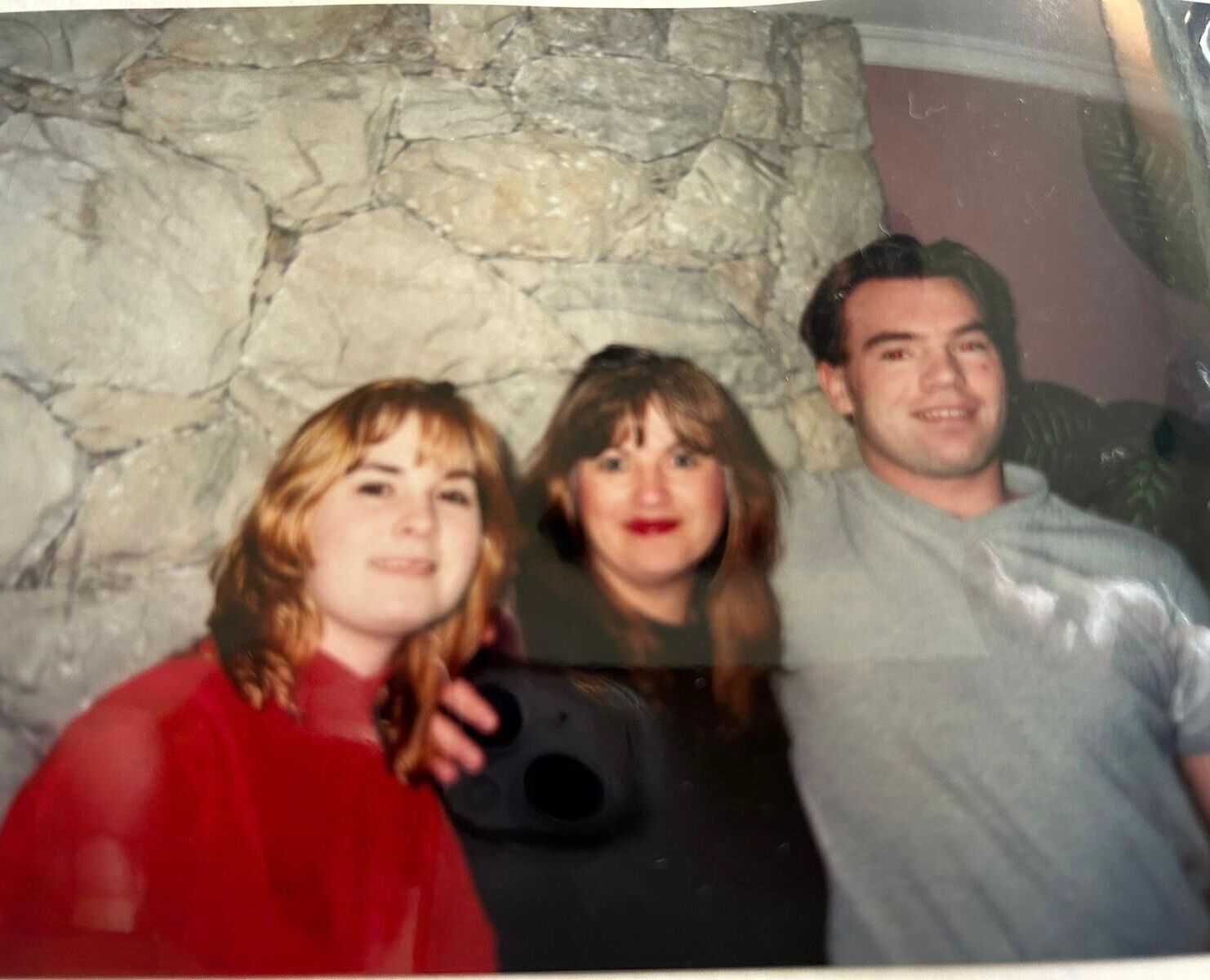
Dr. Jason Butcher felt the sense of responsibility forming in him with each passing year of his formative life. The transitions of early childhood had already taught him to adapt, but this stage of life was a transition to something more internal and lasting. It became more than just adapting to change. It became about understanding that effort, discipline, and self-direction were essential parts of moving forward in life. In both households he moved between, different lessons continued to shape his understanding of life. From his father, a heavy-duty mechanic, he learned the value of discipline, punctuality, and commitment. Work wasn’t a choice. It was to be done consistently and with integrity. If you made a promise, you kept it; if you started a job, you finished it. These weren’t abstract concepts to him. They were real life lessons, reinforced by daily expectation and example.
Through his mother, an entrepreneurial single parent who made her way in life through sheer grit and persistence, he learned another, equally powerful lesson. She proved that one could advance, despite the odds. Her life served as evidence that responsibility often required bravery, especially when the results were not guaranteed. Via her, Dr. Jason saw determination not as theory but as daily action. She showed him that one does not wait for conditions to be perfect before trying. One creates possibility within imperfection.
Between these two influences, a deeper awareness began to form within him. He started to understand that responsibility was not defined by age but by action. He found that he could not always wait for others to solve problems or give direction. He learned to rely more on his own capacity to think, to decide, and to act. It was not rebellion. It was a natural extension of the environments he grew up in where independence was not only preached but also demanded by circumstances.
This period also increased his understanding of consequences. No matter how small the choice, it had consequences that had to be dealt with. At school, at home, or in daily life, he realized that actions had consequences. This understanding built a more mature attitude in him slowly. He began to see life not as something that just happened to him, but as something he was part of creating through accountability and effort.
At an early age, he also began to recognise the importance of consistency. Life around him was still marked by change, yet within that movement, he started to build his Own internal structure. Even as the environment changed, he started to hold on to some principles that gave him some direction. Honesty, responsibility, and follow-through became personal standards, not outside expectations. These values didn’t remove the uncertainty, but they gave him something solid to stand on in the middle of it.
The time also sharpened his appreciation of the importance of self-reliance. There were moments where he understood that if something needed to be done, he would likely have to find a way to do it himself. This awareness did not create isolation. Instead, it created capability. He began to trust his own judgment more, not because he was disconnected from others, but because he had learned through experience that initiative was often necessary.
This growing independence also influenced how he viewed challenges. Instead of seeing difficulty as something external to avoid, he began to see it as something to engage with directly. Problems were not interruptions in life. “Ihey were part of life itself. This perspective gradually helped him to stand firm when faced with uncertainty, building on the adaptability he had developed in his earlier years.
Note of Thanks
This biography of Dr. Jason Butcher is dedicated with heartfelt gratitude to all those people, places, and experiences that helped shape his life into a journey of purpose, resilience, and connection. His Story could not be understood without acknowledging the early influences that gave him both discipline and freedom, both responsibility and courage. His mother’s determination and his father’s steady example became important forces in the foundation of his character, each offering lessons that remained with him in different ways.
Heartfelt thanks are also extended to the families who welcomed him during his younger years. Parents of his friends and members of his extended family gave him care, warmth, love, and support at moments when life was not always settled. Their presence helped him understand the value of belonging, and that understanding later became part Of the way Dr. Jason connected with people across communities, businesses, and ideas.
This note also recognises the many people who became part of his professional journey, from the Vancouver market to the Cayman Islands, from publishing and media to payments, technology, investment, and mentorship. Every colleague, founder, partner, advisor, team member, and community participant contributed in some way to the wider story of his growth. His work through Raincity Marketing, Kickstart Ventures, TraderMedia, Buy&Sell, Parallel Payments, CoinPayments, Orbit Capital Inc., Aldersgate Capital, Rainforest Partnership, Founder Institute, and the Cayman Islands Centre for Business Development and so many more reflects not only individual effort but the power of shared vision.
His continuing work through Orbit Capital Inc., Orbit Advisors, Founder Institute, and emerging technology and community initiatives reflects a journey that continues to evolve, guided by the same belief that people grow stronger when they are connected.
thanks,
– Dr. (H.C.) Jason Butcher

AIMLAY is a leading global education platform empowering ACADEMIC and EXPERIENTIAL learners, uniquely focused on recognizing knowledge gained through experience and building a diversified community of doctorates and aspiring researchers.