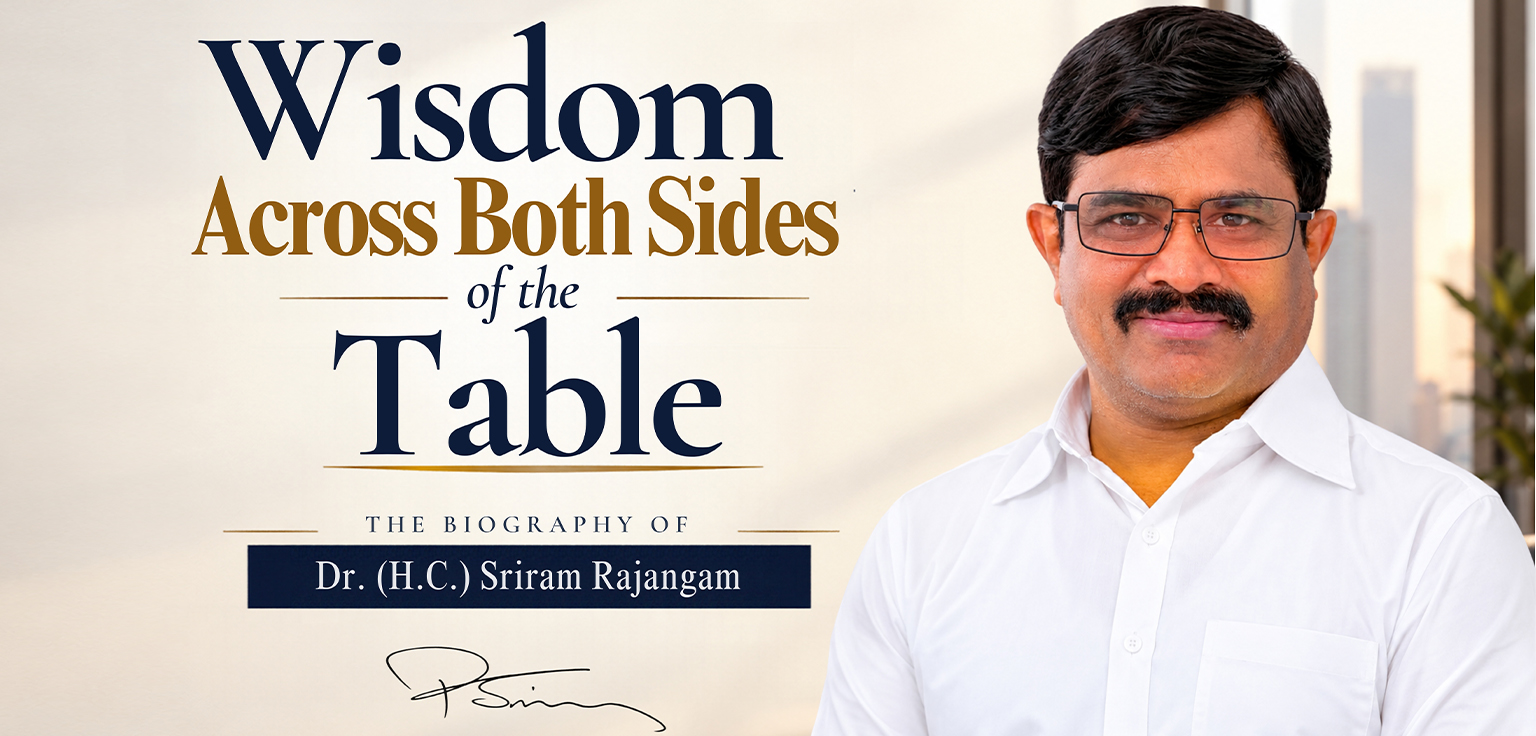
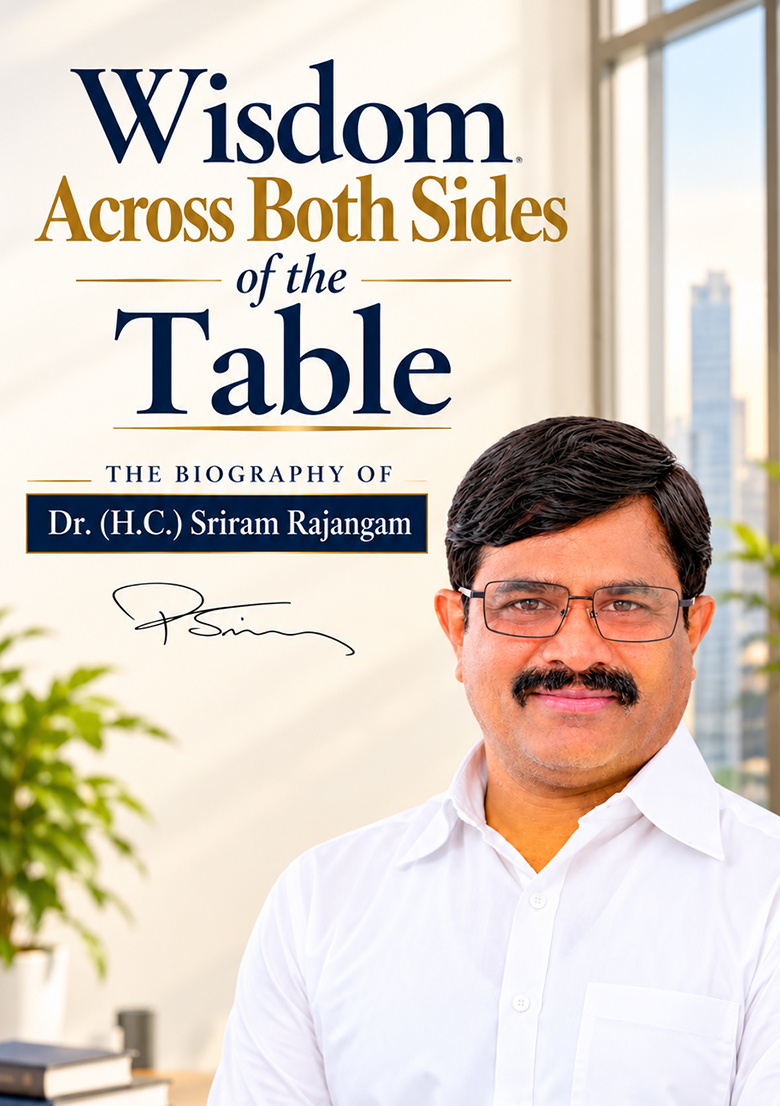
“I believe true success lies in working with integrity, treating others with respect, sharing what I know, and always remaining willing to learn and contribute.”
Introduction
A man who spent much of his career sitting across the table from suppliers now finds himself on the other side, offering products to the very companies for which he once negotiated purchases. This change has brought a fresh sense of excitement to Dr. Sriram Rajangam. After more than three decades of working across different industries and countries, he continues to discover new things about business, technology, and people. His appointment as Global Business Development Director at UNIPROMA in February 2026 marked an unexpected continuation of a career that he had already considered complete.
There is something particularly interesting about the way he speaks of his accomplishments. He remembers the demanding assignments, the complicated negotiations, and the recognition he received, but he finds equal satisfaction in recalling how a problem was solved or how someone benefited from his experience. He has always believed that professional relationships matter. A conversation handled respectfully, a promise honoured, or a connection maintained over many years can become invaluable when circumstances turn difficult. He has witnessed this repeatedly throughout his working life.
His career began far from the international responsibilities he would eventually undertake. From selling consumer products and developing markets, he gradually moved into commercial operations, procurement, and supply-chain management. His years at Unilever exposed him to situations that demanded far more than an understanding of business procedures. Managing manufacturing requirements across distant locations, responding to unexpected disruptions, and finding practical solutions taught him to remain resourceful when conventional arrangements proved insufficient.
The experience he carried into L’Oréal later became central to several significant contributions. His work involved developing new sourcing approaches, sharing technical knowledge, introducing greater transparency into commercial decisions, and helping colleagues understand the industries in which they operated. He received the Chairman’s Award for the Co-emulsion project, a recognition that remained especially meaningful to him. Yet he also remembers contributions that attracted less attention, including the knowledge he shared with colleagues and the practices he continued developing over several years. His satisfaction came from knowing that his efforts had been useful.
Behind these professional experiences is a man whose understanding of responsibility began much earlier. Born in Tamil Nadu and raised in West Bengal, he grew up in a household where comforts were limited, but care was abundant. Losing his father after completing school brought responsibilities he had not expected to face so young. Those circumstances influenced his determination to work, study, and build an independent future.
His life away from work is equally important. His wife has been a source of companionship and happiness, while his son remains especially dear to him. His involvement with the Indian community in Shanghai, support for charitable activities, and willingness to help others reveal the importance he places on human connections.
Today, Dr. Sriram finds pleasure in guiding younger professionals while continuing to learn himself. He has experienced success, disappointment, difficult choices, and unexpected opportunities, yet his outlook remains grounded in the importance of being genuine, practical, and respectful towards others. These values continue to influence the way he approaches his personal and professional life.
"A happy childhood is not always measured by what a family can afford, but by the care, values, and memories that remain long after those years have passed."
Phase 1: From Tamil Roots to the Railways of Kharagpur
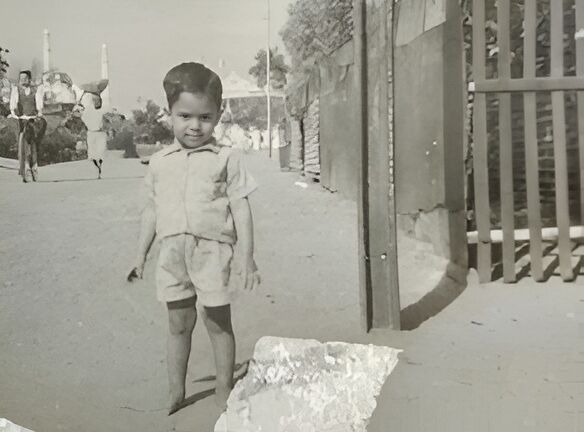
On 18 January 1967, Dr. Sriram Rajangam was born in Pudukkottai, Tamil Nadu, a place that would always remain connected to his family roots, although his childhood would unfold hundreds of kilometres away. His father was employed with the Indian Railways, and the family’s circumstances brought them to Kharagpur, West Bengal. It was there, among railway families, school friends, and a culture different from his ancestral home, that he spent his growing years. Although Tamil Nadu was his birthplace, Kharagpur became the place he knew as home throughout his schooling.
Growing up as a South Indian child in West Bengal gave him an early introduction to a different language and way of life. Tamil was the language associated with his family, but Bengali gradually became an equally familiar part of his everyday surroundings. He learned to speak, read, and write it with remarkable ease. In fact, as the years passed, his command of Bengali became stronger than his Tamil, something he would later acknowledge with amusement. What might initially have seemed like a cultural difference became a natural part of his identity. He belonged to a Tamil family, yet the language and everyday life of Bengal were deeply familiar to him.
His family lived within the modest means of his father’s railway salary. Money was not available for unnecessary spending, and the household operated with a clear understanding of what mattered most. There was enough to meet their needs, but expensive comforts were not part of ordinary life. Even clothing had to be purchased thoughtfully. On occasions when children might normally expect something new to wear for a family function or celebration, school uniforms often took priority. A uniform was something he needed regularly, whereas an outfit for a special occasion would be worn far less frequently. It was a practical decision, one that made complete sense within the family’s circumstances.
Yet Dr. Sriram does not remember those years with bitterness. He speaks of his childhood as a happy time, recalling that his parents ensured the children were cared for and had good food to eat. There was little expectation of anything lavish, partly because such things were not part of the life they knew. He grew up appreciating what was available rather than constantly wishing for something beyond the family’s reach. The simplicity of those years remained meaningful to him even after his circumstances changed considerably in adulthood.
His schooling took place at S E Rly Mixed Higher Secondary School in Kharagpur, where he studied through an English-medium system associated with the ICSE and ISC curriculum. The school held a good reputation in the area, and he remembered his years there with genuine affection. Education was also made financially manageable through his father’s employment. As he recalled, the highest school fee he remembered paying was approximately sixteen rupees, an amount reimbursed through the railway system. The principal expenses left to the family were books, bags, uniforms, and other basic school requirements.
For him, school was never simply a place to attend lessons and examinations. It was also where he developed friendships, played games, and enjoyed the freedom of childhood. He openly described himself as an average student who preferred playing to spending long hours with books. He was neither a regular class topper nor someone particularly concerned with academic rankings. He studied, completed his schoolwork, and enjoyed being among his friends. There was a refreshing simplicity in the way he later described himself, without attempting to make his younger years appear more academically remarkable than they had been.
Science formed an important part of his school education, while subjects such as history and geography were not among his preferred areas. Outside the classroom, however, his interests were considerably more varied. He enjoyed sports, particularly hockey and football, and participated in school sporting activities. Over the years, he earned certificates that he continued to preserve into adulthood. These were reminders of a time when much of his enthusiasm was directed towards the playground and the activities he shared with other students.
“When the person who carried a family’s worries is suddenly gone, growing up becomes less about age and more about finding the strength to carry them forward.”
Phase 2 : When Responsibility Arrived Before Adulthood
There was a time when Dr. Sriram Rajangam could return home from school knowing that his father was taking care of the family’s responsibilities. He had seen how much effort went into providing that security, although understanding its true importance would come later. His father was a man who rarely allowed himself an idle day. Even after completing a demanding week with the Indian Railways, he would spend much of his Sunday at the railway workshop in Kharagpur. To his son, this was simply how his father lived. Only with age did he begin to appreciate the extraordinary commitment behind such an ordinary routine.
One memory remained particularly clear. His father would leave home early to catch the local train, sometimes departing before the family had properly begun its day. The train he usually took left Kharagpur at approximately 6:13 or 6:15 in the morning. After working in Kolkata, he often returned so late that the children had already finished their homework, eaten dinner, and fallen asleep. There was little time left for rest before another working day began. Yet he maintained this routine without allowing personal indulgences to become part of his life. He neither smoked nor consumed betel nuts, and his time was largely devoted to work and family responsibilities.
Long before he understood the responsibilities of adulthood, Dr. Sriram had already experienced the satisfaction of earning something through his own effort. During his school years, around Class 10, an opportunity arose through a summer training programme conducted by the railways. Young participants were given simple duties within the railway workshop, allowing them to experience a working environment. His initial responsibility was to pour water over the mats hanging near office doors and windows. In the heat, these wet mats helped cool the rooms. It was hardly an impressive assignment, but he carried it out as part of the programme.
After the first few days, some railway officers became aware of his English-medium education and asked whether he could teach their children. Instead of spending all his time performing routine workshop duties, he began visiting their homes to help their sons and daughters with their studies. What started as a small training opportunity gradually became a memorable introduction to earning money. The railway programme provided a modest salary, and his name appeared in the official payment register. Seeing his own name recorded there gave him a feeling of pride that stayed with him for years.
There was another benefit that delighted him just as much. He received two railway travel passes issued in his own name. For a schoolboy who had grown up around railway employees and their families, possessing those passes was something special. He could travel towards Kolkata, including Garden Reach, and use the opportunity to watch films. The amount he earned may have been small, but the experience carried a meaning far greater than its financial value. He had worked, received payment, and gained a little freedom to do something he enjoyed. These were among his earliest personal experiences of independence.
The carefree nature of those days changed after he completed Class 12. His father passed away, leaving the family to face circumstances that none of them had been prepared for. Dr. Sriram and his elder brother were still young. Until then, their father’s presence had meant that someone older and more experienced was carrying the responsibility of providing for the family. Suddenly, that certainty was gone. The loss was deeply personal, but it also brought practical questions about how they would manage their lives from that point onward.
This became one of the most decisive moments in Dr. Sriram’s life. He understood that depending on someone else could no longer be his answer. He and his brother had to find their own footing and begin accepting responsibility for themselves. Time, which had once seemed available for ordinary youthful interests, now carried a different importance. He could not afford to spend years waiting for circumstances to improve. He needed to work, earn, and make meaningful use of the opportunities available to him.
“A closed door does not always mean the opportunity is gone. Sometimes, it simply asks for an idea nobody has tried before.”
Phase 3 : Learning Business Beyond the Classroom
In November 1990, Dr. Sriram Rajangam entered the professional world with an opportunity in sales and marketing. His early working years would take him through consumer products, computers, televisions, and specialised scientific equipment. There was no single industry in which he remained throughout this period. Each assignment introduced him to different customers, unfamiliar products, and situations in which he had to understand what people needed before he could persuade them to make a purchase.
His association with Pidilite Industries in Chennai gave him some of his earliest experiences in consumer product marketing. The company was introducing products such as Fevicol MR, Fevitite, Fevibond, and Fevicryl. His responsibilities involved promoting these products, developing distribution channels, and encouraging retailers to make space for them in an already competitive market. Selling a familiar product was one thing, but convincing people to purchase something they had never used required a different approach. He encountered this difficulty particularly while promoting an adhesive that had to compete with the established reputation of Araldite.
The challenge was greater because the product was intended for applications where customers expected a strong and dependable bond. Automobile businesses and hardware retailers were accustomed to products they already trusted. A representative arriving with an unfamiliar alternative could explain its features, but an explanation alone did not necessarily produce an order. He spent considerable time moving from one shop to another, only to discover that many retailers were unwilling to stock the product without evidence of customer demand.
An unusual idea came to him through an old Laurel and Hardy comedy. He remembered a scene in which one character created damage while the other appeared later offering repair services. The humour lay in creating the very demand that the characters hoped to satisfy. Dr. Sriram adapted the underlying idea to his sales problem. He arranged for a few people, whom he paid small amounts, to visit shops and ask whether the new adhesive was available. Naturally, the retailers could not supply something they had never stocked.
After approximately a week, he returned to those same shops. This time, the conversations were different. Some shopkeepers remembered that customers had recently asked about the product. What had previously seemed like an unnecessary addition to their shelves now appeared to have potential demand. Retailers gradually became more willing to keep it, and he began making sales. The incident remained a memorable example of his willingness to experiment when ordinary selling methods were proving ineffective. It also revealed how closely retail decisions could depend on what shopkeepers believed customers were asking for.
Beyond individual shops, his work involved conducting roadshows at schools and colleges, introducing consumer products to prospective users, and developing distribution networks through general trade and educational institutions. He became familiar with the importance of market presence and the difficulty of gaining attention when competing brands already occupied a strong position. These were practical experiences in dealing with customers who could accept, question, or reject a proposal immediately.
Another opportunity brought him into the computer and television business. He remembered being involved in selling an early black and white portable television introduced by ET&T, a government enterprise. Televisions were expensive at the time, and smaller portable sets offered an option to customers considering the purchase. He also witnessed the growing presence of colour televisions. These assignments gave him exposure to a market in which products and customer expectations were changing.
Note of Thanks
There are people who become part of a person’s life through work, friendship, or an unexpected meeting, yet their influence continues long after the circumstances that brought them together have changed. Dr. Sriram Rajangam carries sincere gratitude for those who have offered him guidance, trusted his abilities, and encouraged him to explore opportunities he might otherwise have overlooked.
He expresses his appreciation to the senior colleagues and mentors whose advice helped him make important professional decisions. Their confidence in his capabilities gave him the encouragement to consider possibilities beyond what was familiar. He remains equally grateful to the people at Unilever, whose guidance, training, and willingness to entrust him with demanding responsibilities provided him with invaluable practical knowledge.
His thanks also extend to the colleagues and teams at L’Oréal and UNIPROMA, with whom he has exchanged ideas, addressed difficult problems, and continued discovering new approaches to work. He values the cooperation of the suppliers, business associates, and professionals across different countries who have contributed to his understanding of people and international business.
He also appreciates the friends and members of the Indian community in Shanghai who have supported cultural gatherings, charitable efforts, and opportunities to bring people together.
Above all, Dr. Sriram remains thankful for every individual who has treated him with trust and respect. He believes that relationships built through good conduct, kindness, and mutual respect are among life’s most valuable rewards, and he carries that appreciation with him wherever he goes.
thanks,
– Dr. (H.C.) Sriram Rajangam

AIMLAY is a leading global education platform empowering ACADEMIC and EXPERIENTIAL learners, uniquely focused on recognizing knowledge gained through experience and building a diversified community of doctorates and aspiring researchers.