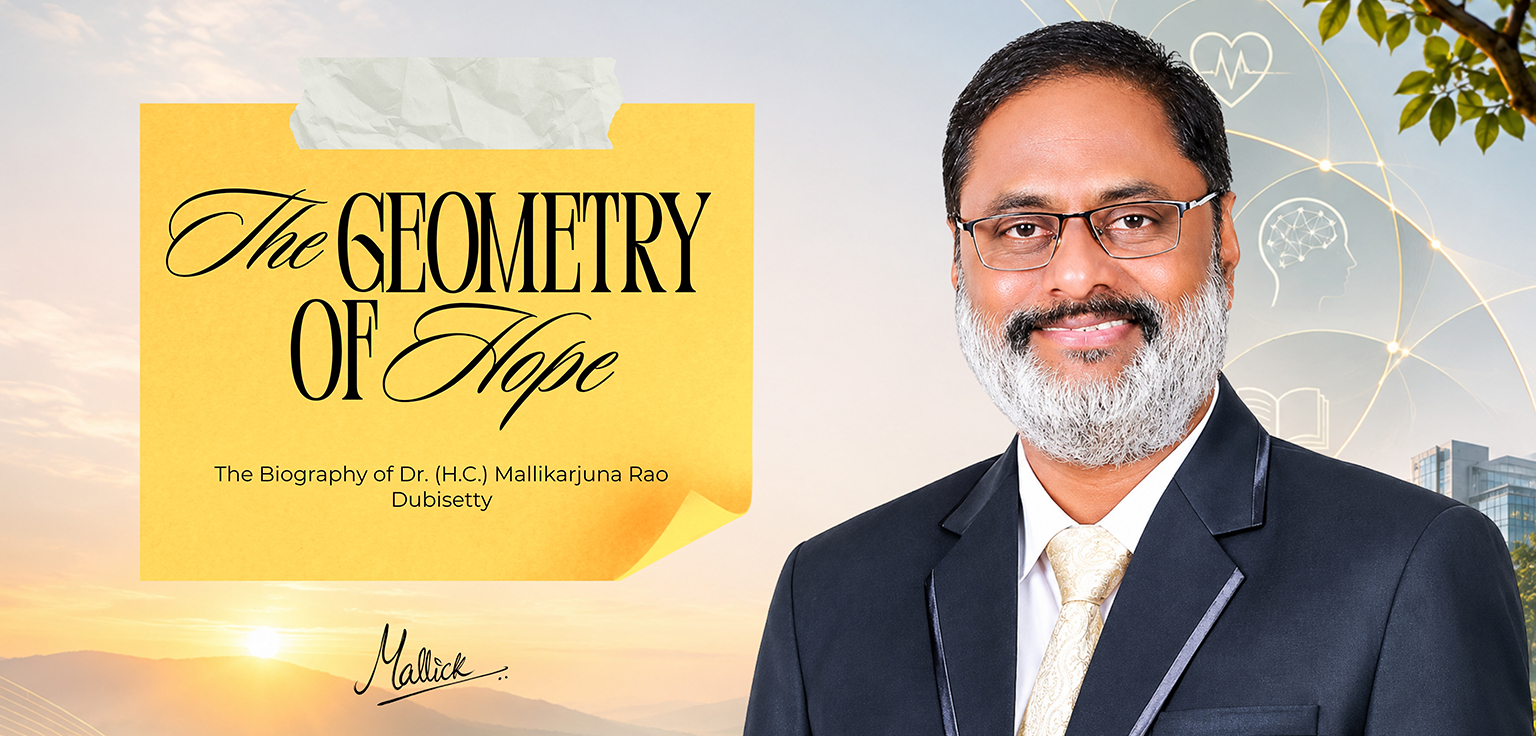
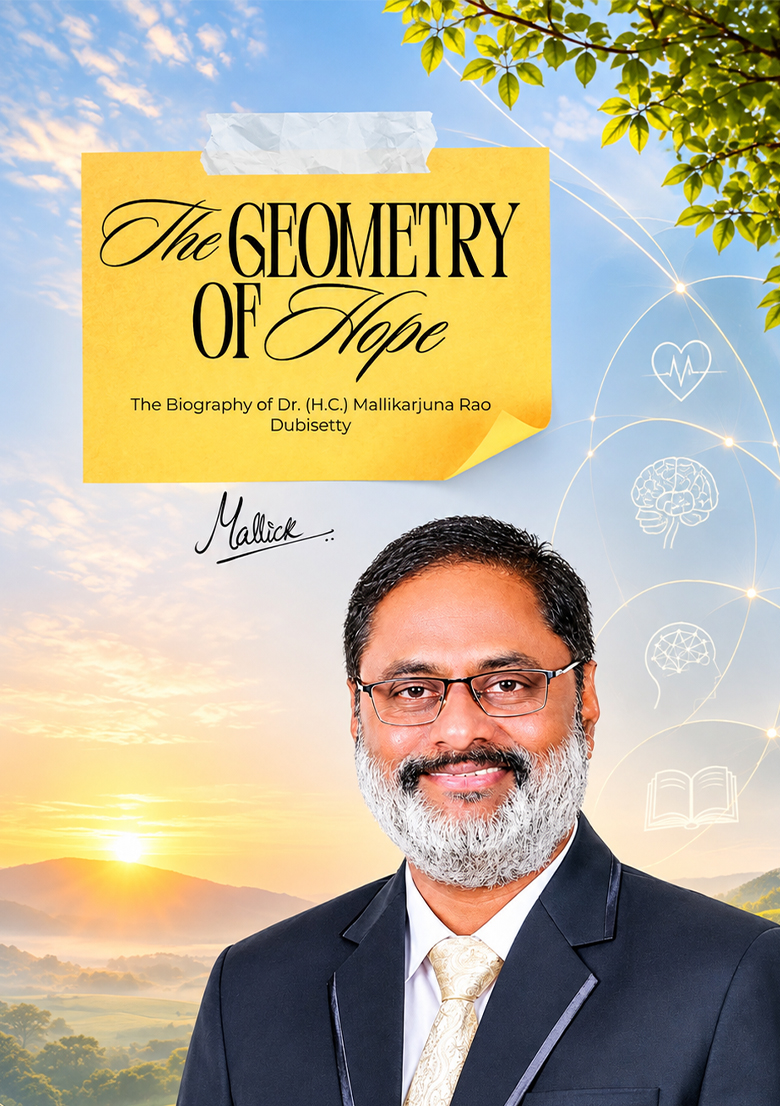
“I spent thirty years building systems for thousands, then my son taught me what those systems were really for. This is the story of a father who turned one difficult question into a mission that now reaches families across the world.”
Introduction
A man may spend decades understanding how the world works, only to discover that the most difficult questions are waiting within his own home. For Dr. Mallikarjuna, years of professional experience had brought an understanding of healthcare systems, technology, and the complicated responsibilities of large organisations. He had worked in environments where decisions affected thousands of people, where efficiency mattered, where knowledge was expected to produce solutions. Yet when his son was diagnosed with autism, the certainty that accompanied professional expertise gave way to something deeply personal. He was no longer approaching healthcare through the responsibilities of an executive or an architect. He was a father seeking answers for his child.
His story began in Nellore, where he was born, before his family life took shape in Hyderabad. The son of D. Papa Rao, a journalist and publisher, and D.V. Sujatha, he grew up in a family whose presence remained part of his personal history. His professional career began in 1996, developing through media, telecommunications, insurance, information technology, and healthcare. These varied industries gradually brought him towards the work that would define much of his professional identity. At Apollo Hospitals, he entered the complex world of healthcare technology, where systems needed to accommodate the demands of medical professionals, patients, and institutional operations. His contributions at Family Health Plan Limited (FHPL) further extended his experience into healthcare administration and insurance-related services.
Over the following decades, he developed a career that crossed technological and organisational boundaries. His professional associations with Accenture, IBM, and Kyndryl involved healthcare transformation, enterprise architecture, research collaboration, and digital innovation. His responsibilities required an understanding of how institutions functioned and how technology could improve their performance. Eventually, his experience brought him to HelixBeat LLC, where he serves as Global Vice President for Strategy and Execution, Healthcare and Life Sciences. Behind these positions lay a sustained commitment to learning, to adapting, to applying technical knowledge to practical challenges.
Yet professional accomplishment could offer little immediate comfort when his family faced the uncertainty surrounding his son, Rahul Shyam. The diagnosis introduced him to difficulties that could not be resolved through managerial authority or technical knowledge alone. There were unanswered questions, emotional struggles, and a period when he moved from Hyderabad to Bangalore. He has acknowledged experiencing depression during this time. Encouragement from a friend helped him consider another possibility: the knowledge he already possessed might become useful in understanding the very difficulties that had unsettled his life.
That possibility demanded considerable effort. Already experienced in technology and healthcare, he began pursuing a deeper understanding of autism, rehabilitation, and early intervention. His academic background expanded to include two MBAs, one in Telecommunications and Business Management and another in Hospital and Health Systems Management, alongside specialised education and doctoral research. His Bachelor of Education in Special Education, focused on Autism Spectrum Disorder, became part of this broader pursuit. He also developed his practice as an early intervention specialist, bringing together professional knowledge and the experiences of a parent who understood the urgency behind every unanswered question.
His growing understanding of the challenges faced by families contributed to the establishment of SMILES Foundation India in 2016. The organisation emerged from a concern he knew personally: parents often struggled to find accessible, coordinated educational and therapeutic support for their children. Through special education initiatives, rehabilitation services, and the Neuro Diversity Centre of Excellence, his work sought to make such support more practical and accessible. The idea of helping children progress from dependence towards greater independence became an important part of his professional and social commitments.
His experiences also influenced his writing, research, and public engagement. He has authored four books and contributed to seven international journal articles, addressing subjects connected with healthcare, rehabilitation, technology, and inclusion. His participation in TEDx and international healthcare conferences has allowed him to share insights drawn from professional practice and personal experience. Recognition followed, including three international Gold honours, the Telangana State Award for Empowerment of Persons with Disability in 2022, and further leadership awards in 2024. These distinctions acknowledged different aspects of work that increasingly brought healthcare technology and human development into closer conversation.
"I have led programmes, earned recognition, and built systems across continents. Yet when I name what shaped me most, I begin with being a father."
Phase 1: The Man Who Turned Experience into a Mission
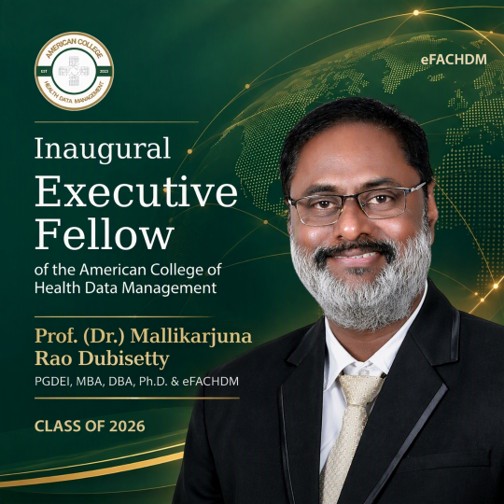
There is a particular kind of responsibility that comes with spending thirty years in professions where decisions affect human lives. Technology must function. Healthcare institutions must respond to the people who depend upon them. Systems designed to improve efficiency must ultimately prove their worth beyond technical performance. For Dr. Mallikarjuna Rao Dubisetty, these responsibilities have become inseparable from his understanding of leadership. Today, his professional identity extends across healthcare technology, research, rehabilitation, and social advocacy. Yet when asked to identify what matters most among his accomplishments, he begins somewhere far removed from corporate positions and professional recognition. He begins with being a parent.
At HelixBeat LLC, he serves as Global Vice President for Strategy and Execution, Healthcare and Life Sciences, a position that brings together decades of experience in enterprise transformation, healthcare operations, and digital innovation. His responsibilities involve strategic planning, technology modernisation, and the execution of programmes intended to strengthen healthcare and life sciences organisations. The work demands an understanding of institutional priorities, financial considerations, emerging technologies, and the practical difficulties of implementing change. Decisions must account for the professionals who operate these systems and the patients whose care depends upon them. For a leader whose career has crossed several industries, the challenge lies in bringing these considerations together without losing sight of their human consequences.
His professional standing has developed through more than three decades of experience across healthcare, telecommunications, information technology, insurance, education, and research. During this period, he has worked with major organisations, including Apollo Hospitals, IBM, Accenture, and Kyndryl, contributing to healthcare technology, enterprise architecture, and organisational transformation. The breadth of this experience has given him an understanding of institutions from different perspectives. Hospitals present challenges unlike those of technology companies. Healthcare administration requires different considerations from enterprise software development. Yet each environment has strengthened his ability to examine problems through their technical, operational, and organisational dimensions.
What distinguishes his present work is the manner in which these professional disciplines coexist with responsibilities that cannot be measured through corporate performance alone. As Chairman of the World Autism Society, he advocates awareness, early intervention, inclusive education, research collaboration, and practical support for individuals with neurodevelopmental differences. His responsibilities involve connecting families, educators, healthcare professionals, researchers, and institutions around concerns that extend beyond geographical boundaries. Through international engagement and professional collaboration, he seeks to encourage a more informed understanding of autism and the needs of those who experience it.
Alongside this international responsibility stands his work with SMILES Foundation India, where his involvement reflects an equally important commitment to accessible education and rehabilitation. The organisation’s activities bring him into a different professional environment, one where families require guidance, children need specialised support, and progress must be understood according to individual circumstances. His responsibilities in this field require patience and careful attention to the differences between children. A programme that works effectively for one individual may require reconsideration for another. Such realities have reinforced his conviction that meaningful support begins with understanding the person rather than assuming that a single approach can serve everyone.
This belief has become central to his philosophy of TrueAbility. He has repeatedly expressed discomfort with approaches that define individuals primarily through their limitations. His attention remains directed towards identifying abilities, encouraging development, and creating opportunities for participation and greater independence. Within this philosophy, technology has an important place, although he does not regard it as a substitute for professional care or human understanding. Its value emerges when it makes services more accessible, improves communication, or helps families and specialists coordinate their efforts. The distinction matters to him because the purpose of innovation must remain connected to the people it is intended to serve.
His standing as a healthcare systems architect and digital health strategist reflects years of engagement with complex technological environments. His professional work encompasses hospital information systems, electronic medical records, healthcare interoperability, artificial intelligence, cloud platforms, cybersecurity, and operational governance. These subjects require technical expertise, but they also demand the ability to understand how organisations function under pressure. A healthcare system must remain reliable while accommodating changing institutional requirements. Information must be protected without making essential services unnecessarily difficult to access. For him, successful transformation depends upon maintaining this balance between technological advancement and practical responsibility.
“Nellore gave me my first breath; Hyderabad gave me my first classroom. My parents gave me the quiet foundations I would only understand much later.”
Phase 2 : Two Cities, One Family, and the Unwritten Years Before Ambition
Before the professional responsibilities, the academic distinctions, and the recognition that would eventually become associated with his name, there was a boy whose life began in Nellore and whose formative years unfolded in Hyderabad. These two places occupy different positions in the personal history of Dr. Mallikarjuna. One marks his birthplace; the other represents the environment in which he grew up, attended school, and began experiencing the world beyond his immediate family. His beginnings were far removed from the responsibilities that would later define his public identity. At that stage, life was concerned with the ordinary but essential experiences of growing up, receiving an education, and gradually discovering the possibilities that existed beyond childhood.
His family formed the earliest part of that world. His father, D. Papa Rao, was a journalist and publisher, while his mother, D.V. Sujatha, occupied an equally important place in his personal history. Both parents are now deceased, but their names remain inseparable from the account of his beginnings. His father’s profession belonged to a world of information, communication, and the written word, where the presentation of ideas carried its own responsibilities. Although the details of his parents’ everyday guidance have not been extensively documented, their place in his life deserves recognition without assigning them words or experiences that have not been recorded. They belonged to the years before professional ambition acquired a definite direction, when his understanding of family and personal responsibility was still developing.
The distinction between being born in Nellore and growing up in Hyderabad is significant because the latter became the setting for his early education. The available account does not preserve a detailed record of his first school, its teachers, or the particular experiences of individual classrooms. What remains clear is that his schooling began in Hyderabad, where his upbringing took shape. Education entered his life long before it became associated with specialised qualifications or professional advancement. At its simplest, it involved the gradual acquisition of knowledge and the experience of learning within a structured environment. The importance of those beginnings becomes easier to appreciate when considering the considerable place that education would eventually occupy in his understanding of personal development.
Childhood is rarely understood fully while it is being lived. The significance of an ordinary school day or a familiar family relationship may become apparent only when a person looks back across many years. For him, the earliest chapters of life are preserved through a small number of firmly established details rather than an elaborate collection of childhood anecdotes. There is no need to manufacture dramatic incidents to give those years importance. His birthplace, upbringing, parents, and schooling provide the foundations of a personal history that existed before the professional world began making demands upon him. They establish where his story started and identify the people who belonged to its earliest years.
The presence of a journalist and publisher within the family is also a noteworthy detail in its own right. His father’s occupation involved communication as a profession, although the available information does not specify the publications with which he was associated or the nature of his daily work. Such distinctions matter in a biography because a parent’s profession and a child’s personal interests cannot automatically be treated as identical. What can be established is that the young Mallikarjuna belonged to a household in which his father pursued this line of work. Whether it directly influenced his eventual interests remains undocumented. The family connection nevertheless forms part of the background against which his early life must be understood.
Although the available account offers few personal details about D.V. Sujatha, her place within his family’s history remains important. Her memory, alongside that of his father, belongs to the formative years that preceded his professional life.
Hyderabad, meanwhile, represented the principal setting of his growing years. It was where the transition from childhood towards the responsibilities of adulthood took place. The specific schools he attended and the subjects that first attracted his attention have not been identified in the available recollections. Nor has he provided a detailed account of his earliest ambitions. What is apparent from the direction of his subsequent life is that formal education would eventually become an enduring commitment. Understanding when and how that commitment developed, however, requires more than assumptions about childhood curiosity. His early years are best approached as the beginning of a developing life rather than as a period in which every future choice had already been decided.
“I learned that hospitals are not machines. Every system I built had to answer to a doctor’s judgment, a patient’s fear, and a family’s hope.”
Phase 3 : Finding His Place in the World of Healthcare & Rehabilitation
A hospital is a place where every decision carries consequences. Behind the medical consultations, treatments, and clinical responsibilities lies an extensive network of information, administrative processes, and technological systems that must work together. For the young professional who would become Dr. Mallikarjuna, entering this environment meant discovering a different dimension of technology. Machines, software, and information systems were no longer concerned solely with organisational efficiency. Their performance could influence the experiences of patients, the responsibilities of doctors, and the functioning of an entire healthcare institution. It was a demanding field, but one that would gradually give his professional abilities a clearer direction.
His working life began in 1996, at a time when he was entering a professional world that extended across several industries. Media, telecommunications, insurance, and information technology formed part of his early experience, each presenting a different set of operational requirements. The movement between these fields exposed him to the practical challenges of managing information, coordinating processes, and understanding how organisations functioned. What appeared to be different professional environments shared certain underlying demands. Information had to reach the right people. Processes needed to remain dependable. Technology had to support the work being carried out rather than complicate it. These experiences formed an important foundation for his developing professional identity.
The early years also brought associations with organisations such as NIIT and NISC, alongside responsibilities connected with technology, education, and institutional operations. His professional exposure was developing across several disciplines rather than remaining restricted to one specialised area. Such breadth mattered because the demands of large organisations rarely existed in isolation. A technological problem could involve administrative procedures, communication between departments, or the practical limitations of an existing system. Learning to recognise these connections became an important part of his professional development. The experience he accumulated would prove particularly relevant when his work began to involve the more complicated requirements of healthcare.
His association with Apollo Hospitals Group marked a defining stage in that development. He entered the organisation’s healthcare technology environment, where the demands of medical practice introduced responsibilities that differed considerably from those of other industries. Hospitals depended upon coordinated systems that could support doctors, administrators, and patients while maintaining continuity across numerous activities. Technology could assist with the organisation of information and the management of services, but its effectiveness depended upon understanding the people and processes it served. For a professional arriving with a technical background, the challenge involved learning to examine institutional needs through a healthcare perspective.
The scale of that environment was considerable. In his own account, he described working within a hospital system associated with approximately 5,000 doctors. Such a setting required an understanding of the connections between medical professionals, administrative departments, and the technological infrastructure supporting their responsibilities. Decisions concerning information systems could affect multiple functions within the organisation. A process designed for one department might need to interact with several others. The complexity demanded careful consideration of how information moved, where operational difficulties occurred, and how technology could support the institution’s broader requirements.
His work at Apollo involved contributions to Corporate IT and healthcare technology architecture. The responsibility of developing and supporting such systems required more than technical familiarity. It called for an appreciation of the daily demands faced by healthcare professionals and the importance of dependable operational support. A hospital could possess advanced medical facilities, but the coordination of its services still depended upon effective administrative and technological arrangements. Within this environment, he began developing the understanding that would become central to his professional expertise: healthcare technology needed to function according to the requirements of medical institutions rather than according to technical possibilities alone.
Note of Thanks
Gratitude often begins with the people whose presence gives life its deepest meaning. For Dr. Mallikarjuna Rao Dubisetty, the experiences that shaped his understanding of responsibility, knowledge, and service cannot be separated from the individuals who stood beside him. Their contributions belong to different chapters of his life, each carrying a significance that professional recognition alone could never express.
His deepest gratitude belongs to his son, Rahul Shyam Dubisetty, whom he considers his greatest teacher. Through fatherhood, he discovered questions that changed his understanding of healthcare, education, and human abilities. His son taught him to look beyond established expectations and recognise the importance of understanding each individual with patience and care. Those lessons remain central to his life’s purpose.
He extends heartfelt appreciation to his wife, Kalpana Dubisetty, whose involvement in education and TrueAbility reflects their shared commitment to supporting individuals with diverse needs. Alongside her, their daughter, Sree Deekshita Dubisetty, has played a meaningful role in caring for her brother, Rahul Shyam, and mentoring him in learning essential real-life skills. Her involvement reflects the importance of family support in everyday development. Together, their care, encouragement, and guidance remain invaluable to him.
He remembers his late parents, D. Papa Rao and D.V. Sujatha, with enduring respect and affection. Their place in his personal history remains irreplaceable, and their memory continues to belong to the story of his life.
Special appreciation is extended to the friend whose encouragement helped him reconsider his direction during a difficult period. That support opened a possibility he would carry forward with determination.
His gratitude also reaches the parents, educators, healthcare professionals, researchers, and rehabilitation specialists who have contributed to his understanding and supported his efforts to serve others.
Above all, he remains thankful to the families who placed their trust in his work. Their experiences continue to remind him that knowledge carries its greatest meaning when it becomes a source of understanding, dignity, and practical support for others.
thanks,
– Dr. (H.C.) Mallikarjuna Rao Dubisetty

AIMLAY is a leading global education platform empowering ACADEMIC and EXPERIENTIAL learners, uniquely focused on recognizing knowledge gained through experience and building a diversified community of doctorates and aspiring researchers.