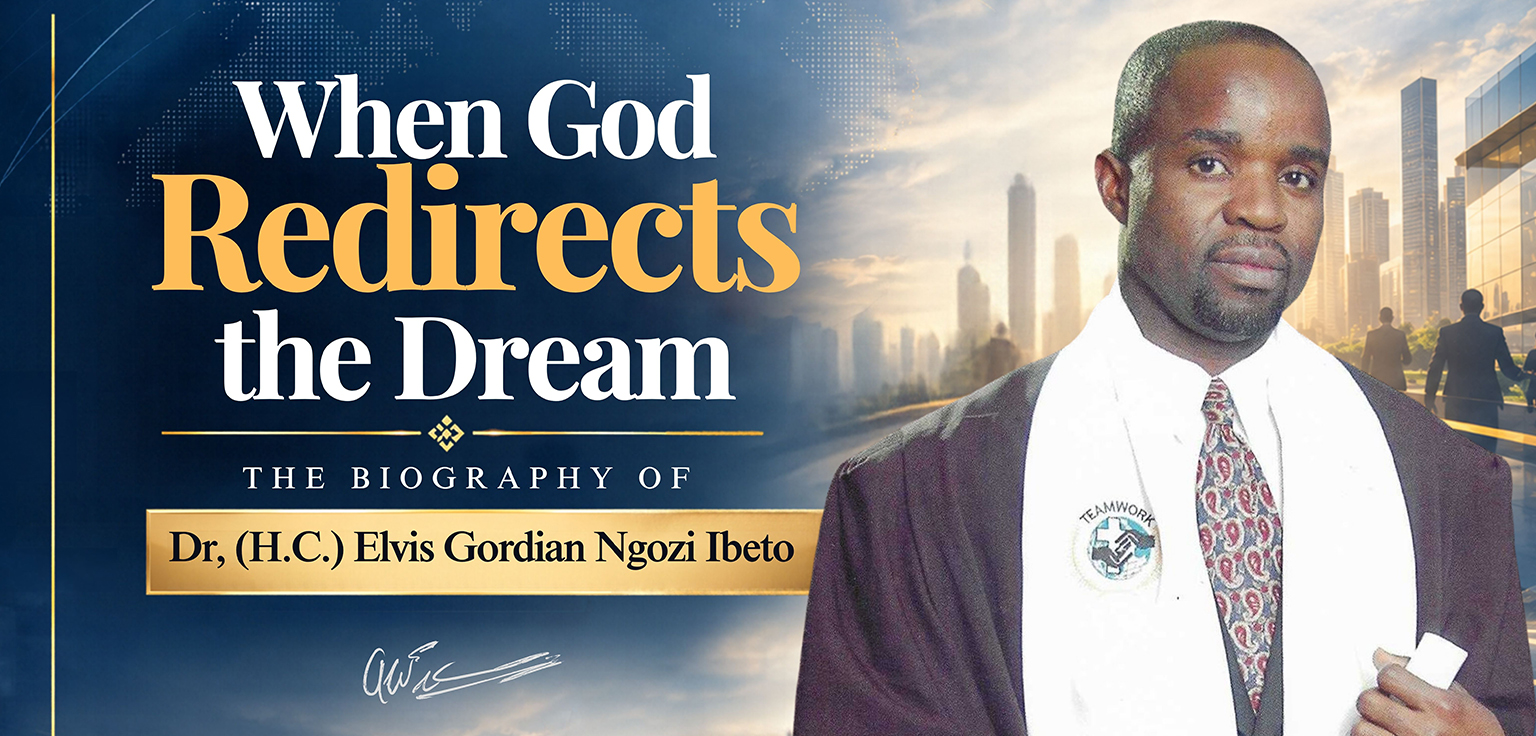
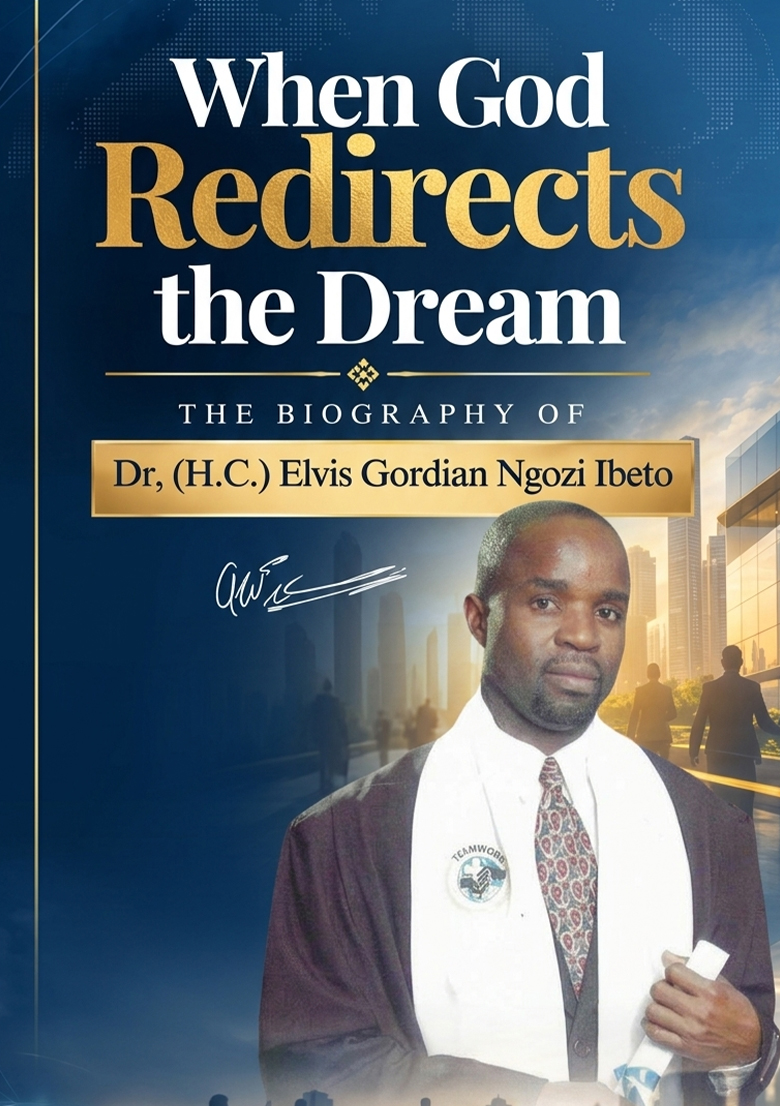
“I walked away from everything I planned and found everything I was made for. my journey teaches you anything, let it be this: say yes to purpose, even when the road is uncertain. Your obedience can change lives.”
Introduction
There are moments in every life when the carefully drawn map begins to blur, when the destination you have spent years pursuing no longer feels like home. For Dr. Elvis Gordian Ngozi Ibeto, that blurring was not a loss. It was an unveiling. The path he had imagined did not disappear; it transformed, revealing how education, responsibility, faith, and service could converge into a single, coherent purpose. His story crosses continents and professions, but its truest movement is internal. It is the account of a man repeatedly asked to decide what mattered enough to shape the next chapter of his existence.
Born on 2 January 1971 in Enugu, Nigeria, he grew up with a restless curiosity about a world far larger than the One immediately around him. Books became his companions, windows into countries, cultures, and people he had never met. In the years before instant digital connection, he formed friendships through pen pals across Asia and Europe, an early exercise in bridge-building that would define much of his later life. That curiosity was not a passing phase. It encouraged him to look beyond familiar boundaries and eventually made him comfortable among people whose cultures and experiences differed sharply from his own.
Education gave that curiosity direction. He thrived in general knowledge, literary activities, and debating, pursuits that demanded both thought and expression. At one stage, sport occupied part of his attention, but an accident around the age of twelve or thirteen redirected his energies. His interests increasingly moved toward intellectual pursuits. Even during school sporting events, he found his place elsewhere, offering commentary through a megaphone rather than competing on the field. Broadcasting, university teaching, and law were among the possibilities that captured his imagination.
Yet aspiration had to coexist with responsibility. The death of his father before he had completed secondary school altered everything. With younger siblings still studying, immediate university education was no longer his first concern. He worked and contributed to the needs of his family, allowing his own ambitions to wait. During those early working years, Dr. Parakal Balakrishnan, an Indian consultant from Kerala, became an important fatherly presence, treating the young man with a warmth that went far beyond an ordinary working relationship. At a time when such guidance carried particular weight, his influence was deeply felt.
The ambition to study, however, had not died. It eventually led Dr. Elvis to Russia, where he pursued law and qualified as a lawyer. Later, an opportunity for further legal studies in Canada appeared to offer the continuation of the future he had once imagined. But in circumstances surrounding the visa process brought him instead to South Africa. What was intended as a temporary stop became one of the most consequential periods of his life.
There, the certainty surrounding his professional direction began to meet another question. The possibility that he might be called into Christian ministry had first been placed before him years earlier, around 1995, when he was home from Russia. At the time, he resisted the idea, dismissing it as improbable. Similar messages followed in Johannesburg, sometimes from people who knew little about him. What began as something he could ignore gradually became impossible to avoid. The decision before him was no longer simply about choosing one profession over another. It was about whether he was prepared to relinquish a future he had worked towards for one he had never originally sought.
"My father taught me to stand. My mother taught me to serve. Between them, I learned that faith without action is hollow, and that compassion is the truest language of the soul."
Phase 1: The Boy from Enugu: How a Quiet, Curious Child Found His First Lessons in Faith & Family

Before the sermons. Before the hospital corridors and prison visits. Before the weight of leadership and the call to serve across continents, there was a boy in Enugu, Nigeria, who believed the world was larger than the streets he walked, and that somewhere beyond the horizon, answers were waiting to be discovered. His name was Elvis, and he grew up in a home where faith was not merely spoken, but lived, where discipline was not a burden, but a gift, and where responsibility was woven into the very fabric of daily life.
Born on 2 January 1971, he entered a family that was large, vibrant, and constantly in motion. Growing up as one among many siblings meant that solitude was a rare luxury. There was always movement around him, conversations to overhear, relationships to navigate, and lessons to absorb. His childhood was never defined by isolation. It was defined by connection, by the endless, beautiful chaos of a household where everyone had a role, and everyone mattered.
Yet that richness did not come without its challenges. With a large family to support, resources were often stretched thin. Financial limitations were a reality during his early years, and he learned early that wants and needs were not the same thing. But those constraints did not diminish his childhood. They enriched it. They taught him adjustment, patience, and the quiet dignity of collective responsibility. He learned that difficulty, when faced together, becomes bearable, and that gratitude is born not from abundance, but from understanding.
At the heart of his foundation stood his parents, Vincent Ibeto and Mercy Ibeto, whose influence would remain with him long after they were gone. His father, a homeopath, was a man of quiet strength and unwavering faith. He did not merely preach Christian values; he embodied them. Through his discipline and guidance, young Elvis learned that faith was not a Sunday performance, but a daily commitment.
His father taught him that responsibility was not optional, that perseverance was not negotiable, and that doing what was right mattered more than doing what was easy. Even the small routines – maintaining order, caring for belongings, prioritizing studies- were lessons in character disguised as chores.
His mother brought a different but equally essential gift. As a nurse at the University of Nigeria Teaching Hospital, she was a living example of compassion in action. Her work was not a job; it was a calling. Through her presence, Elvis learned that service was not something you offered occasionally. It was a way of being. She showed him that kindness was not weakness, that care was not performative, and that the truest strength lay in lifting others. Together, his parents created a household where discipline and compassion were not opposing forces, but partners in the work of shaping a soul.
Within such a large family, relationships became an education in themselves. Older siblings cared for younger ones. Responsibilities were shared. Cooperation was not a choice, but a necessity. Although his parents had demanding professional commitments, he never experienced his childhood as lonely. The household buzzed with life, with the comforting noise of belonging, and in that noise, he found his first lessons in connection and community.
“I set my dreams aside so my siblings could chase theirs. I did not know it then, but that sacrifice was not a detour. It was the first lesson in leadership.”
Phase 2 : The Weight of Duty: How a Young Boy's Sacrifice Became the Foundation of a Servant's Heart
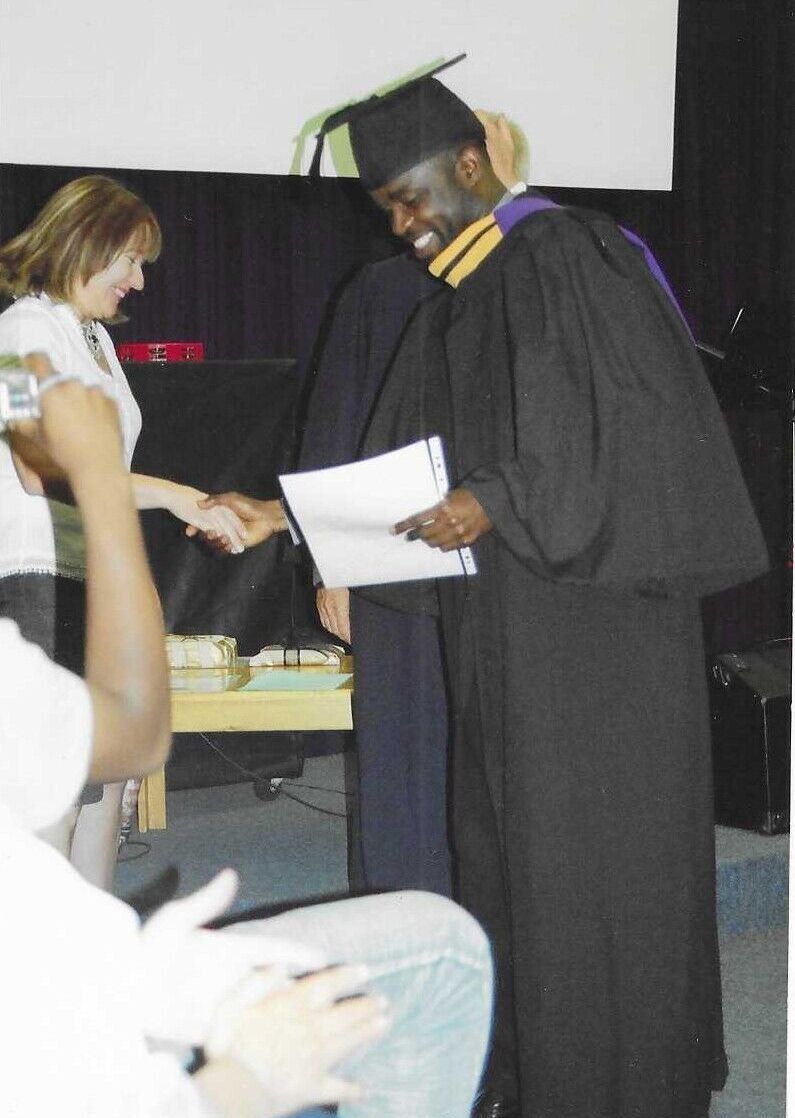
There are seasons in a young life when the future you imagined must be folded carefully and placed aside, not because it has lost its value, but because something more urgent demands your attention. For Dr. Elvis Gordian Ngozi Ibeto, that season arrived earlier than most. It came not with fanfare or warning, but with the quiet weight of loss and the unmistakable call of duty. And in answering that call, he discovered something profound: that character is not built in moments of triumph, but in moments of sacrifice.
His education had always been more than a pathway to a certificate. From his earliest school years in Nigeria, learning was a way Of understanding the world and discovering his own capabilities. His childhood curiosity found fertile ground within the classroom, where teachers recognized his potential and encouraged him to move forward. These years became the bridge between the values shaped at home and the responsibilities that would soon define his character.
His formal education began in Nigeria, where he completed his primary schooling over six years. From the start, his academic abilities stood out. In his fifth year of primary school, teachers noticed something exceptional in him and encouraged his parents to allow him to attempt the entrance examination for secondary education. He succeeded, moving ahead and completing his primary education earlier than the traditional timeline. This early recognition reflected not only his ability as a student, but also the encouragement he received from those who saw promise in him and refused to let it go unnoticed.
His secondary school years continued to develop his intellectual interests. While he explored different activities, his greatest strengths were found in areas that allowed him to think, communicate, and express ideas. But life had other plans. A childhood accident while playing football at around twelve or thirteen years of age changed his relationship with sports forever. Unable to participate in the same way as before, he redirected his energy toward academic and literary pursuits.
That redirection introduced him to new opportunities he might never have discovered otherwise. He became involved in the debating society and quiz activities at school, where his curiosity and knowledge about world affairs became valuable strengths. His interest in learning about different countries and cultures helped him excel in general knowledge. Among his peers, he developed a reputation as someone they could approach when they wanted information or answers about topics beyond their immediate surroundings. He had become, in a quiet way, a resource, a bridge between his community and the wider world.
Even when he could no longer participate physically in sporting activities, he found another way to contribute. During inter-house sports events, he became a commentator, using a megaphone to provide commentary for others. •lhis experience reflected his ability to adapt when circumstances changed. Instead of allowing limitations to define him, he discovered another avenue where his voice and knowledge could create value. He was learning, even then, that leadership is not always about being on the field. Sometimes, it is about being the one who helps others understand the game.
“I had the degree, the plan, the future I had built. Then a voice I could not ignore asked me to lay it all down. I obeyed, and found everything I had been searching for.”
Phase 3 : The Road Not Chosen: How a Lawyer's Certainty Became a Minister's Calling

There are moments in life when the road ahead appears certain, when every step you have taken seems to point toward a destination you can already see. And then, without warning, the ground shifts. Not because you have lost your way, but because a different path is being revealed, one you never planned for, one you never imagined, one that will demand everything you thought you knew about yourself. For Dr. Elvis Gordian Ngozi Ibeto, that moment arrived not as a single dramatic revelation, but as a quiet, persistent whisper that grew louder with each passing year.
His pursuit of knowledge had always been connected to a desire to understand the world and contribute meaningfully within it. After the responsibilities of his early years, the dream of continuing his education remained alive, burning quietly beneath the surface of his daily obligations. The sacrifices he had made for his family did not diminish his ambition. They strengthened his determination to pursue a path where his abilities could be fully developed, where his hunger for learning could finally be fed.
From his youth, he had been drawn toward professions that involved communication, understanding people, and influencing society. Among the possibilities he imagined for himself were becoming a broadcaster, a university lecturer, or a lawyer. These aspirations reflected the qualities that had already begun to emerge in him: curiosity, a love for learning, and an interest in ideas that extended far beyond his immediate surroundings. He wanted to be someone who shaped conversations, who bridged understanding, who stood between confusion and clarity.
Among these ambitions, law became the direction he chose to pursue. It represented an opportunity to engage with society, develop expertise, and use knowledge in a meaningful way. After spending years focused on family responsibilities, he eventually returned to his educational goals and moved forward with his legal studies. The dream that had been deferred was now within reach.
His pursuit of law took him beyond Nigeria to Russia, where he studied and qualified as a lawyer. This period represented a significant expansion of his experiences. Moving into a different environment exposed him to new cultures, new perspectives, and a broader understanding of the world. The curiosity that had existed since childhood now had the opportunity to develop through direct experience. The boy who had once explored distant countries through books and pen pals was now living in an international environment, interacting with people from backgrounds he had only read about.
His time in Russia was not only an academic chapter, but a personal transformation. His earlier openness toward cultures and communities helped him adapt and engage with the world around him. He learned to navigate unfamiliar systems, to communicate across language barriers, and to find common ground with people whose lives were vastly different from his own. These skills would later prove invaluable in ways he could not yet foresee.
After completing his legal studies, Dr. Elvis returned to Nigeria. path ahead appeared clear. His ambition was to further develop his legal career and pursue additional studies. In 2000, he received an opportunity to continue his education through further legal studies at the University of Calgary in Alberta, Canada. The future he had worked toward seemed finally within his grasp.
Note of Thanks
Dr. Elvis Gordian Ngozi Ibeto’s foremost gratitude belongs to his Lord and Saviour, Jesus Christ, who found him worthy to serve in His vineyard despite his frailties, foibles, and flaws. He recognises that his journey has been shaped by grace, guidance, and the opportunity to dedicate his life to a calling greater than himself.
He remains deeply grateful to his parents, Vincent and Mercy Ibeto, of blessed memory, who instilled discipline and selflessness in him and his siblings. By grounding their family in Christian morality and virtue, they created a home where friends and extended relatives were welcomed with warmth and could find a sense of belonging. Their values continue to hold a meaningful place in his life.
He also acknowledges his younger brother, Declan, whose reliable support in caring for the family after their father’s demise became an important source of strength during a difficult period.
Barrister Evangelist Onunkwo holds a special place in his heart as the first person through whom he believes God redirected his attention from a secular profession towards a sacred vocation. Later, in South Africa, Dr. John Nielsen reinforced that message of a ministerial calling, helping him gradually overcome his doubts and resistance.
With profound affection, Dr. Elvis expresses his gratitude to his wife, Melinda, who occupies a cherished place in his heart. He believes that, in the fullness of time, God brought their paths together, blessing him not only with a life partner but also with a fellow labourer in the Lord’s vineyard. Her companionship and shared commitment to faith remain precious parts of his journey.
He further extends his sincere appreciation to the many men and women who have contributed their love, wisdom, support, and knowledge throughout his years in Nigeria, Russia, South Africa, and Ireland. Among them, he gratefully acknowledges Professor Parakal Balakrishnan, Professor Aida Ivanovna, Professor Maksim Grigorivich, Professor Larissa Dimitrova in Russia, and Dr. Gary Theron, Dr. Steve Hansen, Elder Tim Pedro, Dr. Eustatcia Tshukudu, Reverend Edwin Okafor, and Mr. and Mrs. Lally Meyer in South Africa. He also extends his gratitude to all the founding members of Strong Tower Revival Missions and Concerned Brethren International, South Africa.
Dr. Elvis recognises that the encouragement, guidance, and contributions of these individuals have played a meaningful role in his journey. Without their support, he believes that many of his dreams and efforts might never have come to fruition. Their place in his Story is a reminder that even a deeply personal calling is strengthened by the kindness, faith, and generosity of others.
thanks,
– Dr. (H.C.) Elvis Gordian Ngozi Ibeto

AIMLAY is a leading global education platform empowering ACADEMIC and EXPERIENTIAL learners, uniquely focused on recognizing knowledge gained through experience and building a diversified community of doctorates and aspiring researchers.