
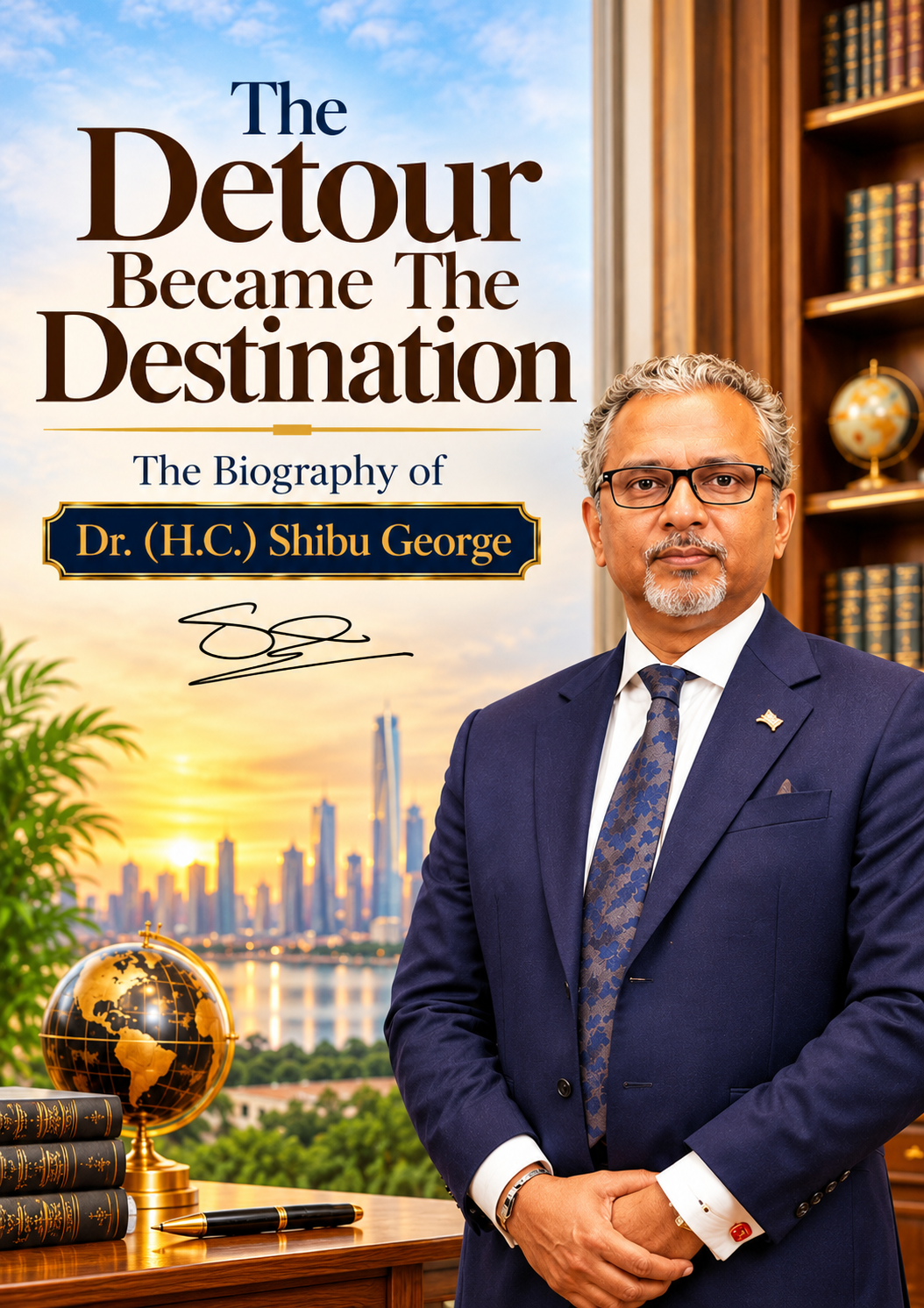
“Like you, I began with nothing but a dream and the courage to say yes to the unknown. The roads I travelled were not always smooth, but they taught me that every detour carries a lesson, every struggle builds strength, and every success is hollow without the people who walk beside you. May my journey remind you that the most extraordinary lives are often the ones we never planned.”
Introduction
Before the ports. Before the towering ships and the sprawling logistics yards. Before the boardrooms and the international calls that spanned time zones. Before any of it, there was a boy in a village in Kerala, the youngest of four brothers, standing at the threshold of a life that had not yet revealed its grand design.
That boy was Dr. Shibu George, and his beginnings were modest, grounded in a family life far removed from the international profession that would eventually define much of his adulthood. Nothing in those early surroundings could have revealed how widely his world would one day expand.
And yet, within that ordinary beginning, something extraordinary was quietly taking shape.
His story does not hinge on a single thunderclap of destiny. It was not one moment that changed everything. Instead, it was a slow accretion of people, of chances taken and relationships nurtured, of workplaces that became classrooms and responsibilities that became stepping stones. Some of those people offered employment. Others offered wisdom. Still others became friends who would linger in his memory long after the professional ties had faded. And a few, without ever knowing the full weight of their influence, helped sculpt the man he would eventually become.
Along the way, certain individuals became important to his development, offering opportunities, guidance, friendship and perspectives that remained with him long after particular stages of work had passed. Dr. Shibu never viewed professional growth as an entirely individual achievement. He remembered the people who helped him understand the industry, opened doors at important moments, and contributed to the person he gradually became. That gratitude would remain one of the most human qualities running through his professional story.
This, then, is the soul of his story. It is not a chronicle of ambition relentlessly pursued. It is a record of how a modest beginning gradually opened itself to a vast and unpredictable world, and how one man learned to meet each new environment with humility, with courage, and with an unshakeable willingness to grow.
Beyond the demands of his profession, he remained conscious of the personal world that gave meaning to everything he was building. However widely his responsibilities expanded, there remained a part of life that could never be measured through professional achievement alone.
The chapters that follow do not present Dr. Shibu as a man who always knew where he was going. Far from it. They reveal him as someone who allowed experience to be his teacher, who treated every setback as a syllabus and every success as a stepping stone. His journey grew not through grand design, but through work, through relationships, through the patient accumulation of responsibility and the courage to remain open to what each stage could offer.
What began in a Kerala village, among the coconut palms and the red earth, would eventually expand into a life far broader than its earliest surroundings ever suggested. But the people of those beginnings, the foundations laid in that modest home – they never truly left him. They travelled with him, across oceans and continents, whispering in his ear, reminding him always of where he came from, and of the man he was always meant to become.
"He did not know where life would lead, only that something within him was already reaching toward a horizon he could not yet see."
Phase 1: The Soil That Held the Seed
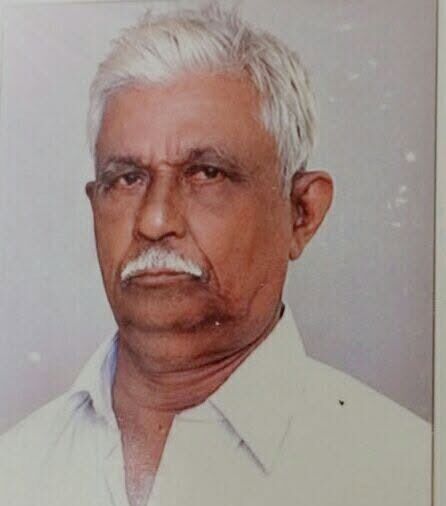
Long before shipping became his language, before foreign ports became familiar as neighborhood streets, and before corporate titles settled upon his shoulders like tailored suits, Dr. Shibu George inhabited a world so different it might have belonged to another man entirely.
His earliest years were cradled in a middle-class home in a Kerala village, where life moved to the rhythm of coconut palms and afternoon rains, where expectations were modest, and dreams were measured not in miles but in the quiet ambitions of a close-knit family. He was the youngest of four boys, growing up alongside his older brothers in a close-knit family. Those early relationships formed part of the foundation he carried into adult life. His first lessons in responsibility were not learned in boardrooms. They were learned in the shared silences of a family dinner table.
His father, the late George Kuty, worked the land as a planter. His world was one of soil and seasons, of early mornings and steady hands, a world utterly alien to the international shipping industry that would one day consume his son’s professional life.
His mother, Lily Kuty, was the quiet heart of the household, the steady flame around which four boys gathered and grew. There was nothing in that village, nothing in that modest home, to suggest that the youngest son would spend decades navigating the complexities of global commerce. The distance between that red earth and the steel decks of ocean vessels was vast, and at that stage, no map connected the two.
And yet, even then, something was stirring within the young man. By the time he reached seventeen or eighteen, a quiet conviction had taken root in his heart. He wanted to become a teacher. This was no fleeting childhood fancy, no whimsical notion that would dissolve with the arrival of practical realities. The desire clung to him, persistent and tender, a seed buried deep that would wait decades to fully bloom. Even after shipping had consumed his days, even after logistics had become his vocabulary, he could still look back and recognize that teaching had been there first, a faithful companion waiting patiently in the wings.
His education provided an important foundation for the professional journey that followed. He graduated in Commerce from the University of Kerala and later earned a master’s degree in Finance from M.G. University, Kerala. The knowledge he gained through these studies would become valuable as his career gradually introduced him to the financial and commercial dimensions of the shipping industry.
That detail matters because the life ahead would not unfold according to this early aspiration. Circumstances were preparing to carry him toward a very different professional world, one he could not yet have anticipated.
But life, as it so often does, was preparing to move in another direction. His brothers would play a pivotal role in that movement. Their presence was not merely one of family companionship. At a crucial stage, they became the architects of circumstance, connected to the events that brought him on a visit to Oman, a seemingly ordinary occurrence that would prove to be anything but. It was one of those quiet turning points whose magnitude could not be measured in the moment. A visit could remain just a visit. Or it could become the invisible hinge upon which an entire life would swing.
“He had not chosen shipping, but shipping had chosen him, and he decided that anything worth entering was worth understanding completely.”
Phase 2 : The Unplanned Beginning

The journey to Oman had begun as a visit. Nothing more. No grand announcement, no farewell ceremony, no certainty that this departure would lead anywhere permanent. Dr. Shibu George had not carried a carefully prepared professional blueprint in his luggage, nor had he imagined that shipping would eventually claim more than three decades of his working life. And yet, this unassuming passage away from home became the invisible hinge upon which his entire future would turn.
His brothers had helped bring him to Oman, their hands gently pushing him toward a horizon he could not yet see clearly. What followed was one of those transitions that often appear entirely ordinary while they are happening, the kind of quiet turning point that only reveals its significance in retrospect. He entered the shipping industry almost by accident. It was not the profession he had spent his younger years dreaming about, not the classroom he had once imagined standing in. But an opportunity had appeared before him, and he accepted it. There was practicality in that decision, the simple logic of survival and progression. But there was also something deeper, a quality that would repeatedly define his working life: when circumstances changed, he did not cling to an earlier plan simply because it had once been his plan.
The first company became his introduction to an industry whose scale he had not yet fully grasped. Shipping was not one isolated function. It was a vast, interconnected ecosystem in which finance, operations, customers, cargo, documentation and commercial decisions all flowed into one another like tributaries feeding a great river. For someone new to the profession, there was much to absorb. Dr. Shibu approached that environment not as though he already understood it, but as someone willing to learn how it worked from the inside, brick by brick, department by department.
One of the most important figures during those formative years was Mr. Jay Kumar, the finance manager of Alfaiah Shipping. Years later, when Dr. Shibu reflected on the people who had contributed most significantly to his professional development, Mr. Jay Kumar remained among the first names he mentioned, spoken with a warmth that revealed the depth of his gratitude. That appreciation tells us something essential about the education taking place during this period. His development was not occurring through designation alone. It was being shaped by people whose experience allowed him to see the business with greater clarity, people who took the time to illuminate what was invisible to a newcomer.
Finance offered an especially valuable window into shipping because numbers exposed realities that activity alone could conceal. Business could appear busy and still be profoundly unhealthy. Revenue could exist while costs consumed its value like a quiet cancer. Customers could generate work while failing to generate actual returns. These distinctions, simple in theory but devastating in practice, would become increasingly important much later in Dr. Shibu’s career, when he would be asked to examine struggling operations and determine where money was being lost. At this early stage, however, the significance lay in learning how a shipping organisation truly functioned, and understanding that every department ultimately contributed to the same commercial result.
He did not remain confined to one narrow corner of the profession. Over time, he worked across departments, gradually building the breadth of knowledge that would become one of the strongest foundations of his career. Each function showed him another side of the organisation, another piece of the puzzle. Instead of knowing shipping merely by title or theory, he came to understand it through participation, through the sweat of daily effort, through the intimate familiarity that only comes from doing.
“His career was built not through ambition alone, but through the hands that opened doors and the voices that guided him forward.”
Phase 3 : The Bridges Between Destinations
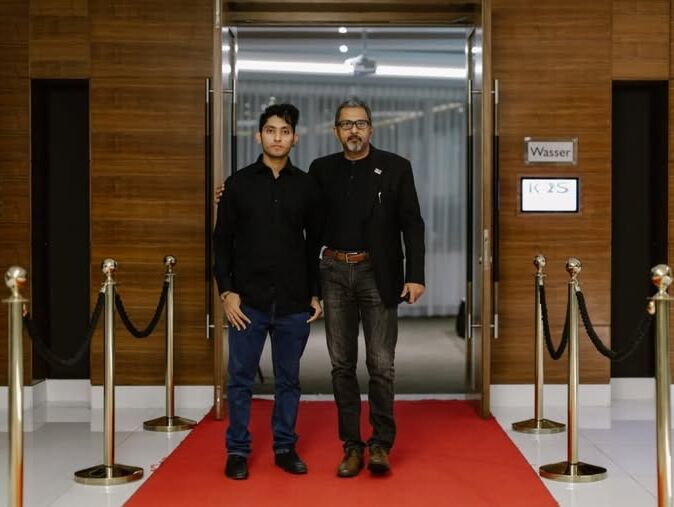
By the time Dr. Shibu George began moving more confidently through the shipping profession, the industry was no longer an unfamiliar world viewed from a cautious distance. He had already begun internalising its working language, its hidden rhythms, and the interconnected nature of its responsibilities. What came next, however, was different. His career was beginning to be shaped not merely by what he could learn from a workplace, but by the people he encountered along the way, the conversations that lingered, and the opportunities those encounters placed before him like gifts he had not expected to receive.
One of the important names to enter this part of his journey was Aniyan Kutty, the Managing Director of Clarion Shipping in Dubai. Clarion would become another significant professional environment in Dr. Shibu’s developing career, offering him a different space in which to continue the work that had unexpectedly become such an essential part of his life. It was not simply a change of letterhead. It was a change of landscape, a new stage upon which his abilities would be tested and refined.
There was something deeply human about the way his professional journey unfolded. It was never simply a sequence of appointments printed neatly across a résumé, cold and lifeless. People appeared at important moments, not by accident but as if summoned by some invisible hand. Conversations led somewhere meaningful. Acquaintances became professional connections. One opportunity created the conditions for another, like doors opening in succession, each revealing a corridor that led to the next. The path developed through movement and interaction rather than through a rigid career plan prepared years in advance, a plan that would have been rendered obsolete by the sheer unpredictability of life.
Biju Nayar was also part of this period. He met him, and through that meeting, he subsequently joined Clarion Shipping. It was another reminder that careers are sometimes redirected through encounters that may initially seem ordinary, almost forgettable. A handshake could lead to a conversation. A conversation could create an opening. An opening could become another substantial chapter of working life. The architecture of a career is not always built with grand designs. Sometimes it is built with the bricks of simple human connection.
Clarion brought Dr. Shibu further into an industry in which relationships and professional credibility existed alongside operational ability, where trust was as valuable as technical knowledge. Shipping was built around movement, the endless ballet of cargo and vessels traversing the world’s oceans. But behind the containers and the manifests were people making decisions, trusting one another with responsibilities, and keeping commercial relationships alive through years of shared effort. He was gradually becoming part of that network, not as an outsider looking in, but as a recognised participant in a global conversation.
Yet he did not approach professional relationships merely as instruments of advancement, as stepping stones to be used and forgotten. The people who remained significant in his memory were remembered because they had played genuine roles in his life, not because they had been useful. Some offered an opportunity when he most needed it. Some guided him through unfamiliar territory. Some became close friends, their presence transcending the boundaries of workplace formality. That distinction mattered enormously because his career was becoming increasingly international, and in such a world, professional life could easily become impersonal, a cold exchange of services. His own experience moved in another direction entirely. Relationships gave the work a human centre, a warmth that balanced the machinery of commerce.

AIMLAY is a leading global education platform empowering ACADEMIC and EXPERIENTIAL learners, uniquely focused on recognizing knowledge gained through experience and building a diversified community of doctorates and aspiring researchers.