“Music teaches us to listen, curiosity gives us the courage to explore, and life teaches us to stand on our own. The true value of knowledge lies in using it to make a difference in someone’s life.”
Introduction
A life cannot always be understood through the achievements a person collects. Sometimes, its deeper meaning lies in the choices made along the way, the questions that remain unanswered for years, and the courage to follow an interest even when it leads somewhere unexpected. Dr. Rupa Kar has built her life around such choices, allowing her love for music, curiosity about astrology, and desire to understand human emotions to become important parts of who she is.
She grew up in a family where business was an established part of everyday life. Her father, Mintu Kar, was a businessman and industrialist, while her mother, Aparna Kar, devoted herself to the household. Yet, it was music that captured her attention from an unusually young age. She began learning when she was approximately two to two-and-a-half years old, so early that she can scarcely remember a time before it.
Her childhood interest gradually developed into formal education. From a government Bengali-medium school to advanced studies in vocal music, she remained closely connected to the discipline. She pursued musical training, completed her postgraduate studies at Tripura University, and later undertook teacher education at Kurukshetra University. Along the way, she came to appreciate not only the beauty of classical compositions but also the knowledge, patience, and understanding required to teach them.
Her professional experiences took her into classrooms, where she taught music to children and developed meaningful relationships with her students. She also worked independently, teaching learners of different ages and exploring opportunities beyond conventional school education. Although she valued these experiences, she eventually recognised that the demands of regular employment were limiting the time she wanted to devote to further study and research.
Meanwhile, a question that had interested her since childhood continued to occupy her thoughts. How could astrologers examine the details of someone’s birth and offer interpretations of their life? This curiosity eventually led her towards Vedic Astrology, where she pursued structured learning under Astro Arun Pandit. What initially interested her as a subject of enquiry gradually became an important part of her professional work.
An especially personal aspect of her approach is the connection she draws between North Indian Classical Music and astrology. Her growing interest in Psychology has added another dimension to this exploration. Through her ongoing doctoral research, she hopes to examine how music relates to human emotional experiences and develop knowledge that may be useful to others.
Her work as an astrology practitioner has also brought her into contact with people facing uncertainty, relationship difficulties, professional concerns, and personal distress. These encounters have made her particularly conscious of the responsibility involved in offering guidance. She believes knowledge should never become a means of frightening or exploiting someone who is already vulnerable.
Beyond her academic pursuits and professional interests is a woman who continues to examine her own choices and learn from the people she meets. She values sincerity over appearances, careful understanding over hurried conclusions, and education that continues long after formal qualifications have been earned.
Dr. Rupa’s life brings together the discipline of a musician, the curiosity of a student, and the responsibility she associates with guiding others. Her ambitions remain active, her research continues, and her interest in discovering meaningful connections between different fields remains an important part of the life she is building.
"A child may be given care, comfort, and education, but the confidence to face the world often begins with the little things she learns to do on her own."
Phase 1: The Little Girl Who Found Her Voice
Long before Dr. Rupa Kar understood what she wanted to become, music had already entered her life. She was barely two or two and a half years old when her musical training began. Even today, she cannot remember exactly when she started learning. It belongs to that distant part of childhood when memories are still forming, and a child follows what comes naturally. For her, music was present so early that she has little recollection of life without it.
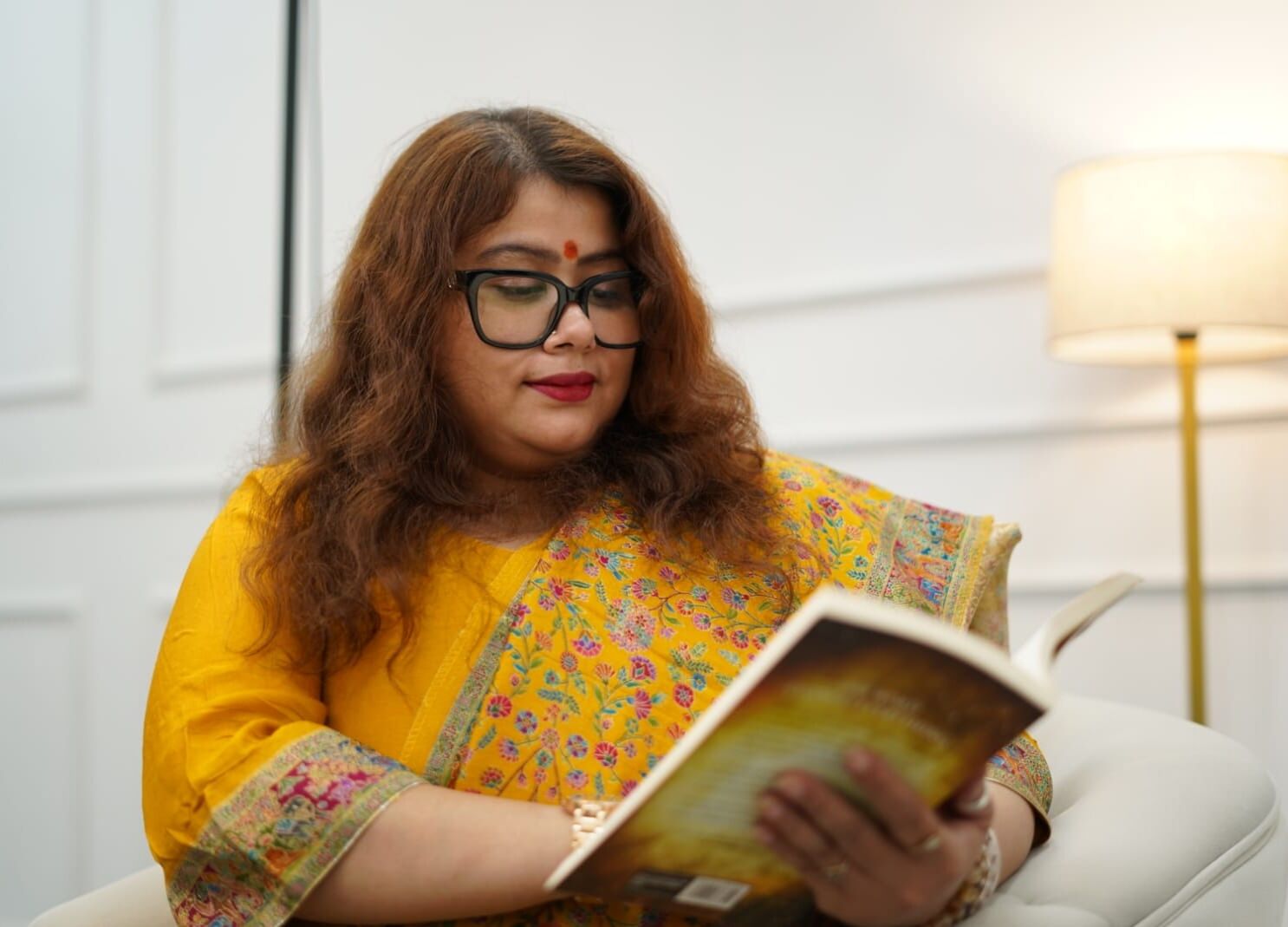
Born on 19 November 1984, she grew up in Tripura, a northeastern state of India, in a family with an established business background. Her father, Mintu Kar, was a businessman and industrialist who had earned considerable recognition for his work. He was known in Tripura’s business community and had received a national award for his contribution to industry. She speaks of him with pride, particularly because she considers his achievement an important distinction in the state’s industrial history. Her mother, Aparna Kar, was a homemaker who looked after the household and its everyday responsibilities. Dr. Rupa Kar in a present-day portrait, reflecting the curiosity and independence introduced in this phase.
Although her family had a recognised position in business, her upbringing was rooted in a comparatively conservative environment. She describes her childhood as a good one, without presenting it as a life filled with extravagance or special privileges. The family had its established responsibilities, and her parents attended to the needs of their children. Their contribution gave her access to education and the care she needed while growing up.
An interesting aspect of her early life was the difference between her family’s business standing and the schooling she received. She did not attend an expensive institution simply because her father was an established businessman. Instead, her education took place in a government Bengali-medium school, where she would continue her studies through the higher secondary level.
There was nothing about this arrangement that she later considered a disadvantage. It was simply part of the environment in which she grew up. Her school years brought her into contact with different people and situations, gradually introducing her to responsibilities beyond the familiarity of home.
In the earliest years, her parents took care of the practical arrangements that a young child could not manage independently. They provided for her schooling and ensured that she was taken to school when she was too small to travel alone. As she became older and more capable of understanding her surroundings, however, she began taking responsibility for such matters herself.
“When something enters your life before you even understand its meaning, years of dedication can turn that childhood affection into a part of who you are.”
Phase 2 : A Childhood Melody Becomes a Life’s Pursuit

There is a difference between enjoying music and allowing it to become a serious part of one’s education. For Dr. Rupa Kar, that distinction became clearer as she progressed through school. Singing was something she had known for years, but school gave her opportunities to take responsibility for musical activities and discover how much work went into preparing others to perform. She was no longer concerned only with what she could learn herself. She was beginning to understand what it meant to guide a group.
Among her clearest school memories were the preparations for Independence Day celebrations on 15 August. Music was an important part of these occasions, and she was entrusted with responsibilities that went beyond simply taking part in a performance. She helped identify children who could sing well, bring them together into groups, and organise their rehearsals. Selecting the right students, helping them practise, and getting everyone ready for the occasion required her attention. She enjoyed being involved in these arrangements, particularly because they allowed her to participate in the musical development of other students.
She remembers these activities with affection. They gave her opportunities to work alongside her schoolmates and take an active part in events that brought the school community together. Music was already her favourite subject, and these occasions gave that interest a practical place in her everyday school experience. Although she never describes herself as an exceptionally brilliant student in every subject, she was comfortable with her academic abilities and knew where her strongest interest lay.
She attended Bani Vidyapith Girls’ Higher Secondary School, completing her education under the Tripura Board of Secondary Education. Her studies included Bengali, English, Political Science, Sanskrit, and Music, while Needle Work was also part of her higher secondary academic record. She completed her Higher Secondary Examination in 2004. The combination of subjects formed part of her general education, but it was music that continued to hold her attention most strongly.
By then, her musical education was no longer limited to the lessons she had received during childhood. She had begun pursuing formal qualifications that would allow her to study the subject more extensively. She undertook diploma-level musical training associated with Bhatkhande University, Lucknow, adding to the foundation she had developed through years of learning.
Her next important academic step took place in Tripura, where she pursued graduation in music at the Government Music College, with her undergraduate examinations conducted under Tripura University. She specialised in Vocal Music, choosing to continue with the discipline she had studied for so long.
University education introduced a more demanding structure to her musical training. Vocal performance was accompanied by theoretical study, and both required formal assessment. The Bachelor of Music Honours programme involved several papers covering theoretical and practical components, giving her opportunities to develop her understanding of the subject through different forms of examination.
“Sometimes, leaving a place where you are valued is the hardest decision, especially when nothing is wrong except that your heart is asking for something more.”
Phase 3 : Beyond the Classroom, Beyond the Familiar
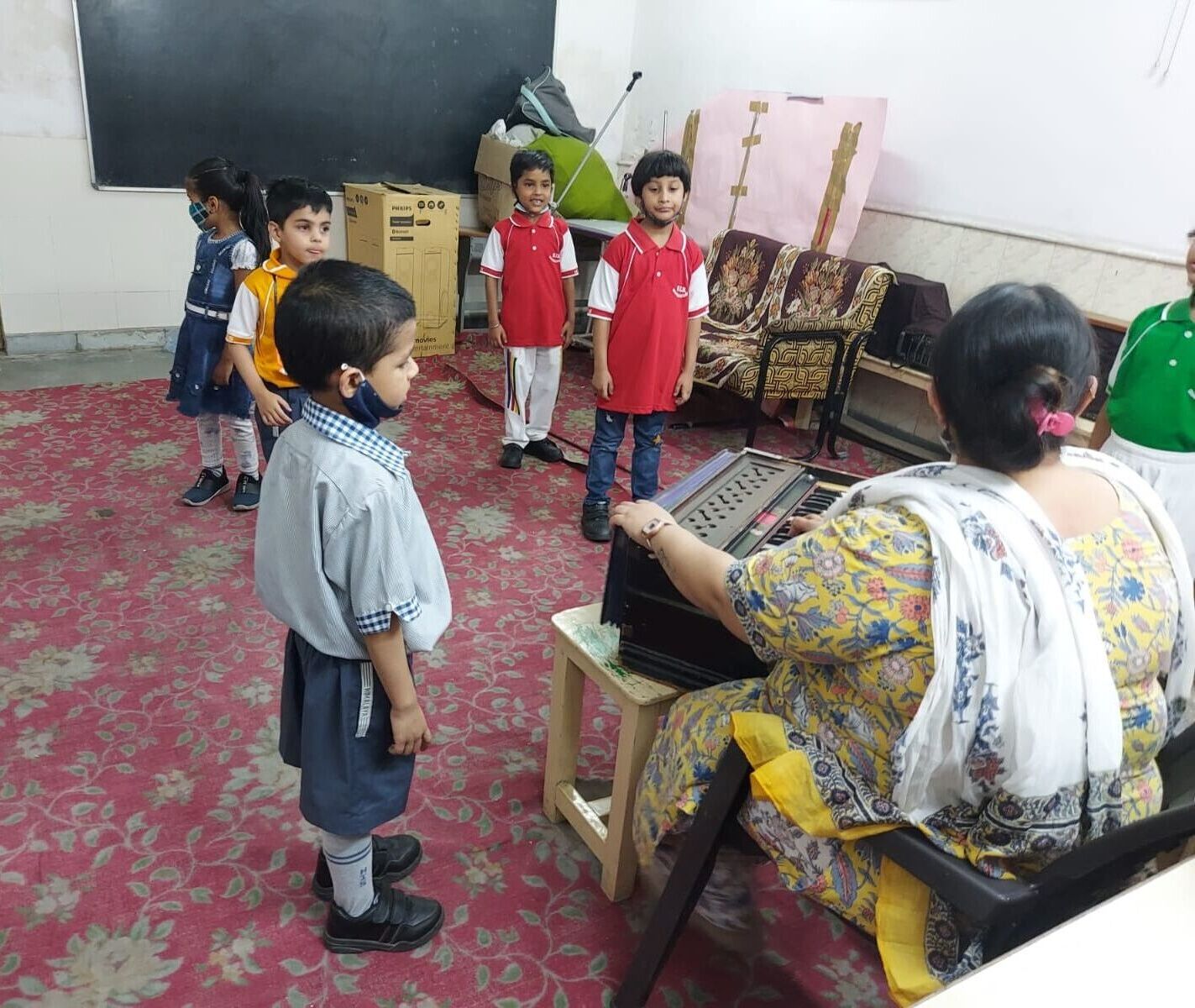
A classroom can teach its teacher as much as it teaches its students. Working in schools introduced Dr. Rupa Kar to experiences quite different from those she had known during her years of musical training. She was now responsible for helping others learn, understanding their individual needs, and finding ways to make music accessible to children with different interests and abilities. It was work she enjoyed in many ways, although she would eventually discover that the life she wanted could not be confined to a regular school schedule.
Her professional experiences brought her to Delhi, where she received opportunities from several schools. She was selective about the institutions and responsibilities she accepted. Rather than taking every opportunity available, she preferred working in environments where she felt comfortable with the expectations and the people around her.
One particularly memorable opportunity came from Delhi Police Public School, where she was invited to participate as a subject expert in the recruitment of teachers. The responsibility was different from teaching students. She now had to listen to prospective teachers, assess their abilities, and contribute to decisions that could influence their professional futures.
She remembers wondering how she would judge another person’s capabilities fairly. Sitting alongside the principal and listening to candidates, she remained conscious of the responsibility involved. She did not want personal preferences to influence her assessment or place anyone at an unfair disadvantage. She subsequently participated in similar activities at other schools.
Alongside these responsibilities, she worked as a music teacher at Himalaya Public School. Her memories of the institution are largely pleasant, particularly because of the support and cooperation she received from the principal. She appreciated the working environment and the relationships she developed with colleagues.
She has always been clear about one aspect of her employment history. Her departures from schools were personal decisions, not the result of dismissal. In fact, some principals encouraged her to return if she ever wished to resume teaching. She remembers these gestures positively because they showed that her work had been valued.
Yet, among all her school experiences, some of her most affectionate memories concern the youngest children.
Although her regular teaching responsibilities involved older classes, she often visited the nursery section whenever she had free time. She enjoyed being around the little ones, speaking with them, and becoming familiar with their lively ways of expressing themselves. They, in turn, grew comfortable in her presence.
Note of Thanks
Behind every meaningful pursuit are people whose knowledge, encouragement, and guidance deserve to be remembered. Dr. Rupa Kar holds two individuals in particular high regard and wishes to express her heartfelt gratitude for the guidance and support they have given her.
Her sincere appreciation goes to Vidushi Professor Dr. Uma Garg, her respected musical guru. Dr. Rupa holds her in high regard and deeply values her association with such an accomplished teacher. Music has occupied an important place in her life, and she considers it a privilege to have received guidance from someone she respects so greatly.
She also wishes to express her gratitude to Astro Arun Pandit, her astrology guru. Having long wanted to understand astrology more deeply, she feels fortunate to have had the opportunity to learn under his guidance. She holds his teachings in high regard and remains sincerely thankful for the knowledge he has shared with her.
Dr. Rupa also acknowledges the support of her family, whose presence has remained important as she continues managing her personal responsibilities and professional commitments.
Her gratitude carries a simple and sincere understanding: however much a person learns independently, the guidance of a good teacher holds a special value. She offers her respectful thanks to those who have shared their knowledge with her and helped her continue learning.
thanks,
– Dr. (H.C.) Rupa Kar

AIMLAY is a leading global education platform empowering ACADEMIC and EXPERIENTIAL learners, uniquely focused on recognizing knowledge gained through experience and building a diversified community of doctorates and aspiring researchers.