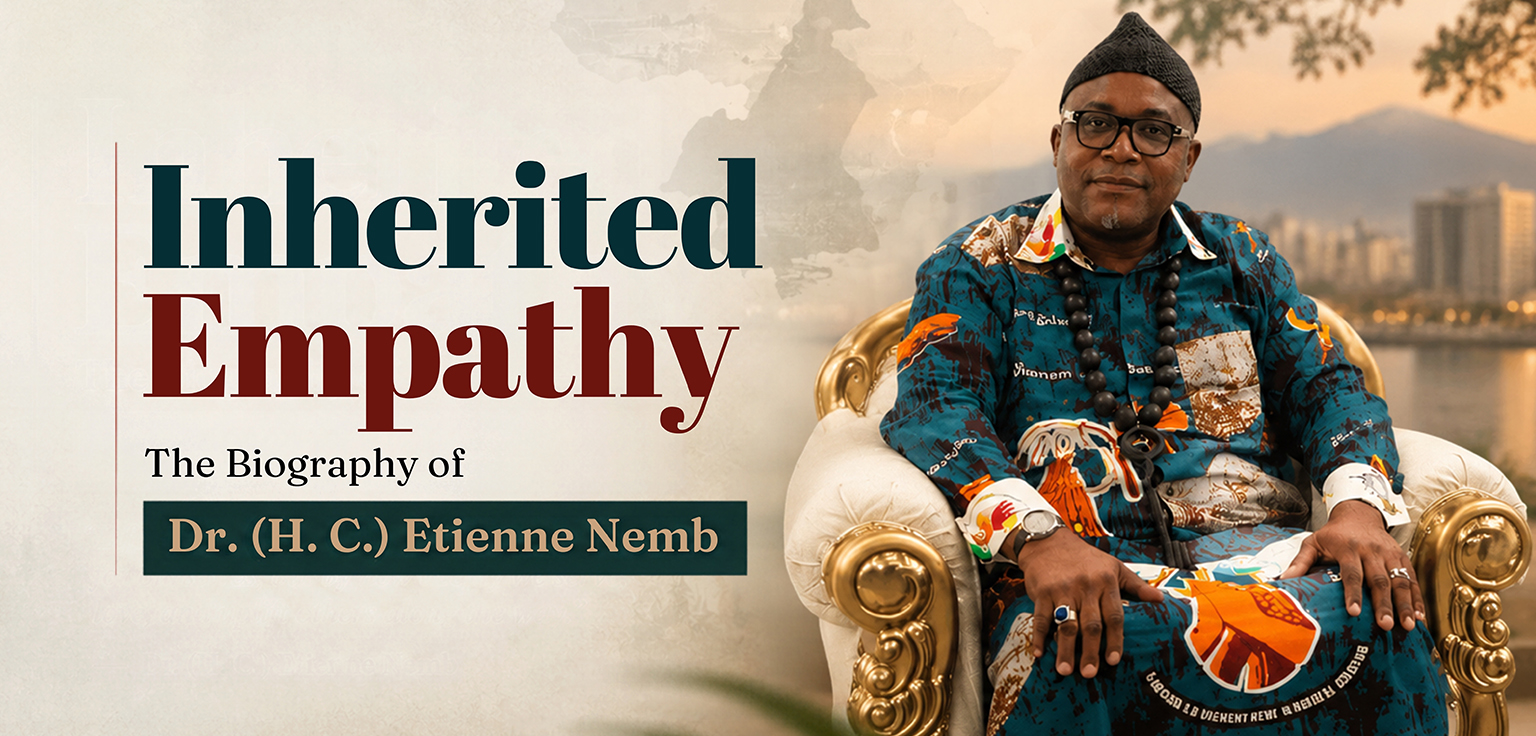
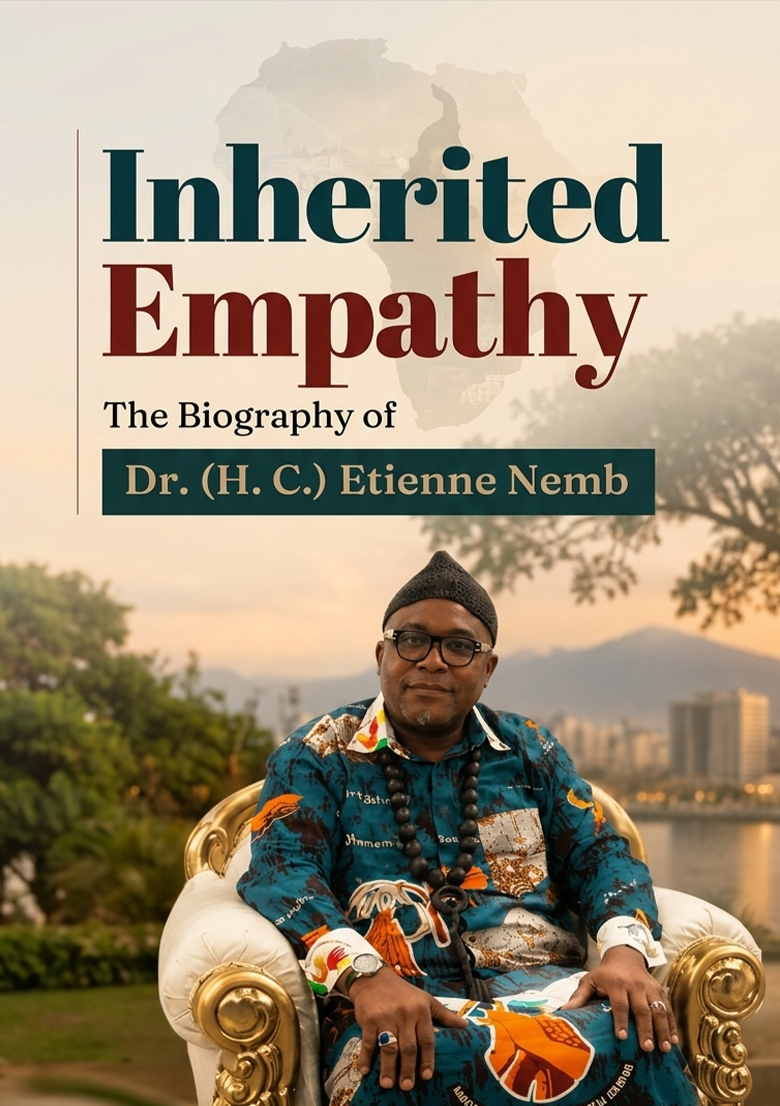
“Life is not measured by what we achieve for ourselves, but by how deeply we serve; love, and uplift others along the way. My journey is complete only in the hope, dignity, and humanity I leave in the lives I touch.”
Introduction
The journey of Dr. Etienne Nemb began in Douala, within the lively neighborhood of Newbell Bassa, where his childhood was a mixture of family, collective duty, and the ever-present buzz of community existence. He was raised in a modest yet affectionate environment where respect, labor, belief, and togetherness were more than just concepts, they were the way of life. The world around him taught him early on that no one makes it alone. He saw neighbors watching out for each Other, heard the wisdom of the elders and learned that belonging also means responsibility.
His first formation was with his late mother, Elisabeth Mpome, affectionately known as Malisa. Her life gave lessons that would never be forgotten. From her sacrifice, strength, faith and unconditional love, Dr. Etienne learned perseverance, humility, compassion and trust in God. She taught him that real wealth is not measured by what one has but by the good one does for others. Her influence became one of the deepest foundations of his character, and her memory continues to inform the way he serves his family, his patients, his community and humanity.
Dr. Etienne grew up quietly dreaming of being someone who could make a meaningful difference. His curiosity led him to an interest in people, stories, communication and community life. During his school years, he developed an interest in the humanities and subjects that helped him understand society more deeply. His early instinct for communication showed up in simple but meaningful ways. As a teenager in Newbell Bassa, he was a neighborhood sports reporter, covering local matches and spreading news about community sporting events. What began as youthful interest became the first sign of a larger calling.
That calling led him to study journalism and communication at the Institut des Sciences et Techniques de la Communication, known as 1ST EC. From there, he began his professional career with the Cameroon Radio and Television Corporation in Buea, in the Southwest Region of Cameroon. His journalistic career took him from newspapers to radio stations and television networks in cities like Buea, Kribi, and Douala. Through the media, he discovered that communication was more than just speaking or writing. It was a means of giving voice to others, of educating communities, of preserving culture and of highlighting the lives and concerns of ordinary people.
Dr. Etienne’s path changed dramatically when he went to the United States for additional training in news reporting. What was meant to be a short-term experience turned into a permanent one. To make the choice to stay and create a future in America took courage, adaptability, and stamina. He had to start over in a new culture, learn new Systems, and cope with personal and professional ambiguity. Yet that transition did not weaken his purpose. It deepened it.
In the U.S., Dr. Etienne found another way to serve in the field of healthcare, especially in psychiatry and behavioral health. His motivation to help people directly led him to those who are in emotional crisis and mental health. For more than 17 years, he has worked in stressful clinical settings where patience, compassion, communication, and dignity are crucial. His positions in organizations such as Emory Healthcare, Grady Health System, Peachford Hospital and Sunrise Senior Living reflect a career of care, stability and human presence. Through this work, he learned that every crisis is a human story and every patient is to be treated with respect, understanding, and hope.
"My mother taught me that real wealth is not what you have, but what you give to others."
Phase 1: The Soil of Newbell Bassa
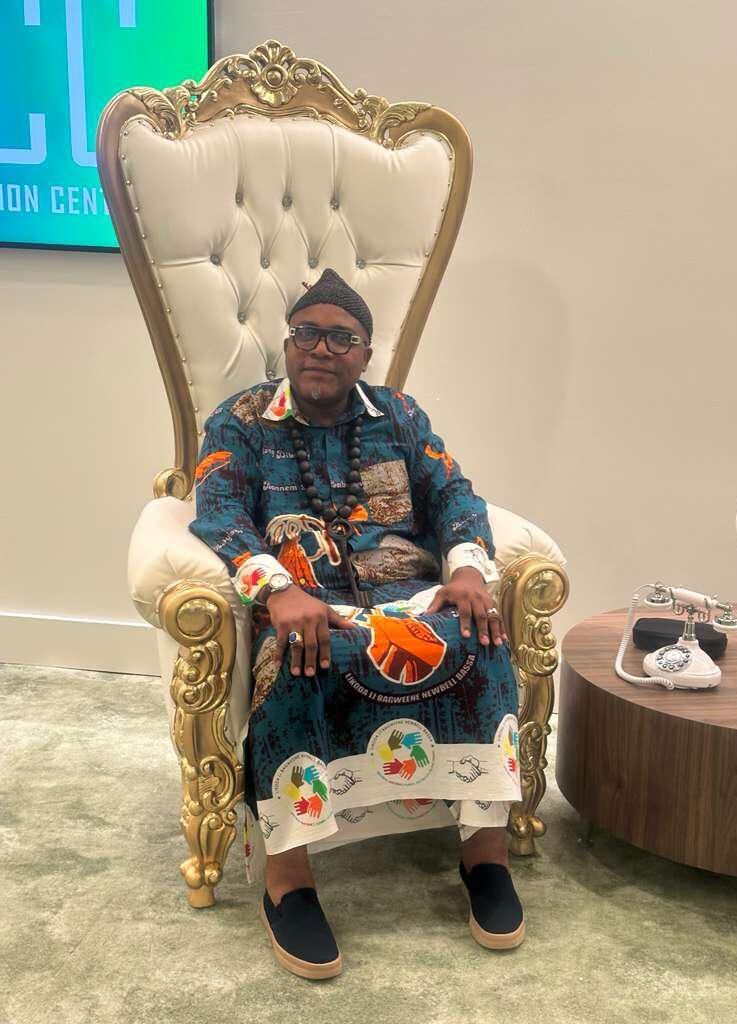
Dr. Etienne’s life began in Douala, Cameroon, in the active community of Newbell Bassa, a place of activity, sounds, customs, and closeness of people. For a child growing there, life was not lived in isolation. Neighbours knew one another, elders carried wisdom, families shared both joy and hardship, and the community had a way of teaching without formal lessons. Newbell Bassa gave him more than a birthplace. It gave him a sense of identity, belonging, and responsibility that would remain with him across every stage of his life.
He was raised in a humble, loving home. Not a home of great material wealth, but rich in respect, hard work, faith and family togetherness. These values were not just things spoken about in his presence. They were things lived out each day by how his family conducted themselves, treated others, kept their promises and faced challenges as a unit. From an early age, Dr. Etienne saw that character is built in ordinary moments. He learned from the way people showed up for one another, from the quiet sacrifices made within the home and from the strength that rises when a family chooses unity over discouragement.
His young life had an emotionally warm, supportive atmosphere. Like many families, they had their difficulties, but love was stronger than hardship. There was resilience in the home, but there was tenderness too. There was discipline, but there was care too. Dr. Etienne grew up understanding that family is not just a group of people tied by blood. It is a place where values are planted, where courage is learned, where a child begins to understand the person he is expected to become.
Another big influence was his childhood with his siblings. They played, learned, struggled and supported one another through the simple realities of family life. He would hold onto the memories of their laughter and their mischief. They invented their own games and adventures from the smallest of things, teaching them that joy doesn’t need much. In those early bonds, he learned about cooperation and loyalty, patience and resilience. In the intimacy of childhood, he learned that companionship can make even the simplest of moments indelible.
Outside his home, the wider community of Newbell Bassa kept on teaching him. He saw how neighbours cared for each other, how traditions were respected, how harmony was natural. It was here that he learned everyone belongs to something bigger than themselves. The elders, the family celebrations, the communal narratives, and the collective duties all contributed to his perception of life. He came to see that people survive and grow not because they stand alone, but because they are connected to others.
At the centre of his formation stood his late mother, Elisabeth Mpome, affectionately known as Malisa. She was the strongest influence in his life, not only because she raised him but also because she showed him what strength looks like when it is lived quietly, faithfully, and without complaint. Her love was steady. Her sacrifices were deep. Her faith was firm. Even in hard times she never gave up on her children. She always encouraged them to work hard, be humble, have faith in God and treat others with dignity.
“I discovered early that every voice carries a story, and every story deserves to be heard.”
Phase 2 : The Awakening of a Communicator

In the safe haven of childhood, Dr. Etienne stepped into the larger world of education with a quiet determination guiding his course: curiosity. His early schooling was not without difficulty, but it gave him the discipline to persist and the understanding that education required more than natural ability. He was eager to understand the world around him, but he also learned that advancement required work, patience and perseverance. This realization stayed with him long after his school years, becoming one of the principles that later helped him rebuild his life in new places and new fields.
In his school years, Dr. Etienne was drawn to subjects that helped him to understand people and society. He was attracted to the humanities because they opened a window into human behaviour, culture, thought and community life. Reading gave him access to ideas beyond his immediate surroundings. Communication gave him a way to connect with others. Community activities gave him a sense that learning was not meant to stay inside the classroom. It had to move outward, touch people and become useful in real life.
Even before he had an established career, signs of leadership and service began to appear. He enjoyed being with people, sharing ideas and participating in activities that united people. He often took initiative when something needed attention. This was not the loud confidence of someone seeking recognition. It was the natural response of a young person who had learned from home and community that a person should contribute where he can. Dr. Etienne was beginning to understand that voice, presence, and responsibility could work together.
One of the earliest expressions of this gift came during his teenage years in Newbell Bassa. He was a neighborhood sports reporter, writing about local games and reporting news about community sporting events. It might have looked simple but it had a deep meaning. It was his first experience of gathering the information and stories of the events that happened to the people. It taught him that people cared about what happened in their community. It also told him that even local stories mattered when they were told with care and respect.
Dr. Etienne’s early role allowed him to discover the thrill of communication. He wasn’t just relaying information. He was linking people to moments that were important to them. A game, a score, a player or a gathering became more than an event when it was shared with the community. In those early experiences, he started to see that stories could bring people together, hold onto memory and spark conversation. What started as youthful interest slowly became a calling.
That calling led him toward journalism and communication. Dr. Etienne came to the Institut des Sciences et Techniques de la Communication, ISTEC, to study Journalism and Communication. His experience at ISTEC helped turn the spark that had first appeared in Newbell Bassa into a career. It gave discipline to his voice and structure to his curiosity. It taught him that communication is not just about talent, but about preparation, ethics, responsibility and service.
For Dr. Etienne, journalism was never simply visibility and exposure. It was about giving voice. He was attracted to stories that were important to ordinary people; their struggles, hopes, successes, worries and place in the social fabric. He understood that the media could be a vehicle for education, enlightenment and awareness of issues that might otherwise go unnoticed. His regard for humanity was not remote or theoretical. It was rooted in lived experience, rooted in community, rooted in family, rooted in the knowledge that every life has a story to tell that deserves dignity.
“Starting over is not failure, it is courage in its most honest form.”
Phase 3 : The Courage to Begin Again

The journey of Dr. Etienne took a decisive turn when his path led him from Cameroon to the United States for advanced training in news reporting. At first, this journey was connected to the profession he had already begun to shape with care and conviction. Journalism had taught him how to observe, listen, write, speak and bring people into awareness. It had given him a voice in public life and a reason to believe that communication could serve society. Yet the journey to America became far more than a professional opportunity. It became one of the most defining transitions of his life.
Leaving one’s homeland is never a simple act when that homeland holds family, memory, language, friendship, and identity. For Dr. Etienne, Cameroon was not merely the place he came from. It was the dirt that made him, the community that shaped him, and the world where his first dreams had born. To step away from that familiar ground required more than movement. It required courage. It required the willingness to face uncertainty without losing the values that had been planted in him since childhood.
What began as a temporary stay gradually became a permanent chapter. After considerable thought, Dr. Etienne chose not to return to Cameroon but to create his future in America. This choice was not without its consequences. It meant confronting the reality of beginning again. It meant learning new systems, acclimating to a new culture, and finding his place in a place where nothing could be taken for granted.” The decision did not erase his past. It asked him to carry that past into a new country and allow it to guide him through unfamiliar circumstances.
In the United States, he experienced the challenge of rebuilding life from the ground up. This transition was a test of his patience, his humility, his resilience. The habits that had served him well in Cameroon had to be reshaped for a new society.
He had to understand how things worked, how people communicated, how opportunities were found, and how responsibility was carried in a different system. There were personal and professional uncertainties, and at times the road ahead was not clear. Yet Dr. Etienne had already learned from his mother, that hardship was not a reason to surrender. It was a place where perseverance had to prove itself.
His life in America also brought important relationships that became part of his growth. Like many young men, he had married in Cameroon, and that marriage blessed him with children. Although that chapter eventually ended in divorce, he did not look at it only through the lens of loss. It remained part of his human journey, a period that brought responsibility, fatherhood and lessons about life. He carried gratitude for his children and the meaning they brought into his existence.
During his years of adaptation, friendship became another source of support. Dr. Karen Wright was one of the people closest to him in the United States. She helped him in so many ways and gave him a better understanding of life in the American system. Her support and perspective were critical to his personal development as he learned to adapt to a new culture and environment. For someone starting over in a new land, such support was no small thing. It gave him the ability to stand taller in a place that had once seemed alien.
Note of Thanks
This note of thanks is offered with humility by Dr. Etienne Nemb to all those whose love, belief, guidance, and support became part of his life’s journey. He begins by thanking the Grand Architect of the Universe, under whose guidance, protection and blessings he has been able to get through every season, every challenge and every new beginning.
Dr. Etienne remembers his late mother, Elisabeth Mpome, affectionately called Malisa, with deep reverence. Her faith, sacrifice, strength and unconditional love laid the foundation of his character. Her lessons guide his service, his compassion and his understanding of purpose.
He expresses his sincere gratitude to his children, Rosalie Jeanine, whose memory he will always cherish, and Samantha, Rachel and Patrice, who have brought meaning and joy to his life. He is also grateful to his beloved grandchildren, Ivan Nemb, Magloire Nemb, David Etienne Nemb, Gloria Dissake and Jazziel Moïse Etienne Nemb, who are the hope, continuity and future of his family.
Dr. Etienne would like to thank his elder brother Samuel Ponda, who became a father figure after the death of their mother, and his aunt Rachel Nemb, whom he lovingly calls Mother, for her enduring love and guidance. He would also like to thank Pepin de Ngon and Dr. Karen Wright for the roles they played in his journey.
He extends sincere appreciation to his colleagues at Emory Healthcare and Grady Health System, to his patients, his Newbell Bassa community, and all those who trusted, encouraged, and walked beside him. Their presence remains part of his story, and their support continues to live in his gratitude.
thanks,
– Dr. (H. C.) Etienne Nemb

AIMLAY is a leading global education platform empowering ACADEMIC and EXPERIENTIAL learners, uniquely focused on recognizing knowledge gained through experience and building a diversified community of doctorates and aspiring researchers.