“She was not defined by the doors that closed before her but by the ones she opened for others.”
Introduction
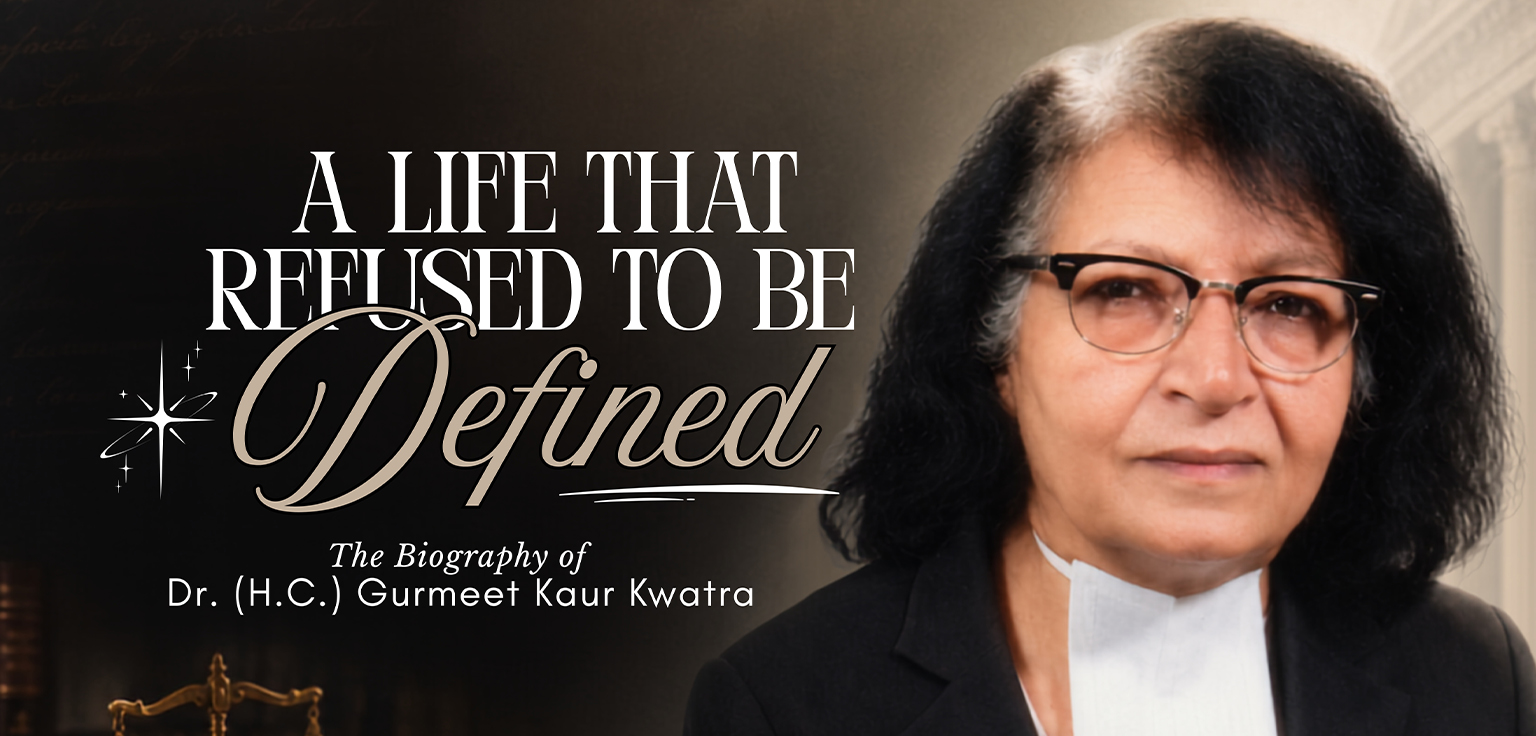
On 5 December 2007, an order issued by the Government of India, Ministry of Law and Justice, placed Mrs. Gurmeet Kaur Kwatra among the advocates engaged as Group B Panel Counsel for conducting Central Government litigation before the Supreme Court of India. It was a significant professional responsibility, but it did not stand alone. Behind that appointment was a woman who had spent years building her understanding of law, accepting demanding responsibilities, and remaining committed to truth even when circumstances tested her patience. She was elevated to panel “A” Counsel for the Central Government in the Supreme Court of India, a position she held until April 2022.
The legal identity of Dr. Gurmeet emerged through persistence rather than convenience. Long before she entered a courtroom, she was a young girl learning how expectations could shape a woman’s choices. Born in Rahon, Punjab, on 25 February 1952, she was the youngest child in her family and grew up between contrasting influences. Her mother brought creativity, encouragement, and an instinctive warmth into the home.
That early determination appeared in many forms. At Government Girls Higher Secondary School in Panipat, she participated in athletics, hockey, music, dance, and other activities. She competed in shot put and discus, played hockey, performed folk songs and group dances, and earned recognition in school competitions. Her involvement in the National Cadet Corps added another dimension to those formative years. Discipline was becoming part of her character before she fully understood how often she would need it.
Her first degree led her to Home Science College in Chandigarh, where she completed a Bachelor of Science in Home Science. Ihe subject matched her natural interests in cooking, creativity, and the practical responsibilities of everyday life. Her education also included training in first aid and home nursing through the St. John Ambulance Association. lhese experiences reflected a personality that was never confined to one direction. She could appreciate art, gardening, food, and the care of a home while still searching for a wider intellectual purpose.
That purpose gradually became clearer through law. Convincing her father to permit further study took almost a year, but the resistance strengthened her resolve. She entered the Faculty of Law at the University of Delhi, where legal education became more than the pursuit of a qualification. Criminal law, constitutional law, administrative law, evidence, jurisprudence, and related subjects gave form to her instinctive desire to question, understand, and search for truth.
Her university years also revealed her confidence beyond examinations. She participated actively in classroom discussions, debates, Moot Court activities, cultural programmes, and social initiatives. Her selection as Best Girl Student reflected not only academic participation but also the ability to remain visible, responsible, and engaged within the wider life of the institution.
After completing her LL.B. studies in 1974, she was enrolled as an advocate with the Bar Council of Punjab and Haryana in November 1975. Her ambition then carried her beyond India. She applied to The Law Society in London with the intention of becoming a solicitor. The duties attached to that training demanded confidentiality, honesty, diligence, and professional propriety, qualities that closely matched the principles she was already learning to protect.
"She entered the world with little more than faith, yet that faith quietly taught her to meet life with honesty, humanity, and dignity."
Phase 1: The Youngest Voice in the Family
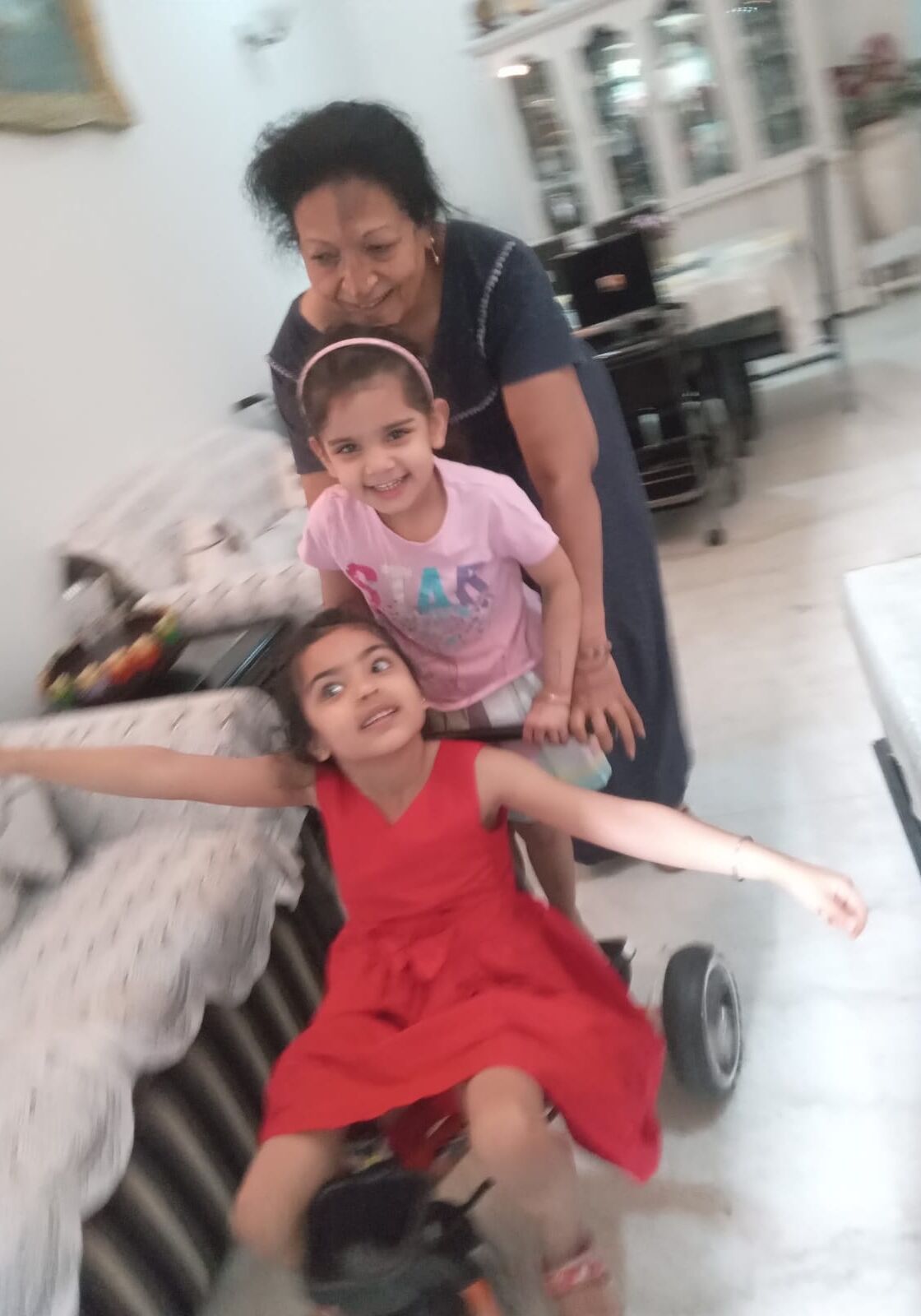
The story of Dr. Gurmeet begins in Rahon, Punjab, where she was born on 25 February 1952. She arrived as the youngest child in a family where five children had already created their own places, relationships, and experiences. Being the youngest gave her a distinctive position. She was surrounded by elders whose conduct offered lessons long before she was old enough to understand them fully. Their choices, disagreements, loyalties, and responses to difficulty became part of her earliest education.
Her childhood was not one she would later describe as entirely happy. Yet she did not speak of it only with sorrow. She believed those years had given her much to learn. Within the family, the children respected one another and listened to their parents. Honesty was not treated as a convenient virtue but as an expectation that shaped how they lived together. This environment planted within her an early understanding that character is built through everyday conduct, particularly when nobody is offering praise or recognition.
Her arrival into the family carried a painful story that remained with her through the account of her brother. At the time of her birth, her mother was unwell and suffering from a high fever. Her father, Sh. Pritam Singh Bedi had to leave for an urgent meeting, while her maternal aunt remained nearby. Concerned about her sister and the five children who were already dependent upon her, the aunt reacted with fear when the newborn was found to be a girl. She placed the infant near the main entrance of the family’s large haveli, without a sheet or prepared bed.
When the children returned from school, they found the newborn lying close to an uncovered charpai near the gate. Her brother later remembered that she was not crying. She was moving playfully, giggling, and appearing to look towards the sun. The day coincided with a solar eclipse, and her face and body had become red from exposure. The family recollection remained unusual and unsettling, yet within it Dr. Gurmeet recognised an image on her forehead extending upto nose that seemed to accompany her throughout life. Even in an unprotected moment, the infant had responded to the world with movement and laughter.
She later interpreted the moment through faith. It was as though the sun had offered the first silent lesson of her life, telling her that struggle would accompany her, but that she could still choose how to meet it. She did not treat the incident as a reason to remain wounded or to define herself through rejection. Instead, it became part of her understanding that life could begin in uncertainty and still grow towards meaning.
The two Strongest influences within the household came from parents whose personalities were markedly different. Her father, Pritam Singh Bedi, was educated, disciplined, and deeply familiar with the English language and manners. He had worked closely with British officers and absorbed many aspects Of their conduct and way of living. What he observed in his professional surroundings entered the home through expectations about speech, discipline. presentation, and behaviour.
He was also remembered as an exceptionally honest man, and a firm, rough, and demanding personality. His manner could feel severe, particularly to a daughter whose own will was gradually becoming stronger. Yet she recognised that important parts of her character had developed through him. Her command of English grew under his influence, but the deeper inheritance was an insistence upon honesty. The value remained with her not because it was repeatedly explained, but because she had seen it embodied with uncompromising seriousness.
“Sometimes the person who questions a dream also gives it the strength to survive."
Phase 2 : When Resistance Strengthened Her Resolve
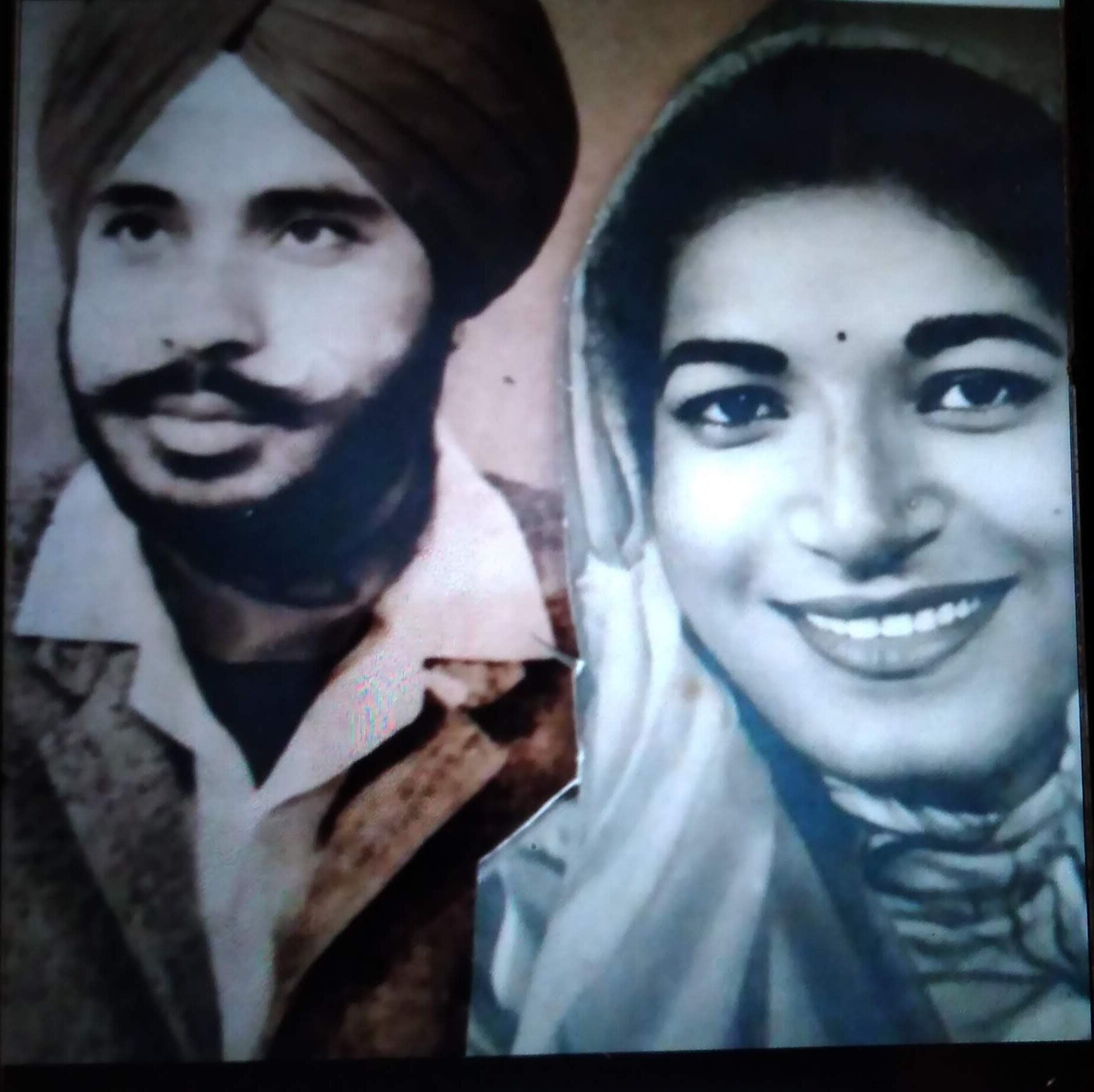
As Dr. Gurmeet moved beyond the earliest years of childhood, education became the first cause for which she had to stand firmly. Learning did not arrive as an unquestioned right. Her father was not supportive of women pursuing extended education, and the possible expense added to his resistance. He wanted his daughter to become settled in life, but she had already begun to sense that her future could not be decided without allowing her mind to develop.
The disagreement was not simply about attending classes. It revealed two different understandings of security. Her father believed protection came from limiting uncertainty and keeping his daughter within a familiar path. She felt that education itself would give her the knowledge and confidence needed to face an uncertain world. Neither position was without emotion. His objections were shaped by financial concern and his understanding of a woman’s future, while her persistence came from an inner certainty that she was capable of more.
She did not receive constant encouragement or enthusiastic praise. At times, even her visible achievements passed without acknowledgment from him. One of her accomplishments appeared in a newspaper with her photograph after she secured an important position among participating schools. She remembered the recognition clearly, but she also remembered that her father said little about it. For a young person, silence at such a moment could have reduced the joy of achievement. For her, it created a different response. She gradually learned that personal progress could not remain dependent upon another person’s approval.
This lesson became central to her growth. She could respect her father and still disagree with the limitations he placed before her. She could recognise the discipline he represented while refusing to let his hesitation become her final answer. The relationship demanded emotional strength because the resistance came from within the home, from someone whose authority carried weight. Defying a stranger may require courage, but standing by direction before a parent demands a more complicated kind of resolve.
Her mother, Smt. Iqbal Kaur, responded differently. Though she had not received formal education herself, she understood what opportunity could mean for her daughter. Her encouragement did not always appear through long conversations or public declarations. It emerged through sacrifice. When money became an obstacle, she sold her gold to support her daughter’s education. The act carried a meaning greater than its financial value. She was giving away something of her own so that the youngest child could move towards a future that had not been available to her.
For Dr. Gurmeet, this support became a lasting responsibility. Her decision could not be treated casually. It asked her to work, persevere, and prove that the sacrifice had served a meaningful purpose. Education was no longer only a personal wish. It had become connected to trust, courage, and the faith of a woman who wanted her daughter to demonstrate what she could become.
“Her early victories were not confined to one field. Each activity revealed another part of the person she was learning to become.”
Phase 3 : A Childhood Alive with Talent
Before Dr. Gurmeet found her professional direction, school gave her a broad arena in which to discover her abilities. At Government Girls Higher Secondary School, Panipat, education extended beyond books and examinations. The opportunities available through sports, music, cultural programmes, practical competitions, and disciplined training allowed her to participate in many different forms of learning.
She did not limit herself to activities that appeared easy or naturally connected. Her school record presents a young girl willing to enter both athletic and creative spaces. She competed in events that required physical strength, joined performances that depended upon coordination, and participated in activities where concentration and practical skill mattered. This variety became one of the most distinctive features of her early development.
In January 1964, she participated in the Fifth Inter-State School Music Contest held at Jain High School in Panipat. Her event was folk singing, a form of expression connected with memory, language, and cultural tradition. Taking part in an inter-state contest brought her into a setting larger than the familiar boundaries of her school. She received a Certificate of Merit for her participation, marking one of the earliest documented recognitions of her willingness to appear before others and contribute through her talent.
Music allowed her to express herself, but she was equally prepared to test her strength on the sports field. During the Karnal District Annual Sports Meet for 1964 and 1965, she competed in the junior categories of shot put and discus. She secured second position in both events on 10 November 1964.
Shot put demanded controlled power. Discus required strength to work together with timing and technique. Neither event rewarded hesitation. For a schoolgirl, entering both competitions meant accepting the possibility of failure in full public view. Finishing second in each demonstrated not only physical ability but also the willingness to prepare for disciplines that required focus and repeated effort.
Her participation challenged any narrow idea of what a young girl should enjoy or attempt. She could sing before an audience and then enter a field event built around force and precision. She did not appear concerned with keeping her interests within one category. What interested her was the opportunity to learn, participate, and discover what she could accomplish.
The value of these events did not rest only in the positions she secured. Competition taught her that effort becomes visible through performance. Preparation may happen privately, but the decisive moment arrives when a person must step forward and trust what has been practised. This understanding would later become valuable in settings where confidence, composure, and readiness mattered.
Note of Thanks
As the story of Dr. Gurmeet reaches its closing pages, it carries sincere gratitude towards every person and institution that contributed to her growth. Each encounter brought a lesson, an opportunity, a responsibility, or a reason to continue when the way forward appeared uncertain.
She remains grateful to her family for the values, challenges, sacrifices, and shared experiences that shaped her character. Their presence taught her that strength may arise through encouragement, but it can also emerge when a person is called upon to defend a meaningful purpose.
Her gratitude extends to the teachers who recognised her abilities during her years at the University of Delhi. Their observations of her intelligence, industry, thoughtfulness, and social responsibility encouraged the young student to participate fully in academic and university life. The opportunities offered through classroom discussions, debates, Moot Court activities, cultural programmes, and student leadership helped prepare her for responsibilities beyond education.
She also acknowledges The Law Society and William Patrick Duckney for the professional opportunity and legal instruction connected with her training in England. That experience strengthened her understanding of diligence, confidentiality, honesty, and propriety within legal work.
Dr. Gurmeet remains thankful to the Advocates, colleagues, institutions, and individuals whose paths met hers during more than five decades in the legal profession. Every responsibility entrusted to her added depth to her understanding of law and public service.
Her deepest appreciation belongs to those who trusted her voice, shared their concerns, and allowed her work to support the causes of Senior Citizens, Women, and Mental Well-Being. Their experiences gave human meaning to Advocacy.
Finally, she offers gratitude to the Almighty for giving purpose to every challenge and strength for every continuation. May these pages honour all who contributed quietly to her journey and carry forward the dignity, compassion, and courage she values
thanks,
– Dr. (H.C.) Gurmeet Kaur Kwatra

AIMLAY is a leading global education platform empowering ACADEMIC and EXPERIENTIAL learners, uniquely focused on recognizing knowledge gained through experience and building a diversified community of doctorates and aspiring researchers.