

"I pedalled to school while others rode the bus. I answered power with politics, faced loss I never expected, and kept building for others. This is the story of what struggle taught me, and what I refused to surrender."
Introduction
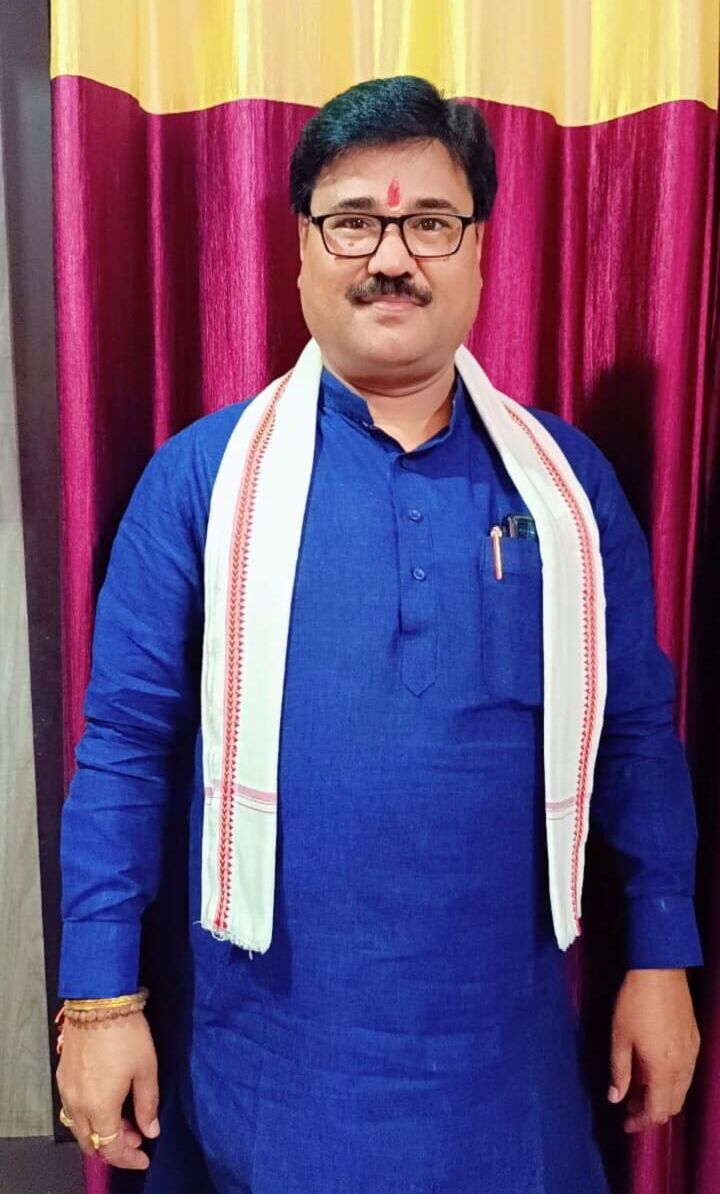
There are childhoods in which the greatest concern is reaching school on time, finishing homework, or finding another hour to play. There are others in which a child begins to understand the burdens of adulthood long before he is old enough to carry them. For Dr. Bhim Kumar Pandey, growing up in Ranchi, Jharkhand, meant learning to recognise responsibilities that could not be postponed. The circumstances around him demanded maturity, and the choices he made in response gradually shaped a man who would come to find purpose in public service, education, and the welfare of others.
His life cannot be understood through professional designations alone. Behind every responsibility he accepted was someone who had known the discomfort of financial limitations, the importance of family, and the effort required to continue learning when circumstances offered little encouragement. He understood early that opportunities were not always distributed equally. Some children had access to facilities that others could scarcely imagine. He noticed those differences, felt their weight, and developed a determination to make something meaningful of the opportunities available to him.
His relationship with education reveals an important part of his character. Learning was never simply a requirement to be completed before entering professional life. It remained an interest he continued to pursue as his responsibilities increased. Whether studying philosophy, qualifying in law, or later undertaking higher education in astrology, he demonstrated a willingness to approach unfamiliar subjects with seriousness. Each demanded time, attention, and personal effort. His academic pursuits were especially significant because they developed alongside the practical demands of supporting a household and earning a livelihood.
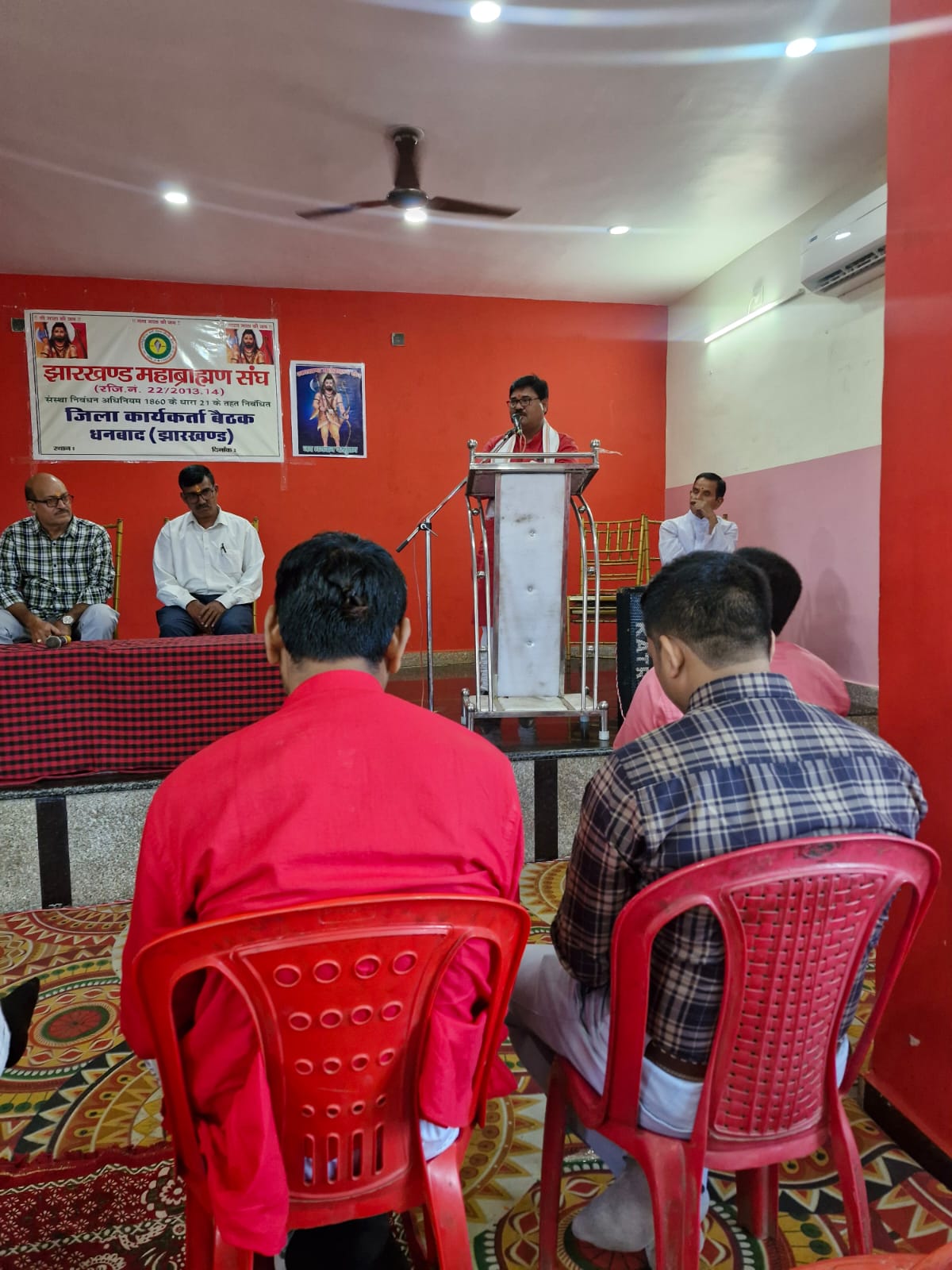
The world of politics entered his life through circumstances that were intensely personal. Experiences involving his family altered his understanding of influence, authority, and the difficulties ordinary people could encounter when confronted by those holding power. His decision to become involved in the Bharatiya Janata Party grew from those experiences. What followed was a sustained involvement in organisational work, where responsibilities increased gradually and required him to work closely with people whose concerns were often immediate and practical.
Yet politics was never the only sphere in which he remained active. His familiarity with religious practices gave him another means of serving people. The knowledge associated with traditional ceremonies became part of a livelihood that eventually extended opportunities to other priests. He understood that a profession could support more than the person managing it. When work was organised thoughtfully, others could earn through their own skills and experience a greater measure of financial security.
The demands of these different commitments did not exist separately from his private life. Family remained an essential part of his understanding of responsibility. His marriage to Shrimati Rajni Pandey brought encouragement to his continued education, while fatherhood introduced concerns that professional achievement could never fully answer. His experiences as a parent required patience, difficult decisions, and an understanding that every child deserved care and opportunity according to individual needs.
"I could have kept every ceremony for myself. I chose to share the work instead. Thirty families now earn because one man decided not to be greedy."
Phase 1: The Hands That Keep Traditions Alive
Within Nakshatra Van in Ranchi, Jharkhand, lies Hataniya Talab, a pond where people gather to perform traditional religious ceremonies. A small temple stands nearby, with a shelter constructed beside it. The surroundings are modest, yet the work carried out here demands careful arrangements and the participation of people who understand the requirements of traditional rituals. For Dr. Bhim, this place represents something considerably more meaningful than a centre for religious activities. It is where his knowledge, organisational abilities, and concern for the livelihoods of others have found a practical purpose.
The shelter was built through his own initiative. Its importance lies in the facilities it provides for people who gather to conduct ceremonies and the priests who perform them. Religious observances often require suitable arrangements, and having a designated space makes it possible for such activities to take place in an organised manner. He takes particular satisfaction in showing the place to others, speaking about the structure he has developed and the work that continues around it. There is a certain simplicity in how he explains these arrangements. He is concerned with what the place enables people to do and how it serves those who come there.
Across Ranchi and its surrounding areas, approximately twenty-five to thirty priests are associated with the religious service network he coordinates. Their involvement is an important part of his present work. Rather than keeping every opportunity for himself, he has established a system through which different priests can receive assignments and earn through their knowledge of religious ceremonies. work includes pujas and other traditional rituals, each requiring people familiar with the appropriate practices. His responsibility involves understanding the bookings received, identifying the necessary arrangements, and assigning priests according to their availability and schedules.
Such coordination requires attention to details that can easily be overlooked. A booking must be understood correctly, the appropriate priest must be available, and the agreed arrangements must be communicated. When several requests arise, responsibilities have to be distributed so that the work can continue without confusion. He remains involved in managing these arrangements, bringing together people who require religious services and those qualified to conduct them. What appears to be a straightforward activity carries its own administrative demands, and the reliability of the System depends upon how those demands are handled.
The livelihoods associated with this work are particularly important to him. He speaks with satisfaction about the priests who have become connected with his arrangements, recognising that their knowledge can provide them with Opportunities to earn a living. For individuals trained in traditional religious practices, having access to regular assignments can make a practical difference. The number of priests associated with his work gives an indication of the scale of the responsibility he currently manages.
His understanding of employment is grounded in a straightforward consideration. People possess abilities through which they hope to support themselves and their families. When those abilities are connected with suitable opportunities, their work acquires greater practical value. He considers the satisfaction of the priests associated with him an encouraging aspect of the enterprise. Some, as he explains, prefer earning through religious activities rather than seeking unrelated employment elsewhere. He appreciates that preference and the possibility of enabling people to work in a field they understand.
“My father walked out of that house with nothing but his dignity. He taught me that a man who keeps his self-respect keeps everything that truly matters."
Phase 2 : The House His Father Left Behind
A promise can give a person the courage to devote years of his life to another family’s welfare. When that promise is broken, the disappointment reaches far beyond anything material. It raises difficult questions about loyalty, fairness, and the value of one’s efforts. For the family of Dr. Bhim, these questions became closely associated with the experiences of his father, Late Saryu Pandey, a man whose decision to preserve his self-respect would become an important part of the family’s history.
The family’s ancestral roots lay in Gaya, Bihar, where his grandfather and father originally belonged. The circumstances of his father’s early life were far from easy. He lost his father at a young age, an experience that left him without the guidance and security ordinarily expected during childhood. With limited support available, the presence of his paternal aunt (A&ff) became significant in determining the direction of his life. She brought him to live with her family, giving him an opportunity to continue his education and become involved in the household’s affairs.
What began as an arrangement within the extended family gradually developed into a substantial responsibility. His aunt’s family had business interests that required attention, and Saryu became closely involved in managing them. According to the family account, he was entrusted with responsibilities that demanded honesty, patience, and considerable personal effort. Rather than treating the work as a temporary obligation, he devoted himself to it seriously, believing that his contribution was recognised and that his future had a place within the family.
There was also a promise attached to those years of service. His aunt (g3fT) had four sons, and he understood that he would receive a share of the family’s property in recognition of the responsibilities he had undertaken. The assurance carried considerable importance for someone who had already experienced the loss of a parent and was working to establish security in his life. It suggested that his efforts would eventually lead to a more dependable future and that the relationship he had maintained with the family rested upon mutual trust.
For years, he continued managing the business with that understanding. He fulfilled the duties placed before him and remained committed to the people whose affairs he had been asked to handle. The expectation of receiving a share was therefore connected to something larger than financial benefit. It concerned the value of work performed in good faith and the belief that an agreement made within a family would be honoured when the time arrived.
That belief was eventually challenged. When the question of distributing the promised share arose, his aunt explained that her sons had become responsible for the property and that she could no longer make such a decision herself. From Saryu’s perspective, the explanation brought an extremely painful disappointment. The work he had performed over the years remained unchanged, but the assurance upon which he had relied no longer appeared secure. He felt that the trust he had placed in the arrangement had not been respected.
“We were children who learned to be adults before our time. I do not regret it. Those early burdens taught me how to carry the heavier ones later.”
Phase 3 : A Childhood That Grew Up Too Soon
Childhood is supposed to allow a little carelessness. There should be time to play, make mistakes, and spend an afternoon without worrying about what tomorrow might demand. For Dr. Bhim, growing up in Ranchi, Jharkhand, life offered fewer such freedoms. His days were filled with the ordinary concerns of school and family, but beneath them lay responsibilities that children rarely understand until they become adults. He belonged to a family of three brothers and three sisters, where affection was abundant ewen when money and everyday comforts were limited. Being the middle son brought its own expectations. He had an elder brother to respect and a younger brother to look after, learning early that his place in the family required consideration for both.
At home, his mother, Shrimati Shanti Devi, frequently struggled with poor health. Her recurring headaches and medical difficulties sometimes prevented her from managing the household as she would have wished. For the younger children, this meant depending upon another person whose love became one of the most comforting parts of their childhood. Their eldest sister, Shrimati Manju Devi, assumed responsibilities that Ordinarily belonged to a mother. She cared for her younger brothers, fed them, attended to their needs, and made certain they received the attention their mother was sometimes unable to provide. Her affection was expressed through simple actions that remained with him long after those years had passed.
One memory still brings a gentle warmth to his recollections. During the summer holidays, when electricity was frequently unavailable, his elder sister would settle the younger boys down for their afternoon-sleep:-She sat beside them with a traditional bamboo hand fan, moving it to provide some relief from the heat. The boys would close their eyes and pretend to be asleep. After a while, she would ask whether they had finally fallen asleep, and his younger brother, innocent enough to miss the contradiction, would answer that they had. Their sister would respond with a playful tap Of the fan. It was a small family incident, filled with the humour Of childhood, yet it remained precious because of the care surrounding it.
School introduced another kind of responsibility. There were days when he travelled by bicycle, taking his younger brother along with him. The distance had to be covered regardless of the discomfort involved, and he gradually became accustomed to the effort. Along the way, he noticed children travelling in school buses, enjoying conveniences that remained beyond his family’s financial reach. He remembered watching them and wishing that he, too, could attend such a school. The desire was particularly strong because he loved English and wanted the opportunity to study in an English-medium institution.
His father’s earnings from municipal employment were modest, and providing for six children’s education required careful financial decisions. Some wishes simply had to remain wishes. He understood that his parents could not provide every facility he wanted, although understanding the reason did little to remove the disappointment. He was interested in learning and wanted access to better opportunities, yet the realities of the household decided what was possible. Those experiences made him conscious of the difference between wanting an education and having the means to pursue it in the manner one preferred.
Among his favourite subjects were Sanskrit, English, and Biology. Sanskrit held a special attraction for him from an early age, while English represented a language he was eager to understand more deeply. Biology appealed to his curiosity about scientific subjects, and he considered pursuing science in his further studies. However, the subject required sustained attention and adequate time, two things he could not always devote exclusively to schoolwork. His interest remained genuine, even when his circumstances did not allow him to follow every academic preference.
There were people within the classroom who helped make learning enjoyable despite these limitations. In Class Five, he encountered two teachers whose methods stayed in his memory. The school principal, Pushpa Srivastava, impressed upon her students the importance of discipline. Her advice was direct. A person might earn considerable money or acquire extensive education, but discipline should never be abandoned. He remembered the seriousness with which she taught this principle, understanding that it applied to conduct at home and in society just as much as it did within school.
Note of Thanks
Some people enter a person’s life through ordinary circumstances, yet their encouragement comes to hold a special place in the decisions that follow. For Dr. Bhim, Shri Anjani Kumar Verma (Gopal Verma) is one such individual whose confidence in his abilities encouraged him to accept responsibilities beyond his personal concerns. This note of thanks is dedicated to him with sincere gratitude, affection, and respect.
What he values most about Shri Anjani Kumar Verma is the sincerity with which he approached the people around him. His example demonstrated that concern for society could be expressed through everyday actions, without seeking attention or personal recognition. This understanding remained meaningful to Dr. Bhim as he developed his own place within public life.
When he saw a young Dr. Bhim becoming involved in public activities and establishing connections with elected representatives, he recognised an opportunity to encourage the next generation to participate. Rather than keeping those responsibilities to himself, he invited him to take a more active role in addressing community concerns.
That encouragement carried particular meaning. It was an expression of trust from someone who had already spent considerable effort working for the neighbourhood. Being considered capable of accepting such responsibilities gave him an opportunity to contribute in ways that extended beyond his own household. His gratitude comes from remembering that encouragement was accompanied by a genuine willingness to share responsibility. Anjani Kumar Verma recognised his potential and invited him to put his abilities to practical use, allowing him to learn through participation.
Through these words, Dr. Bhim offers his heartfelt appreciation for that trust and guidance. He remembers Shri Anjani Kumar Verma with deep respect, acknowledging the meaningful place his encouragement holds in his understanding of community service and responsibility.
thanks,
– Dr. (H.C.) Bhim Kumar Pandey

AIMLAY is a leading global education platform empowering ACADEMIC and EXPERIENTIAL learners, uniquely focused on recognizing knowledge gained through experience and building a diversified community of doctorates and aspiring researchers.