“Learning is only half the journey. The other half is returning home with something useful in your hands.”
Introduction
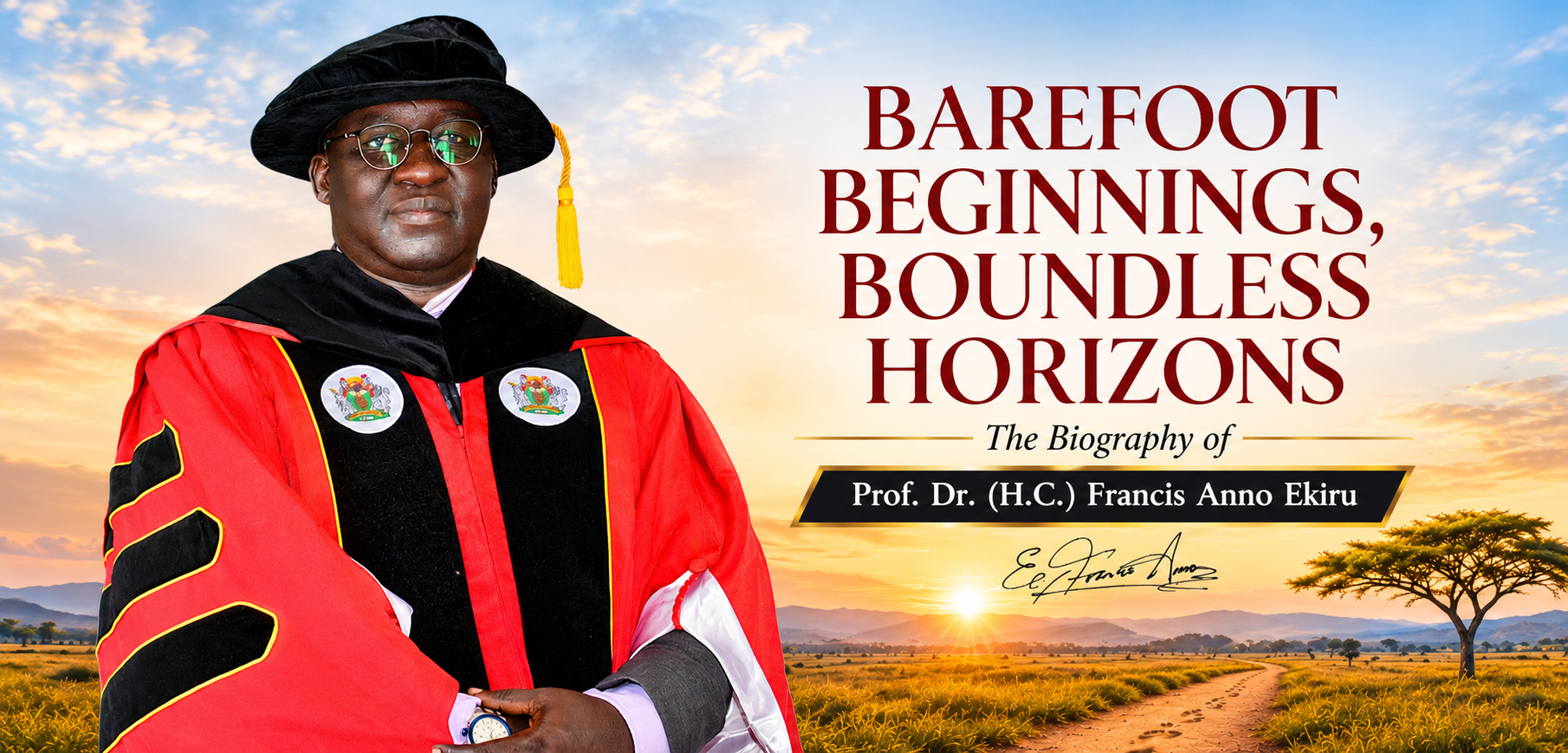
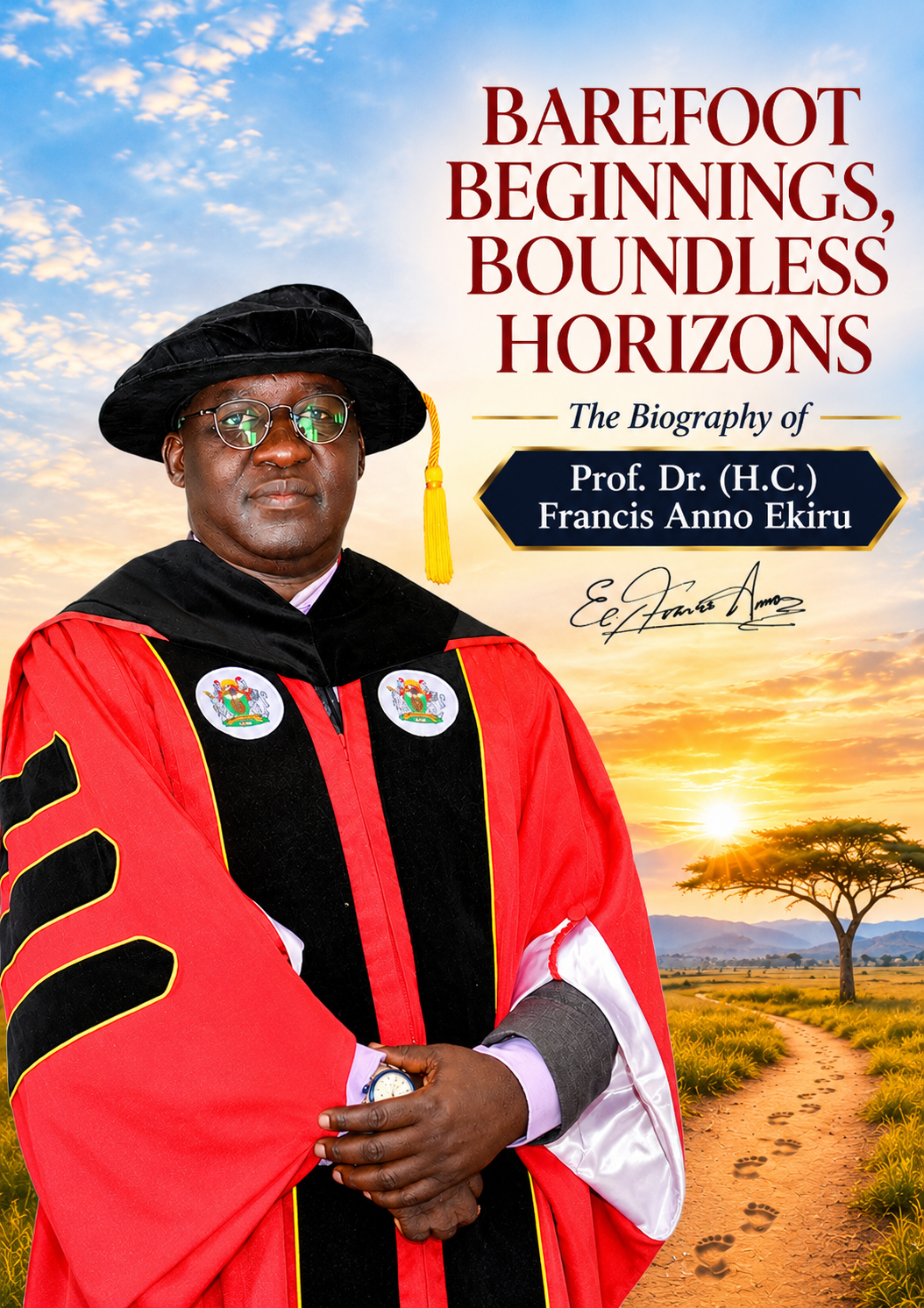
Dr. Francis continues to describe himself as a pastoralist. Education and professional work have expanded the opportunities available to him, but they have not removed his connection to the people and livelihoods of Turkana. That connection gives his life story its particular direction. He understands the importance of livestock to a family because he grew up within that dependence. He also knows the limits of relying on it alone when drought reduces herds, children cannot attend school, and households have few other sources of income.
Born on 20 June 1978 and raised in Lorugum, Turkana County, Kenya, he came from a nomadic family without an established path into formal education or employment. Livestock provided the basis of daily survival, while access to schools, services and economic opportunities remained restricted. His later work would address many of those same conditions, but his beginnings were those of a child living within them. The distance between that childhood and his professional life involved assistance from others, continued study, and decisions that gradually changed what he could contribute.
Schooling became possible through Catholic Church support. He entered formal education at ten and continued with help that his parents could not afford to provide themselves. Alongside his studies, religious instruction introduced him to the Catholic faith, which remained important in his understanding of family and service. The opportunities he received became part of his appreciation of what access can mean for someone whose circumstances otherwise leave little room to progress. Education opened possibilities beyond the work and expectations familiar within his household.
His first professional training was in Animal Health and Production. Although he already knew livestock through pastoral life, college introduced standards of care that changed how he understood their treatment. Returning to work among pastoralists brought another discovery: knowing how to improve animal husbandry did not necessarily mean knowing how to communicate those improvements effectively. He recognised a gap in his understanding of people. Community development and conflict studies became part of his response, extending his preparation beyond technical practice.
Further learning also carried a personal purpose. As a certificate holder, he had experienced being dismissed by colleagues with higher qualifications. He resolved to continue studying and later encouraged others to advance rather than remain at the same level. Yet the significance of his education extended beyond his own professional standing. He was the only one among his parents and siblings to receive formal schooling, and his children subsequently entered educational pathways that had once been absent from the family.
Behind that progress stood a household making choices about limited resources. His wife, Selina Anno, encouraged investment in further study while setting aside needs of her own. Their family life developed alongside his professional responsibilities, and her business activities became another source of productive work within the household. He also remained responsible for supporting his mother, siblings and their families. These obligations give his account of advancement a practical dimension: employment brought greater capacity to help, but also continuing expenditure and demands on what he could save.
Within community work, he sought ways for people to take a more active part in decisions affecting their livelihoods. His attention included women and young people whose contributions could be excluded from established arrangements. Practical learning, including Pastoralist Field Schools, offered another means of involving producers in examining problems and improving their skills. His concern was whether new practices could become useful within the circumstances of pastoral life, where familiarity with existing methods did not automatically translate into acceptance of an alternative.
"The circumstances of a childhood do not measure the worth of the people who raise a child."
Phase 1: Before There Was a School Path
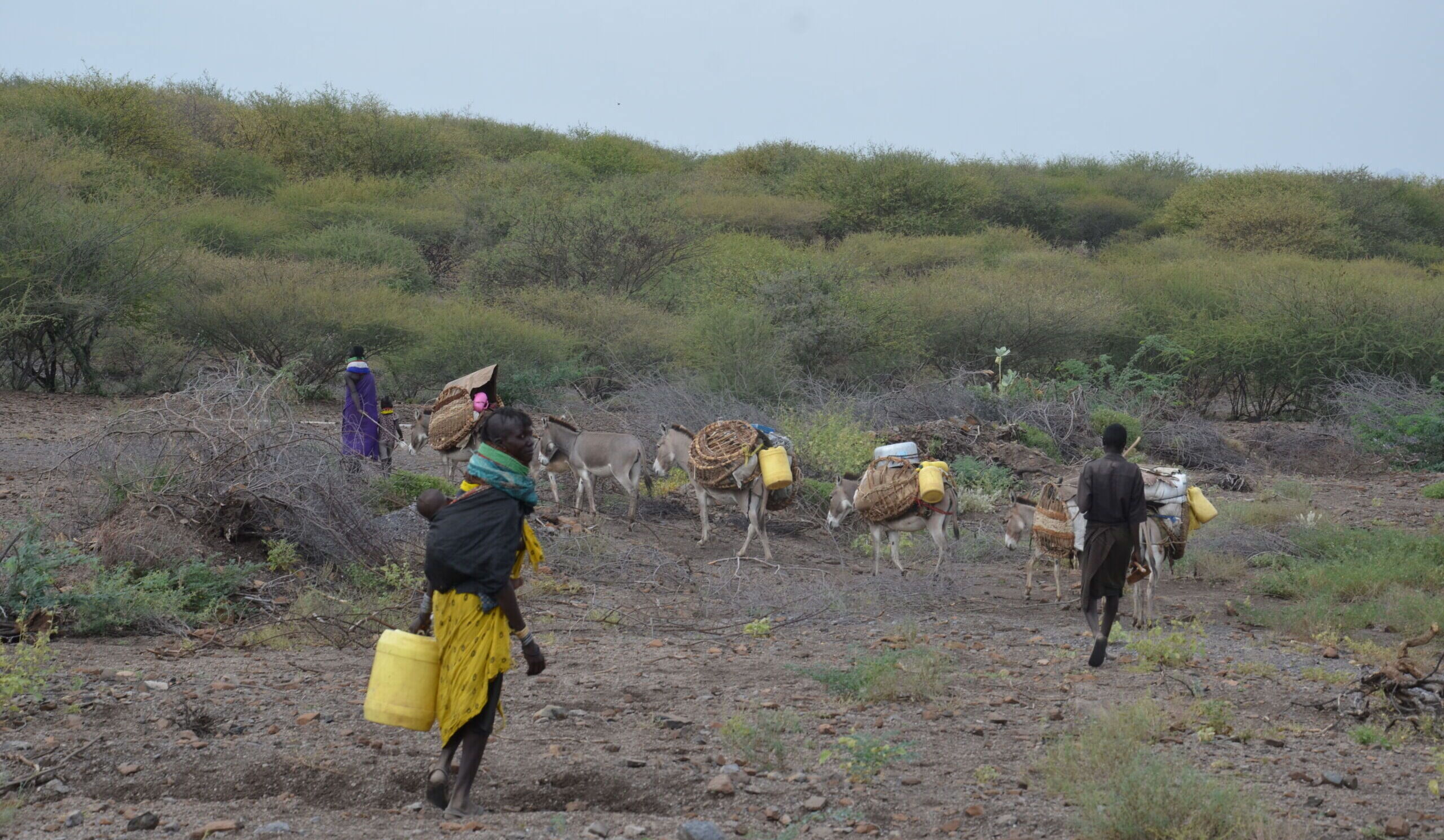
Born on 20 June 1978, Dr. Francis grew up in Lorugum, Turkana County, in northwestern Kenya. His family belonged to a pastoral and nomadic community whose livelihood depended on livestock and the resources available around them. Before education introduced other possibilities, this was the life he knew: a household whose security was closely connected to its animals, within an environment where drought and scarcity could make that security uncertain.
His Turkana praises, Areng’eta, Bokoreng’ Ng’imalia Alogurigur, remain part of the way he identifies himself. He also preserves the praises associated with his parents, regarding them as important expressions of who they were. His father was Elder Erastus Natukal Logiron (Ng’oritom, Lokurere, Ekone A Kirien Ka Apa Leleya), and his mother was Mama Martha Lorono Ikutan (Lopusiriong’a, Apa Aitaok).
He was one of seven children. In his later account of the family, five were alive and two had died. Among his surviving siblings were two sisters and two brothers. Neither his parents nor his siblings had received formal schooling, and no member of the family had previously entered formal employment. There was consequently no example within the household of someone moving through education into a salaried profession. The family’s experience centred on the work and demands of pastoral life.
Livestock occupied several places within that life at once. Animals supplied food, represented wealth, offered a source of income and helped households cope with difficulty. They also had social importance. Yet belonging to a livestock-dependent community did not mean that his own family possessed enough animals or enjoyed all the benefits that livestock could provide. He describes a humble beginning in which the resources needed for security were limited. The household depended on a livelihood that was itself exposed to considerable risk.
Aridity and recurrent drought shaped the conditions around them. Food and water could be scarce, while livestock losses reduced what families had available to sustain themselves. Disease, insecurity and other disruptions added to those pressures. When animals were lost or became less productive, the consequences reached beyond the herd. There could be less food, less income and fewer resources with which to respond to the next difficulty. His early understanding of hardship developed within that connection between the condition of livestock and the circumstances of a family.
Limited infrastructure and restricted access to services made the situation more difficult. Education and economic opportunities were not readily available, and meeting immediate household needs took priority. In such circumstances, long-term plans had to compete with the demands of survival. A family could need its children’s labour while having little means to pay for their schooling. For him, the absence of an educational tradition was therefore connected to material conditions as well as established expectations about how children should live.
He remembers a time when parents commonly expected children to follow the life they themselves knew. Boys and girls would help with herding and family work rather than attend school. Pastoralism was a strong part of community life, and it provided the familiar pattern for the next generation. That expectation helps explain the significance of his eventual entry into education. He would be taking a direction for which his family had neither previous experience nor the resources to provide everything he needed.
“Sometimes the chance to learn begins with someone making sure a child has enough to eat."
Phase 2 : A Plate, a Sponsor and a Place in Class
For Dr. Francis, the first reason to go to school was practical. There was food there. He remembers porridge and carrying a plate because he knew something would be available to eat. Before schooling became a means of professional advancement, it met an immediate need.
He started formal education at the age of ten through assistance from the Catholic Church, particularly the Diocese of Lodwar. In the remote pastoral areas he knew, government presence was scarcely felt. Charitable organisations supplied services, and the Church played a substantial role in his region. Its work included constructing schools and health facilities and providing relief food. His access to a classroom belonged within this wider provision of support to communities whose needs extended beyond education alone.
A programme called the Christian Children Fund, or CCF, supplied another essential part of that opportunity. He became Case #158, receiving support through a sponsorship arrangement. The number is a detail he has preserved from those years. He recalls being fortunate to enter the programme, although he cannot explain precisely how he was selected. What he remembers clearly is the help that followed and the difference it made to his ability to remain a pupil.
His sponsor was in the United Kingdom. They never met, but the arrangement provided practical educational necessities. When he needed a uniform, one could be made and given to him. When he needed books, the sponsorship supplied them.
These were specific needs his parents could not afford to meet. The assistance therefore reached into the ordinary requirements of schooling, supporting his attendance through primary education.
Alongside primary schooling, he received religious instruction from the Sisters of Mary of Kakamega in Lorugum. He completed catechism training and, at twelve, was baptised by the late Rev. Fr. David Ekwee Akileng. At baptism, he received the saint’s name Francis. He also received the Sacrament of the Holy Eucharist. Education and religious formation thus developed during the same period, with the Church contributing to both his schooling and his introduction to Catholic life.
At fourteen, he received the Sacrament of Confirmation, ministered by the late Rt. Rev. Bishop John Christopher Mahon, the founding bishop of the Catholic Diocese of Lodwar. Bishop Mahon occupies an important place in his remembrance of these years.
Faith became a continuing part of his life. From this early formation, he came to know and follow Jesus Christ, whom he regards as a foundation of hope and assurance. His understanding of religious support includes both spiritual guidance and the practical provision that helped him study. The priests, sisters, and bishop belonged to a period in which assistance, instruction, and belief developed together, each with its own place in his experience.
“They need to treat their animals. They need to handle their animals with care.”
Phase 3 : Learning to Protect the Animals He Knew
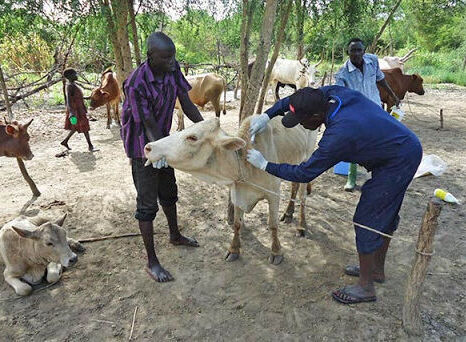
College asked him to reconsider practices he had grown up around. Livestock were familiar to him, but familiarity did not cover everything an animal needed. Through his certificate training in Animal Health and Production, he began learning about their care in a more systematic way. His preparation as a para veterinarian brought together practical knowledge of livestock with an understanding of disease, treatment, husbandry and welfare. It gave him new responsibilities towards the animals themselves and the people whose livelihoods depended on them.
From July 2000 to April 2002, he studied at the Animal Health and Industry Training Institute, AHITI Ndomba College in Kutus, under the Kenya State Department of Livestock. His research project examined the factors limiting the anticipated performance of pastoralism as the main form of livestock production in Turkana. Alongside clinical subjects, his training covered pasture production, farm structures and water supply, farm business management, livestock legislation, research and extension. These areas placed animal care within the wider requirements of managing a livestock enterprise.
One example remained particularly clear in his memory: removing an animal’s horns. At home, the horns could be cut without measures to prevent pain. He recalled that the animal’s distress might continue long after the procedure. College introduced a different requirement. Anaesthesia should be used so that the animal would not feel the pain of the operation. The contrast changed his understanding of what proper handling involved. Completing a procedure was only part of the responsibility; the suffering caused during it also mattered.
This was a practical change in how he understood care. He began to value animal welfare more consciously and to regard animals as living beings whose treatment deserved attention. Having raised livestock did not mean that every familiar method was adequate. His studies gave him reasons to examine those methods and recognise where better practice was needed.
Shelter was another area in which his training challenged established practice. He described pastoral livestock enclosures as open yards, leaving animals exposed when heavy rain came. At college, he learned that appropriate shelter should protect them from being rained on. This widened his attention beyond procedures and illness to the conditions in which animals lived. Their comfort required consideration even when they were not being treated. Housing and everyday management belonged within the same responsibility as veterinary care.
When he returned to work with pastoralists, he began sharing these lessons. He trained livestock keepers to make their animals more comfortable, seek treatment when needed and handle them carefully. The people he worked with already understood the importance of their herds. His contribution was to introduce practices that could improve how those herds were managed. He was bringing professional instruction into a setting he knew personally, with particular attention to aspects of care that his training had helped him see differently.
Note of Thanks
Dr. Francis offers his thanks to those whose assistance made education possible and whose guidance remains important to him. His appreciation reaches beyond the recognition of particular achievements to the people who provided help when he could not obtain it through his family’s resources.
He remembers the late Rt. Rev. Bishop John Christopher Mahon with gratitude for the educational support he received and for the schools and health facilities established through the Catholic Diocese of Lodwar. The bishop’s place in his life belongs within his wider appreciation of the Catholic Church, whose practical assistance enabled him to continue learning.
He also honours the late Rev. Fr. David Ekwee Akileng and acknowledges the Sisters of Mary of Kakamega for their part in his religious formation. Their instruction and ministry remain connected to his Catholic faith, which continues to inform how he understands responsibility towards others.
Thanks are extended to the Christian Children Fund and the sponsor in the United Kingdom whom he never met. The assistance provided through that arrangement deserves recognition in its own right. He also acknowledges Rev. Fr. Dr. Joseph Ekomwa, his friend and priest, for his place in the family’s sacramental life.
His late father, Elder Erastus Natukal Logiron, his mother, Mama Martha Lorono Ikutan, and his wife, Selina Anno, hold the places of honour expressed in the dedication. Here, he renews that gratitude without retelling the contributions through which they helped shape his life.
He expresses particular gratitude to Dr. Dawit Abebe, who shares his name with his son, Dawit Anno. As his first employer and supervisor at VSF Belgium in Turkana in 2002, Dr. Dawit introduced him to community based animal health service delivery systems and encouraged his continued education. Understanding his family background, he showed empathy for his circumstances and a personal commitment to his progress. His daily mentorship included recognising even his smallest contributions to the organisation. He encouraged him to look beyond animal health and production when planning his studies, explaining that livestock development required broader knowledge. That advice helped shape an educational journey through which Dr. Francis developed a fuller understanding of livestock farming communities, markets and the effects of climate change on pastoral livelihoods and economies.
He also thanks Dr. Darlington Akabwai for deepening his understanding of pastoral mobility and its associated risks, including transboundary animal diseases and cattle rustling. Dr. Darlington introduced him to interventions intended to address these risks and reduce the need for pastoral movement. Although trained as a veterinarian, he recognised peacebuilding and conflict resolution as essential to addressing pastoral challenges. His programmes strengthened communities’ ability to coexist peacefully, negotiate resource-sharing agreements and coordinate activities within and across borders. Dr. Francis acknowledges the importance of this approach in substantially reducing livestock disease transmission and improving access to pasture and water for large numbers of livestock.
Sincere appreciation goes to Dr. Deborah Duveskog for creating opportunities for him to contribute as a Farmer Field School expert to piloting and expanding the approach in pastoral and agro-pastoral areas. Her support enabled assignments across dryland areas of Kenya, northern Uganda, South Sudan, Ethiopia, Somalia and West Africa, including Niger and Burkina Faso. Working with communities dependent on livestock and opportunistic crop farming broadened his professional experience and deepened his understanding of their differing circumstances, challenges and opportunities. He remains grateful for the trust and opportunities through which she helped him extend his contribution.
He offers heartfelt thanks to Mr. Michael Ngutu, his supervisor during his years with FAO’s refugee operations in Turkana. Beyond his project management responsibilities, Mr. Michael took a personal interest in his professional and personal growth. His guidance deepened Dr. Francis’s appreciation of service to displaced communities and strengthened his commitment to humanity. Through effective project management and care for those he led, he demonstrated the meaning of servant leadership. During difficult moments, he offered encouragement and stood beside him. His emphasis on compassion and discipline helped Dr. Francis become one of the leading staff members promoting unity between refugees and host communities in Turkana and within FAO Kenya. He remembers him as one of the best project managers with whom he has had the privilege of working.
Finally, he appreciates those who offered recommendations and testimonies about his work. He has asked that their contributions be included in the annexes, giving their voices a place alongside his life story. This acknowledgement recognises their willingness to express what they know of him and the work they have associated with his name.
thanks,
– Prof. Dr. (H.C.) Francis Anno Ekiru

AIMLAY is a leading global education platform empowering ACADEMIC and EXPERIENTIAL learners, uniquely focused on recognizing knowledge gained through experience and building a diversified community of doctorates and aspiring researchers.