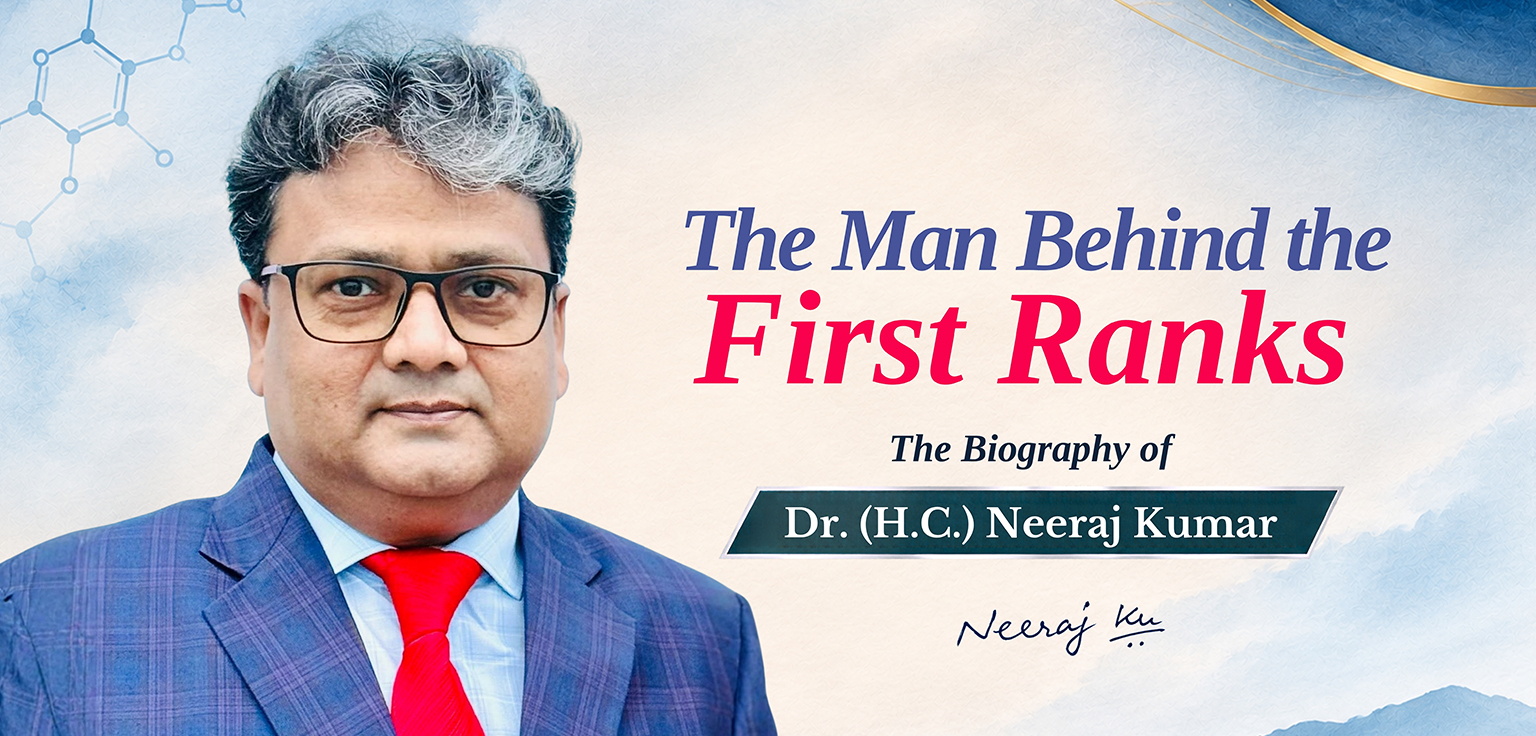
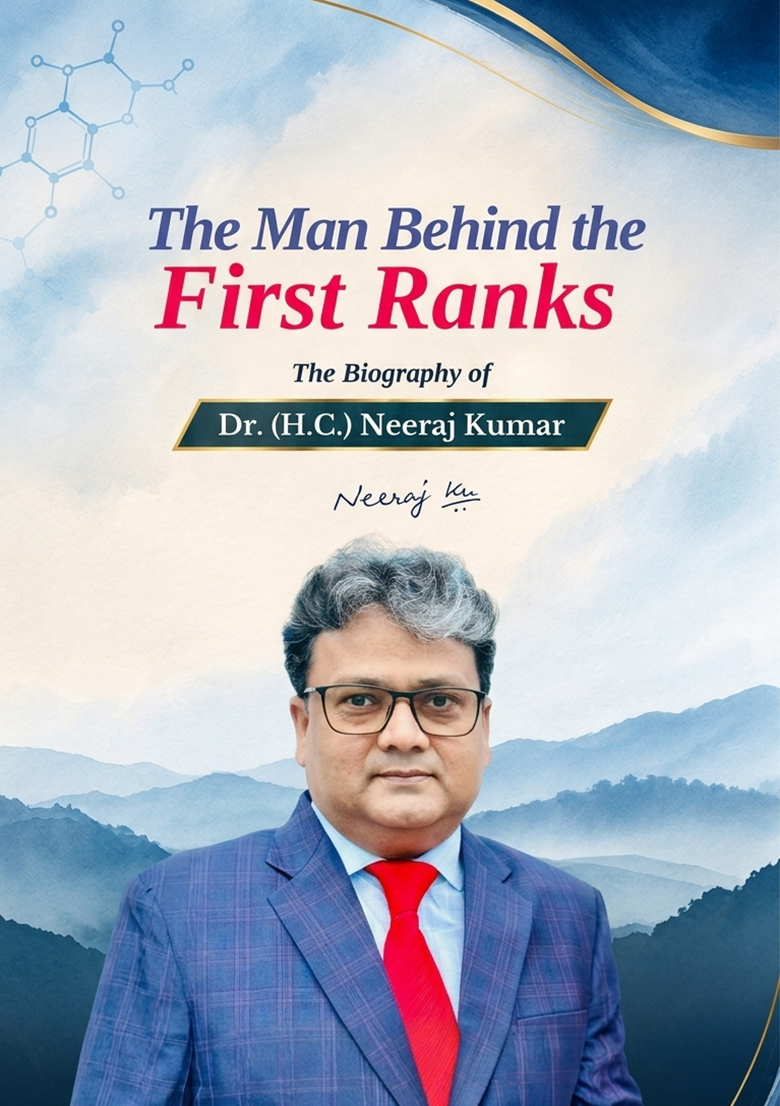
“He once searched for his own place among the ranks. Life gave him something far greater: the chance to help others find theirs.”
Introduction
For more than three decades, Dr. Neeraj Kumar has devoted his professional life to teaching Chemistry, helping students prepare for some of India’s most demanding competitive examinations. As Vice-President and Senior Chemistry Faculty at ALLEN Career Institute, Kota, he has worked with students whose academic abilities place them among the country’s highest achievers. His name has become closely associated with Physical Chemistry, advanced problem-solving, and the preparation of students for the Joint Entrance Examination and Physics and Chemistry Olympiads (IPhO and IChO). Yet his professional standing developed through a series of decisions, difficulties, and opportunities that were far from predictable.
Born on 1 August 1972 in Daudnagar, Aurangabad district, Bihar, he grew up in a large family where education and hard work were important parts of everyday life. The youngest of eight siblings, he demonstrated an early ability to learn quickly. His mother introduced him to formal learning at home, and his academic progress allowed him to advance through school faster than most children of his age. However, the years that followed were not marked by uninterrupted academic success. His enthusiasm for sports and the freedom of living in Patna affected his studies, and he faced repeated disappointment while attempting to enter engineering college.
Those experiences became important because they challenged the direction his life might have taken. When his father’s medical practice declined and the family’s financial circumstances became difficult, continuing his education was no longer simply a matter of personal ambition. He eventually secured admission to Civil Engineering at Bihar College of Engineering, Patna. During his studies, the need to earn money encouraged him to begin teaching. What initially provided financial support gradually became work in which he found genuine satisfaction.
His growing involvement in Chemistry education created an unexpected choice. His father had hoped that he would pursue the civil services, and he made serious attempts at the UPSC examinations. Despite demonstrating considerable ability in Chemistry and Mathematics, he found himself increasingly drawn towards teaching rather than an administrative career. In 1997, he made the decision to pursue Chemistry education professionally. It was a choice that placed his future in a field he had entered while still completing his own studies.
The early years of independent teaching in Patna gave him experience in managing students and developing an educational institution. However, concerns about the local environment eventually encouraged him to consider opportunities elsewhere. His move to Kota in 2002 introduced him to a larger and more competitive coaching industry. There, he worked with different institutions, encountered financial uncertainty, and learned that professional ability did not always guarantee stability or recognition. Some decisions brought opportunities, while others became lessons he would reconsider later in life.
His association with Career Point, Sri Chaitanya, Ambition, and Bansal Classes gradually expanded his experience as a Chemistry educator and academic leader. Joining ALLEN Career Institute in 2015 marked another important development. He began teaching top-performing batches and continued refining his understanding of the subject to meet the expectations of exceptionally capable students. His work required sustained preparation, particularly when dealing with unfamiliar and advanced questions. He came to regard teaching as an activity in which the educator must remain willing to learn.
"Some children discover their abilities through the lessons they are given. Others begin to show what they can do before the lessons have even begun."
Phase 1: A Childhood That Moved Faster Than the Classroom
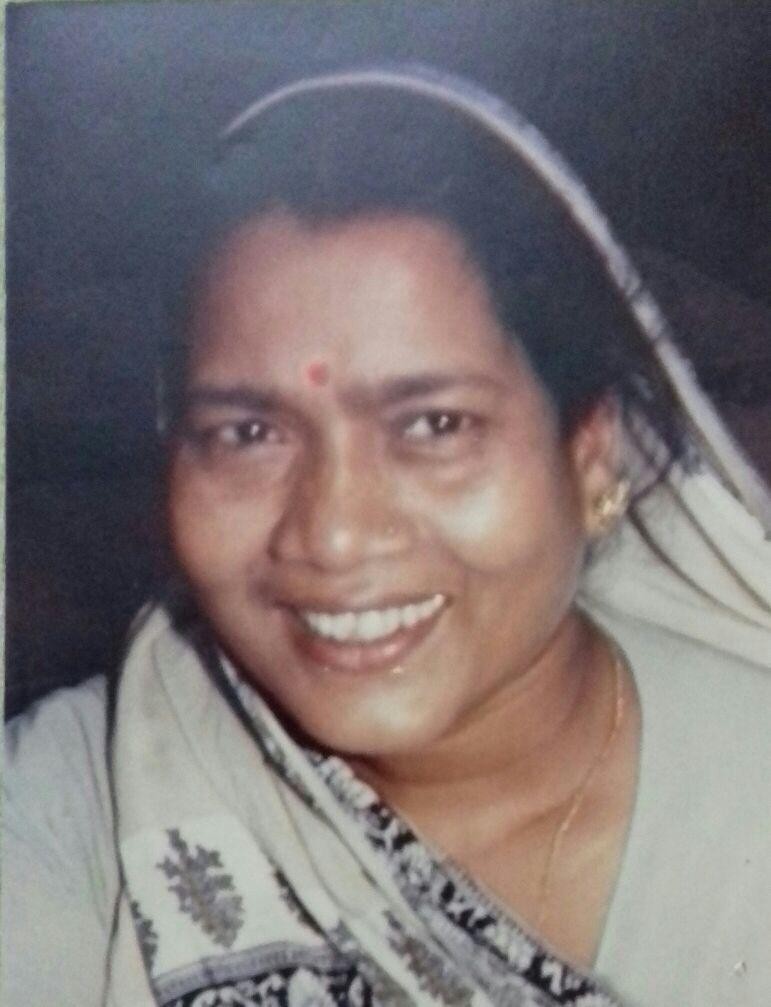
On 1 August 1972, Dr. Neeraj Kumar was born in Daudnagar, a town in the Aurangabad district of Bihar. He was the youngest of eight children in a family where education, discipline, and hard work were important parts of growing up. His father, Dr. Suresh Prasad, was a medical practitioner, while his mother, Malti Devi, took an active interest in the education of her children. Their home became the setting for his earliest learning, long before he was old enough to attend school.
Being the youngest in a large family meant growing up among siblings who were already progressing through different stages of education and life. His siblings include Rajiv Ranjan Prasad, Madhulika, Manibala, Pratiba, Sanjay Kumar, Nivedita, and Pankaj Kumar. Each had abilities of his own, and the younger boy grew up observing their different interests. He remembered one brother as particularly accomplished in sports and another as exceptionally strong in academics. Their achievements formed part of his early understanding that ability could be expressed in different ways.
His mother’s involvement in his education was especially important. Rather than waiting for him to reach the usual school-going age, she began teaching him at home. Through her instruction, he developed familiarity with lessons that other children would ordinarily encounter only after entering a classroom. She gave him the opportunity to learn at his own pace, without requiring his progress to follow a conventional school timetable.
By the time he was approximately four or five years old, his preparation had advanced sufficiently for him to begin formal schooling at a higher level than was customary. He did not attend Lower Kindergarten, Upper Kindergarten, or Class 1. Instead, he was admitted directly into Class 2 following an assessment of his abilities. For a child of that age, entering school alongside older students was an unusual beginning. Yet his earlier preparation meant that he was already familiar with the kind of academic work expected of him.
This early admission was the first significant indication that his school education would not follow the usual sequence. While most children moved gradually from one class to the next, his progress was measured by what he had learned rather than simply by his age. His mother had already established the foundation that made this possible. Formal schooling gave that preparation a recognised place within the education system.
His advancement continued during the primary years. He recalled completing the academic requirements of Classes 4 and 5 within a single year, allowing him to move ahead more quickly than students following the regular progression. Such advancement required him to manage material intended for older children. It also meant that the difference between his age and the ages of his classmates became an established feature of his schooling.
His father contributed a different but equally important influence. As a medical practitioner, he understood the value of education and the responsibilities that came with professional life. He placed considerable importance on discipline and sustained effort. These expectations were not limited to examinations or classroom performance. They formed part of the values he wanted his children to carry into adulthood.
“Sometimes, the opportunity that changes a life comes after the chances that were lost. What matters is whether a person is willing to begin again."
Phase 2 : Cricket, Missed Chances and the Forty Ninth Rank
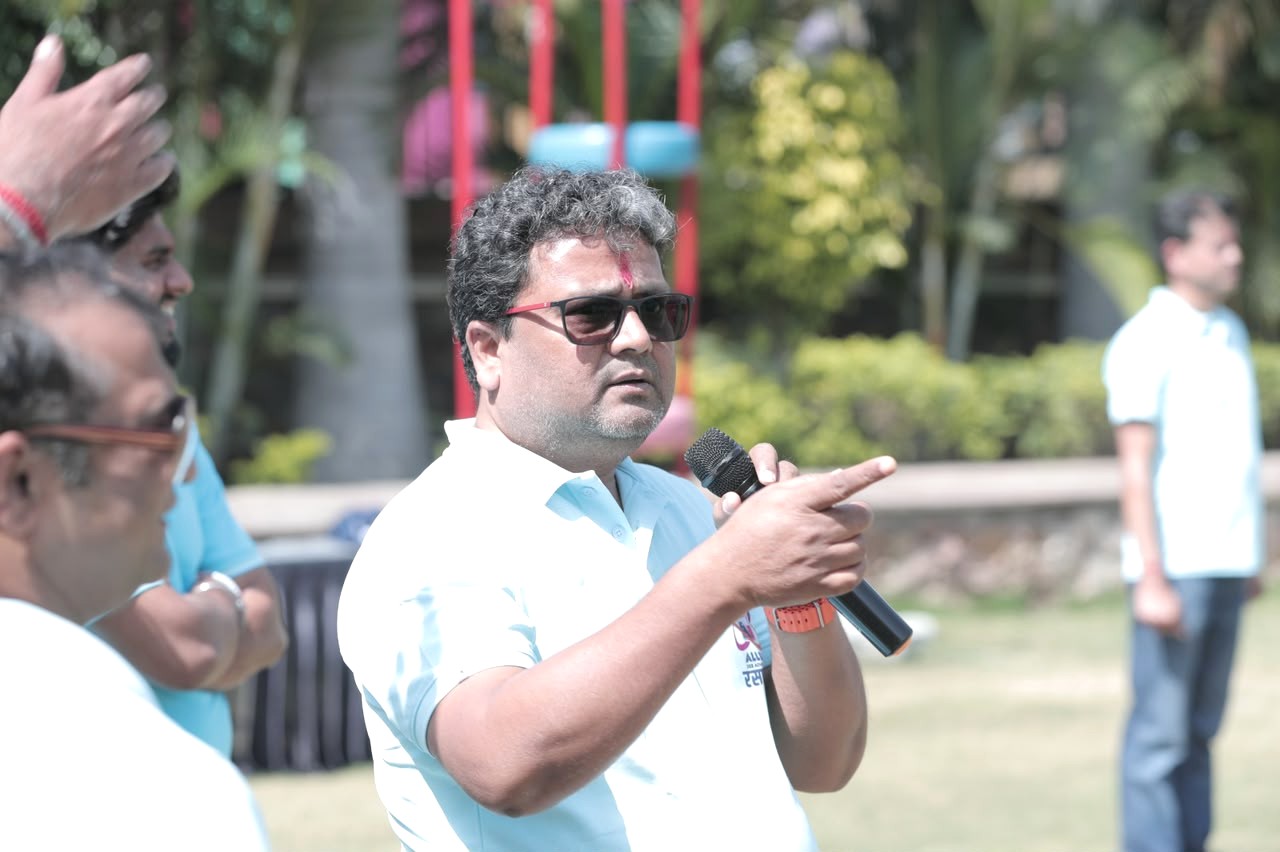
Patna introduced Dr. Neeraj Kumar to a period of life in which his interests began moving in several directions. Having arrived to pursue Intermediate of Science, he was expected to continue the academic progress that had distinguished his school years. Instead, he became increasingly involved in activities outside the classroom. Cricket, badminton, carrom, and cinema occupied much of his attention. For a young student who had previously advanced through school with unusual speed, the freedom to pursue these interests brought a different kind of experience.
Cricket held a particularly important place in those years. He played regularly and developed sufficient ability to receive recognition beyond his immediate circle. On two or three occasions, his photographs appeared on the sports pages of newspapers in Bihar. These appearances were meaningful achievements for a young sports enthusiast. They also showed how seriously he had begun to pursue activities that were separate from his academic responsibilities.
Badminton was another sport he enjoyed, while carrom provided a different form of competition. His interest in films further reduced the time available for studying. The combination gradually affected his preparation for examinations. Although he possessed considerable academic ability, his attention was no longer directed towards his studies with the same consistency that had characterised his earlier schooling.
The consequences became evident during his Intermediate of Science examinations. He had not prepared adequately and found himself depending on last-minute efforts to complete the course. Guess papers became an important part of his examination preparation. Rather than approaching the examinations with a thorough understanding of the prescribed material, he relied heavily on questions and topics that were considered likely to appear.
He managed to pass, but his performance was far removed from the standard his earlier academic progress might have suggested. The experience exposed a weakness that intellectual ability alone could not overcome. Understanding lessons quickly was useful, but it offered little protection when regular study had been neglected. His Intermediate results marked a clear departure from the rapid advancement of his childhood.
The next challenge was securing admission to an engineering college. Engineering was an important educational option for him, and the Bihar Combined Entrance Examination provided a route towards that goal. However, his preparation remained inadequate. His involvement in sports and other interests had continued to take precedence over the sustained academic work required for a competitive entrance examination.
His first attempt did not bring the result he needed. The disappointment was followed by further attempts, but his approach to preparation had not changed sufficiently. He experienced repeated failure in the engineering entrance examination, despite having demonstrated considerable academic potential during his earlier years.
“Sometimes, the work that begins as a way to meet life’s needs becomes the very work a person was meant to do.”
Phase 3 : Fifty Students and a Hostel Room
In 1991, while pursuing Civil Engineering at Bihar College of Engineering, Patna, Dr. Neeraj Kumar began an activity that would eventually take his professional life in an entirely different direction. His family’s financial circumstances had made it necessary for him to earn money while continuing his education. Teaching offered a practical means of doing so. He began giving Chemistry tuition to students preparing for engineering entrance examinations, using his hostel room as the starting point.
At that time, he was still an engineering student himself. His immediate responsibility was to complete his degree, and teaching was something he undertook alongside his studies. There was no established institution behind him, nor had he completed any formal training as a teacher. What he could offer was his understanding of Chemistry and his ability to explain the subject to students who needed help with their preparation.
The response came surprisingly quickly. Within approximately three to four months, more than fifty students had begun attending his classes. For someone who had started teaching to meet financial needs, the growing number of students changed the scale of the activity. What had initially been a small arrangement within a hostel was developing into something that required greater organisation.
The increase in student numbers also meant that he had to manage responsibilities beyond his own academic work. He was preparing for engineering examinations while helping other students prepare for theirs. His time was divided between learning the subjects required for his degree and teaching Chemistry at a level appropriate for competitive entrance examinations.
He was still in his late teenage years when he began earning independently. The income helped him address financial pressures that had become part of his family’s circumstances. It also gave him practical experience in taking responsibility for work outside his formal education. At an age when many students depended entirely on their families for support, he was beginning to contribute through his own academic abilities.
As the number of students increased, continuing within the original hostel arrangement became less practical. He decided to establish a separate teaching centre in Mussallahpur Hat, Patna. The centre was called Neeru’s Chemistry Arena, a name that identified Chemistry as the focus of his teaching.
The move from a hostel room to a separate centre represented an important development. He was no longer simply providing occasional tuition alongside his studies. He now had an organised place where students could attend classes, and he was responsible for managing the teaching activity he had created. The growth had come through the demand for his instruction rather than through a planned entry into the coaching industry.
Note of Thanks
For Dr. Neeraj Kumar, gratitude begins with the people who have been closest to him through the different circumstances of his life.
His heartfelt thanks go to his late parents, Dr. Suresh Prasad and Malti Devi. Their guidance provided an important foundation for his understanding of education, responsibility, and perseverance. Although they are no longer present, he continues to value the principles they encouraged him to follow.
He expresses particular gratitude to his wife, Sweta Saha, for the responsibilities she has undertaken within their family. Her care and attention have been especially important during the years when his teaching schedule demanded so much of his time.
His daughter, Shrija Suman, also holds a special place in his appreciation. He values the time they spend together and hopes to continue giving greater attention to their relationship.
This expression of thanks also carries remembrance for the family members who are no longer alive and appreciation for the relationships that remain.
A deeply personal expression of gratitude belongs to his beloved son, Mihir Suman, affectionately remembered as Mihu. Although their time together was brief, Dr. Neeraj remains thankful for the happiness his son brought into their lives. He remembers those three months with love, and he continues to treasure the moments they shared. His gratitude comes from the simple and lasting meaning of Mihu’s presence, which remains precious to the family.
He is equally grateful to his parents-in-law, Gopal Prasad and Shyama Saha, whose care, blessings, and encouragement have accompanied his family through different stages of life. Their support, particularly in helping care for his daughter during demanding professional years, has meant a great deal to him. He also extends heartfelt thanks to his brothers-in-law, Sawan Kumar, Gautam Anand, and Rohit Raj, and his sister-in-law, Tanu, for their affection, practical assistance, and willingness to stand beside him during difficult times. He values them not simply as relatives through marriage, but as younger siblings whose presence has brought warmth and reassurance to his life.
Above all, his gratitude is rooted in an understanding that personal achievement does not exist separately from family life. The people he thanks have shared the responsibilities, adjustments, and passage of time that accompanied his work. Their place in his life deserves recognition beyond any professional title or examination result.
thanks,
– Dr. (H.C.) Neeraj Kumar

AIMLAY is a leading global education platform empowering ACADEMIC and EXPERIENTIAL learners, uniquely focused on recognizing knowledge gained through experience and building a diversified community of doctorates and aspiring researchers.