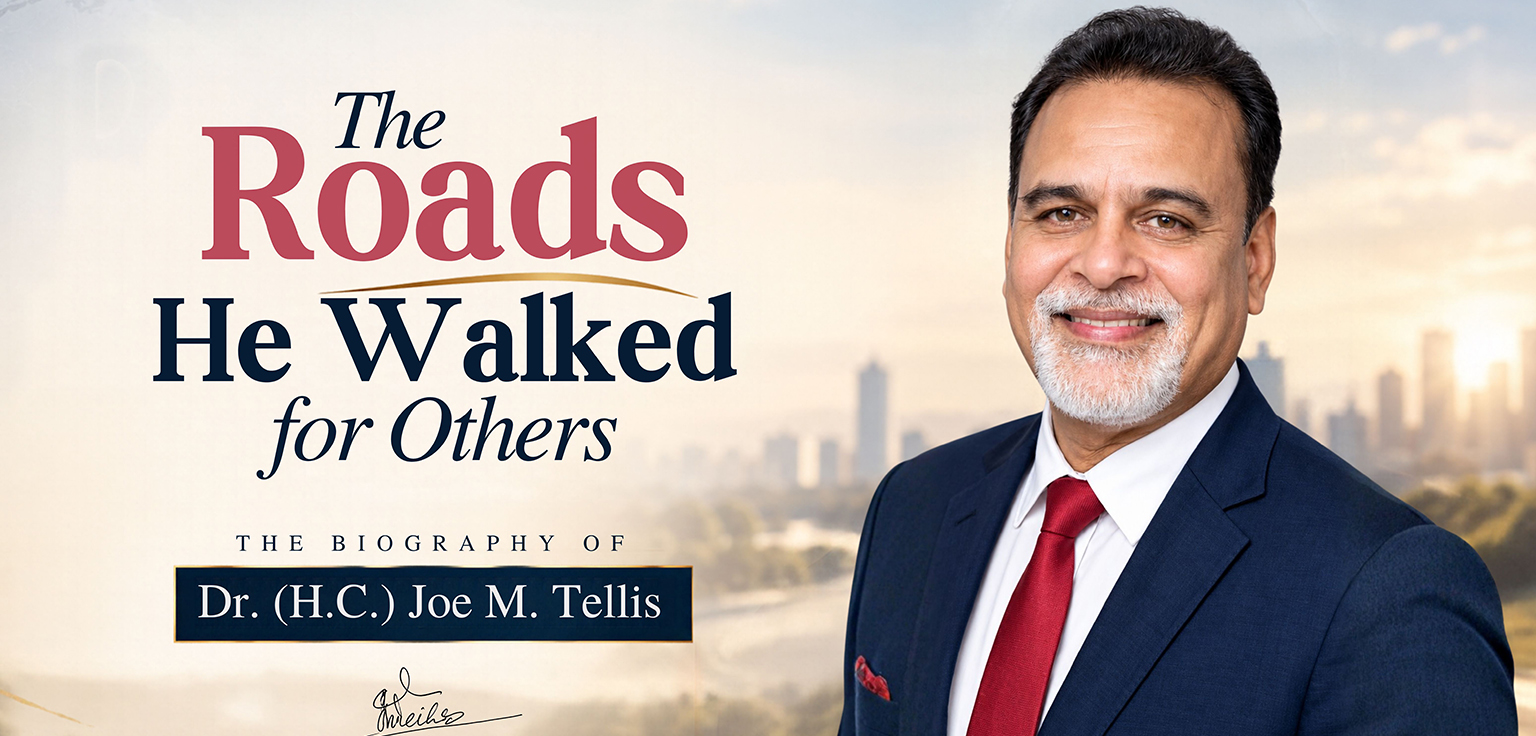
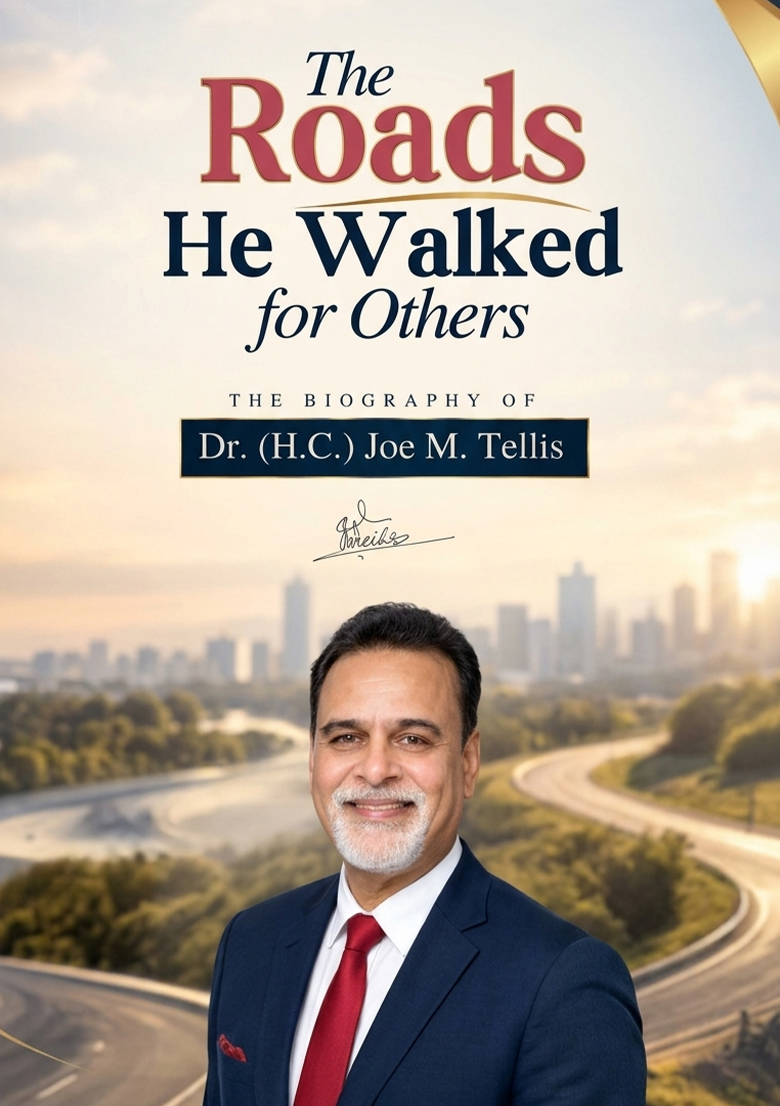
“Fire spared me at three months. Loss tested me at fifty. What I did with the years between, and after, is the story these pages tell.”
Introduction
Retirement did not slow Dr. Joe M. Tellis down so much as rearrange his days. There are people to visit, meetings to attend, and work he still wants to see through. His children call from Bangalore with the same gentle worry each time: come live nearer to us, you should not be alone. He hears the love in it. He appreciates the concern. And still he stays, rooted in the community around his home in Mangalore, where the neighbors know his name, where former colleagues and parish members cross his path, and where a friend is always a short walk away. Loneliness is not a word he uses. There is too much to attend to.
His beginnings were hard in the way that money is hard when there is never quite enough of it. The third of seven children, he grew up in a village household where education was something the whole family had to work for. The children walked long distances to school. The parents stretched what they had. He remembers himself as an average student and says so without embarrassment, conceding that academic brilliance was never his gift. What he recalls with more confidence is simpler: he was willing to help, a classmate with a difficult lesson or a teacher with a task. Affection and friendship took up a large place in those years, and they have never really loosened their hold on him.
For a time, he hoped to become a Catholic priest. He studied philosophy and theology and lived inside the discipline of religious formation. Then the path turned. He left the seminary without entering the priesthood, and employment carried him into the livestock business in Bangalore, first as a supervisor, later into public relations. Living among people from different states taught him their languages, and that ear for how others speak became the foundation of a career built on communication.
At GMR Energy Ltd., his responsibilities brought him into contact with government officials, colleagues, and the residents living around the power plant. Public relations and administration were the formal description. The reality was broader. He helped arrange educational support for young people, taught computer skills, and proposed a local health clinic. These were company initiatives, carried out with others, and he is careful to say so. What he remembers is not only the assistance provided but the people whose cooperation made any of it possible.
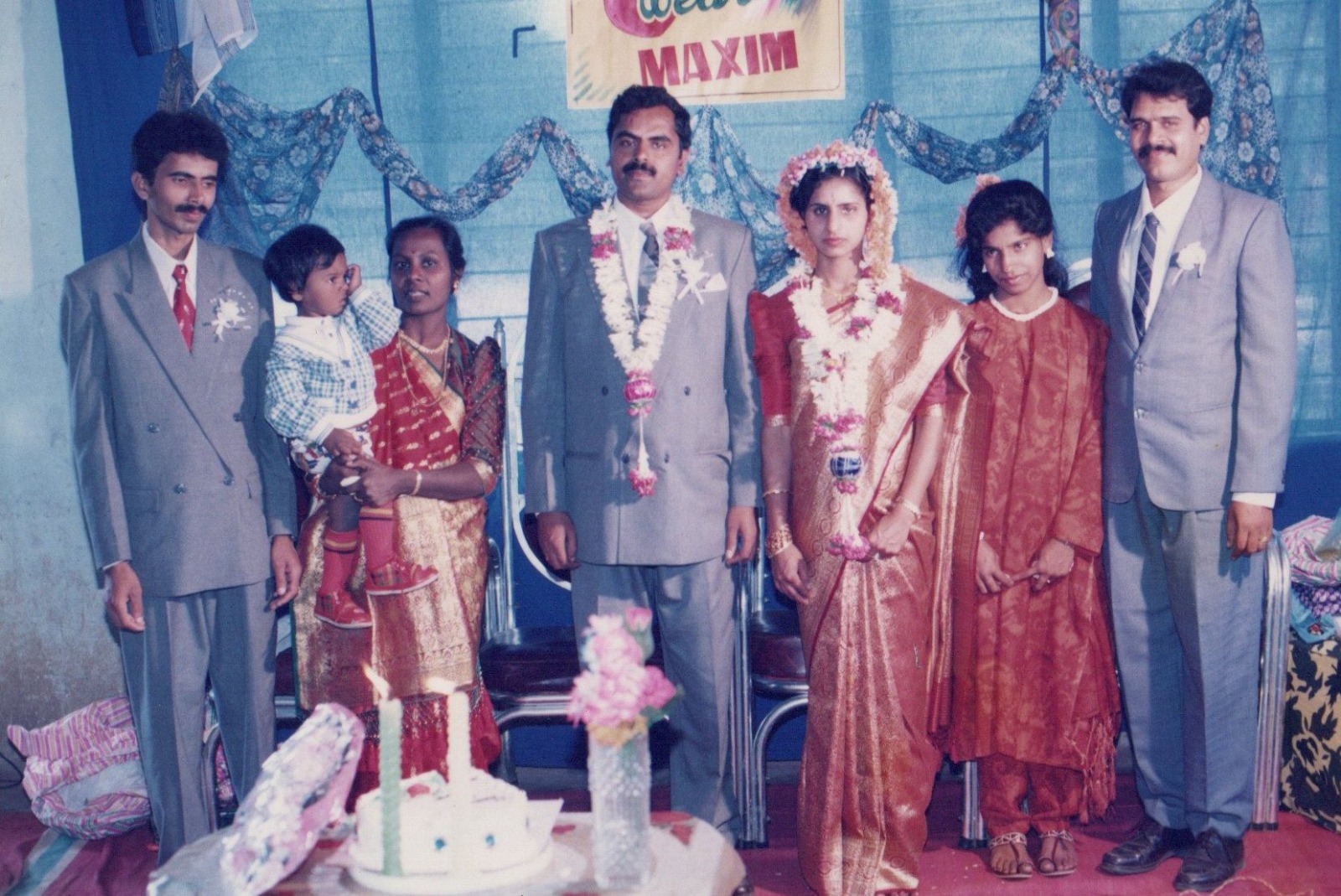
Family life gave him happiness and then dealt him a profound loss. He married Regina in 1990. They became parents to Renita and Jovith. After Regina’s death in 2005, his mother came to stay and help, and he speaks with quiet appreciation of how his children cooperated through those difficult years, how they steadied one another. Both went on to study and work in Bangalore, and both keep their connection with him close.
Then came the pandemic, an unexpected stay in Thane, and another immediate need. He watched migrant workers moving along the roads with their belongings and their children, and he began offering what he had: juice, biscuits, water. It was not a program. It was a response. Elsewhere his involvement has taken quieter shapes. Restoring a neighborhood park. Accepting responsibilities at church. Joining Rotary activities. Visiting someone who is unwell.
He guards his independence. Walking and badminton remain part of his days, along with spiritual reading and the calls and conversations that keep him tethered to the people he loves. He wants to keep helping for as long as his health allows. The account that follows gives space to the circumstances behind that wish: opportunities accepted, an ambition left unfulfilled, companionship, bereavement, and responsibilities shared. Through all of it emerges a man who has found lasting satisfaction in remaining available to others, even as he recognizes how much he himself has received. His life holds room for unfinished tasks and for the hope of being useful again tomorrow, in whatever modest way the day permits.
"We had little money and plenty of people. Cousins, aunts, uncles, and a river on Saturdays. Looking back, I see how rich that made us."
Phase 1: A Cradle Carried Out of the Fire
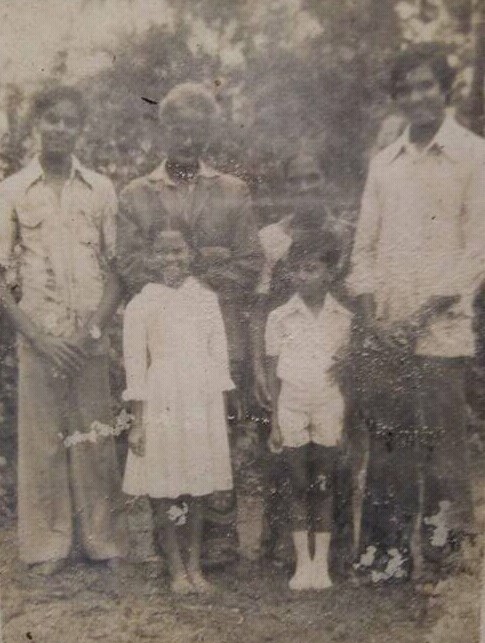
Before he could remember the house he lived in, he had already been carried out of it.
He was three months old when fire took the family’s thatched cottage. His elder brother and sister, small children themselves, had been playing near the kitchen fire where the family cooked. When the thatch caught, they ran in terror. Their baby brother stayed inside, lying in his cradle.
The house stood beside a main road, and that accident of geography saved him. A truck passed; the driver saw the flames, and the people travelling in it stopped. They went into the burning cottage, found the infant, and did something remarkable in its simplicity: they lifted the entire cradle and carried it outside, setting it down safely beside the road before they went on their way. His mother had gone to a shop. She heard the news and came running. Her youngest child was outside, unharmed. The other two were nowhere to be seen.
She found them hiding behind the house, near the family’s small patch of land. All three children were safe. He knew of the rescue through his family’s retelling.
He was the third of seven, four boys and three girls, raised in the village surroundings of Devadhana and Sangameshwarapete. His father, Gregory, took contracts to build houses in the village. His mother, Christine, kept the household. Money was scarce, and he remembered what it was to come from a poor family, including the way some people treated those with fewer means. Such experiences lived alongside considerable affection. The family’s poverty never described the whole of his childhood.
His father’s brothers and his mother’s sisters lived within about ten kilometres, and their children moved freely between one another’s homes, visiting, playing, going to school together. Aunts and uncles were close enough to feel like extra parents. Until his tenth standard, that extended circle remained an everyday part of his life. They kept separate houses, yet he remembered them as living much like a joint family. There were many adults to whom a child could belong.
The river behind their home gave the children another gathering place. On Saturdays they would go there together, jump into the water, bathe and play through the afternoon. These were regular pleasures, held in memory with warmth.
School first stood near the house, the government school, with around three hundred children in the primary years and perhaps sixty in the fifth through seventh standards. After Standard VII, continuing meant travelling to a town about ten kilometres away. Transport did not always fit the school day. He walked there and walked back, sometimes catching a bus in the evening when one happened to come. Walking was simply how they reached the places they needed to go.
At home he studied by kerosene light until he was thirteen. He made no claim to having been an outstanding pupil. Average, he called himself, and he meant it. What he remembered with affection was his readiness to help classmates and teachers, and the warmth they showed him in return. His place at school was formed through those relationships as much as through lessons. He could acknowledge his academic limits without dismissing the companionship and usefulness he found there.
“I gave seven years to a calling I believed was mine. It was not to be. I do not carry bitterness about it, only the memory of wanting it sincerely."
Phase 2 : The Calling He Could Not Complete
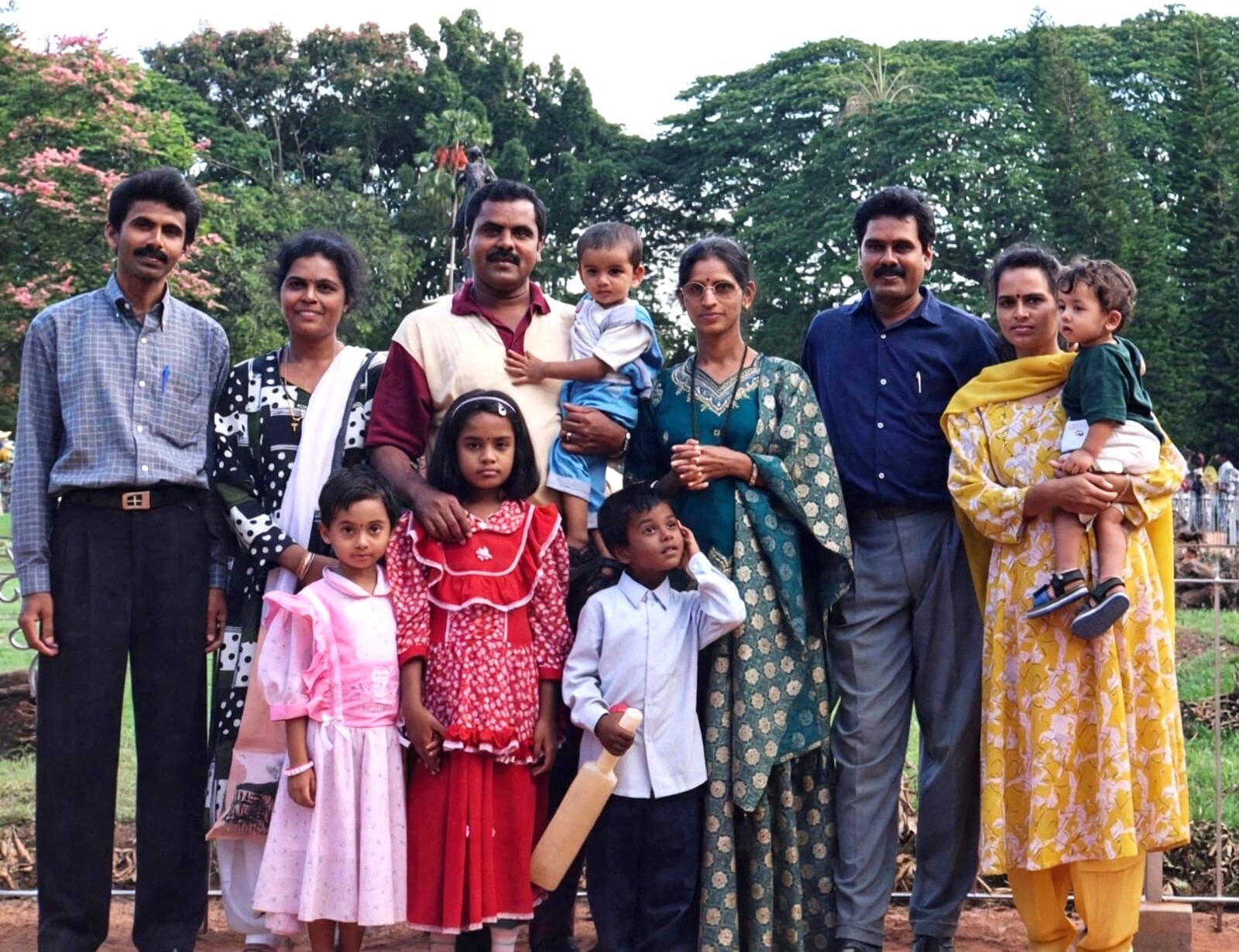
He wanted to become a Catholic priest. That was not a passing thought for Dr. Joe M. Tellis, not a boyhood fancy he outgrew. It was an intention he acted upon, entering the seminary and giving years of his life to religious formation. His education became bound up with that purpose; academic study and spiritual preparation pressed into the same years, aimed at the same future.
After his school years, he pursued PUC at St. Philomena’s College in Mysore. From there, he completed a Bachelor of Arts in Philosophy through Bangalore University. Philosophy was not an arbitrary choice. It formed part of the preparation the priesthood required, and he went on to study theology in Bangalore as well. These subjects belonged to a period when his studies and his intended future ran together, when every book he opened pointed toward the same altar.
He remained in formation until his seventh year. Of the twenty-nine men in his group, nine eventually became priests. The others left at different points, some early in their training, some after several years of investment.
He speaks of the priesthood as a grace from God, recognising that entering formation did not mean everyone would reach ordination. That is how he understands the distance between entering the seminary and reaching ordination. He had wanted the vocation. He had studied toward it and stayed for years. And still he did not become a priest.
He withdrew in his seventh year. His degree in philosophy was complete, and he had also studied theology, but he left without entering the priesthood. His theological studies had been part of his education. The formation itself ended with his withdrawal in the seventh year. He left having pursued a calling that, despite all the time he had given it, would not become his vocation.
“I had no experience and no polished answers. I had willingness. That interview at the chairman’s house taught me that willingness can open a door.”
Phase 3 : A Quarter at the Farm, a Home in Bangalore
His first employment interview took place at the chairman’s house. Dr. Joe M. Tellis reached it through a family connection: the woman with whom he stayed as a paying guest happened to be the chairman’s cousin. The introduction gave him an opening, though he had little experience of presenting himself for a job. What he remembered was the friendliness of the meeting. The chairman spoke with him, then took him to the research and breeding farm in Bangalore and showed him the accommodation where he could stay.
The arrangement was direct. He would live in the quarter, prepare his own meals, and take care of the livestock. Beginning as a supervisor, he entered a working environment populated by animals that made the experience particularly interesting to him. He recalled crocodiles, colourful birds and rabbits among those at the farm. His first responsibilities placed him close to the animals, with his accommodation on the premises.
The income was modest. Coming from a family that had already known financial difficulty, he did not describe these early working years as comfortable, but he managed. Employment gave him a place to live and duties of his own. The quarter and the farm belonged to the same daily arrangement, bringing the practical matters of cooking, accommodation and work together.
After supervising at the farm, he moved into the corporate office as a public relations officer. The change brought a different kind of responsibility. His work now drew more directly upon his ability to speak with people and establish friendly relationships. He continued in the livestock sector for several years, moving between businesses while gaining office experience. The employers changed, but public relations remained part of his working life.
Language was one of the abilities he brought to those encounters. During his years of study and work, hostel life introduced him to friends from Kerala, Tamil Nadu and Andhra. Living among people from different states gave him opportunities to learn how they spoke. He found that he picked up languages quickly, and the friendships provided a setting in which to practise them.
His languages included Konkani, Tulu, Kannada, Hindi, English and Malayalam. He also mentioned some Tamil, Urdu and Telugu, while acknowledging that he was not fluent in every language he could speak. He valued this ability for its practical usefulness. Alongside his qualifications, it helped him find his place in employment, where speaking with people was central to his responsibilities.
Education continued while he worked. He completed a postgraduate diploma in Business Administration, adding a business qualification to his earlier studies. This belonged to the period in which he was earning and developing his professional experience. His academic preparation and office responsibilities now extended into the same field of working life.
Note of Thanks
For Dr. Joe M. Tellis, gratitude belongs to the people whose guidance, companionship, and support have mattered in his life. He offers his thanks to G.K. Shanava, his late wife Regina, and his children, Renita and Jovith. Each has a distinct place in his affection, and each has given him something he continues to value.
His mentor receives his appreciation for the wholehearted encouragement with which he supported him. Working alongside him provided practical guidance in preparing budgets and approaching social initiatives. More than instruction alone, he remembers the confidence and willingness to help that accompanied it. He remains thankful for having someone experienced to turn to while learning how to carry out responsibilities involving children, education and women’s empowerment. That support gave him a person from whom he could learn through work.
To Regina, he offers the love and appreciation of a husband who remembers their fifteen years together with happiness. He valued her company deeply and continues to remember her with affection. His thanks are for the marriage they shared and her place in his life. Her absence does not lessen the gratitude with which he speaks of her.
His children receive his appreciation for their cooperation during difficult years and for the support they continue to give. He remembers that they studied well and did not add to his burdens when the family was facing loss. Their growing independence brought him reassurance, while their concern for him remains present in their calls and invitations to stay with them.
He is grateful that they want him close, even as he chooses to remain involved in his community. Their affection gives him the knowledge that he is wanted and cared for. To his mentor, wife, and children, these thanks acknowledge relationships he holds dear, with appreciation for what each has given him.
thanks,
– Dr. (H.C.) Joe M. Tellis

AIMLAY is a leading global education platform empowering ACADEMIC and EXPERIENTIAL learners, uniquely focused on recognizing knowledge gained through experience and building a diversified community of doctorates and aspiring researchers.