

“I have always wanted to help people become better. In some capacity, that is what I have spent most of my life doing.”
Introduction
The story of Dr. Tara Toliver is not built around a single profession or one defining achievement. It is shaped by a lifetime of moving toward people who needed help and finding a practical way to stand beside them. In Hopkinsville, Kentucky, that instinct has appeared in schools, community programs, churches, ballfields, family resource work, and the justice system. The setting changed across the years, but the purpose remained familiar: help people move toward something better.
Long before social work became her formal field of study, service was already present in the way she understood life. Her mother, Hattie Williamson, gave that understanding its earliest shape. As a licensed practical nurse, she cared for people whose circumstances often left them with few options. She delivered babies for families who could not afford hospital care and sometimes brought children with disabilities home during the holidays when their families did not come for them. Dr. Tara saw care expressed through action. Her father contributed something different but equally lasting. After military service, he became a chef, and from him she developed a love of cooking that began early in childhood.
Her early years were not sheltered from hardship. Her parents separated when she was six, and her mother worked two jobs to support the family. Dr. Tara did not grow up dreaming of wealth. She wanted something simpler: not to remain in poverty and, one day, to create better possibilities for her own children. That desire strengthened her respect for education. Her third-grade teacher, Ms. Wilkinson, encouraged students to believe that hard work could open possibilities, even during segregation. The lesson stayed with her.
For many years, work and responsibility came before professional titles. She worked as a hotel maid, a nursing assistant and later spent about two decades with Flynn Enterprises. Even in a factory setting, her attention often moved toward people around her. She became a trainer, and when coworkers struggled with rent or utility bills, she kept track of community programs that might help and brought that information back to them. When the factory eventually moved its operations to Mexico, an established chapter of her working life closed. Instead of entering another factory, she returned to college.
That decision gave formal direction to instincts that had been present for years. Dr. Tara completed undergraduate study in social work at Murray State University, continued to Western Kentucky University for a Master of Science in Social Work, and later undertook drug and alcohol counseling studies at Morehead State University. Her academic performance reflected the seriousness with which she approached the opportunity. Education did not replace experience. It gave her additional tools for work she already understood at a human level.
Her professional path eventually brought her into the Kentucky Court of Justice, where she worked with juvenile justice, family court matters, diversion, substance abuse, and program supervision. The work placed her close to people facing consequences that could alter the course of their lives. Her approach was practical. She believed in connecting people with resources, speaking plainly, offering guidance, and expecting them to participate in changing their own circumstances. Help, in her view, was not the removal of responsibility. It was the creation of a fair chance to use it well.
That philosophy later found another expression through the Christian County Board of Education. As a Family Resource Center Coordinator, she has worked to remove barriers that can interfere with a child’s education. Those barriers can involve food, housing, family hardship, confidence, behavior, or access to support. Her work has included family assistance, tutoring, food support, spelling activities, mentoring, and programs intended to strengthen students beyond academic performance alone.
"My mother was my biggest influence. She was always giving back, and I know that giving spirit rubbed off on me."
Phase 1: The Giving Spirit She Inherited
The earliest lessons in the life of Dr. Tara Toliver were not taught through formal instruction. They lived around her, most powerfully through the example of her mother, Hattie Williamson. Growing up during a period marked by racism and segregation, she saw families in her community facing circumstances in which even hospital care could be financially out of reach. In that environment, her mother became the person who showed her what compassion looked like when it moved beyond words.
Hattie Williamson was a licensed practical nurse, but her care was never limited to the hours she spent working. There were families who could not afford to go to a hospital when a baby was due, and she would help deliver those babies without asking for payment. She also worked in a hospital with children who had disabilities. During the holidays, when one or two children were sometimes left without family members coming to collect them, she brought them home. In that household, they were not treated as visitors who had nowhere else to go. They were cared for as though they belonged there.
For a young Dr. Tara, such moments quietly established a standard. Her mother did not appear to separate caring for people from everyday life. Someone needed help, so she helped. A child needed somewhere to spend the holidays, so space was made. A family could not afford something necessary, so she responded with what she knew how to do. Watching that happen repeatedly left an impression not only on Dr. Tara but on her siblings as well.
Family life, however, was not untouched by difficulty. Her parents divorced when she was six years old. After the separation, her mother carried the responsibility of supporting the household and worked two jobs to take care of the children. The experience made struggle part of Dr. Tara’s early understanding of life.
Her father influenced her in a different way. He had served in the military and later became a chef. From him came her love of cooking, a skill she picked up remarkably young. By the age of eight, she could prepare meals she believed were comparable to those cooked by adults. Cooking was more than a childhood accomplishment. It became one of the ways she connected with the influence her father left in her life.
Her siblings shared that same environment, and their relationship developed around closeness and mutual care. The siblings loved one another and looked after one another, carrying forward much of the caring spirit they had seen in their mother. It was not something discussed as an ideal. It was simply how family was expected to behave.
Her grandmother added another layer to that sense of belonging. In earlier years, she had worked in a factory, and later, after becoming disabled, she became the grandmother and great aunt whom family members would visit or who would come to visit them. She was also the person who began traditions that remained important long after their beginnings.
“I wanted to do better, and I wanted my children to be better than me."
Phase 2 : She Never Dreamed of Riches
As Dr. Tara moved beyond the earliest years of childhood, her idea of a good future was already becoming clear. She was not drawn to fantasies of wealth or status. What mattered to her was the possibility of living without the constant limits that poverty could place around a family. She wanted enough stability to move forward with confidence, and when she became old enough to earn money of her own, she wanted her mother to know that help was available if it was ever needed. Her mother would not take the money, but for Dr. Tara, simply being able to offer it mattered.
That same determination became visible in school. Dr. Tara took her education seriously and worked for strong results. She earned mainly A and B grades and took particular pride in graduating with honors. Academic success was not something she treated casually. It required effort, and she was willing to give that effort because education represented a way of moving toward the life she wanted.
One of the people who strengthened that belief was her third grade teacher, Ms. Wilkinson. The classroom existed within the realities of segregation, yet Ms. Wilkinson encouraged her students to believe that hard work could expand what was possible for them. She told them that if they worked hard, they could become what they wanted to become. For a child growing up in a world where opportunities were not equally available, those words carried weight.
The expectations in that classroom were practical as well as encouraging. Children were expected to learn cursive writing, reading, and mathematics at an early age. Those school years required discipline, and Ms. Wilkinson consistently pushed her students to succeed. Her encouragement reinforced the importance of working hard despite the limitations surrounding the students at that time.
As she entered adulthood, life began to ask different things of her. At eighteen, Dr. Tara married her childhood sweetheart, who was serving in the military. Their marriage brought a new chapter that included travel beyond the community where she had spent most of her life. It also brought the responsibilities of family life. Over the course of their twenty-two years of marriage, they became parents to four children, Tefrell Toliver, Rhadius Toliver, Reshawn Toliver, and Renikka.
Motherhood gave an even more personal meaning to the idea of doing better. What mattered was that they should have better opportunities than she had known. The hope was straightforward but deeply important to her. She wanted the lives of her children to reflect forward movement.
That hope was closely tied to the standards she had already set for herself. She knew what it meant to work hard in school, to take responsibility seriously, and to look beyond immediate circumstances. Those lessons naturally became part of the way she viewed parenthood. The future was no longer only about what she could achieve for herself. It was also about what could become possible for the generation following her.
“Even though it was a factory job, people needed help. I made sure I knew what programs were available so I could bring that information back to them.”
Phase 3 : Work Before Titles
The working life of Dr. Tara began without ceremony. There was no carefully mapped career waiting ahead of her and no professional title defining what she would eventually become. Her first job was as a hotel maid. It was practical work, taken at a time when earning an income mattered. From there, she became a nursing assistant, entering a role that placed responsibility for another person’s wellbeing directly into her hands.
These early positions were different from the work that would later define her professional career, yet they gave her something important. They brought her into everyday contact with responsibility, routine, people, and the reality of earning a living through consistent effort. Dr. Tara was learning through work itself, long before she would return to a classroom and give formal academic direction to the interests that had been developing within her.
A much longer chapter began when she joined Flynn Enterprises. What might initially have seemed like another job became approximately twenty years of her working life. The factory provided financial stability during an important period and paid wages that were above average. For years, she showed up, worked, and built a substantial part of her adult life around that environment.
As she became more experienced, Dr. Tara took on the responsibility of training people who were coming into the workplace. New employees needed to understand how to perform their jobs, and she became one of the people who helped them learn. Through her work there, she became aware that some coworkers needed help with rent and utility bills.
Some of the women she worked alongside were struggling to pay rent. Others were having difficulty keeping up with utility bills. These were matters outside the formal requirements of her job, but Dr. Tara did not regard that as a reason to ignore them. She began paying attention to community programs that were offering financial assistance. When she learned that funds or other support were available, she brought that information back to the factory so that coworkers who needed help would know where they might find it.
At that stage, connecting coworkers with assistance was not the professional social work role she would later hold. She was bringing useful community information back to women who needed it. Approximately twenty years at Flynn Enterprises gave Dr. Tara a long period of employment and financial stability. During those years, she became a trainer.
Note of Thanks
The gratitude at the heart of Dr. Tara’s journey begins with her mother, Hattie Williamson. If her mother were still here, she would be among the first people Dr. Tara would want to thank. Hattie Williamson remained her hero and held a deeply important place in the values that shaped her life.
Her thanks extend with equal sincerity to her family. Throughout the years, their presence has remained an important part of her life. Dr. Tara recognizes that a journey filled with responsibilities, commitments, and service is never carried entirely by one person. Family has been part of the circle around her, and she remains deeply appreciative of that support.
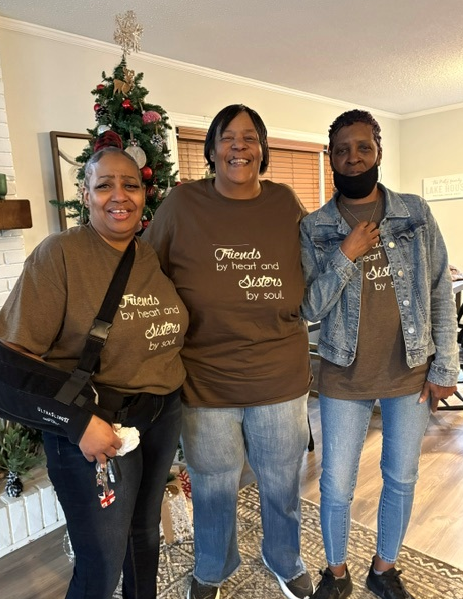
There is also a special place in her gratitude for her friends. They have often helped with the things she wanted to accomplish and have willingly become part of her efforts. Their presence has added practical support as well as friendship throughout many of the things she has chosen to do.
Above all, Dr. Tara offers her thanks to her Lord and Savior, Jesus Christ. Her faith gives this gratitude its deepest meaning. In her own conviction, without Him, nothing is possible. That belief remains at the heart of the way she understands the life she has lived and everything that has been possible along the way.
thanks,
– Dr. (H.C.) Tara Toliver

AIMLAY is a leading global education platform empowering ACADEMIC and EXPERIENTIAL learners, uniquely focused on recognizing knowledge gained through experience and building a diversified community of doctorates and aspiring researchers.