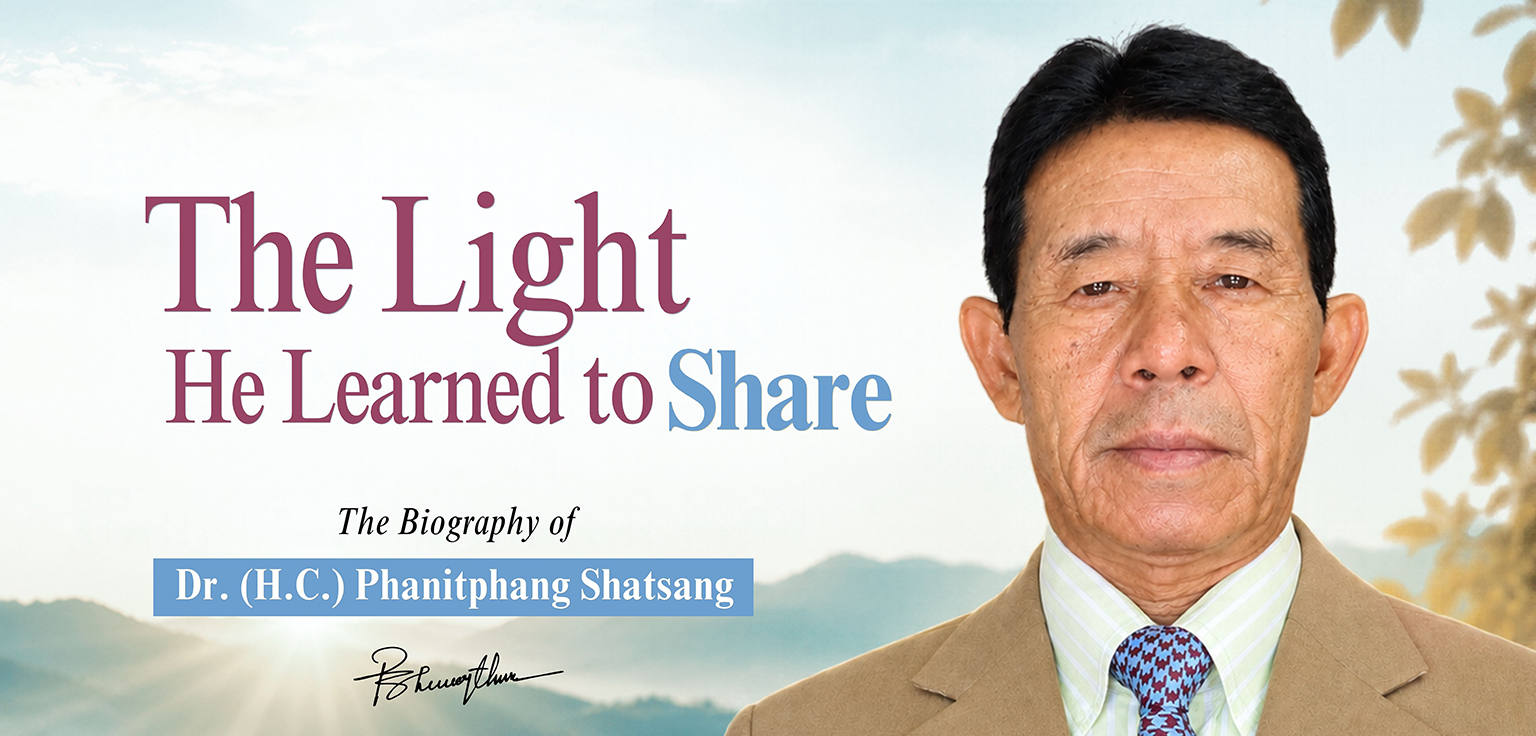
“Even when learning begins with only a little light, it can lead to a life that helps others find their way.”
Introduction
For Dr. Phanitphang, retirement from government employment has left room for reading, church responsibilities, and contact with people who continue to seek his advice. He has expressed a wish to reduce some of his public duties after many years of work, yet invitations to participate still reach him. That present circumstance reflects a life spent in several settings: the village where he grew up, the schools and colleges he attended, government offices, and organisations through which he worked with his community.
Born on 25 December 1957, he was brought up in Chingai Village, Ukhrul District, Manipur, in a rural family with limited means. His early education depended on what the village could provide. Recognised learning institutions were scarce, electricity was unavailable, and transport connections were difficult. Before moving into formal schooling elsewhere, he attended night school and began learning letters and numbers. The circumstances of that beginning give context to the distance he later travelled in education and employment.
His schooling took him between Ukhrul and Imphal, where Catholic-run institutions and an English-medium school provided opportunities unavailable at home. Continuing his education involved school fees, changes of residence, and his father’s efforts to arrange money. His father had little formal education himself, but helped pay for his son’s schooling. These practical circumstances remained part of his progress as he completed matriculation and moved into college studies.
At Pettigrew College, he pursued pre-university and degree-level education, qualifying for a Bachelor of Arts in 1985. College life also included participation in a Christian singing group that visited villages to present songs and talks. Academic study and religious activity thus occupied the same period of his life. He subsequently enrolled for M.A. studies at Manipur University, seeking to continue his education while facing the need to earn a living.
Government employment began during that period of postgraduate study. An appointment in the Secretariat Planning Department, Government of Manipur, brought him back to work at the district level. He attempted to complete his M.A., but transport disruptions during bandhs and blockades prevented him from reaching the final examination. His working life continued, while the degree remained unfinished. That interruption forms part of his account of education and employment, both of which required him to travel between Ukhrul and Imphal.
Over the years, his responsibilities increased from those of a Lower Division Clerk to Upper Division Clerk, Head Clerk, and Superintendent. His work included service at the district headquarters and later in Imphal. He described a routine of arriving before other officials and checking office matters, as well as contact with visiting officers. By the time he retired on 31 December 2023, he had spent more than three decades in government service and held the post of Superintendent.
Alongside employment, he accepted responsibilities in church and community organisations. He served in elected positions, participated in building committees, and worked with students and young people. His involvement extended to conferences, sports, public speaking activities, and village maintenance. These tasks brought him into contact with people of different ages and placed him in roles where advice, organisation, and practical assistance were needed. His religious responsibilities have continued through his work as an Assistant Pastor and Sunday School Superintendent.
"Sometimes, learning begins with a little light and a few letters, long before there is a proper classroom."
Phase 1: Learning by Pinewood Light
The first lessons in Dr. Phanitphang’s life took place at night, when a small group gathered to learn letters and numbers from a teacher who had studied only up to Class II. In Chingai Village, education depended on the knowledge someone nearby could offer. There was no recognised lower-primary school for him to enter, and no regular daytime classroom in which to begin. His earliest schooling therefore followed a different arrangement, one made possible by a few people who wanted to learn and someone able to teach them the basics.
Born on 25 December 1957, he grew up in a rural household in Ukhrul District, Manipur. He belonged to the Tangkhul community, a Naga tribe, and his early learning included the Tangkhul language alongside English letters and numbers. The village was the setting of his childhood, but its limited facilities affected what was available to him. Beginning an education there meant working within those circumstances before any opportunity arose to study elsewhere.
His parents were Late Chilang Shatsang and Late Mrs. Luisomla Shatsang. The family had modest means. His father had received little education and could neither read nor write. He was, however, the pioneer of Chingai Baptist Church and became the village’s first Christian convert in 1946. He was baptised on 1 January 1947, together with those who subsequently converted.
Distance added another difficulty. The nearest administrative headquarters was approximately 160 kilometres away, while the nearest motorable road was about 25 kilometres from the village. Transport facilities were extremely limited, and people covered considerable distances on foot. These distances mattered in a childhood where the immediate surroundings offered few institutions. Access to facilities outside Chingai involved travel, and travel itself required more than simply finding a vehicle nearby.
The absence of a daytime school led him to attend night school. Usually, only three, four, or five learners took part. They were people who wanted to receive an education, even at its most elementary level. Others in the village did not yet understand what learning letters and numbers could offer or why it was important. The small attendance belonged to that setting, where education was not something everyone knew how to approach.
Their teacher had studied in another village and reached Class II. That was the extent of his formal schooling, but he knew enough to introduce the alphabet and basic counting. He taught what he had learned. For his pupils, this limited knowledge was still a way to begin. The arrangement placed a person with a small amount of schooling in charge of learners who were encountering those lessons for the first time.
Teaching started with identifying individual letters. The familiar expression “A for apple” did not form a clear part of what he remembered learning. An apple itself was unfamiliar to the children. Instead, the teacher showed them A and B as letters to recognise and repeat. Before words could be introduced, the pupils needed to understand the symbols placed before them. What later became basic knowledge first required explanation, practice, and repeated attention.
“A child's education also carries the efforts of those who find a way to keep the school fees paid."
Phase 2 : Between Imphal and Ukhrul Classrooms
Admission to a Catholic-run school in Imphal began with a conversation between Dr. Phanitphang and a Father. He wanted to study there and asked to be admitted, expressing himself through a mixture of English and Manipuri. The Father welcomed his request and allowed him to enrol. By this time, he could speak a few English words. He now had an opportunity to continue beyond the elementary learning available in his village.
His earliest classes in Imphal covered the lower-primary years. He recalled progressing through Classes I, II, III, and IV at the Catholic school. “Ihis part of his education placed him within an institution where he could move from one class to another. The precise point at which he left remained uncertain in his recollection, but his next move took him back towards Ukhrul to continue his schooling.
Attending school also meant finding money for fees. The monthly charge was approximately twelve rupees, an amount that required effort from his family. His father went from place to place to arrange payment. The fee may appear small when expressed as a figure, but money was valuable in their circumstances, and paying it was a practical responsibility that accompanied his education. His father’s efforts helped him remain in school.
The next school was Sacred Heart High School, Hungpung, in Ukhrul District. Like the institution he had attended in Imphal, it was a Catholic mission school run by Fathers. He remembered spending about two years there before returning to Imphal. His school years consequently involved more than one change of place, with education continuing across institutions in both the capital and his home district.
On returning to Imphal, he joined Tiny Tots English Medium School in Deulaland. It was there that he continued through the later school classes and prepared for matriculation. Rather than completing all his schooling in one institution, he reached this Stage after studying in different locations. Tiny Tots became the school from which he finished his secondary education.
Among his memories of the school was its Anglo-Indian proprietor, who had married a Tangkhul woman. He also recalled the principal, although the name was not clear enough to preserve accurately. His recollections included a humorous observation about the man’s large build and the difficulty of carrying him in a rickshaw. Alongside memories of classes and examinations, this particular detail remained part of how he remembered the people at the school.
In 1980, he passed the High School Leaving Certificate examination under the Board of Secondary Education, Manipur, obtaining Third Division. The result marked the completion of his school education. It followed years in which admission, fees, work, and changes of school had all formed part of continuing his studies. He had reached matriculation through those circumstances, with the next level of education now available to him.
After completing school, he returned to Ukhrul for college. That move followed the pattern of travelling between the district and Imphal, but it introduced a different stage of study. He would enter Pettigrew College for pre-university education and later pursue an arts degree. His school years ended at Tiny Tots; the account of his higher education would begin back in Ukhrul.
“The walk to college ends at the classroom, but the wish to learn can carry a person much further.”
Phase 3 : The Walk to Pettigrew College
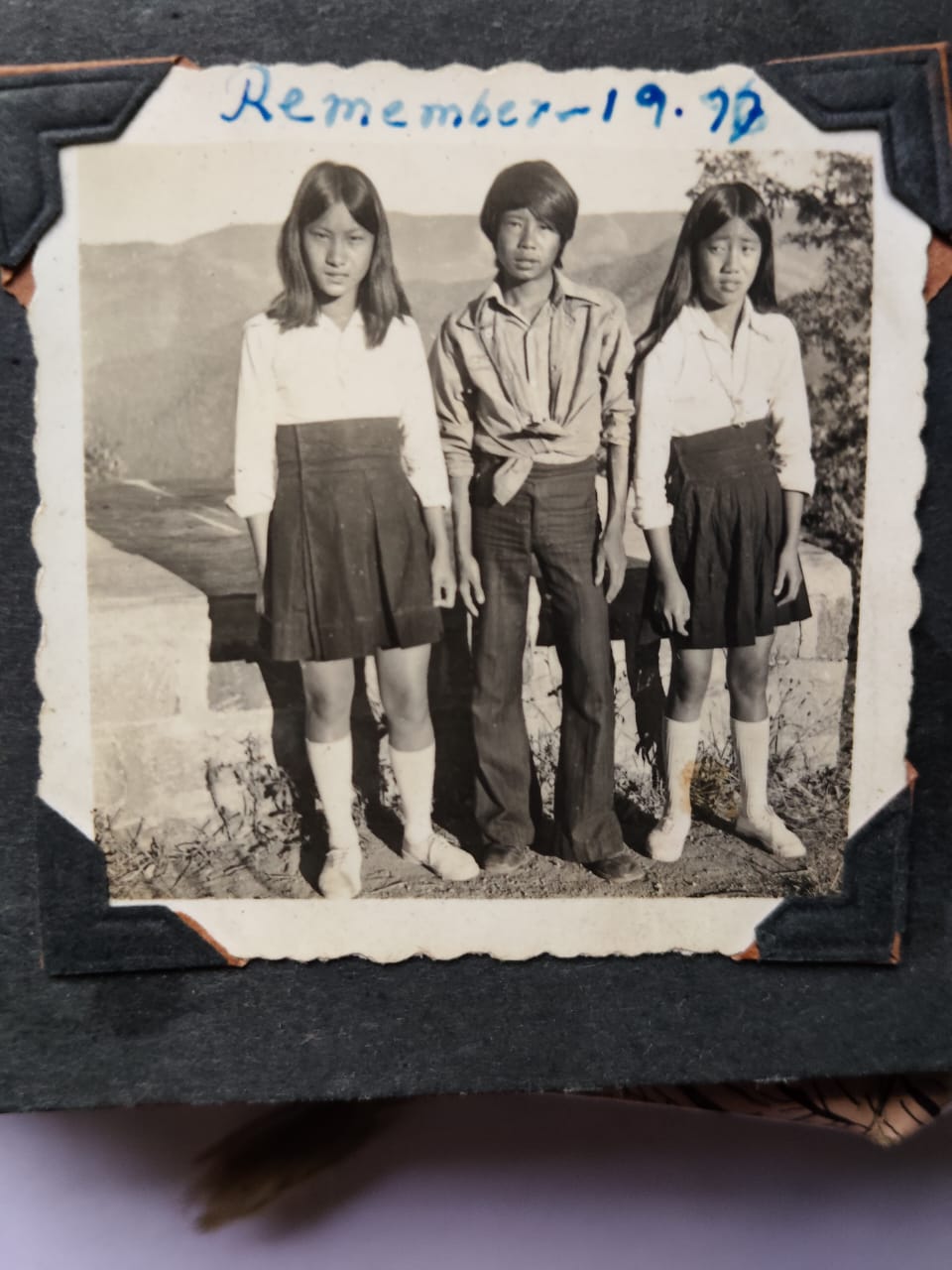
Attending college in Ukhrul meant walking approximately two and a half kilometres on teaching days. Dr. Phanitphang made that walk to Pettigrew College, where he continued his education after matriculation. The college stood some distance from the main town, so reaching it was part of his routine as a student. Except on holidays, he travelled there on foot to attend classes. His account of higher education began with this practical detail: before taking his place in a classroom, he had a distance to cover.
Returning to Ukhrul brought him into a different level of study from the schooling he had completed in Imphal. He enrolled for pre-university education and then continued towards a Bachelor of Arts degree. These were successive Stages rather than Separate decisions to leave education and return to it. Once he had completed the preparatory course, he remained in college studies and worked towards graduation. The move back to his district therefore became the beginning of his higher education.
Pettigrew College had a name he associated with missionary work in Ukhrul. He knew of William Pettigrew as a missionary who had come to the district and understood that the college had been named after him. That connection formed part of how he remembered the institution. For him, however, the college was also the place he attended regularly, where his studies continued beyond school and where he pursued the qualification that would precede his postgraduate education.
The degree course also brought him into contact with D.M. College in Imphal. He remembered appearing for his examination there and referred to the institution as Dhanamanjuri College. Pettigrew College remained associated with his studies in Ukhrul, while DM. College appeared in his account of the examination arrangements. His college education thus involved both places. The relationship between them was not something he explained fully, but his recollection clearly included travelling beyond Ukhrul for this part of his academic work.
He also remembered students from different streams attending together. Arts, commerce, and science all appeared in his recollections of that period, and he described arrangements in which students shared classroom space. He found aspects of this experience amusing, although he no longer recalled exactly how the arrangements had worked. It was one of the details that remained with him from college: students pursuing different courses were part of the same setting in which he continued his own education.
Academic work was only one part of his college years. He belonged to a boys’ Christian singing group, where the members learned songs with guitars, drums, and other instruments. Their activities required learning and practising music together. He described the group through what they did, rather than through a formal title or a list of performances. It provided another setting in which he participated with others during the period when he was pursuing his degree.
The group’s activities extended beyond practice. The members took their instruments to villages, where they presented special songs and talks in their Own language. These visits gave their singing a setting outside the college. Their participation involved both music and spoken contributions, with the language of their community allowing them to address the people they visited. No particular village or occasion was singled out, but travelling together to present these programmes formed a clear part of his recollection.
Note of Thanks
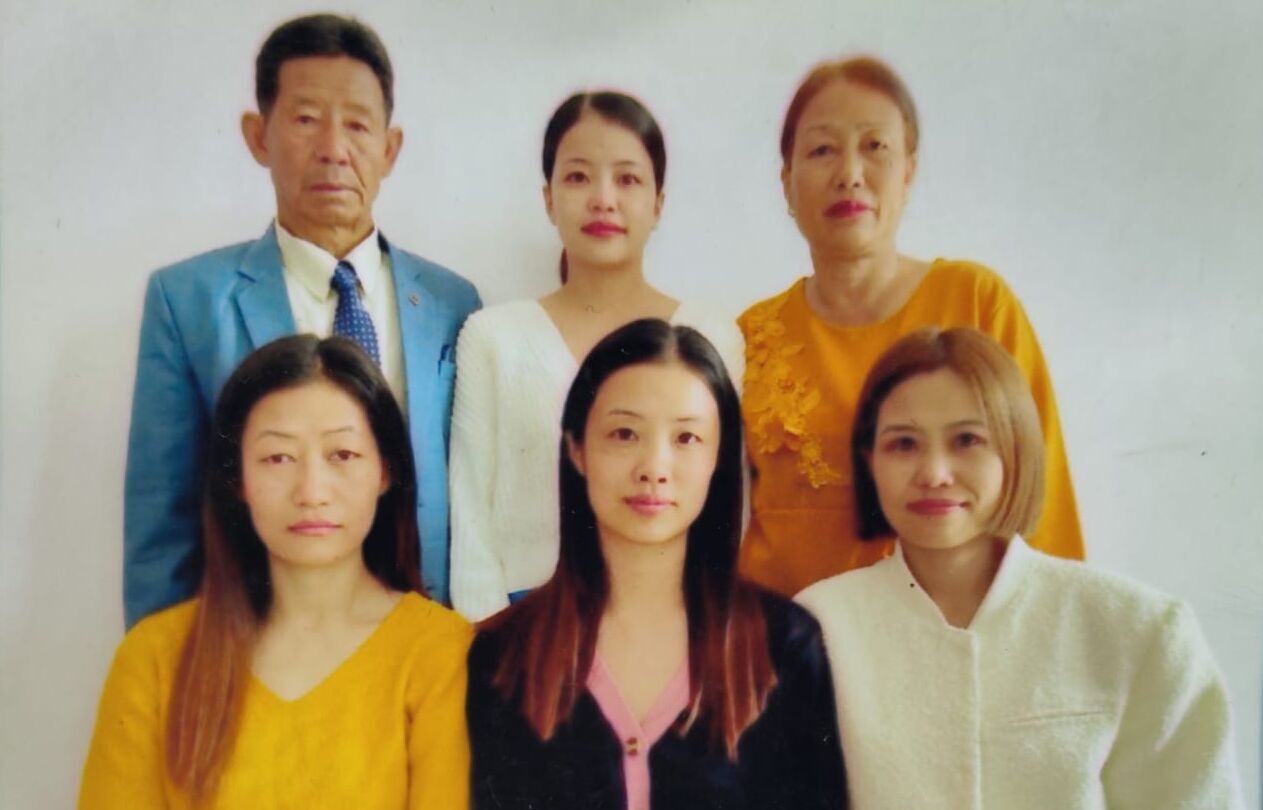
Dr. Phanitphag expresses his gratitude to those whose help has accompanied different periods of his life. He remembers his father’s efforts to arrange school fees when money was difficult to find. That assistance gave him the means to continue attending school. His acknowledgement recognises the practical work behind those payments and the place his father holds in the account of his education.
To his wife, he offers thanks for her encouragement and prayers. Her support in his pursuit of honorary recognition after retirement has been acknowledged in the dedication. Here, he includes her in the wider expression of gratitude to the people whose help he wishes to remember as his life story comes together.
He also appreciates the people who have assisted his children while they lived, studied, and worked away from Manipur. Their help mattered in the everyday circumstances of living elsewhere. His gratitude reaches beyond his household to those local communities, whose assistance he has recognised when speaking about his family’s experiences outside their home district.
His thanks extend to everyone involved in supporting the process, regardless of position. He has expressed his wish to pray for them all, recognising assistance without separating people by rank. This acknowledgement preserves that intention: to remember those who helped, to recognise what they contributed, and to offer gratitude in the same spirit in which he received their support. Each has a place here through the particular help he has described, from arranging the means to study to guiding an application undertaken much later in life.
thanks,
– Dr. (H.C.) Phanitphang Shatsang

AIMLAY is a leading global education platform empowering ACADEMIC and EXPERIENTIAL learners, uniquely focused on recognizing knowledge gained through experience and building a diversified community of doctorates and aspiring researchers.