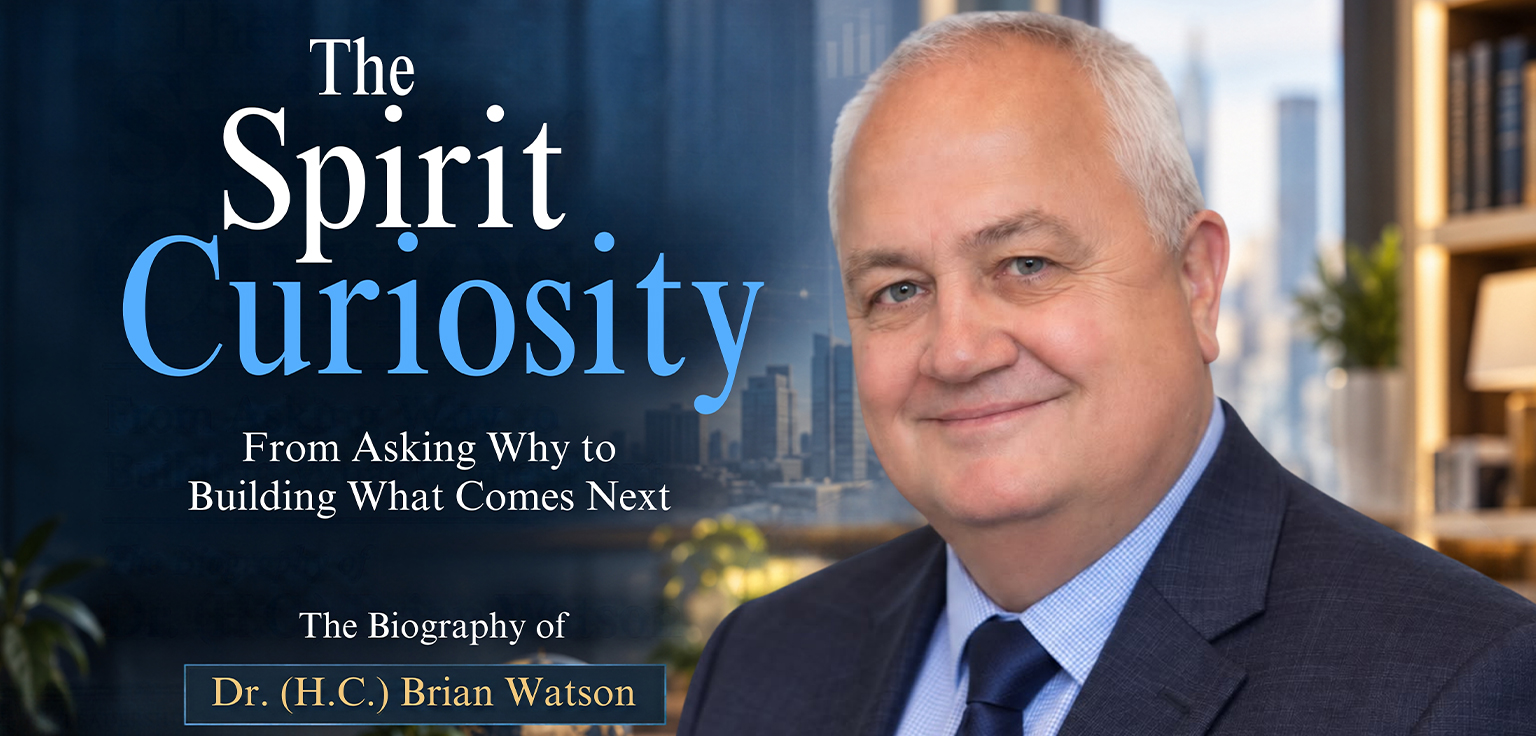
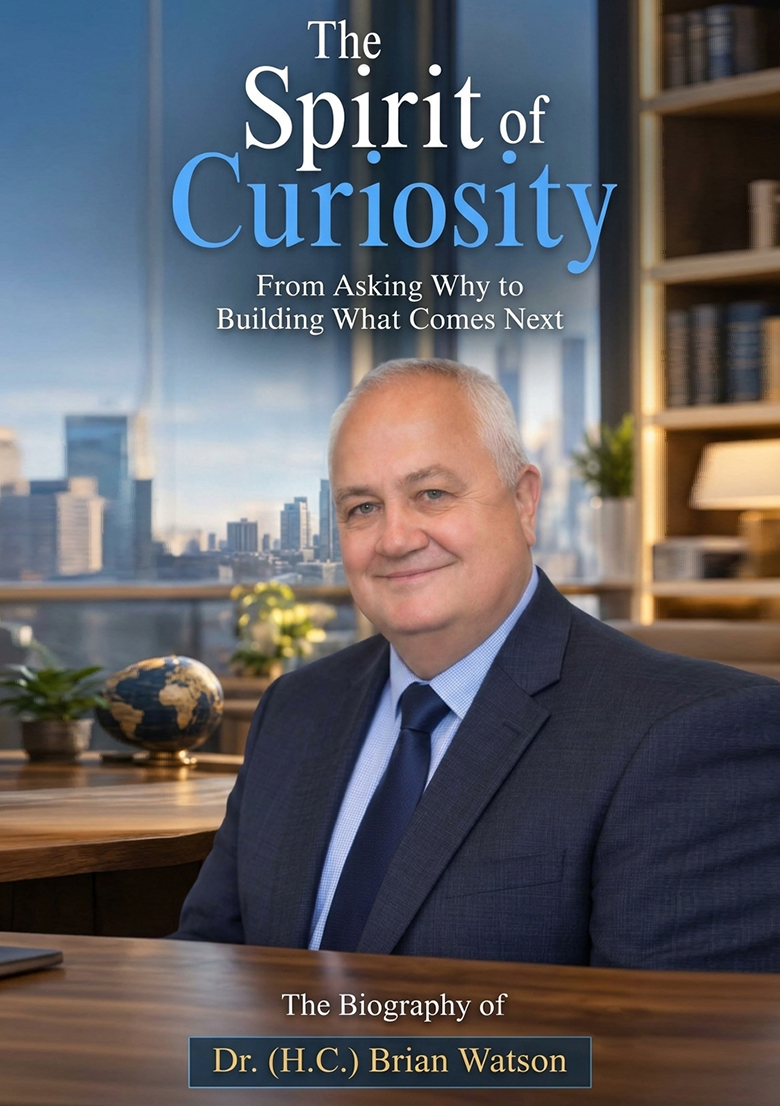
“I believe that curiosity gives us the desire to explore, courage helps us move forward, and experience gives meaning to our actions, allowing ordinary moments to become extraordinary contributions.”
Introduction
The life of Dr. Brian Watson is shaped by a rare combination of technical expertise, determination, leadership, and a strong sense of responsibility towards others. His path began in a coal mining community in the United Kingdom, where he developed a curiosity for understanding how things worked and a desire to challenge himself from an early age. Surrounded by hard-working people and guided by individuals who recognised his potential, he developed the values that would later influence his approach to engineering, leadership, and service.
From a young age, learning for him did not stop at school. He loved taking things apart, fixing them, and figuring out how they worked; it became a natural part of who he was. Teachers and mentors saw something in him and pushed him forward. Their encouragement helped him find his confidence, step into leadership, and realise that opportunities matter most when you make the most of them.
His transition into engineering began through a five-year apprenticeship in electrical engineering, where he gained practical knowledge and experience connected with mining environments. This foundation allowed him to develop a strong understanding of technical systems, problem-solving, and the importance of precision in engineering work. His early professional years introduced him to demanding projects and responsibilities, including involvement in the Channel Tunnel project, where he contributed as one of the principal engineers working on the design of conveyor systems used in the removal and movement of tunnel spoil.
Over the years, Dr. Brian expanded his expertise from technical engineering into commercial leadership and international business development. His professional experience with General Electric became a significant chapter in his career, providing opportunities to lead teams, manage large-scale operations, develop international partnerships, and contribute to innovative solutions across different markets. His ability to combine engineering knowledge with strategic thinking allowed him to take on increasingly senior responsibilities and work with organisations across Europe, the Middle East, Africa, and other global regions.
A defining aspect of his professional identity has been his ability to adapt to changing industries and emerging technologies. After gaining experience in traditional energy sectors, he moved towards renewable energy and battery energy storage, driven by a desire to contribute to cleaner and more sustainable solutions. His involvement in energy storage developed into a major area of expertise, where he has worked on commercial growth, technology development, safety standards, and large-scale projects.
Through his roles with organisations such as General Electric, Hyosung Heavy Industries, American Energy Storage Innovations, RONIN Energy Storage Sales, and TeraStor Energy, he has contributed to the advancement of battery energy storage solutions across international markets. His work has focused not only on expanding opportunities within the sector but also on improving safety, reliability, and industry standards through his involvement with BSI and ISO energy storage committees.
Beyond professional accomplishments, he has maintained a strong connection with community and environmental initiatives. His involvement with local sustainability planning, charitable activities, sports coaching, and environmental efforts reflects his belief that knowledge and experience should be used to benefit others. Whether supporting young people, contributing to local projects, or sharing his expertise, he continues to value the importance of giving back.
Dr. Brian Watson’s biography goes beyond professional milestones. It tells the story of the experiences, values, and choices that define him as an engineer, leader, and contributor. Throughout his work, he stays focused on knowledge, teamwork, and fresh ideas, all in service of one goal: building a safer and greener future.
"Before the world recognises a talent, it often begins as a quiet curiosity in a child’s hands, a question in the mind, and a desire to understand how things work."
Phase 1: Childhood, Family Values and the Making of a Determined Mind
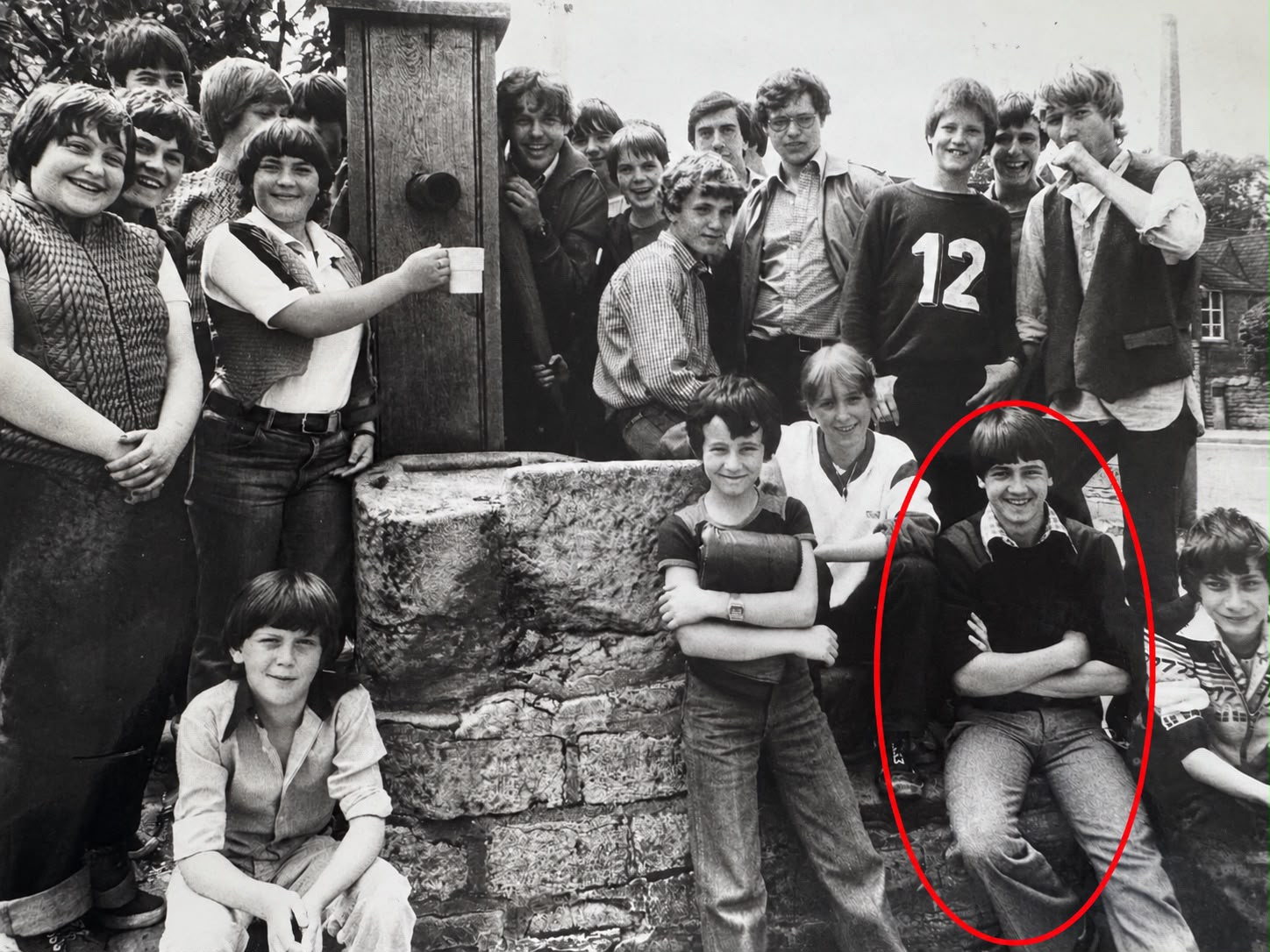
Born on 5 March 1964 in Chesterfield, United Kingdom, Dr. Brian Watson grew up in an environment where hard work, resilience, and practical skills were part of everyday life. His childhood was shaped by the character of a coal mining community, a place where people understood the importance of dedication to their work and supporting one another through challenges. While the area faced economic difficulties and significant deprivation, it was also a place where strong values, community connections, and personal determination played an important role in shaping young lives.
From an early age, Dr. Brian displayed a natural curiosity about the world around him. He was not simply interested in knowing that something worked; he wanted to understand why it worked and how it could be improved. His curiosity often appeared through simple childhood activities that later became connected to his engineering mindset. He enjoyed building things, experimenting with ideas, fixing bicycles, and taking objects apart to understand their mechanisms. A Meccano set became one of the many ways he explored his creativity, allowing him to design and construct different creations through imagination and practical thinking.
Within his family, Dr. Brian often felt different from his siblings. He had an older sister, a younger brother, and a younger sister, but his interests and personality did not always follow the same path as theirs. While others may have been drawn towards more traditional childhood activities, he found enjoyment in creating, repairing, and discovering how things functioned. This curiosity became an important part of who he was, quietly developing the mindset of someone who enjoyed solving problems and finding possibilities where others might simply see limitations.
The values that shaped Dr. Brian’s early years were deeply connected to his family, particularly the example set by his father, Philip Watson. He worked as an engineer at Rolls-Royce, and Dr. Brian admired the discipline and commitment he demonstrated throughout his working life. He remembers his father leaving home very early in the morning and returning late after long working days, showing a level of dedication that left a lasting impression. Although the family lived with limited financial resources, his parents made sure that opportunities were available whenever they believed something could help him grow. His father’s example taught him that progress comes through effort, responsibility, and a willingness to keep moving forward even when circumstances are not always easy.
As a young child, Dr. Brian also experienced personal challenges that shaped his confidence and determination. He described himself as being physically small during his school years, which made him a target for bullying. Rather than allowing those experiences to limit him, he used them as motivation to improve himself. He wanted to become stronger, more capable, and more confident. These early experiences helped develop an important quality that remained throughout his life: the ability to face challenges directly and use them as opportunities for growth.
A significant influence during his childhood came from the people who recognised abilities in him before he fully recognised them himself. One of those individuals was Alan Rasman, his Year 4 primary school teacher. More than a teacher, Alan became someone who encouraged Dr. Brian to explore his abilities, develop leadership qualities, and take part in opportunities beyond ordinary classroom learning. His support gave Dr. Brian confidence and helped him understand the importance of believing in one’s own potential.
Another important influence was Mrs. Jackson, a music teacher who noticed Dr. Brian’s enthusiasm and encouraged his creative side. When Dr. Brian was six years old, his family could not afford to buy him a musical instrument, so Mrs. Jackson loaned him a guitar and other musical instruments. That simple act of kindness opened a new area of exploration for him. Through her encouragement, he became involved in music, school choirs, and amateur dramatics. Her support remained meaningful throughout his life, and their friendship continued for more than four decades until her passing.
“A person’s path can change forever when someone chooses to see beyond who they are today and believes in who they can become tomorrow. "
Phase 2 : Mentorship, Confidence and the Making of a Young Leader
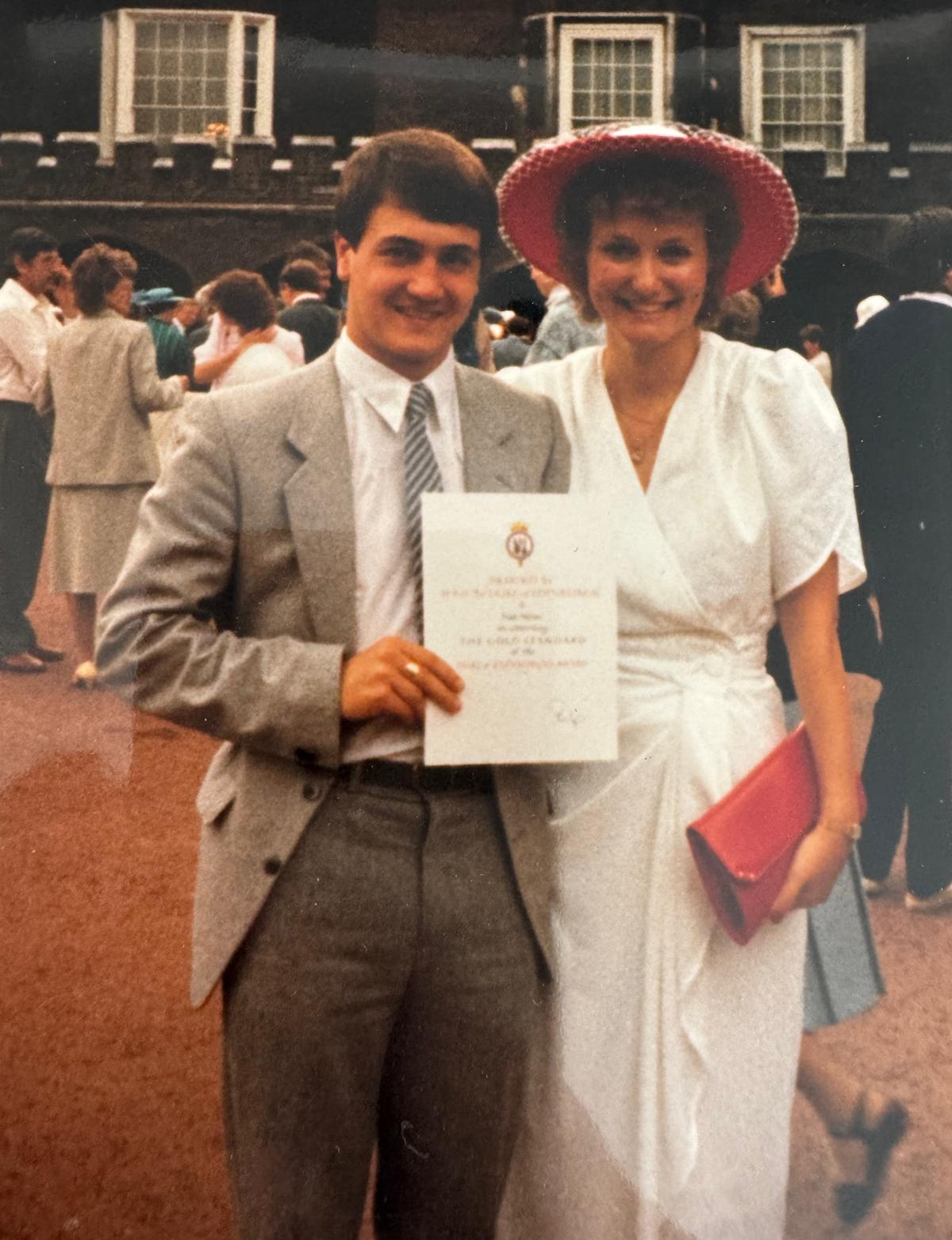
For Dr. Brian Watson, education was never limited to gaining qualifications; it was a process of discovering abilities, accepting responsibility, and learning how to work with others. The years between his school education and early engineering preparation played an important role in shaping the discipline, confidence, and leadership qualities that would later guide him through a demanding professional life.
During his time at Clowne Comprehensive School, Dr. Brian developed both academically and personally. He pursued a broad range of subjects, including Mathematics, Applied Mathematics, Physics, Technical Drawing, Woodwork, Metalwork, Geography, English Literature, Languages, and General Studies. His pull toward technical subjects came from the same curiosity he had carried since childhood.
Alongside his studies, Dr. Brian began developing leadership abilities that would become a consistent part of his character. He was appointed Head Boy, a responsibility that required trust, maturity, and the ability to represent others. This opportunity gave him early experience in taking responsibility and supporting those around him. It was an important stage in learning that leadership was not simply about holding a position; it was about setting an example and being willing to contribute.
Outside the classroom, he found valuable lessons through his involvement in scouting and outdoor activities. These experiences introduced him to teamwork, preparation, discipline, and the importance of supporting others. Beyond the achievements themselves, scouting helped him develop confidence, resilience, and a deeper understanding of responsibility. The challenges he experienced through these activities strengthened his ability to work with others, remain committed to his goals, and approach leadership with a sense of service.
His interest in practical learning continued as he moved into further education at Chesterfield College of Further Education, where he studied HNC Electrical and Electronic Engineering between 1982 and 1987. This period became the beginning of his formal engineering development, combining academic learning with practical experience. The course covered areas connected with electrical and electronic engineering while also exposing him to wider aspects of professional development, including financial and commercial understanding.
At the same time, Dr. Brian began a five-year indentured apprenticeship with SRE Controls, creating a foundation that connected classroom knowledge with real engineering environments. The apprenticeship provided exposure to different areas of engineering operations, including fabrication workshops, machine shop activities, testing and inspection, electrical departments, purchasing, and quality control. He also gained experience connected with underground mining training, giving him practical insight into the environments where engineering solutions were applied.
This period was significant because it shaped his understanding that engineering was not only about theories and designs. It was about creating solutions that worked in real situations, understanding the people who used those solutions, and appreciating the importance of accuracy and responsibility. The practical nature of his training helped develop the mindset of an engineer who valued both technical knowledge and hands-on experience.
“The desire to understand how things work can become the foundation for a lifetime of creating solutions that make a difference.”
Phase 3 : Technical Mastery and Early Professional Challenges

After completing his education and apprenticeship training, Dr. Brian Watson entered the professional world with a strong practical understanding of engineering and a determination to apply his knowledge in real working environments. The early stages of his career were shaped by hands-on experience, increasing responsibility, and the opportunity to work on complex engineering challenges where accuracy, problem-solving, and technical judgement were essential.
His early professional development took place with SRE Industrial Controls, an organisation where he continued building on the foundations created during his apprenticeship. Moving from a trainee environment into professional responsibilities required him to demonstrate not only technical capability but also the confidence to make decisions and contribute ideas within engineering teams. The practical understanding gained during his apprenticeship became an important advantage as he began taking on roles that involved greater responsibility and deeper involvement in engineering solutions.
During this period, Dr. Brian progressed through several positions, including Draughtsman, Electrical Engineering Design Manager, and Commercial Engineering Manager. Each role introduced a different aspect of engineering and business operations. As a draughtsman, he developed his understanding of technical drawings and design requirements. As he moved into engineering management responsibilities, he became increasingly involved in reviewing requirements, developing concepts, preparing specifications, supporting tender processes, and working closely with electrical teams to create practical solutions.
His role required him to look beyond individual technical tasks and understand how engineering decisions influenced wider projects. Managing design activities meant considering technical accuracy, project requirements, financial responsibility, and the needs of customers. During this time, he learned how to connect engineering know-how with business sense, and that mix stayed with him in the way he approached his work.
Dr. Brian’s work also gave him exposure to demanding industrial environments, including projects connected with the mining sector. His experience extended beyond the United Kingdom, including involvement related to mining projects in Botswana. These opportunities allowed him to understand how engineering solutions needed to adapt to different environments, operational requirements, and industry challenges.
One of the most significant professional achievements during this period was his involvement in the Channel Tunnel project. As a young engineer, Dr. Brian contributed as one of the principal engineers involved in design work connected with the removal and movement of tunnel spoil. The project required innovative engineering solutions, and his contribution included the design of conveyor systems and radial spreader conveyor systems used to transport and distribute material.
The scale and international nature of the project made it a defining achievement in his early engineering career. The work brought together engineers from different countries and demonstrated the capability of engineering expertise developed within the United Kingdom. For Dr. Brian, being part of such an important project represented the opportunity to apply practical knowledge to a challenge of significant complexity.
Note of Thanks
Throughout his life, Dr. Brian Watson has been fortunate to have the support, encouragement, and guidance of many individuals who played meaningful roles at different stages of his development. This note of thanks recognises the people whose belief, kindness, and support helped shape the person he became and the values he continues to carry forward.
He has always held his father, Philip Watson, close to his heart. His father’s presence and quiet guidance never left him, even as the years passed. The values they shared during those early years were simple but lasting. They stayed with him, guided his decisions, and became part of how he carried himself every day.
He also acknowledges the encouragement received from the teachers and mentors who recognised his potential from an early age. Alan Rasman provided guidance and confidence during his school years, while Mrs. Jackson introduced him to music and creative opportunities by supporting his interest in learning and performance. Robert Lee encouraged his involvement in outdoor activities and community service, helping him understand the value of supporting others.
Dr. Brian is grateful to Mr. German Navarro, whose mentorship during his time at General Electric provided guidance, opportunities, and professional encouragement during an important stage of his career. He also appreciates the friendship and support of Richard Holland, whose kindness, charitable nature, knowledge, and willingness to help have made a lasting impression.
He extends his deepest appreciation to his wife Jayne Watson, who has been beside him since their school years, when they both served as head students. Their relationship has continued through every stage of his life, providing support during moments of achievement and challenge. He is equally grateful to his children, Charlotte and Elliot, and his grandchildren, Oliver and Nora, whose love, encouragement, and presence continue to remain an important source of motivation as he works towards creating a safer and greener future.
He also recognises the many colleagues, teams, communities, and individuals who have shared experiences with him throughout his professional and personal life. Every interaction, lesson, and shared opportunity has contributed to the person he is today.
Above all, Dr. Brian Watson remains grateful to those who believed in him, encouraged him, and offered support when it mattered most. Their influence continues through the values he carries and the support he extends to others.
thanks,
– Dr. (H.C.) Brian Watson

AIMLAY is a leading global education platform empowering ACADEMIC and EXPERIENTIAL learners, uniquely focused on recognizing knowledge gained through experience and building a diversified community of doctorates and aspiring researchers.