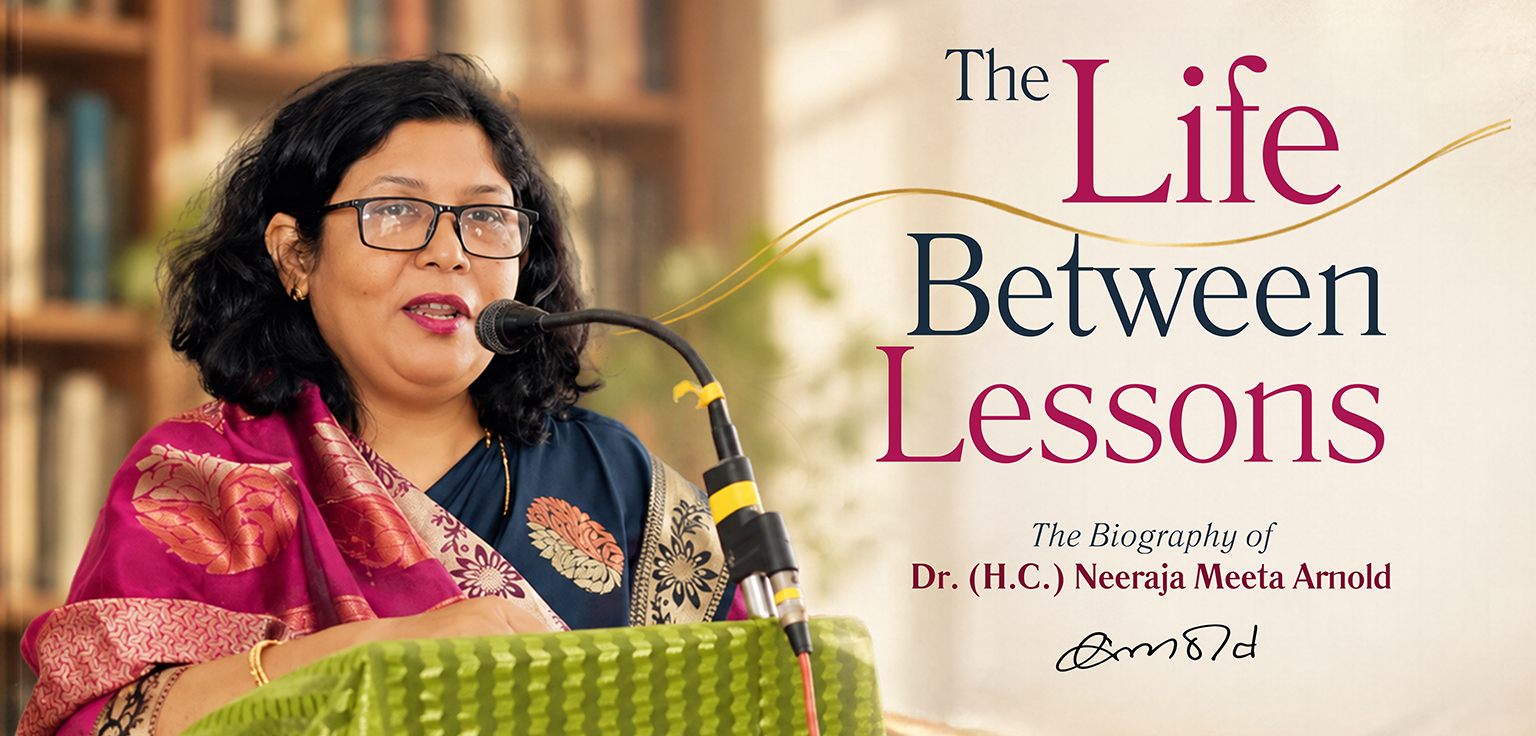
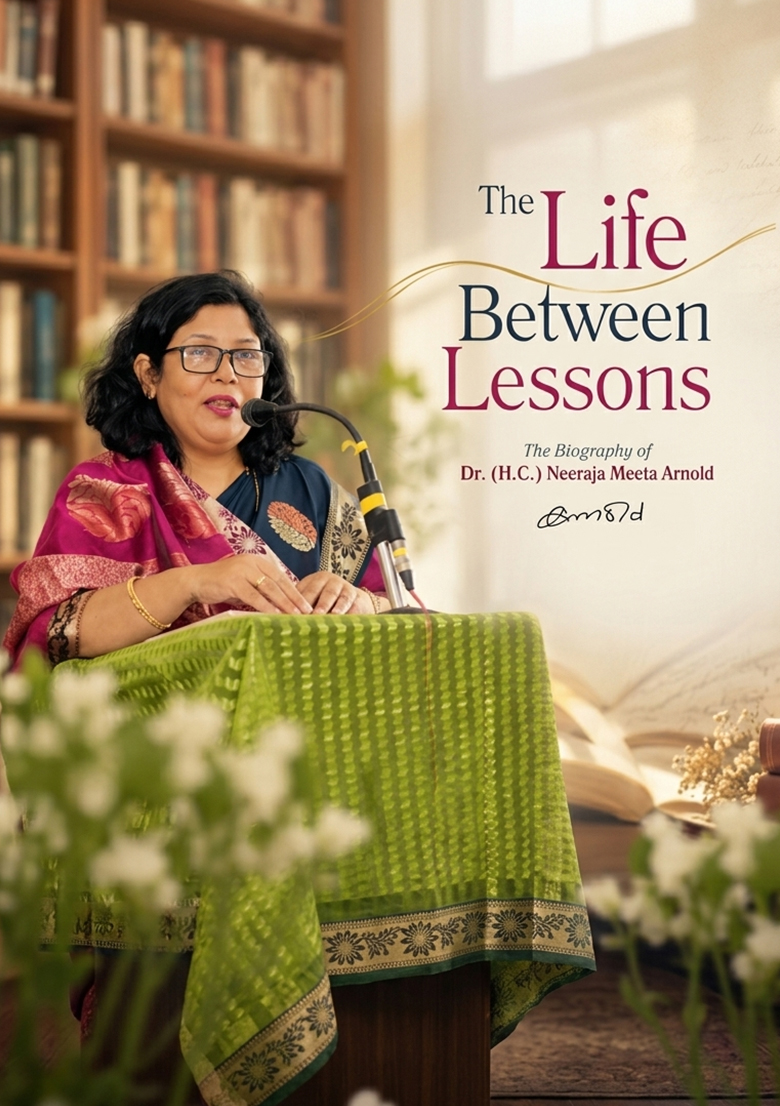
“I spent thirty-five years in classrooms, and the greatest lesson was mine: titles fade, credentials expire, but a person who keeps learning never runs out of reasons to get up.”
Introduction
Eighty-four schools answer to her now. The number is impressive, and it is also a poor summary of a life. Dr. Neeraja Meeta Arnold did not set out to run anything. She wanted to be an IPS officer, and she sat for it, applied, interviewed, and waited. What arrived was a government appointment to teach, and somewhere inside that detour she found something she hadn’t expected: a room full of faces, a problem on the board, and the particular pleasure of watching comprehension arrive. Everything since has been built on that moment, brick by brick, across years when work, study and family all demanded her at once.
She grew up in a house where both parents taught. Discipline held the walls up. Books took most of her attention, and for a long while that was enough. A shy girl’s days circled the page and little else. Then a teacher noticed the narrowness of it and spoke to her family about letting her play. Sport cracked the world open. She became a state-level badminton player and competed nationally in basketball, hauling her studies along through practices and tournaments, learning early that a day could hold more than one demanding thing.
Physics changed for her the same way it changes for most people: through a teacher willing to make it make sense. At Dr. Harisingh Gour University, someone found the explanation that finally landed, and her confidence followed. She finished her master’s degree in 1989, carrying a lesson she would spend a career repaying. What a teacher does to a student can alter the direction of a life. She knew it firsthand. So she prepared her lessons carefully, and she hunted for the version of an explanation that a struggling student could actually hold onto.
At home, further study was a group effort. Her husband backed her education. Relatives took the children while she stacked her job against a B.Ed. and then an M.Ed., the household running on borrowed hours and other people’s kindness. Then came 2007, and his death, and suddenly there were two young daughters and a house and a salary and no room for the academic plans she had sketched. She kept working. She kept raising her children. She made decisions inside circumstances she never chose, and her account gives those years their full weight without letting the loss swallow the life.
Leadership brought its own humbling. Posted to a village school, she tried to speak the children’s language, badly at first, which was the only way to begin. The administrative side required her to sit with someone more experienced in accounts and learn procedures from scratch, and she did it gladly, even when the person teaching her was junior. A title, she learned, does not remove the need to understand what you are signing.
Beyond the appointment letter sit the parts of her life no file would record. Faith-based messages she records with patient help from others. Friendships with people who are visually disabled, sustained over years. Small assistance given quietly, wherever she could manage it. These people taught her something too, mostly through how they carried themselves.
So the story holds badminton and physics, motherhood and public office, faith and paperwork and grief. Each deserves its own room. Through all of it she remains a woman with interests still unexplored and work still unfinished, someone who knows from the inside how much an ordinary-looking person might be carrying on any given Tuesday. That is where you begin to know her. Not at the designation but at the particulars.
“They tell me I chose two pens before I could speak. I cannot remember it, but I have spent a lifetime proving my mother’s quiet certainty right.”
Phase 1: The Child Who Chose Two Pens
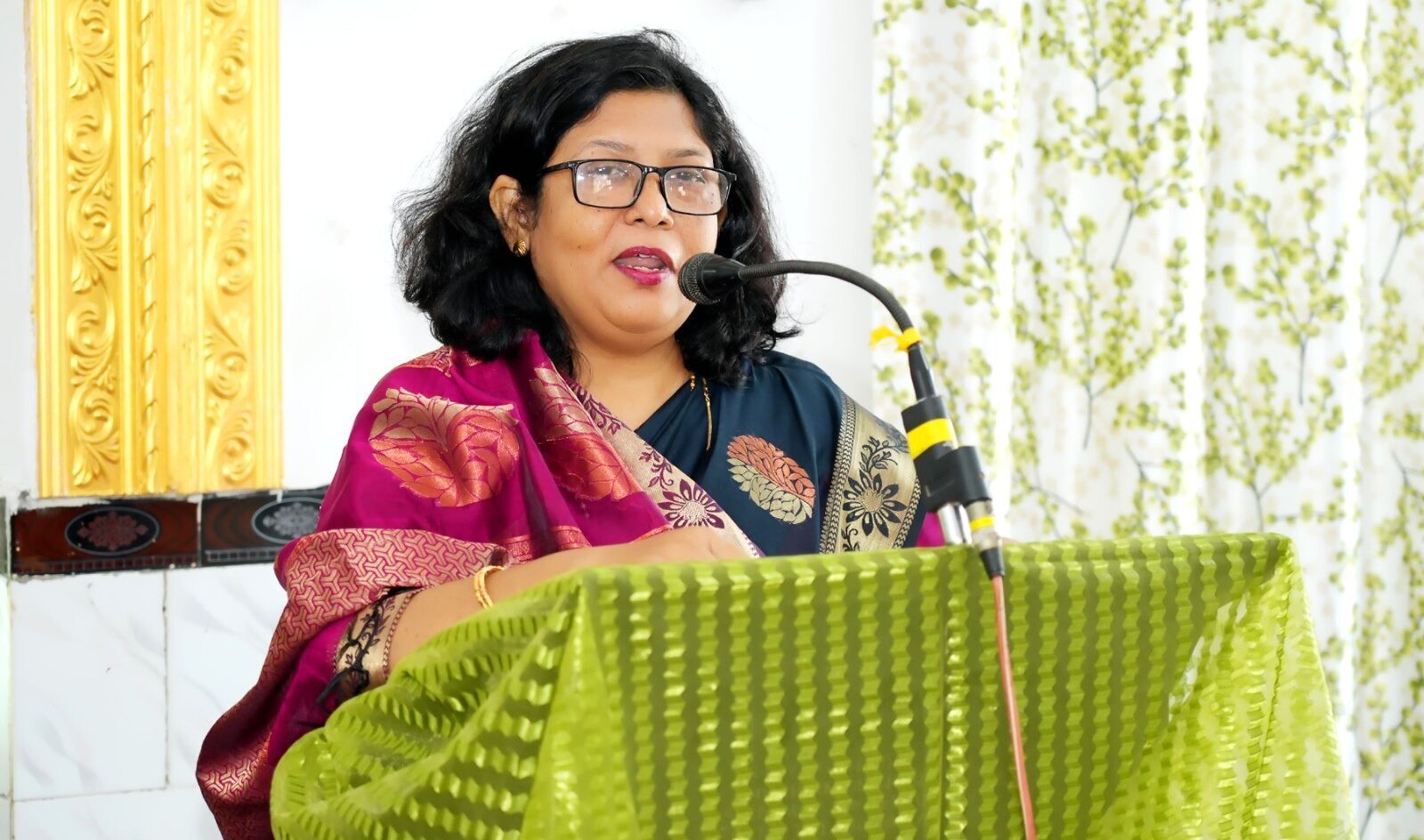
The objects were laid out for a child too young to understand the game. A doll. A toy car. Bright things are meant to catch an infant’s eye and hold it. On her first birthday, Dr. Neeraja Meeta Arnold crawled or reached past all of it and closed her small hands around two pens. She could not have told anyone why. She didn’t need to. Her mother watched, and something settled in her mind right then, a quiet certainty she would repeat for years afterward: this one belongs to education. Whatever she does, it will have something to do with writing.
The memory wasn’t hers first. It belonged to her parents, who kept it and polished it and handed it down, so that she grew up knowing a version of herself she was too young to remember being. That is how family lore works. Someone else holds the beginning of your story until you are old enough to carry it.
She was born on 26 October 1967, and her earliest school years unfolded in Bihar, inside a house where teaching was not a profession so much as the air. Her father, Mr. George Washington Singh, was a principal. Her mother, Mrs. Chhaya Rani Singh, was a teacher. Lessons came home with both of them every evening. And yet the girl forming in that house had her own idea about the future. She wanted to wear a uniform and join the police. She wanted to be an IPS officer. Her mother had read the pens one way. The daughter was already reading herself another. Both readings have earned their place in this account.
Discipline held that household together, and it would be dishonest to soften what that meant. Her father kept a cane and used it when she stepped out of line. She never dressed it up as gentle guidance. It was simply part of the childhood she lived, sitting alongside the support both parents gave her. The two things are not contradictions. Care does not always arrive softly, and strictness does not always mean indifference. They watched her closely. They saw that she was good at her books, and they made sure she knew it.
Books were where she lived. She could sit for hours inside a lesson, finding enough there to fill the time and asking for nothing else. She was, by her own clear accounting, both academically capable and painfully shy. Those qualities traveled together. Understanding the work came easily. Speaking up, walking into an unfamiliar room, and being seen: none of that came easily at all. Her parents wanted her to talk more, to come out of herself. They could see what she was capable of, and they could see how little of it she risked.
She shared that house with one younger brother. Their parents drew both children into the family’s faith, seating them together for prayer and for readings from the Bible. These were ordinary rhythms, not performances. The adults made room for the children to listen and take part, setting religious instruction beside schoolwork and behavior as simply another thing a household does. Her first understanding of God came through that arrangement: a brother at her side, parents guiding them both.
Language added another layer. She spoke Bengali, and she tied that tongue to her mother and her grandmother. Hindi moved through the family’s conversations too. The details blur at the edges, but the fact of it stays: more than one language lived in that house. Beside the lessons, the rules and the prayers, there were ways of speaking that tied her to the people she came from.
Her primary schooling took place in Bihar. Within the expectations of her home, she had begun forming an ambition of her own. She was still reserved, but her wish to enter the police service was clear.
“I lost that first match two games to one, and my teacher still smiled. She saw something in me before I saw it myself, and that changed everything.”
Phase 2 : The Shy Girl They Pushed onto the Court
In Class 8, Dr. Neeraja Meeta Arnold walked onto a badminton court she had no desire to be on, running a fever she remembered clearly, and her PTI teacher handed her a tablet and told her the fever was really fear. Then she sent her out to play anyway. She lost two games to one. And afterward, the woman who had pushed her out there was pleased. Winning a single game had meant something to her. What the girl might have filed away as a straightforward defeat became, instead, a moment someone refused to let her dismiss.
By then, her life had shifted to Sagar, Madhya Pradesh, where she studied from Class 6 onward. She attended a government girls’ school while her father served as principal of a boys’ school, a neat division that probably said something about the household. Academics remained her strongest ground. Her teachers noticed her ability and steered her subject choices. Dave ma’am, her middle-school class teacher, stayed in her memory. The girl could give extraordinary hours to her books. What she needed was somebody willing to ask whether there might be more for her to try.
Mrs. Tamrakar, her sports teacher, asked exactly that. She had spotted her during a physical-training competition, and she went to the father directly. The girl was too shy, she told him. She needed something outside the narrow loop of her studies. The intervention was personal and specific. Mrs. Tamrakar saw a capable student whose willingness to work was never in question, and she wanted her to meet something that could not be conquered by sitting alone with a textbook.
Her parents agreed, though letting her travel for competitions still worried them. It was her younger brother who argued her case when they hesitated. If she had been selected, he said, she should be allowed to go. His voice inside the family gave her something she remembered with real affection: someone insisting that fear for her safety should not slam shut a door she had earned the right to walk through.
By Class 9, basketball had folded itself into her school life. Mrs. Tamrakar would pull her out of academic lessons for training, asking the subject teachers to help her catch up separately. An instructor was brought in from outside to teach the students. Practice ate time, and making that time meant rearranging the school day. Her athletic education began in these small logistical decisions: one teacher carving out space, another agreeing to cover what she missed, and a pupil learning to meet both sets of demands without dropping either.
Regular practice happened at a convent school six kilometres away. When their own school let out, the girls walked there with their teacher. They trained where selection for further competition also took place. The distance was simply part of the work. Before anyone could be chosen, they had to arrive and put in the hours. When selection came around, only a handful from her government school were picked alongside students from other schools.
The training didn’t stop at the convent gate. Her father woke with her around four in the morning and rode beside her on his scooter while she ran four kilometres along the road. His support was not advice. It was time and presence: a man on a scooter at dawn while his daughter put one foot in front of the other. The permission Mrs. Tamrakar had asked for was now being backed by something the whole household could feel.
“Physics was a wall until one teacher explained it in my own language. That day taught me what I would spend my career giving back."
Phase 3 : When Physics Stopped Being a Stranger
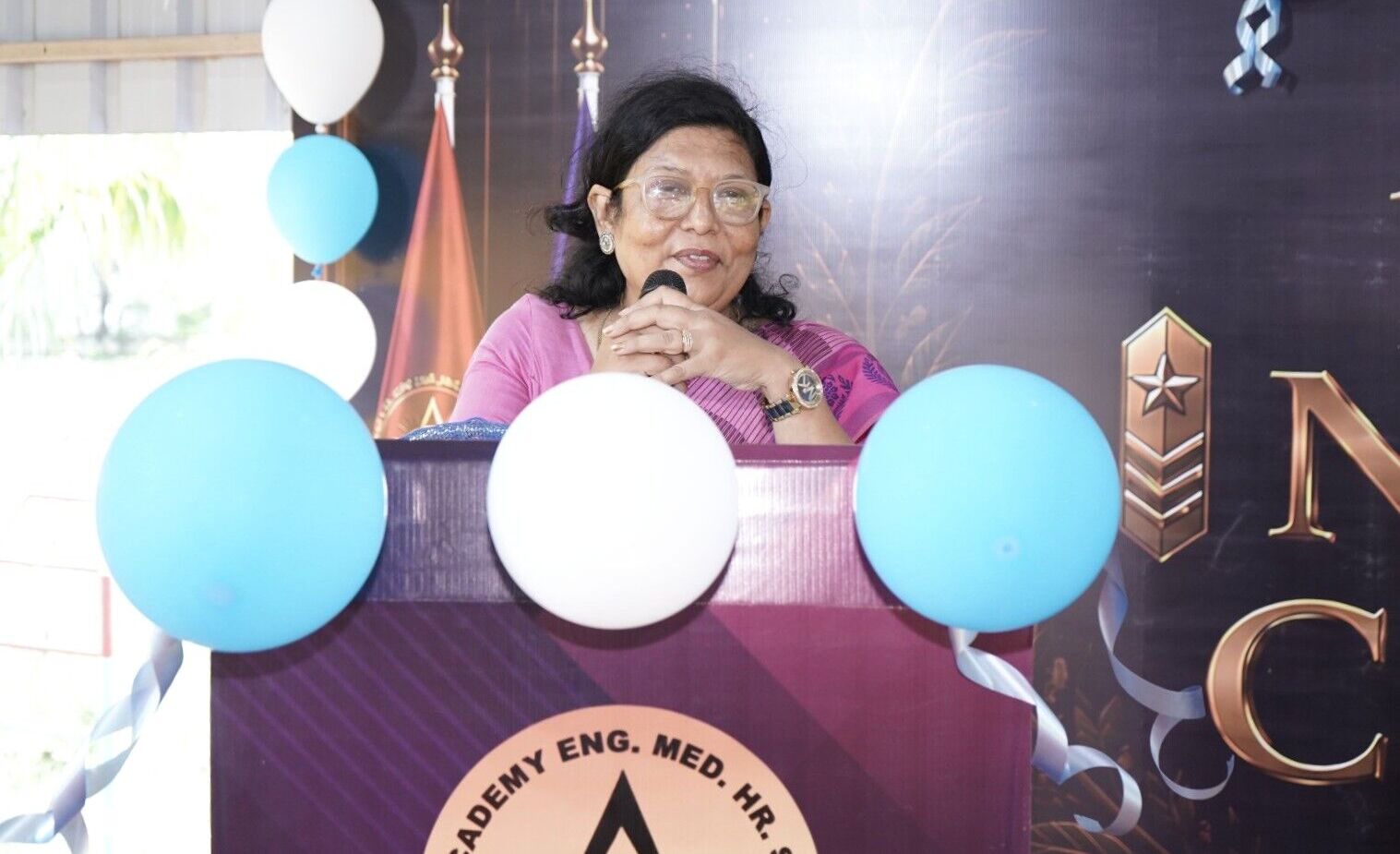
She wanted to study engineering. Her father wanted her to stay in Sagar, where a university already stood within reach. His answer was simple: continue your education here, not somewhere else. So the question of what Dr. Neeraja Meeta Arnold would become got folded into the question of where her family was willing to let her go. She enrolled at Dr. Harisingh Gour University and took up a B.Sc. in Physics, Chemistry and Mathematics, with English alongside.
Admission required selection, and her marks carried her through. Once inside, she worked hard at her studies and represented the university in basketball, neither pursuit treated as a sideline to the other. She gave both her full attention, hauling academic preparation alongside competition. University handed her something a single school never could: room to earn a degree and play beyond the walls she had grown up inside.
Then Physics shifted under her feet. She had studied it before and found it difficult, the kind of subject you survive rather than enjoy. Dr. R. K. Pandey changed that. He taught in Hindi and Bundelkhandi, moving through the material with an ease and humor that reached her directly. The language was familiar. The ideas stopped hiding. She remembered how naturally he could teach something she had once approached with dread.
Her marks told her the change was real. She recalled earning full or nearly full marks on some of his assessments, results that forced her to reconsider what she was actually capable of in the subject. Physics stopped being a requirement she had to manage inside a science degree. It became something she wanted more of. That difference mattered when the time came to talk with her father about what would follow.
She finished her B.Sc. in 1987 with a first division. Her father suggested English or Mathematics for postgraduate work. She wanted to sit the entrance exam for Physics instead. She had heard the programme was meant for especially strong students, and rather than let that discourage her, she asked for the chance to apply and find out whether she could qualify. Her request rested on real classroom work and the results she had earned doing it.
She qualified through the written entrance examination and entered the M.Sc. programme in Physics.
Basketball brought its own tests. Representing the university meant competing against players from outside Sagar, where familiar preparation did not always carry over into unfamiliar conditions. She described herself as slight and relatively short next to some opponents. On the court those differences showed, though they never told the whole story of what a player could add.
At a match in Panna, all eyes followed her team’s captain, whose height, build and skill made her the obvious threat. Opposing players swarmed her whenever she touched the ball. So the captain passed to Neeraja instead, opening shot after shot. She remembered scoring most of the team’s points that day. The exact tally blurred in her telling, but the memory itself stayed sharp: a match where the smaller player made the biggest contribution and got noticed for it.
Note of Thanks
Dr. Neeraja Meeta Arnold offers her heartfelt thanks to the people who encouraged her, helped her make difficult decisions, and supported her wish to keep learning. Their contributions hold a personal place in her life, and she acknowledges them with affection and gratitude.
Above all, she thanks Jesus Christ for giving her strength in moments of weakness. Her faith has helped sustain her through difficult times and given her courage to continue.
She offers heartfelt thanks to her three sisters-in-law, Joyce Otto, Jasmine Kiran, and Jean Masih, whose support has meant a great deal to her. She values the encouragement they gave her after her husband’s death, and their willingness to let her pursue her work and interests without placing restrictions on her. When professional commitments required travel, they backed her participation. She remains thankful for that understanding, and for the confidence they placed in her choices.
She also remembers Mrs. Tamrakar with gratitude. Her teacher saw possibilities beyond the classroom and persuaded her family to let her explore them. She treasures the attention and effort behind that encouragement. Her thanks extend to the teachers who gave their time generously and helped her keep studying alongside her sporting commitments.
Her deepest appreciation goes to her daughters, Sharon Arnold and Shine Arnold, for their love, understanding and encouragement. They reminded her to make room for her own aspirations and encouraged her to pursue honorary recognition. Their belief in her gave her confidence to take that step.
To the colleagues and younger people who encouraged her further learning, she offers sincere appreciation. Their readiness to help, including an offer of financial assistance when she needed it, reassured her that she could keep pursuing something important to her. She values their kindness and the respect they showed toward her aspirations.
She is especially grateful to Abhishek Mathew for his invaluable moral support, which helped her remain focused and committed to pursuing this milestone.
Her thanks go to the Aimlay team, with special appreciation for Meenu, whose guidance helped her understand how to move toward honorary recognition. She also acknowledges Nitin, Akshat and Anwesha for their assistance, their encouragement, and the care with which they guided her through the process.
She is grateful to every person who made time to explain, listen or offer support. Their help took different forms, but she remembers its value clearly: it let her take the next step with greater confidence, and with the sense that she was not walking it alone.
thanks,
– Dr. (H.C.) Neeraja Meeta Arnold

AIMLAY is a leading global education platform empowering ACADEMIC and EXPERIENTIAL learners, uniquely focused on recognizing knowledge gained through experience and building a diversified community of doctorates and aspiring researchers.