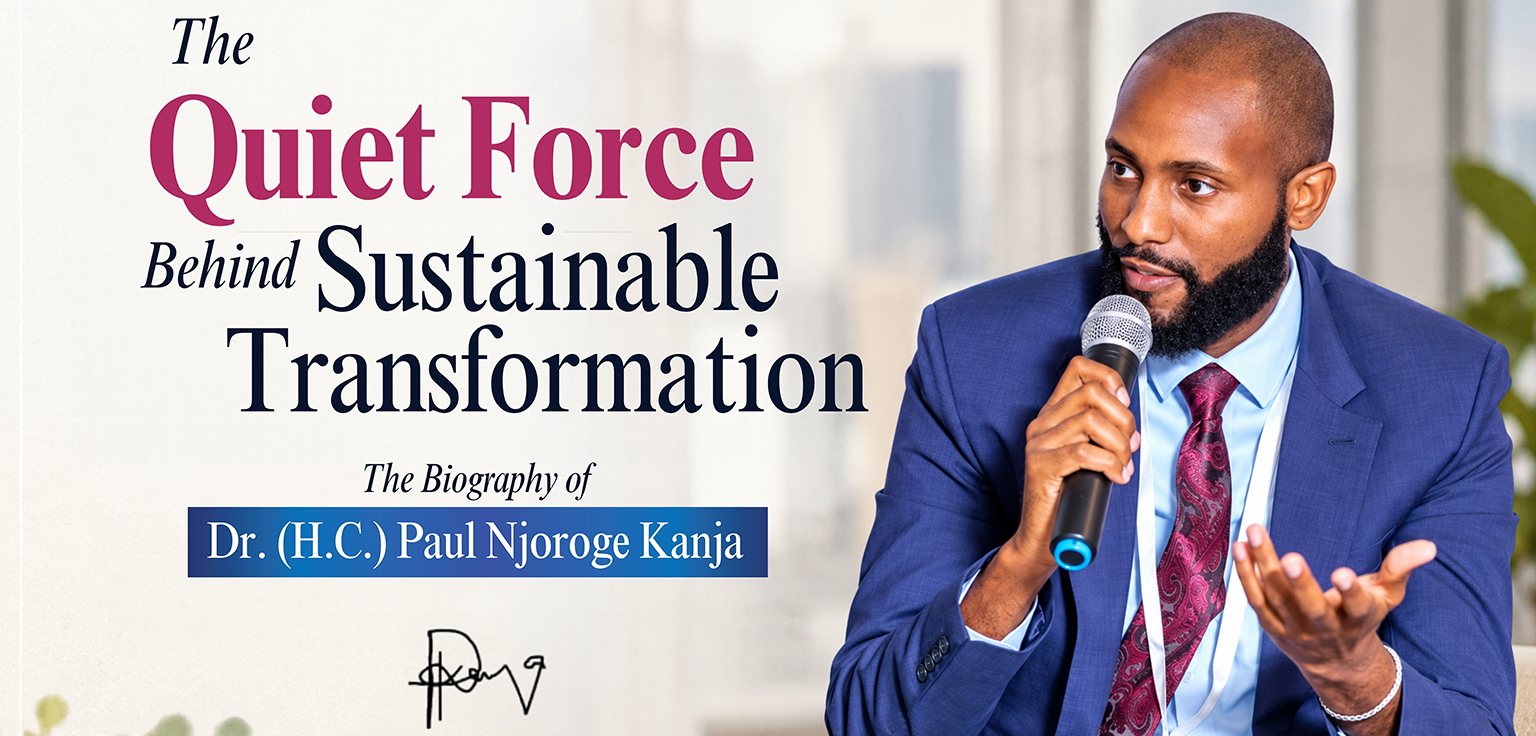
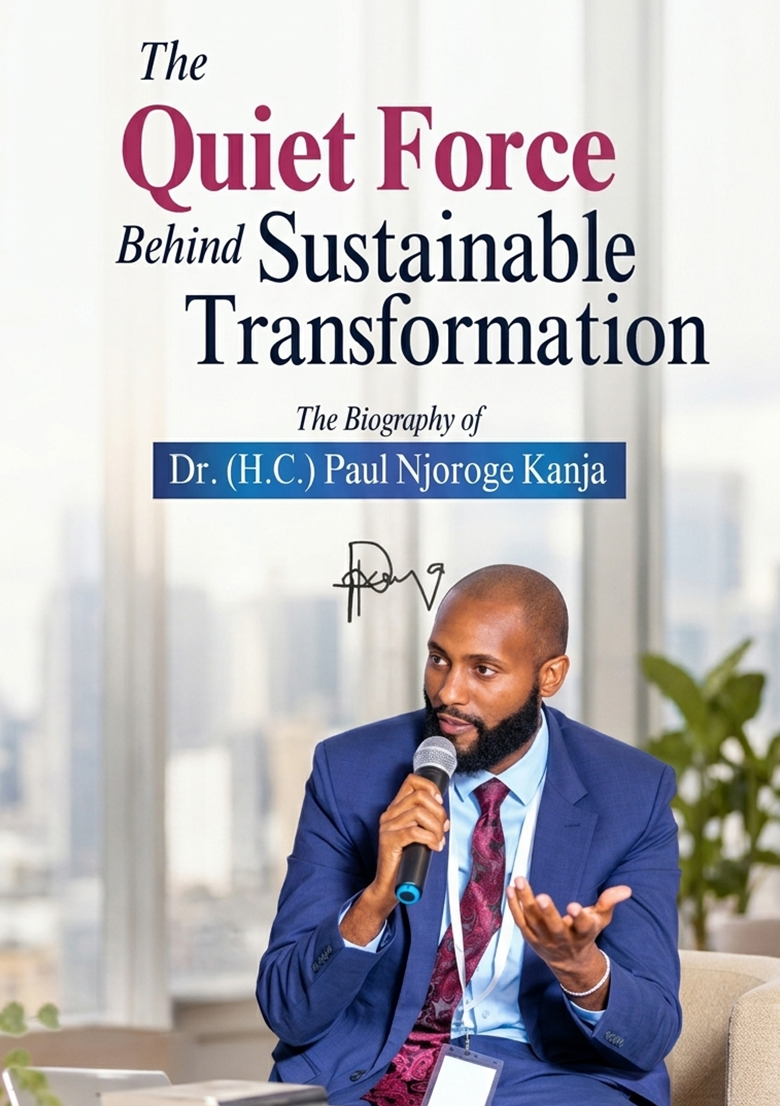
“Power, money, wisdom, and knowledge must never change who you are.”
Dedication
This biography is dedicated to the memory of Late Peter Danson Kanja and the late Mary Wanjira Kanja, whose presence shaped the values that continue to guide Dr. Paul Njoroge Kanja throughout his life.
His father, Peter Danson Kanja, instilled the importance of education, discipline, responsibility, and respect for the environment. Through his guidance, Dr. Paul learned the value of perseverance and the importance of remaining grounded regardless of achievements or circumstances. His mother, Mary Wanjira Kanja, represented humility, organisation, accountability, resilience, and a beacon of hope for generations. The principles she shared with her children, especially the importance of staying true to oneself and supporting one another, became an enduring part of his character.
From his early years, the lessons received from his parents became the foundation upon which he has built his academic and professional path. Their encouragement supported his pursuit of education, from his school years to his studies at Jaramogi Oginga Odinga University of Science and Technology, where he completed his Bachelor of Science in Renewable Energy Technology and Management with First Class Honours.
The values they passed on continue to reflect in the way Dr. Paul approaches life, leadership, and service to others. He carries forward the belief that achievements, knowledge, and opportunities should always be accompanied by humility and a willingness to support and to inspire those around him.
As he continues to grow professionally and personally, this dedication honours the two individuals who formed the earliest foundation of his identity, values, and outlook on life. Their teachings remain present in the principles he follows and the way he chooses to contribute to others.
“Before a person learns how to achieve, they first learn how to stand. The values given by family become the strength carried through every stage of life.”
Phase 1: Where Values Took Root Before Dreams Took Flight
Before professional achievements, certifications, and leadership roles became part of Dr. Paul Njoroge Kanja’s story, his early years were shaped by family values, personal responsibility, and a strong belief in education. Raised in Njoro and later moving to Nyandarua, he grew up in an environment where discipline, accountability, and learning were regarded as important parts of life. The influence of his parents, Late Peter Danson Kanja and Late Mary Wanjira Kanja, became a defining part of the principles that guided him through different stages of his development.
His father played an important role in shaping his understanding of education and responsibility. Known for his strict approach, Peter Danson Kanja placed strong emphasis on learning and encouraged his children to pursue education. He also valued the environment and demonstrated care for nature through activities such as planting trees. These values created an early connection between personal responsibility, education, and awareness of the world around him.
His mother, Mary Wanjira Kanja, contributed equally to the foundation of his character through her own example. She was known within the family for being organised, accountable, humble, and reserved. The lessons she shared with her children focused on remaining true to oneself, supporting one another, and building strong relationships within the family. Her emphasis on resilience and simplicity became principles that remain important throughout Dr. Paul’s life.
The early years of his childhood also required him to develop independence at a young age. When his older brother completed Form Four and left home, he spent more time with his father. During this period, particularly around Class 6, 7, and 8, he learned to manage many responsibilities by himself. He became responsible for tasks such as preparing meals, waking up early, getting ready for school, and handling daily activities. These responsibilities increased further when his father became ill while he was still young. Despite these challenges, he continued to focus on his education and maintained his academic performance.
From an early age, Dr. Paul demonstrated strong academic ability. He frequently ranked among the top students in his class, often securing first or second position. His academic performance gave him confidence and encouraged him to continue pursuing education seriously. The discipline developed during his childhood became closely connected with his approach towards learning and personal growth.
After completing his primary education, he sat for the Kenya Certificate of Primary Education (KCPE) examination in 2005 and performed exceptionally well, emerging among the top students in his district. This achievement provided him with the opportunity to continue his studies at Jomo Kenyatta High School, Nakuru. He joined the institution for Form One, where he continued performing strongly in academics.
However, he soon realised that he wanted a more competitive environment that would further challenge him academically. With the desire to continue improving, he transferred to Anestar High School, Nakuru, where he joined in Form Two. The move allowed him to continue developing academically, and he remained among the top-performing students through his secondary school years.
“Growth begins when we choose to step beyond what is familiar and seek the challenges that help us become better.”
Phase 2 : The Pursuit of Excellence
Academic excellence became one of the defining aspects of Dr. Paul Njoroge Kanja’s early years. The discipline and responsibility developed during childhood gradually reflected in his approach towards education, where learning was not simply a requirement but a path through which he could continue improving himself. From his primary school years, he demonstrated a strong academic ability, consistently performing among the top students in his class.
His performance in the Kenya Certificate of Primary Education (KCPE) examination in 2005 became an important milestone in his educational path. Emerging as one of the top students in the district, the result opened the opportunity for him to continue his studies at Jomo Kenyatta High School, Nakuru. Entering secondary education marked a new stage of growth, where he continued applying the discipline and determination that had shaped his earlier academic years.
During his time at Jomo Kenyatta High School, Dr. Paul maintained strong performance in his studies. Whether in continuous assessment tests or other academic evaluations, he consistently performed among the leading students. However, he also recognised the importance of being in an environment that would continue to challenge him and encourage further growth. Although he was performing well, he wanted greater academic competition and a setting that would push him to develop further.
This desire for improvement led him to transfer to Anestar High School, Nakuru, where he joined in Form Two. The move represented his willingness to seek opportunities that would strengthen his abilities rather than remain comfortable with existing achievements. At Anestar High School, he continued to perform strongly and remained among the top students through his secondary school education.
His years in secondary school were also a period when his interest in engineering became clearer. Initially, he had aspirations of pursuing aeronautical engineering. The idea reflected his early curiosity about technology and engineering fields. However, as he considered the practical opportunities available and discussed different career possibilities, his focus gradually shifted towards a field that was becoming increasingly significant around the world.
Renewable energy began emerging as an area of interest, particularly as countries continued exploring sustainable solutions for energy needs. The possibility of contributing to a field connected with technological advancement and environmental considerations encouraged him to pursue this direction. This decision would later become the foundation for his academic specialisation and professional work.
Choosing a career path was an important step, but the qualities that guided him through school remained consistent. The same determination that helped him perform strongly in academics also influenced the decisions he made about his future. Rather than simply following a familiar path, he considered where his skills could be developed and where his education could create meaningful opportunities.
“The right direction is not always the easiest one to take, but it is the one that allows knowledge to create meaningful possibilities.”
Phase 3 : Building a Foundation for the Future
The transition from school to university marked an important stage in Dr. Paul Njoroge Kanja’s life, where academic ability had to be matched with determination, independence, and a clear sense of purpose. After years of strong performance in secondary education, he reached a point where his choice of field would shape the direction of his professional future. Although engineering had always interested him, selecting the right specialisation required careful consideration.
During his earlier years, Dr. Paul had been interested in aeronautical engineering. However, through discussions about available opportunities and the changing needs of the world, he began exploring other areas within engineering. Renewable energy emerged as a field with growing importance, as countries increasingly focused on sustainable solutions and alternative energy systems. This shift in interest introduced him to a discipline where engineering knowledge could connect with environmental considerations and future development.
With this new direction, he applied for and gained admission to Jaramogi Oginga Odinga University of Science and Technology to pursue Bachelor of Science in Renewable Energy Technology and Management. The university was located approximately 250 kilometres from his hometown, making it a significant transition from the environment he had always known. Before he began his studies, his father, Late Peter Danson Kanja, travelled with him to visit the institution and understand the place where he would continue his education. This visit reflected the support and involvement his family provided as he prepared for this new chapter.
Dr. Paul officially joined the university in April 2012. Entering a new academic environment required adjustment, but he approached the opportunity with the determination that had guided him throughout his education. Having travelled far from home to pursue his studies, he remained focused on making the opportunity meaningful. His approach was centred on learning deeply, understanding concepts, and developing the practical knowledge required in engineering.
University life also brought financial responsibilities. Coming from a modest family background, he had to contribute towards aspects of his tuition, accommodation, food, and daily expenses. Outside his academic commitments, he took up small jobs and worked to support his needs while continuing with his studies. Balancing these responsibilities required discipline and careful management of his time, but he remained committed to maintaining strong academic performance.
Rather than focusing only on examinations, Dr. Paul placed importance on understanding the principles behind engineering concepts. He believed that once the foundation of knowledge was clear, the ability to solve problems became stronger. This approach encouraged him to spend additional time exploring practical applications related to his field of study.
During his university years, he engaged in practical projects that connected renewable energy knowledge with community needs. His involvement included work on solar-powered irrigation projects and community-based biogas initiatives. These experiences allowed him to explore how renewable energy technologies could support practical solutions beyond academic learning. He also mentored high school students, sharing knowledge and encouraging younger learners to explore their own potential.
Note of Thanks
Dr. Paul Njoroge Kanja’s story has been shaped by the support, guidance, and values shared by the people who have contributed to different stages of his life. This note of thanks recognises those whose presence, encouragement, and influence have remained meaningful throughout his personal, academic, and professional development.
He expresses deep gratitude to his parents, Late Peter Danson Kanja and Late Mary Wanjira Kanja, whose teachings formed the foundation of his character. Their emphasis on education, discipline, humility, accountability, and staying true to oneself continues to guide the principles he follows.
Appreciation also extends to the educators, colleagues, mentors, and professional associates who supported his growth through different stages of learning and work. The guidance received throughout his academic years and professional roles contributed to the knowledge, skills, and perspectives he continues to apply in the fields of renewable energy, sustainability, and leadership.
Special recognition is given to individuals who contributed to his professional development, including Jackson Mutonga, whose guidance during his time at GIZ influenced his understanding of purpose driven work and leadership. The support of colleagues, project partners, and stakeholders across various initiatives also played an important role in shaping his experiences.
Dr. Paul acknowledges the young professionals and students he has had the opportunity to support through mentorship and knowledge sharing. Their aspirations continue to reinforce the importance of encouraging future generations to pursue learning and growth.
With gratitude for every contribution, lesson, and opportunity, he continues to carry forward the values that have guided him: humility, continuous learning, and the responsibility to use knowledge in service of others.
thanks,
– Dr. (H.C.) Paul Njoroge Kanja

AIMLAY is a leading global education platform empowering ACADEMIC and EXPERIENTIAL learners, uniquely focused on recognizing knowledge gained through experience and building a diversified community of doctorates and aspiring researchers.