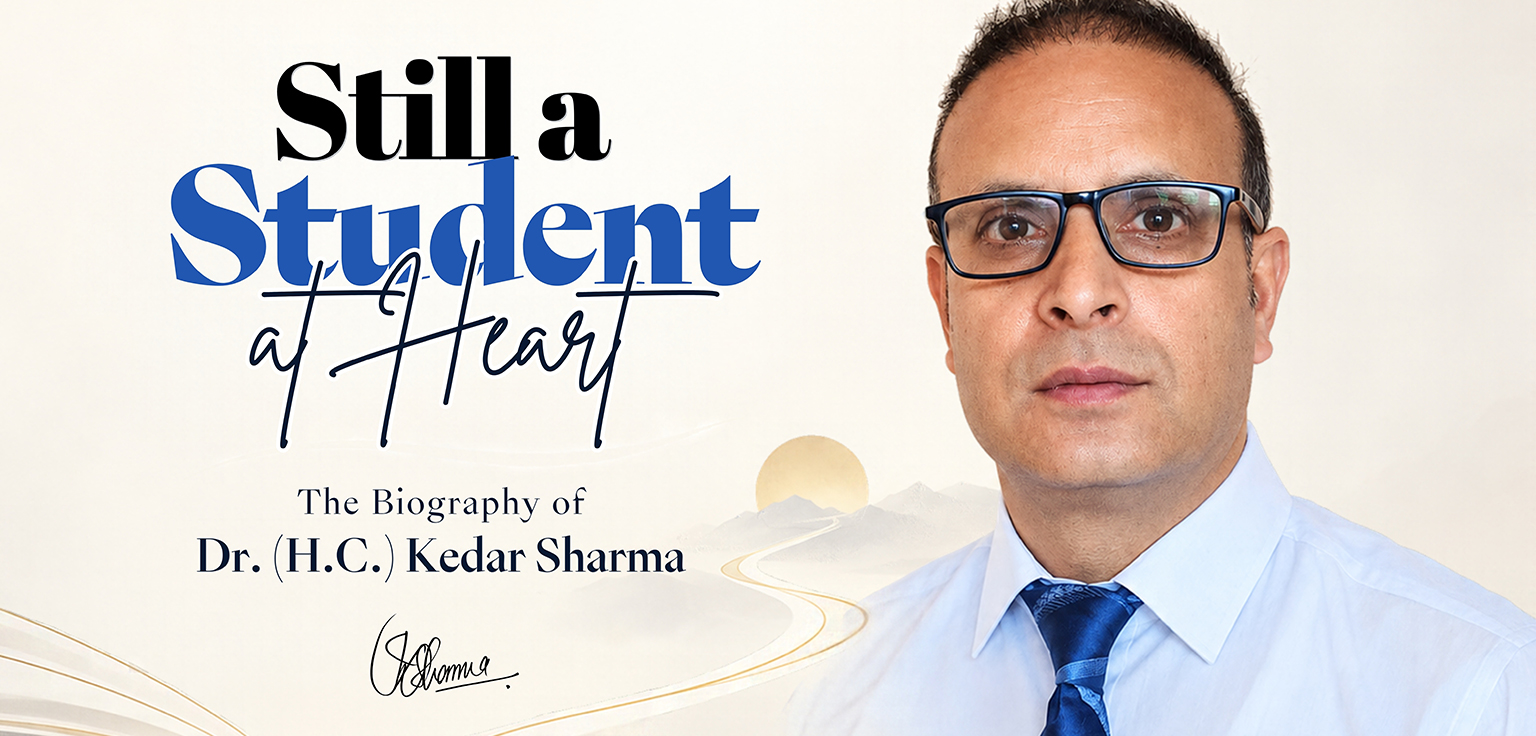
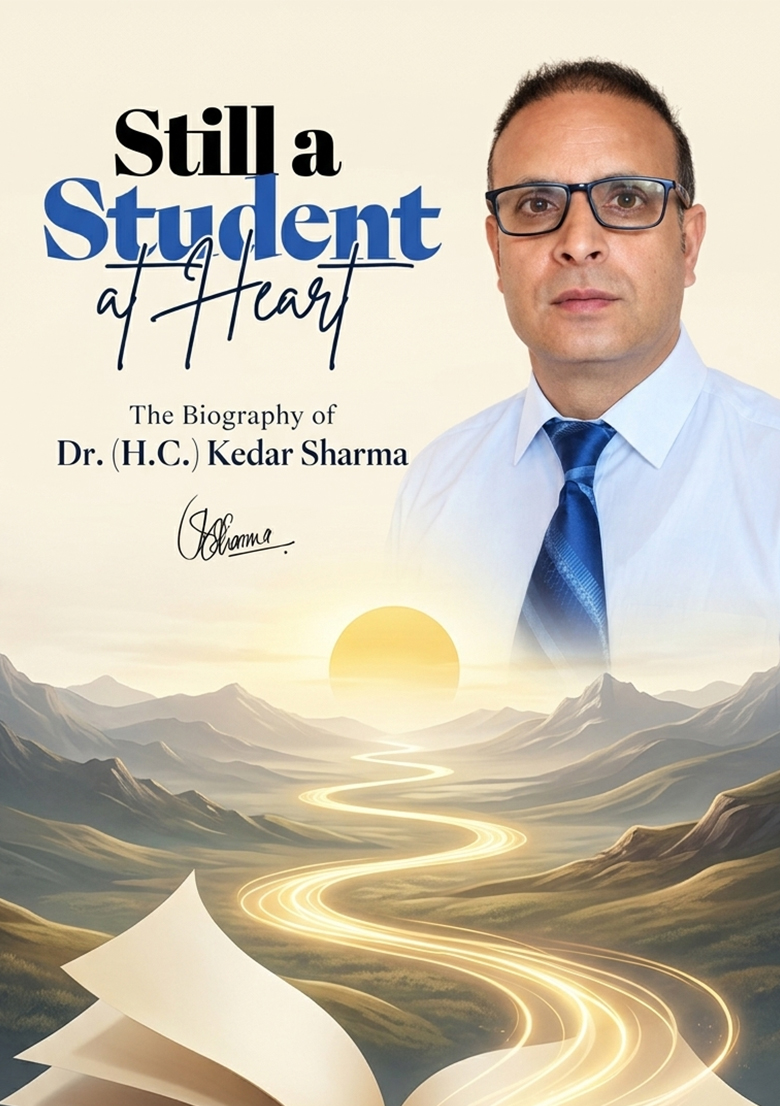
“From a middle-class home in Kalimpong to classrooms where students finally understood, I built a life on explanations, patience, and the people who carried me. The journey continues.”
Introduction
Ask Dr. Kedar Sharma what he loves about teaching, and he will tell you plainly. He works with mathematics, a subject that splits a classroom the moment it appears on the timetable. Some students lean forward. Others quietly brace themselves. He knows both reactions well, and his account of his work makes room for the gap between explaining a lesson and knowing it has landed. That gap is the thing he keeps worrying at, the way a tongue finds a chipped tooth. It is also what gives weight to the moment a student tells him, finally, that it makes sense.
He lives and teaches in Kalimpong, and his working life stays close to the subject he has studied for years. He talks about it directly, with no urge to turn every class into a triumph. He enjoys the work. Enjoyment, though, has never stopped him from noticing how hard it can be. A teacher may know the material cold and still stand there, facing a student whose mind is somewhere else entirely. He describes that problem the way a man describes weather he has walked through a hundred times.
His understanding of mathematics lives in the ideas beneath the calculations. Where did this method come from? What does it actually mean? Where would you use it? Those questions matter to him because a worksheet filled in correctly proves very little. The explanation has to travel further than that. In his classroom, he starts with the basics, which gives students a handhold into material that might otherwise stay out of reach, and their faces tell him soon enough whether the approach worked.
There is real pleasure in that recognition. He remembers the students who valued what he knew and how he taught it, and he takes their encouragement gladly, without pretending every learner responds the same way. His observations stay measured by what he has actually seen: appreciation from some, distraction from others, and the steady demands of a subject that will not forgive inattention. He offers no effortless solution to those demands. His account keeps the work in view.
Technology has its practical place in all this. Typing out questions on a computer, now and then putting something on a projector: small tools serving a particular classroom purpose. Chalk and a board remain close at hand. Either way, what counts is the teaching itself, not the shine of a lesson made modern by equipment.
Away from school, he still plays sports, badminton and table tennis especially. Those hours round out the picture of a man whose life holds study, work, family duty, and play. Mathematics anchors his profession. It does not fill his whole day.
The man introduced here is a teacher who takes pleasure in explaining what he knows and keeps asking himself how his students receive it. He speaks of his profession with affection and with a clear-eyed sense of its limits. Both deserve a hearing. Together they let this biography begin where his working life actually happens: in the familiar, demanding, sometimes rewarding business of standing before a class, and caring enough to keep at it.
“I was the youngest, so I learned by watching. My brothers and sister went first, and I followed, picking up whatever they left behind for me.”
Phase 1: The Youngest in a House of Six
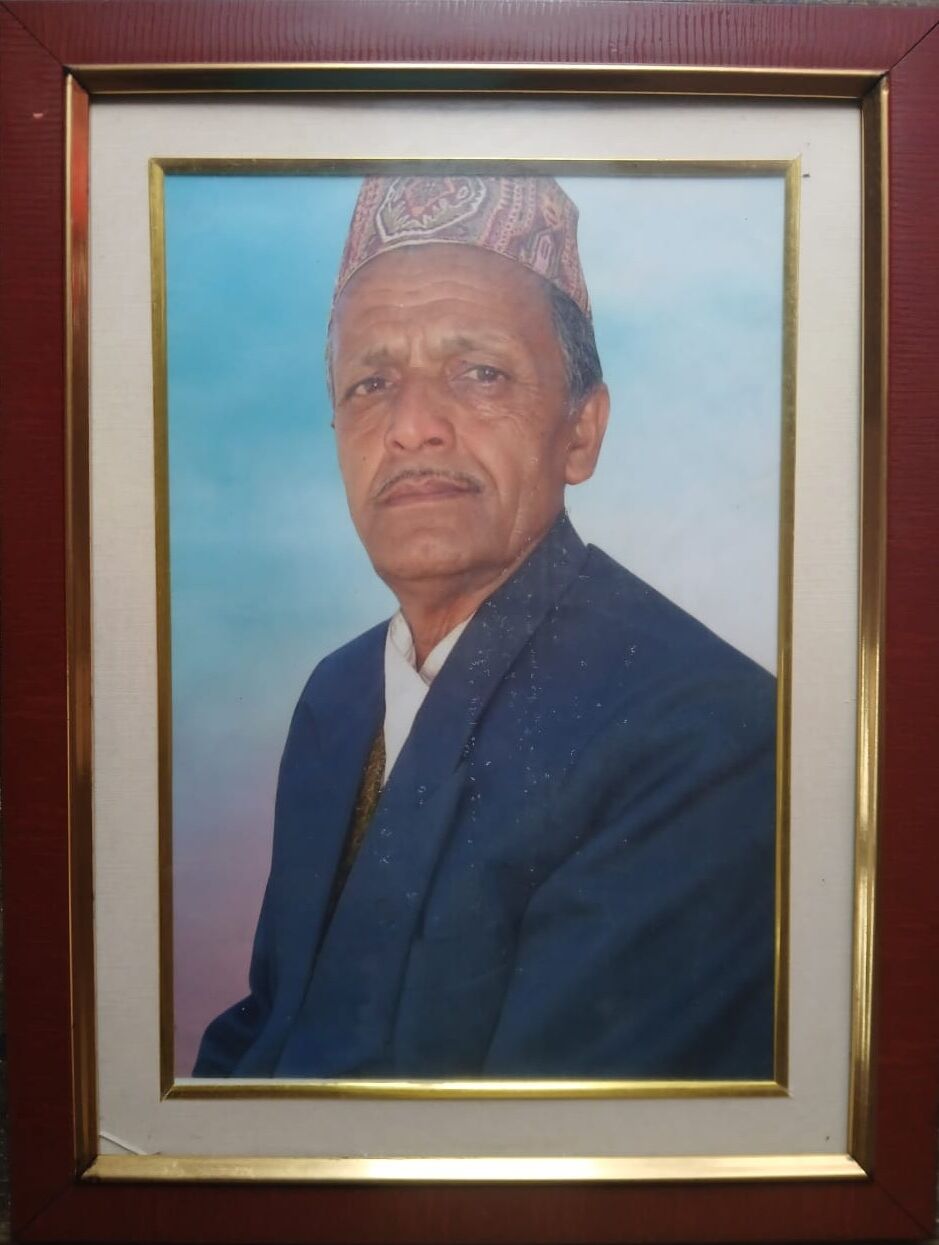
He arrived on 3 July 1980 in Kalimpong, West Bengal, the last of four children. Two brothers and a sister had already gone ahead of him, mapping the territory he was about to enter. With their parents, that made six at the table, and his position at the end of the line shaped everything about how he learned. His siblings had already done the things he was only beginning to try. They showed him how to study, how to play, and how to move through an ordinary day. He sums up their influence without decoration: they were older, and they taught him.
The family belonged to the middle class, and he describes that life plainly, without dressing it up as either plenty or struggle. What he remembers is a home where his parents worked to educate their children, though neither of them had received much schooling themselves. Their own education had stopped early. What they wanted for their children reached much further. Learning mattered in that house because his parents made it matter, putting the older children through school first, then turning to the youngest.
His father, Prabhakar Sharma, worked in the Public Health Engineering Department as a Group C employee. His father encouraged him to study and aspire to opportunities beyond the kind of employment he himself held. The encouragement carried a practical edge. His father knew his own circumstances from the inside, the hours and the pay and the ceiling overhead, and he wanted his children to have more room than he had. He spoke as a man who earned for his family and asked the next generation to make something of what education could offer.
For the youngest child, this was ambition received from someone else, handed down before he had any idea what he wanted to become. He did not need a profession in mind to understand the message. Learn more. Aim higher. His father’s wishes concerned possibilities, not instructions, and they placed their weight on what the boy might do with the chances his family was scraping together.
His mother, Savitri Sharma, kept the home. Her place in his account is bound up with the upbringing he received. He credits both parents with giving him good values, and he speaks of their influence as one thing rather than splitting it into competing claims. His father’s job and his mother’s work at home formed the conditions in which four children grew up. He remembers them with gratitude for what they gave the family and for the effort they made to keep their children in school.
The gap between his parents’ schooling and their children’s opportunities sits at the heart of this beginning. Limited education did not stop them from seeing its worth. They helped the elder sons pursue their studies, and those brothers, in turn, became guides for the youngest. Learning in that house moved in more than one direction. It passed between siblings as well as from parent to child. He could turn to people close to his own age who understood the games and the lessons he was running into for the first time.
Being the youngest put him on the receiving end of all of it. Both brothers shaped him, and he remembers the older children telling him what to do and how to go about it. His sister belonged to that childhood household too. He offers no elaborate incidents to explain these relationships. What he recalls instead is the plain experience of growing up among siblings who knew more than he did. Their guidance was simply part of being a younger brother, folded into the daily business of the house.
“I could solve the problems without understanding them. It was my brother who showed me that mathematics had a reason behind every rule.”
Phase 2 : Beyond the Answers in the Exercise Book
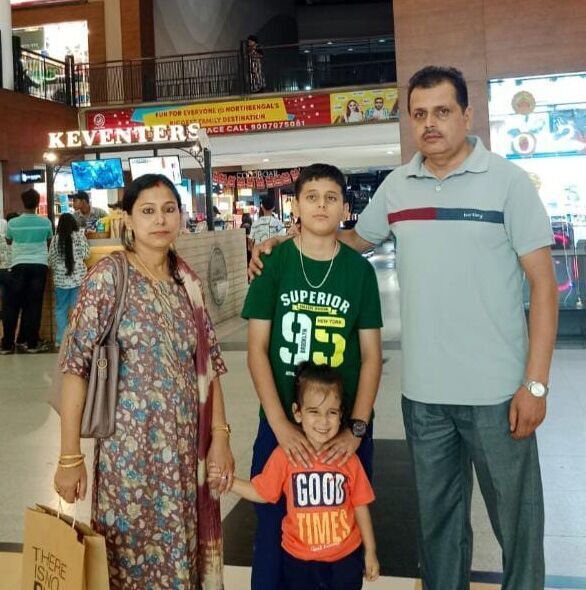
That was how Dr. Kedar Sharma remembered himself at school. Not the boy with the remarkable marks, not the child who showed an early gift for numbers. Through Class 8, his studies ran an ordinary course. He went to school, worked through the lessons, and landed, by his own honest reckoning, somewhere in the middle. He says it without embarrassment. The description simply leaves his school years as they were, before a shift in his surroundings gave him a reason to take his studies seriously.
His schooling happened in Kalimpong, at the institution he calls SUMI, from Class 1 all the way through higher secondary. He studied under the West Bengal board. Staying in one town gave those years a steady backdrop while the academic demands climbed with each class. For much of that time, mathematics was not a subject he particularly enjoyed. Its place on the timetable created no interest by itself. Something in the way it was taught stayed out of reach.
He could work through an exercise book without understanding the ideas underneath. Open a chapter, solve the questions, and reach the answers. But where a method came from, what it was for, and how it connected to anything beyond the page: those things often stayed unclear. He remembers those lessons as a concentration on the questions themselves. What he needed reached past the solution. Without it, mathematics remained a set of tasks to finish rather than a subject whose reasoning he could hold in his hands.
At home, his eldest brother, Deepak Kumar Sharma, helped him make sense of what had stayed murky. A physics teacher, his brother could explain the principles beneath the work. When the younger student brought his difficulties home, the conversation moved past the exercise and into the concept. It dealt with what the method meant and where it came from. That difference mattered. Ideas that had seemed locked inside a textbook began to acquire a purpose, and his interest in mathematics grew as the reasoning came clear.
His brother also talked about what studying mathematics could open up. The advice gave the subject a practical weight alongside its intellectual pull. There was something worth chasing here, provided he learned to understand it. In his account, his brother holds the central place in this change. When he considers who helped him academically in those years, he returns to those explanations at home. The help was specific to what he needed: a way into the core of a subject that had failed to hold his attention.
A separate change came through friendship. From Class 9, he belonged to a group of five friends who took their studies seriously and earned good marks. Their approach left a mark on him. Studying mattered inside that circle, and belonging to it pushed him to give his own work more attention. He describes a simple response to their example: since he was among friends who studied, he could study with them. The group gave academic effort a place inside the companionship he already valued.
Among those friends he remembered was Karma Bhutia. What mattered about these friendships was their effect on his habits at a point when schoolwork was starting to count. He does not trace the change to a dramatic warning or one extraordinary incident. It came from being around people whose attention to their studies pulled his own along. Their good marks gave him an example close enough to follow. His interest grew gradually, in the company of classmates who were already making an effort.
“Three marks kept me out of the Navy. I mourned it briefly, then I found another road. Sometimes a closed door is the only map you get.”
Phase 3 : Three Marks and a Different Direction
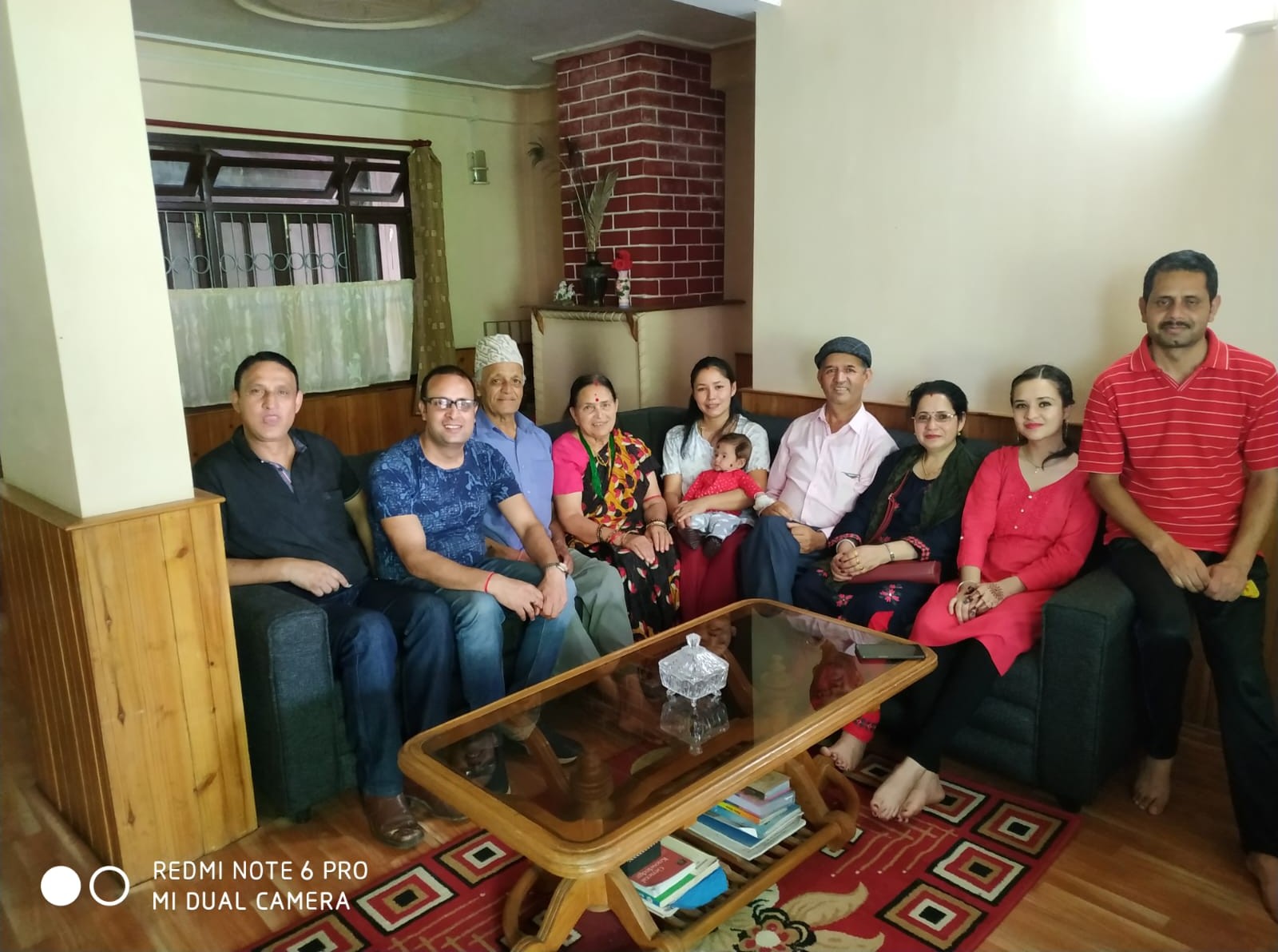
After higher secondary school, Dr. Kedar Sharma wanted to become a Navy officer. The ambition had a specific origin: a television programme caught his attention, showed him something of naval life, and let him picture himself inside it. The idea appealed enough that he acted on it. He and four friends went to sit for the NDA examination, a first step toward the future he hoped was waiting.
The result left him three marks below the cutoff. A tiny numerical gap, and a decisive one. He had taken the examination, and he had not been selected. Those three marks stayed sharp in his memory because they drew the line between the outcome he wanted and the one he got. No appointment followed. The profession he had pictured did not open through that door.
He also remembered the age restriction, which shut off any second attempt. That closed the question in a practical way. Another try was no longer his to make, so he changed direction. His account turns no dramatic corner here. He explains it through the circumstances themselves: the result fell short, the chance to repeat it had passed, and he needed to find another route.
Further education offered that route. Some of his friends planned to finish graduation and then prepare for competitive examinations. He chose to keep studying past that point. The difference lay in how each of them judged what might work. For him, higher qualifications became the path he followed. It let him move toward something he could actually do, even though it looked nothing like the profession that had first pulled him.
His undergraduate years took him to Darjeeling Government College. Leaving Kalimpong for college introduced a different rhythm of daily life, with a hostel as his address during graduation. He remembers those years warmly. Friends surrounded him, including students who had come from other places, and their company made up an important part of the experience. When he describes that period, he talks about the help he received and how easy it was to live among fellow students.
The hostel years did not bring the homesickness you might expect from a student living away from family. He is clear about that. Darjeeling sits roughly two and a half hours from Kalimpong, close enough to travel home often. He remembers going back about once a week. College asked him to live elsewhere, but it never put home out of reach. Visits stayed part of his routine, not something saved for a distant holiday.
Contact between those visits depended on what was available at the time. Mobile phones had not yet entered his everyday life. Calls came through the hostel landline, giving him chances to speak with his parents. The arrangement was simple: a conversation over the telephone, then another trip home when he could make it. These details explain why he never remembered his undergraduate years as a stretch of separation or loneliness.
Note of Thanks
Dr. Kedar Sharma offers his heartfelt thanks to his wife, Sushma Chhetri, and his elder brother. Their support holds a special place in his life, and he wishes to acknowledge both with the affection and gratitude they deserve. Each has helped him in a different way. His appreciation belongs to the particular care, guidance and encouragement he has received from them.
To his wife, he expresses gratitude for standing beside him while managing her own professional responsibilities. He recognises her contribution to their family, her care for their daughter and her financial assistance when needed. Her support forms part of the everyday arrangements through which they continue to fulfil their responsibilities. He appreciates the effort those arrangements require and the part she carries within them. Her willingness to make time for occasions important to him is another contribution he wishes to honour.
His thanks to his elder brother carry an appreciation for guidance that has remained important over the years. He values the help he received with his studies, the explanations that made difficult ideas clearer and the encouragement to continue his education. That assistance gave him something practical to work with whenever understanding was needed. He remembers the contribution with gratitude, recognising the difference that help from someone close can make.
He also acknowledges their encouragement in taking this step towards recording his life. Both have supported the undertaking, and their place in these pages follows his own wish to thank them.
This acknowledgement gives each relationship its due. His wife has shared the responsibilities of their family; his brother has offered guidance and encouragement. He values both contributions and wishes his appreciation to be expressed clearly. To them, he extends his sincere thanks for the support they have given and for the place they continue to hold in his life.
thanks,
– Dr. Kedar Sharma

AIMLAY is a leading global education platform empowering ACADEMIC and EXPERIENTIAL learners, uniquely focused on recognizing knowledge gained through experience and building a diversified community of doctorates and aspiring researchers.