“The true measure of one’s life is not in the titles earned, but in the values lived and passed on.”
Introduction
Dr. Cheruparambil Ahamed Rahman’s story is one that begins quietly, in the small settlement of Hopetown in South Andaman, yet grows into a legacy that touches institutions, forests, and generations of officers. Born on 21 April 1960 to Late C.K.Ahmed and Late Mariam Bibi, his life was shaped by deep family roots, hardship, and an enduring sense of responsibility. From an early age, the values of honesty, resilience, and discipline became the compass points that guided his journey through life.
His family history itself carried echoes of courage and endurance. His paternal grandfather, remembered for his daring, once leapt from a timber raft to swim across the sea—an act that lived on as a story of audacity and independence. His maternal grandfather carried the weight of exile, having been among the Moplahs deported by the British to the Andamans during the 1920s, enduring the Cellular Jail and later building a life marked by quiet dignity. These stories of survival and defiance seeped into young Rahman’s upbringing, embedding in him the lesson that no struggle is wasted when carried with integrity.
Growing up as the second among eight siblings, he witnessed his parents’ tireless effort to raise a large family on modest means. His father, who began as a bus conductor and retired as a Traffic Inspector cum Station Master, lived with discipline and unshakable ethics. His mother, a silent force of order, kept the family rooted in values. Together they taught their children that dignity could exist even in struggle, and that education was the doorway to self-respect.
The daily realities of life in a household of ten meant that from a young age, Rahman shared responsibilities beyond his years. Along with his brothers, he helped cultivate crops, rear livestock, and sell produce in local markets. Carrying milk, eggs, and vegetables to earn a little extra income was not merely work—it was an education in humility and responsibility. These early labors imprinted on him the belief that effort, however small, has meaning.
His friendships and community engagements also played a pivotal role in shaping his youth. With friends from across cultural and linguistic backgrounds, he experienced the richness of the Andaman community. Lacking cinema halls or modern entertainment, he found joy in community dramas and local fairs, and with youthful creativity, he and his peers founded the “Yuva Sangh.” This youth organization staged plays, organized sports, and introduced cricket beyond Port Blair, proving that with determination and teamwork, even remote villages could echo with ambition. These experiences taught him collaboration, leadership, and the transformative power of collective energy.
Education soon became his path of distinction. He began at Primary School, Wandoor, moved to Delanipur, and later continued at Government Senior Secondary School, Wimberlygunj. In 1977, he became the first student in his school to secure First Division marks in the Higher Secondary examination—a milestone that brought pride to his family and community. He went on to pursue Pre-Medical and a B.Sc. in Botany, Zoology, and Chemistry from Jawaharlal Nehru Maha Vidyalaya (erstwhile Government College), Port Blair, then affiliated with Punjab University. His academic progress, though constrained by the limits of the islands’ facilities, was a clear testament to his perseverance and discipline.
Yet, the journey was not easy. After graduation, with financial challenges pressing on his family, further studies seemed out of reach. Travel to mainland universities demanded resources that were scarce, and opportunities in the Andamans were limited. In these moments of uncertainty, he shouldered responsibility, taking up small jobs—including daily-wage work in the Electricity Department—while searching for a career that could balance livelihood with purpose.
“Heritage is not only what we inherit from our ancestors, but also the values they plant in us to carry forward.”
Phase 1: Roots in the Islands, Seeds of Character
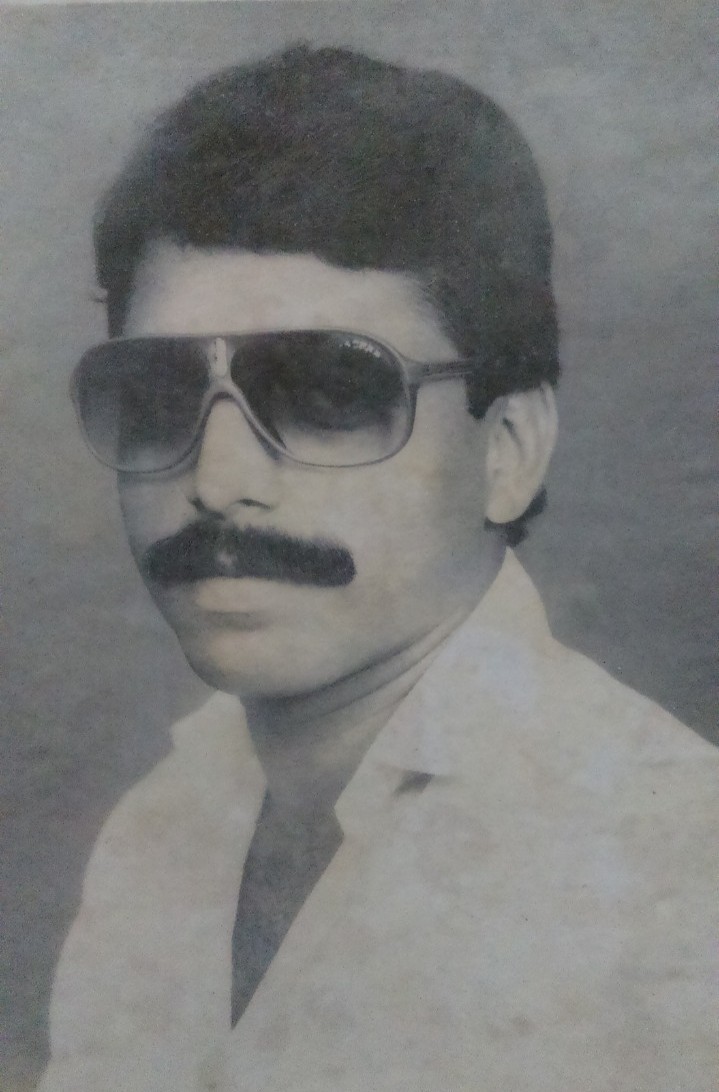
In the story of Dr. Cheruparambil Ahamed Rahman, the origins are as telling as the achievements that would later mark his career. His journey began in Hopetown, a village in South Andaman, where the rhythms of nature, community, and family formed the earliest lessons of life. Born on 21 April 1960 to Late Haji Cheruparambil Kuttu Ahmed and Late Hajja Mariam Bibi, he was cradled in a world that balanced hardship with dignity, scarcity with discipline, and tradition with resilience.
The Andaman and Nicobar Islands, where Rahman’s roots lie, are lands of striking beauty and complex history. The seas, forests, and winds carried with them both abundance and challenge. For the people who made these islands home, every day was a negotiation between survival and growth. In this environment, family histories were not just remembered; they were lived and retold, stitched into the identities of their descendants. For young Rahman, the stories of his grandfathers carried more weight than textbooks. They were narratives that offered meaning to the struggles around him and pointed towards the kind of man he would one day become.
His paternal grandfather, Late C. Kuttu of Hopetown, was remembered for his daring spirit. Among the tales passed down was one of remarkable audacity: how he leapt off a timber raft being towed from the North Bay area and swam across the sea to Hopetown to save time. Such stories were not just entertainment for a boy—they were lessons in courage, in rejecting limitations, and in trusting one’s own strength. To the family, and indeed to the village, this grandfather was a figure of both admiration and affectionate pride. His actions embodied the boldness that island life demanded: a refusal to surrender to inconvenience, a willingness to risk, and an instinctive drive to push against boundaries.
On the maternal side, the weight of history was even more pronounced. Late Haji Mathummal Ahammed Kutty of Junglighat, Rahman’s maternal grandfather, carried scars of political and colonial upheaval. He was among the Moplahs deported to the Andamans by the British between 1922–1924, imprisoned in the Cellular Jail alongside his brother, Late Mathummal Marakkar of Wimberlygunj. For a child growing up in villages of the Andamans, such stories were not just distant history—they were living evidence of endurance. They were reminders of how pain could be transmuted into resilience and how exile could be turned into belonging.
After his release, this grandfather chose to live a life of quiet purpose. He established a grocery shop, becoming known affectionately as “Mullaji” in Junglighat and its surroundings. His presence in the community was steady and dignified, offering an alternative kind of heroism—one not defined by daring acts but by the patient work of rebuilding, of restoring dignity to a life disrupted by injustice. This thread of resilience would run strongly through Rahman’s own life. He would come to embody that same quiet determination, that same refusal to be broken by hardship.
Thus, even before he had learned to walk the paths of school or face the struggles of adulthood, Rahman’s character was already being shaped by two powerful legacies: the boldness of his paternal grandfather and the endurance of his maternal one. These stories, carried in family conversations and village memory, were not relics. They were living guidelines for a boy who was learning what it meant to belong to both family and land.
His immediate family deepened this inheritance. His father, Late Haji C.K. Ahmed, carved his life out of perseverance. He began modestly as a bus conductor in the State Transport Department and, through consistent effort and an unwavering commitment to honesty, rose to retire as a Traffic Inspector cum Station Master. Along the way, he also worked in the Forest and Revenue departments. His career was neither glamorous nor easy, but it was marked by integrity. For Rahman, his father’s daily journeys—often walking long distances from North Bay or Hope Town to the Boys school at Middle Point and back, covering more than ten kilometers each way—were profound examples of discipline. These were not mere commutes. They were life lessons on endurance, on the value of routine, and on the quiet pride of keeping one’s word.
“In the classroom of struggle, every small victory becomes the seed of resilience.”
Phase 2 : The First Lessons of Effort and Aspiration
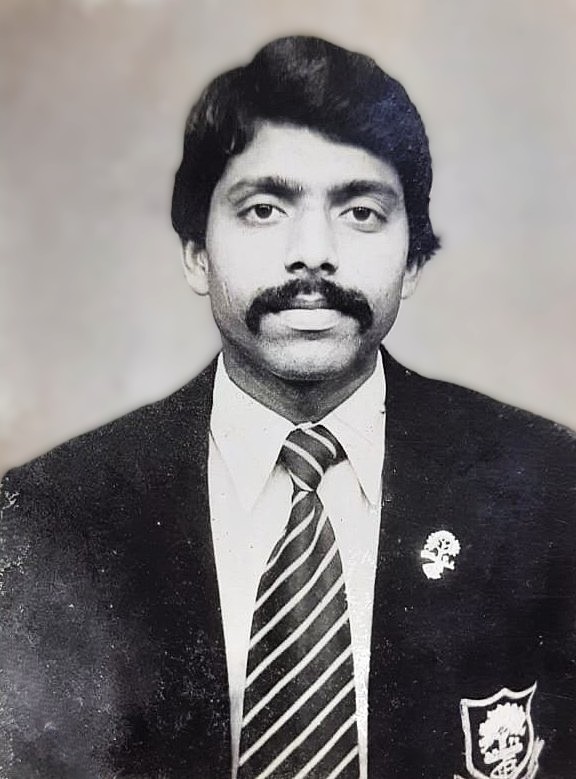
For Dr. Cheruparambil Ahamed Rahman, childhood was never about idle play or carefree indulgence. His earliest years were imprinted with responsibility, and his formative years were a balancing act between education, household duties, and the quiet determination to rise above limitations. If Phase I of his life was about roots and inheritance, then Phase II was about the first shoots of growth—how a boy from Hopetown & then from Mannarghat began to shape himself into a young man ready to take on challenges.
Born into a household of eight siblings, Rahman stood as the second child, flanked by four brothers and three sisters. The family’s modest resources were stretched across many shoulders, yet there was never a shortage of discipline or shared effort. The children did not grow up with the luxuries of abundance; instead, they grew up in the wealth of lessons that hardship offers. Their home was a place where every child contributed, not out of compulsion but out of necessity and care for one another.
From a young age, Rahman and his brothers worked alongside their father to support the family. They cultivated grains and vegetables in whatever plots of land were available, reared cows, goats, and poultry, and turned these small ventures into essential income for the household. Selling cows’ milk, eggs, and vegetables in local markets became part of Rahman’s early routine. Carrying these goods to the stalls and engaging with buyers gave him not only a sense of responsibility but also an early awareness of the dignity of labor. Every coin earned was a contribution, every exchange in the market a reminder that self-respect comes from effort.
This upbringing instilled in him a sense of humility that would never leave him. Even later in life, when his name carried titles of authority and recognition, he would remember those days of carrying milk cans or vegetables to sell. They taught him that no work was too small and that the worth of a person lies not in what he receives but in what he contributes.
Amid these responsibilities, education remained central. His parents, particularly his mother, were deeply committed to ensuring that all the children were educated, even when resources were scarce. Rahman’s schooling began at Primary School, Wandoor, a modest institution that laid the foundation of his learning. For a brief period, he was shifted to Delanipur School, but it was at Government Senior Secondary School, Wimberlygunj, that his real academic journey took shape.
At Wimberlygunj, Rahman quickly distinguished himself as a student of discipline and ambition. In 1977, he passed his Higher Secondary examination with First Division marks, a remarkable feat that carried historical significance—it was the first time in the school’s history that a student had secured a First Division. For the teachers, this was a moment of immense pride; for the community, it was an inspiration; and for his family, it was a vindication of every sacrifice they had made. For Rahman himself, it was proof that hardship could be overcome with perseverance and dedication.
This achievement was not born in ease. It came against the backdrop of evenings spent helping at home, mornings shaped by discipline, and the constant reminder that education was not just for personal growth but for the family’s upliftment. Each book he studied was held with the awareness that knowledge was his only true inheritance.
“Destiny often hides in the very paths we walk daily—waiting for courage to recognize it.”
Phase 3 : Into the Forests, A Calling Found
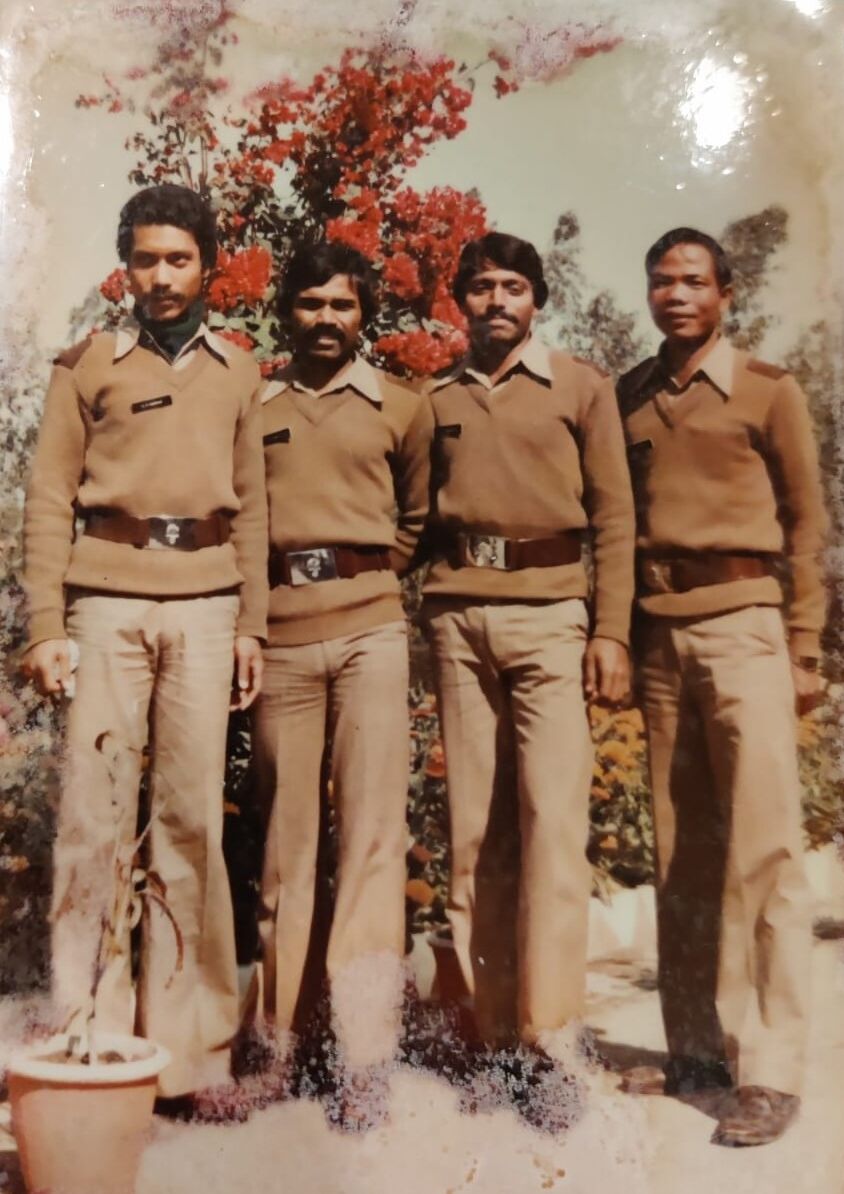
When Dr. Cheruparambil Ahamed Rahman cleared the Forest Ranger selection and stepped through the gates of the Eastern Forest Rangers’ College (EFRC), Kurseong, his life took the decisive turn that would define his legacy. It was the year 1982, and for the next two years, he immersed himself in the demanding professional training in forestry and allied subjects. This was not just an academic pursuit but a complete transformation—physical, intellectual, and spiritual.
The training at Kurseong was known for its rigor. It combined classroom lectures with field exercises, demanding physical drills, and exposure tours that tested both stamina and intellect. For Rahman, who had already cultivated resilience through hardship in his youth, this environment was fertile ground. His endurance in sports gave him an edge in field tests, and his academic grounding in natural sciences made him quick to grasp forestry’s scientific principles. But beyond competence, what marked him out was his sincerity. He treated every exercise as a responsibility, every lecture as a duty, and every challenge as a step toward service. He completed the two-year training, securing 6th rank in the order of merit in a batch of 89 trainees.
It was during this training that he first encountered Sazda Banu of Kurseong, Darjeeling, the woman who would later become his life partner. Their meeting, at the far end of his training period, was the beginning of a bond that would weave strength and companionship into his journey. She was in service too, working in the Health Department under the West Bengal Government, and like him, her life was shaped by discipline and dedication. Their relationship would later blossom into marriage, anchoring him in ways that complemented his demanding career.
After completing his two-year training in 1984, Rahman was appointed as a Forest Ranger (Forest Range Officer) in the Andaman & Nicobar Islands. Returning to his home terrain was both a privilege and a responsibility. He had grown up amidst these forests; now he would be their custodian. His first postings were in Middle Andaman and Havelock Island, regions covered in thick forests where biodiversity thrived in abundance and danger.
The work of a Range Officer was immense in scope. He was responsible for the scientific management and protection of forest resources, the conservation of biodiversity, and the enforcement of forest and wildlife-related laws. In practical terms, this meant everything from afforestation and reforestation projects to patrolling against timber smugglers and poachers. It also included meeting the legitimate needs of local people for timber, fuel, fodder, and other non-timber forest products, ensuring that conservation goals were balanced with human requirements.
For Rahman, these tasks were not mechanical. They were deeply personal. The forests of the Andamans had nurtured his childhood, and now he saw himself as their guardian. He walked through them with both scientific knowledge and emotional connection. Every tree felled illegally was a wound to him; every sapling planted was a promise for the future. His days were long, often spent in remote areas where facilities were scarce, and nights were punctuated with the anxieties of protection work. Yet he never flinched from the responsibility.
Note of Thanks
In presenting the biography of Dr. Cheruparambil Ahamed Rahman, heartfelt gratitude is extended to all who became part of his journey, shaping it with their silent strength and visible encouragement. He owes his earliest thanks to his parents, Late Haji Cheruparambil Kutu Ahmed and Late Hajja Mariam Bibi, whose discipline, honesty, and resilience became the foundation upon which his life was built. Their values were the compass that guided his path through hardship and success alike.
He remains deeply grateful to his wife, Sazda Banu, whose patience, sacrifices, and unwavering support made it possible for him to dedicate himself to demanding responsibilities. Her strength was the unseen force that allowed his professional life to flourish. To his children, Junaid and Jubaid, his daughter-in-law Saira, and his granddaughter Zarish, he offers thanks for being his pride, his joy, and his enduring legacy.
Acknowledgment is also due to his seniors, colleagues, trainees, students, and the many officers he mentored at EFRC Kurseong, CASFOS Burnihat, and in the Andaman & Nicobar Administration. Their respect and affection have been his true reward. Finally, he extends gratitude to the forests themselves—their silence, resilience, and beauty were his greatest teachers, shaping not only his career but his life.
thanks,
– Dr. Cheruparambil Ahamed Rahman

AIMLAY is a leading global education platform empowering ACADEMIC and EXPERIENTIAL learners, uniquely focused on recognizing knowledge gained through experience and building a diversified community of doctorates and aspiring researchers.