

"I have lived in boardrooms and on factory floors, in countries that speak different languages but share the same hunger. I built things, broke things, and rebuilt them better. But the only thing that ever truly mattered was coming home and knowing I gave it my all."
Introduction
The story of Dr. Kaushik Burman is shaped by curiosity, adaptability, and an enduring desire to create meaningful change. His path reflects the evolution of a professional who has consistently stepped beyond familiar boundaries, moving across industries, countries, and challenges with the belief that growth comes from learning, taking calculated risks, and embracing uncertainty.
Born in Kolkata, West Bengal, he grew up in a family environment that encouraged exploration and learning. His parents, Manas Kumar Burman and Shyamali Burman, played an important role in shaping his outlook. His father, a chemical engineer known for his intellectual approach, influenced his curiosity and analytical thinking, while his mother, a classical music teacher, brought creativity, discipline, and cultural richness into his upbringing. Surrounded by ideas, music, and encouragement, he developed an appreciation for continuous learning from an early age.
As a child, he found joy in reading, travelling with his family, and participating in sports, music festivals, debating, and NCC (Air force at National Cadet Corps). These early interests reflected qualities that would later become central to his professional identity: curiosity, observation, teamwork, and the willingness to explore different perspectives. Over time, reading became a lifelong habit, allowing him to continuously engage with new ideas and changing environments.
Kaushik’s childhood dream was to be an Indian Air Force fighter pilot, and he cleared the prestigious National Defence Academy (NDA), with an All India Rank of 7. Subsequently, Kaushik pursued Mechanical Engineering at the University College of Engineering, Osmania University, graduating with distinction, a choice influenced by the broad applications and opportunities offered by the field. The discipline provided him with a strong technical foundation and a problem-solving mindset that would later support his transition into business leadership.
After his graduation, Kaushik joined GE Power Systems’ Design Center of Excellence, connecting his engineering knowledge with real-world industrial applications. This facility was the offshore unit of General Electric (GE) working on gas turbine design (6F/7F) . Early on, the role provided him with exposure to international industrial clients based in China and the US. This period became the starting point of a transformation from an engineer focused on design and systems into a professional drawn towards commercial growth and business strategy.
Recognising his interest in scaling businesses and leading commercial initiatives, Dr. Kaushik pursued management education through an MBA at FMS Delhi. This transition opened new pathways, leading him into roles at Nestlé, Citibank, and HSBC, where he developed experience across sales, distribution, financial services, regional leadership, and international business operations. These experiences helped him understand markets, customers, teams, and the complexities involved in building sustainable organisations.
His pursuit of further learning continued when he chose to join INSEAD for his second full-time MBA on a scholarship, a decision that required significant personal and professional commitment. Moving from a stable position into an internationally competitive environment reflected his willingness to challenge himself and seek broader perspectives. The experience strengthened his global outlook and prepared him for the next stage of his career.
"My father taught me to ask why. My mother taught me to feel how. Together, they gave me the only tools I would ever truly need."
Phase 1: The Boy Who Never Stopped Asking: A Childhood Forged in Wonder & Song
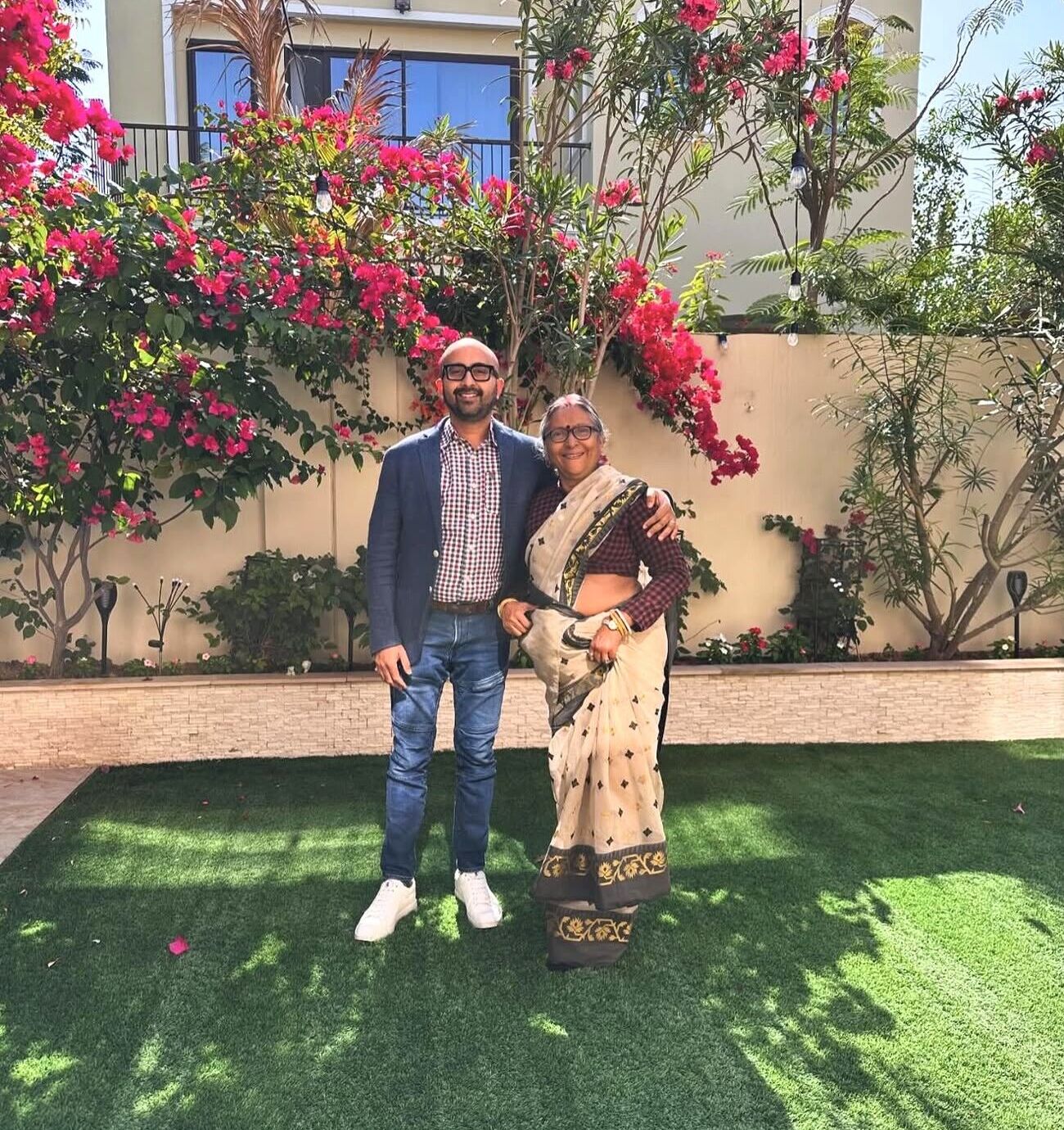
Before the boardrooms. Before the global stages. Before the weight of leadership settled upon his shoulders, there was a boy in Kolkata, wide-eyed and wondering, who believed the world was a question waiting to be asked. His name was Kaushik, and he grew up in a home where curiosity was not merely tolerated. It was celebrated. It was fed. It was allowed to run free.
That home stood in the bustling heart of West Bengal, a city of contrasts where ancient rhythms pulsed beneath modern clamor. But within those walls, a different kind of music played. His father, Manas Kumar Burman, was a chemical engineer by profession, but a philosopher by nature. He did not simply answer his son’s questions; he taught him how to chase them, how to sit with uncertainty, how to observe the world with the patience of a scientist and the wonder of a poet. He would point to the steam rising from a kettle and unfold the physics behind it, then pause and ask, “But what do you see?” That question, so simple and so profound, became the seed of everything that followed.
His mother, Shyamali Burman, offered a different language altogether. She was a classical music teacher, and her world was one of ragas and talas, of discipline wrapped in beauty, of expression bound by structure. In her presence, young Kaushik learned that silence could be as powerful as sound, and that the spaces between notes often carried the deepest emotion. She taught him that creativity was not the opposite of logic, but its partner, and that a life lived without art was a life only half lived. Their home became a quiet laboratory of the soul, where engineering met elegance, and where intellect danced with imagination.
And so the boy grew, absorbing lessons that no textbook could offer. He read voraciously, losing himself in worlds far beyond the narrow lanes of his neighborhood. Books became his windows and his mirrors, reflecting the person he was and revealing the person he could become. That hunger for the written word never left him. Even today, in the frantic rush of global business, he carves out moments to read, because he knows that understanding begins with listening, and listening begins with stillness.
But his childhood was not confined to the quiet corners of study. He ran on football fields under the merciless Kolkata sun, his lungs burning with the joy of pursuit. He swung cricket bats with the reckless hope of youth, learning early that victory and defeat are fleeting, but the camaraderie of teammates endures. These were not mere diversions. They were classrooms of their own, teaching him resilience, collaboration, and the beautiful unpredictability of effort.
Travel, too, painted his early canvas. Family journeys took him beyond the familiar, exposing him to new landscapes, new faces, and new ways of living. Each trip was a gentle reminder that the world was vast and that his small corner of it was only one of countless stories waiting to be discovered. Those travels planted a restlessness in him, not the restlessness of dissatisfaction, but of wonder, the quiet knowing that there was always more to see, more to learn, and more to become.
Through it all, his sister remained a constant presence, a companion in the shared language of childhood, a tie to the roots that would hold firm even as his branches reached toward distant skies. She stayed in India, a living bridge to the place where it all began, and their bond reminds him that no matter how far he travels, he carries his origins within him.
"I chose engineering for its breadth, not its boundaries. I wanted to see the whole machine, not just one gear."
Phase 2 : Steam, Steel, and Curiosity: How a Young Engineer Learned to See the World in Systems
There comes a moment in every young life when the abstract becomes urgent, when the endless horizon of possibility narrows into a single decision that will shape everything that follows. For Kaushik Burman, that moment arrived in the form of a choice. Not simply which degree to pursue, but which door to open, knowing that once he stepped through it, the world would never look quite the same again.
He chose Mechanical Engineering at the University College of Engineering, Osmania University, and he chose it for reasons that reveal something essential about the man he would become. He did not select the narrowest path or the most predictable one. He chose breadth. He chose flexibility. He chose a discipline that would not imprison him within a single specialty but would instead offer him a panoramic view of how things work, from the smallest moving part to the largest energy system. His academic rank gave him access to this coveted branch, but it was his instinct for possibility that truly guided his hand.
That instinct proved wise. Mechanical engineering did not demand that he declare his final destination before he had even begun the journey. It offered exposure to systems, to design, to the elegant marriage of theory and application. It allowed him to study the physics of motion and the thermodynamics of power, all while keeping countless professional futures within reach. He did not need to know exactly where he was heading. He only needed to trust that the foundation he was building would hold whatever he eventually chose to place upon it.
The years at Osmania University were not merely academic. They were formative in a deeper sense, teaching him that precision is not a burden but a liberation. Problems, he discovered, could not be solved by intuition alone. They demanded dissection, examination, and a willingness to sit with complexity until its structure revealed itself. Engineering taught him to think in systems, to see connections where others saw chaos, and to approach every challenge with the quiet conviction that order could always be found.
But theory, however elegant, is only half the story. The other half is written in the messy, unforgiving language of practice. That lesson arrived when he stepped through the doors of Tata Consultancy Services, recruited through campus placement into a world far removed from lecture halls and laboratory sessions. The technology industry stretched before him with its vast and glittering promise, yet even then, a quiet resistance stirred within him. He had not spent years mastering mechanical engineering only to become a programmer. He wanted his education to matter, not as a credential on a résumé, but as a living, breathing part of his daily work.
He found that validation in an unexpected place: the GE Power Systems Design Center of Excellence. Here, engineering was no longer an abstraction. It was the language of creation. He immersed himself in the design of gas turbines, those colossal machines that convert raw energy into the electricity that powers civilizations. His mechanical background found its true home, not in theory, but in the intricate dance of blades, combustion, and pressure, where every decision carried weight and every miscalculation could have consequences that echoed far beyond the drawing board.
"I realized that the most complex systems are not made of metal. They are made of people, markets, and the invisible threads of trust."
Phase 3 : From Turbines to Transactions: A Craftsman Learns the Poetry of Commerce
There is a moment in every craftsman’s life when he looks at his tools and realizes they are capable of building something far greater than he first imagined. For Kaushik Burman, that moment arrived not with a sudden revelation, but through the slow, persistent whisper of a question he could no longer ignore. He had learned how systems worked. He had mastered the language of machines, of turbines, of precision and pressure. But beneath the steady rhythm of engineering, another curiosity was stirring, one that had nothing to do with gears and everything to do with growth, with markets, with the mysterious alchemy by which ideas transform into enterprises.
The decision to pursue an MBA at FMS Delhi was not a departure from his engineering foundation. It was an expansion, a deliberate act of architectural ambition. He was not abandoning the discipline that had shaped him; he was adding new floors to the structure, new windows through which to view the world. Engineering had taught him to solve problems. Business would teach him to identify which problems were worth solving, and how to mobilize entire organizations to solve them together.
The two years at FMS Delhi were nothing short of transformational. The curriculum was a revelation, a systematic unpacking of everything that makes commerce breathe, strategy, finance, marketing, and organizational behavior. Each subject was a new lens, and Kaushik found himself looking through them with the same hunger he had once reserved for technical manuals. He was no longer just a builder of things. He was becoming a builder of value, of teams, of futures.
When he stepped into Nestlé India, he stepped into an entirely new universe. This was not the controlled environment of engineering design. This was the raw, unpredictable theater of consumer markets, where success depended not on theoretical precision but on the messy, beautiful complexity of human desire. He worked in sales and distribution, and for the first time, he found himself face to face with the people who ultimately determined whether a product lived or died. He learned to listen, not to machines, but to customers. He learned that distribution networks were not just logistics; they were lifelines. He learned that a great product could fail if it did not reach the right hands at the right time.
The shift from engineering to sales was jarring, exhilarating, and deeply instructive. It demanded a different kind of intelligence, one rooted in empathy, in observation, in the subtle art of understanding what people need before they know it themselves. And it planted a seed that would grow into something far larger, a conviction that business, at its best, is not about transactions, but about relationships.
His journey continued at Citibank, a global institution renowned for cultivating young leadership talent. Here, he was entrusted with building and leading a new region in the East. The responsibility was immense, and the learning curve was steep. He navigated the intricate world of financial services, managing portfolios that spanned cards, personal loans, and mortgages. He was no longer a specialist. He was becoming a generalist, a strategist, a leader who could see the whole chessboard and anticipate the moves that mattered.
Note of Thanks
No journey of this magnitude is ever walked alone. Behind every milestone, every risk taken, and every boundary crossed, there are hands that steadied the path, voices that whispered encouragement, and minds that shared their wisdom without reservation. For Dr. Kaushik Burman, this biography is not only a chronicle of his own efforts, but a quiet, grateful acknowledgment of all those who made the walking possible.
His deepest gratitude flows first to the ones who have been his compass through every storm. To his wife, Nithya Ravishankar, whose quiet strength has been the bedrock upon which his ambitions rest, and to his son, Kiansh Burman, whose laughter reminds him daily of what truly matters. They are not merely witnesses to his journey; they are its beating heart. To his parents, Manas Kumar Burman and Shyamali Burman, he offers a son’s eternal reverence. They gave him not just life, but a life of purpose, filling his childhood with questions, music, and the courage to seek answers beyond the obvious.
He carries deep appreciation for the teachers at Hyderabad Public School, Begumpet, who planted the first seeds of curiosity in young minds and nurtured them with patience and care. Their influence, though early, has never faded. He remains equally grateful to the alumni and faculty of University College of Engineering, Osmania University, whose academic rigor and intellectual generosity gave him the tools to think in systems, to solve with precision, and to build with confidence.
His gratitude extends to the alumni and faculty of FMS Delhi, who opened his eyes to the language of business and strategy, and to the transformative learning environments of INSEAD, Fontainebleau and Singapore, and Cornell University. These institutions did not merely educate him; they expanded his horizons, challenged his assumptions, and shaped him into a citizen of the world.
He is deeply thankful for the mentors who appeared at pivotal moments, offering guidance that went beyond professional advice and touched the very core of his growth. To Srivatsa Krishna, Ravi Ramachandran from Nestlé, Sanjiv Moghe from Citibank, and Duncan Van Bergen from Shell, he offers his enduring appreciation. Their wisdom, their belief in his potential, and their willingness to share hard-won insights helped him navigate complexities he could not have faced alone.
Dr. Kaushik carries within him a profound sense of gratitude for everyone who has crossed his path and left a mark. The colleagues who challenged him, the teams who trusted him, the friends who stood by him, and the strangers who taught him unexpected lessons. Their influence, whether large or small, has become part of the fabric of who he is.
He believes that achievement is never a solitary act. It is a tapestry woven from countless threads of support, guidance, and shared purpose. And as he looks back on the road he has traveled, he sees not just his own footprints, but the footprints of all those who walked beside him, lighting the way.
For that, he will always be grateful.
thanks,
– Dr. Kaushik Burman

AIMLAY is a leading global education platform empowering ACADEMIC and EXPERIENTIAL learners, uniquely focused on recognizing knowledge gained through experience and building a diversified community of doctorates and aspiring researchers.