
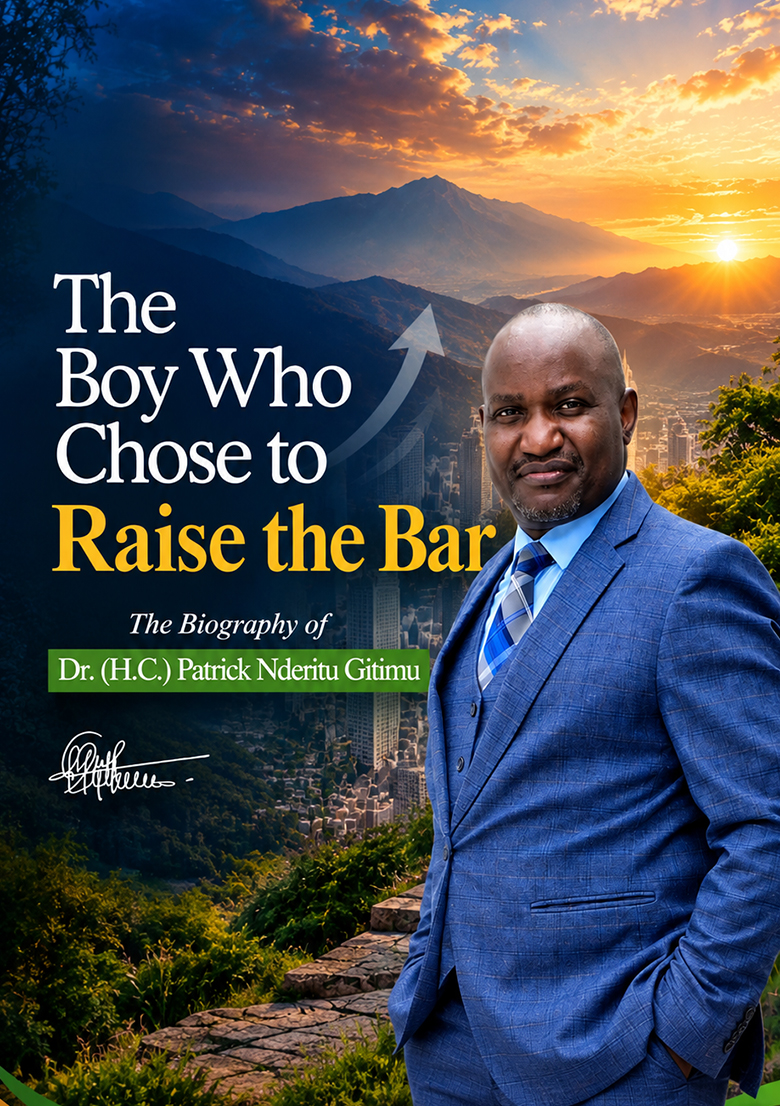
“It does not matter where you come from or where you were born. Determination is what will take you to where you want to be. Have goals and keep looking ahead.”
Introduction
Dr. Patrick Nderitu Gitimu’s story begins long before his professional worlds of data governance and monetary systems would later define his career. It starts in rural Kenya, in a family of farmers whose lives centered on the land and the capriciousness of rain. He grew up in a household with divided responsibilities. The children helped till three acres, plant crops, weed, harvest, and carry produce, learning early that progress depended on unity.
Faith also shaped his childhood. At about eleven years of age, Dr. Patrick became an altar boy in his church. Because the pastor visited only occasionally, he gradually accepted responsibilities that placed him before people much older than himself. He helped coordinate church activities and listened to elders whose guidance influenced his outlook. The experience strengthened his spiritual commitment and taught him to speak with confidence, serve others, and accept responsibility without waiting for recognition.
Education became the first great test of that conviction. In his community, many young people completed primary school and moved into casual labour or technical work. Dr. Patrick wanted to continue learning, build a professional life, and one day show others that a different future was possible. His parents were peasant farmers with limited means, yet they believed him when he said he wanted to study. Their support could not remove every difficulty, but it gave him the courage to begin.
High school demanded unusual sacrifice. He lived away from home in a single rented room made from timber and iron sheets, sometimes falling behind on rent because his parents had no money to send. The timber spacing that made the walls of the rental room made it possible for the sunshine rays to pass through in his room; this was an assurance that great future awaits him. When unpaid fees threatened to end his studies, he approached the principal and explained that sending him home would probably mean he could not return. He consistently ranked among the leading students and showed strength in mathematics, physics, and Swahili. The principal let him stay and helped him with bursary support when the money came in.
During school holidays, Dr. Patrick remained to oversee the gardens, keep the grounds and do practical work so his earnings could be applied to his fees. Later, the deputy principal offered him a room in exchange for helping with her cows and garden. She allowed him to use a bicycle and keep some milk for his meals. People working in the school kitchen also made sure he had something to eat in the evening.
After high school, Dr. Patrick initially hoped to pursue civil engineering. A conversation in Nairobi, however, directed him towards the abilities he had demonstrated in mathematics and accounting. He began professional accountancy studies in 2006 and completed his CPA qualification in 2010. Financial difficulty followed him into higher education, but a work and study program changed that period. Although it normally offered partial support, he received full assistance for his second, third, and fourth years. He also sold spiritual literature books with his friend Paul Alomo. The net income earned would help him to cover rent, food, and occasional travel home.
His first professional breakthrough came after marriage, when responsibility had grown but financial security had not. Dr. Patrick wrote a personal letter to God, asking for employment in his profession and naming the salary he believed would allow him to provide for his household. Soon afterwards, an elder in church helped him register with a recruitment agency. From about two hundred applicants, he advanced to the final ten and secured the position. The salary offered matched the amount he had written in his prayer. He began as a financial accountant and later advanced into senior financial leadership.
"I needed to raise the bar. I wanted to become educated, succeed in life, and return to the same community to give young people guidance and hope."
Phase 1: The Village Boy Who Dreamed Beyond Familiar Limits
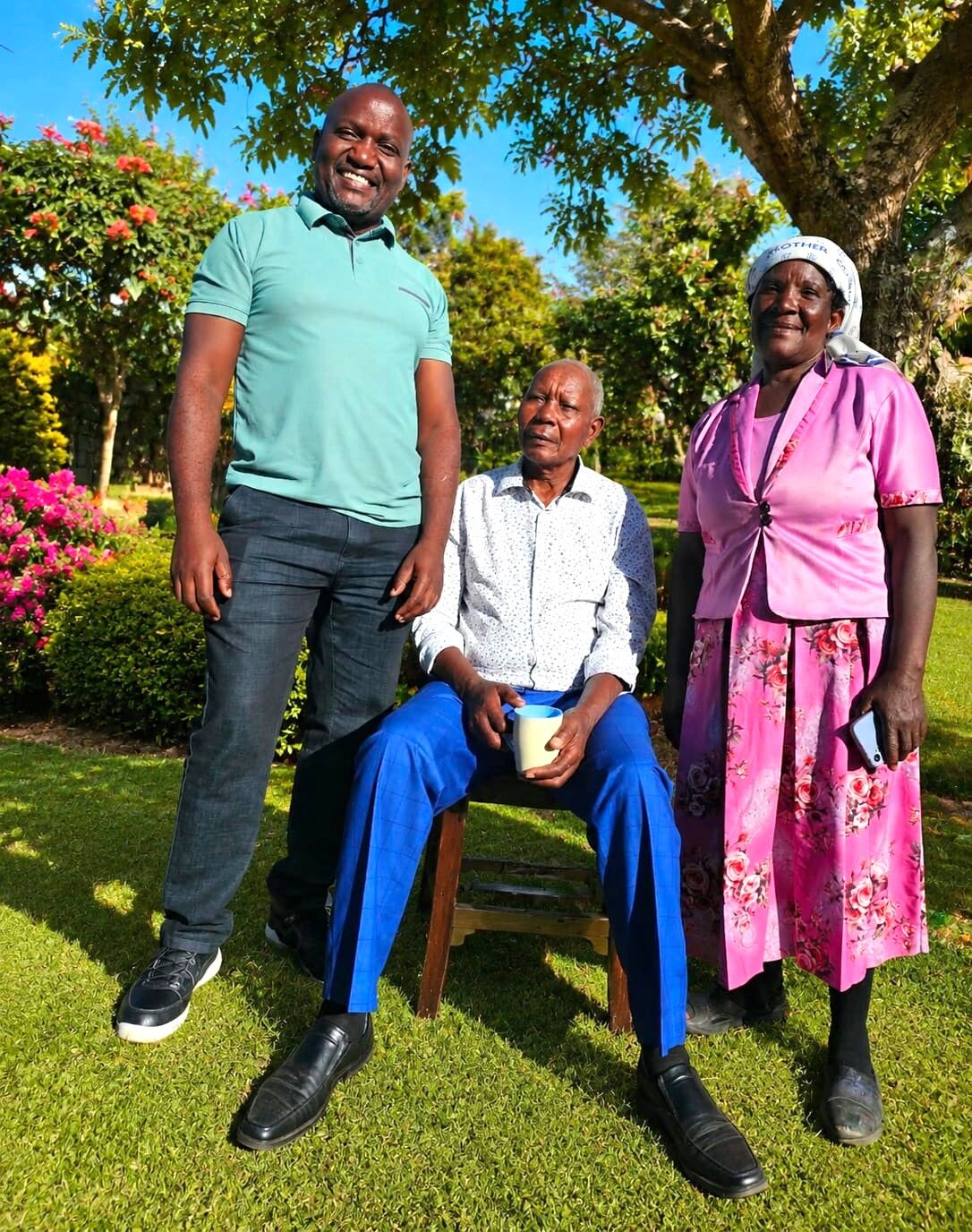
The earliest chapter of Dr. Patrick Nderitu Gitimu’s life was written in rural Kenya, within a household sustained by farming, faith, and the shared labour of seven family members. He grew up with four siblings, Simon, John, Nancy and Rose. Life did not offer the family a predictable income. Their livelihood depended largely on the land, and the land depended on rainfall. When the rains came, the fields could provide. When they failed, scarcity sometimes remained for years.
His parents, Lydiah Wambui and Samuel Gitimu, were peasant farmers who worked hard to ensure their children’s needs were met. Their means were limited, yet they created a home where effort mattered and every person had a responsibility. They could not remove every obstacle from their children’s path, but they kept working through uncertainty, divided what they had among the family, and continued believing in their son’s potential.
The family cultivated about three acres of land. Farming was woven into the childhood of every sibling. Together they ploughed the soil, planted crops, weeded, harvested wheat, sorghum, maize, and beans, and took produce to the store. Work was divided into parts, and each child was expected to do his or her share. Work sometimes became a friendly race, yet no one was abandoned with an unfinished task. Once one child completed a portion, the others helped whoever was still working. Dr. Patrick learned that personal effort had value, but shared effort carried everyone further.
The farm also became their playground. After beans had been separated from their pods, the remaining stalks were gathered into piles. To the children, those piles became places for jumping, somersaulting, hiding, and laughing together. Even when their parents insisted that the assigned work had to be completed before lunch, childhood found room to breathe. Their games required no purchased toys. Imagination transformed the remains of harvest into something memorable.
Family gatherings carried their own warmth. When everyone was home, the household sometimes marked the occasion by slaughtering a goat or, more commonly, a chicken. They prepared chapati, pilau, beef stew with peas and waru and shared the meal together. Chapati held a special place in these memories because it was not an everyday dish. It was generally prepared for visitors and occasions such as Christmas, Independence Day, Heroes Day, and Easter Holiday. Each child received a piece, while the remaining pieces were counted and kept for the following day.
The temptation was not always resisted. Sometimes one of the children quietly returned to the kitchen for an extra chapati. The next day, their mother would count what remained and ask who had eaten it. At other times, a child saved a piece and carried it to bed. In the silence of the night, the sound of someone eating revealed the secret. These small moments preserved the affection and humour of a family whose happiness was not measured by abundance.
"For three years, while others returned home for the holidays, I remained at school and worked so that I could pay my fees."
Phase 2 : Holidays That Kept the Classroom Open
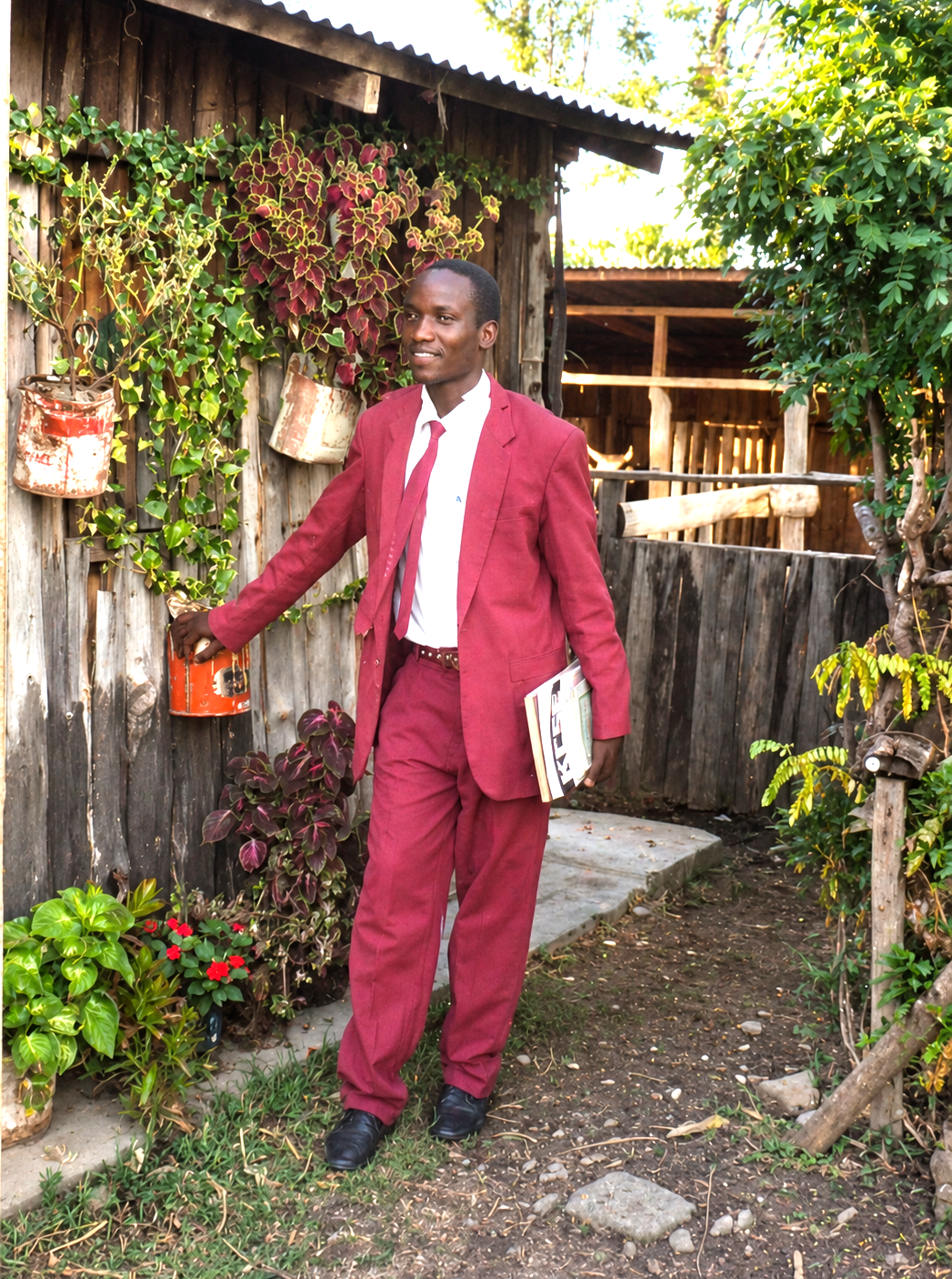
For Dr. Patrick, high school was not a natural extension of primary school. It was a departure from what many young people around him had come to expect. He had earned good grades and received several invitations from schools, yet admission was only one part of the challenge. His parents could afford only a day school, and even that school was located away from the village in an urban area.
To make attendance possible, they rented a small room for him near the school. It was built from wood and iron sheets and cost about two dollars a month. The amount may have appeared modest, but in a household dependent upon uncertain harvests, even that payment could become difficult. There were months when the rent accumulated for three or four months. Dr. Patrick lived with that uncertainty while trying to keep his attention on his studies.
He performed well in high school during his first year. He was always one of the better students, second, third, fourth or fifth in the class. He never claimed the first position, nor did he need to enlarge what he had achieved. His results already showed disciplined effort. Mathematics, physics, and Swahili were among his strongest subjects, proving that the opportunity given to him was not being wasted.
The greater test arrived as he prepared to continue into Form Two. Raising the required school fees had become increasingly difficult for his family. Then one day the class teacher came in with a register in which the names of students who had not paid their dues were written. They told them to go home and ask their parents to send the money before they could come back.
For Dr. Patrick, going home was not a practical solution. He knew his parents were not withholding money. There was simply no money available. Returning to the village would not create the fees, and he feared that once he left the classroom, he might never find his way back. Rather than walk away quietly, he went directly to the principal and explained his situation.
He told the school principal, Mr. Kingi, that he had no school fees and would most likely be unable to return if he was sent home. The principal listened, considered his academic status and understood the seriousness of his request. He instructed the class teacher to allow Dr. Patrick back into class. He then assured the young student that he would not be sent home before completing Form Four.
That decision did not erase the financial difficulty, but it created a way forward. The school sometimes received bursary or scholarship funds donated to assist students with genuine needs. Whenever such support became available, Dr. Patrick was among those considered. Yet the principal understood that donations were uncertain. Depending entirely on funds that might not arrive would leave the student exposed to the same danger.
"I looked at mathematics and accounts and realized that the two could lead me towards a profession suited to my abilities."
Phase 3 : When the Road to Nairobi Changed His Direction
Completing high school gave Dr. Patrick something he had once struggled simply to preserve: a genuine chance to move forward. Yet achievement did not immediately produce opportunity. His results were strong, but there was no scholarship waiting for him and no secure source of money for university fees. Faced with that reality, he considered the most practical option available. He would find casual work, support himself, and make use of the education he had already gained.
A former school friend, Mr. Francis Maathai, was living in Eldoret, Kenya, where he earned an income by selling secondhand clothes. He invited Dr. Patrick to join him. The opportunity offered work and a way to meet his immediate needs. Dr. Patrick therefore began the journey towards Eldoret, believing that employment, rather than further study, might have to become his next step.
On the way, Dr. Patrick stopped to visit his cousin, Peter Ndiritu. Their conversation began simply, but it altered the course of his life. Peter asked how he had performed in high school. After seeing the grades, he was surprised that Dr. Patrick was travelling to take up casual work instead of continuing his education. To him, the results showed ability that should not be abandoned. He encouraged Dr. Patrick to go to Nairobi, where Joseph Muchiri could help him search for a suitable college or university.
The suggestion reopened a door that financial hardship had nearly closed. Dr. Patrick explained that his parents could not meet the cost. Their farming income was uncertain, and difficult seasons had often left the household without enough for food, fees, and other necessities. His cousin understood the concern but remained firm. He did not want those circumstances to decide the young man’s future before his abilities had been given a fair chance.
With that encouragement, Dr. Patrick changed his destination. Instead of joining the secondhand clothing business, he travelled towards Nairobi, the capital city of Kenya. He was leaving behind the immediate possibility of earning money and choosing another educational path without knowing how the expenses would eventually be met. What guided him was the belief that the opportunity deserved to be pursued before it was dismissed.
At that point, Dr. Patrick wanted to study civil engineering. It was the direction he had imagined for himself before reaching Nairobi. Once there, conversations about his academic strengths led him to reconsider. Munene, a young man who was already studying at KCA University, observed that Dr. Patrick had a strong ability in mathematics and accounting. He suggested that these subjects could form the foundation of a suitable professional path.
The idea made sense when Dr. Patrick reflected on his school years. He had performed well in mathematics and had participated in a national mathematics competition for students with recognized ability in the subject. Accounts had also been one of his strengths. The combination pointed naturally towards a discipline requiring numerical understanding, accuracy, and structured thinking. Rather than holding rigidly to his first plan, he allowed his proven abilities to guide the decision.
Note of Thanks
As Dr. Patrick reflects on his journey, first he thanks God for is His faithfulness, a constant in the midst of uncertainty, education, professional growth and the responsibilities that came with it. He believes that help came in the form of different people at the time he needed it most, allowing him to press on when the way forward was not always clear.
His heartfelt thanks go to his parents, who never measured their support by abundance but by willingness. They believed in his desire to pursue education and gave all they could despite their meagre means. Their hard work, trust, and sacrifices helped lay the foundation upon which he built his aspirations. Their contribution remains inseparable from every achievement that followed.
Dr. Patrick also wishes to convey his heartfelt appreciation to his wife Florence, for her support and for sharing the challenges of his journey. Her support has been particularly meaningful during the years when distance has placed him apart from his family. He is grateful to his children, whose faith in him has strengthened his resolve and has reminded him that professional success is most fulfilling when it advances the security and future of those he loves.
He thanks the people who guided, helped, sheltered, encouraged, and gave him opportunities at various points in his life. Although no single mentor directed every step, each person met a particular need. Their actions showed him that sincere support, however modest it may appear, can influence the course of another person’s life.
From Kenya to the United States of America, Dr. Patrick has carried the memory of those who helped him move forward. Every success is met with humility realizing the determination paved the way, but faith, family, and timely kindness made the perseverance. To all who believed in him, stood beside him, and helped him grow, his eternal gratitude.
thanks,
– Dr. (H.C.) Patrick Nderitu Gitimu

AIMLAY is a leading global education platform empowering ACADEMIC and EXPERIENTIAL learners, uniquely focused on recognizing knowledge gained through experience and building a diversified community of doctorates and aspiring researchers.