“When answers were unclear, he learned by observing. When paths changed, he accepted them with courage. When responsibility called, he served without hesitation.”
Introduction
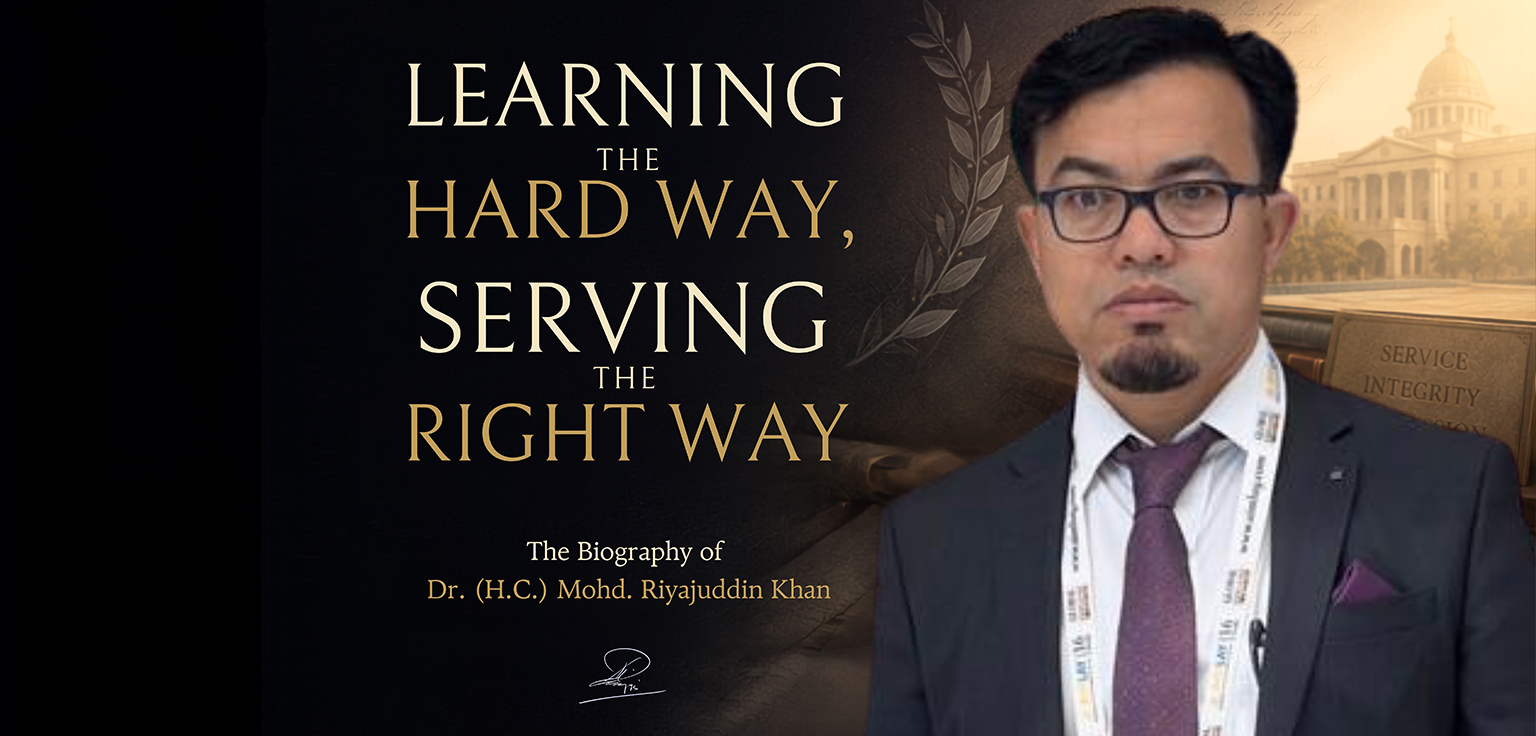
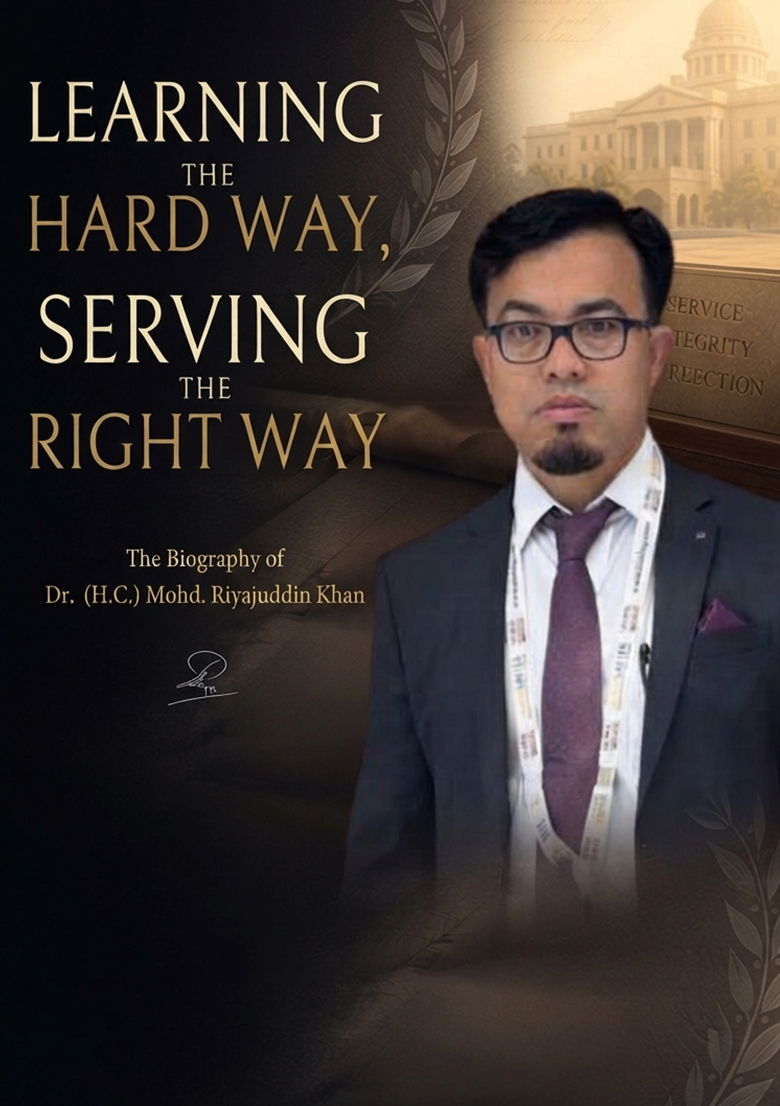
The life journey of Dr. Mohd. Riyajuddin Khan is a story of steady growth shaped by resilience, learning, and an unwavering sense of responsibility. It reflects how an individual, starting from limited means and unfamiliar systems, can gradually build a life of purpose through patience, discipline, and service. His story does not follow a straight or easy path; instead, it unfolds through struggle, self-discovery, and the courage to adapt when dreams take unexpected turns.
Yet, before his journey even took shape, an invisible burden was quietly placed upon his shoulders – one he did not create but would carry for a lifetime. His real date of birth is 4th April 1977, but due to a blind entry made by his teachers during the High School Leaving Certificate Examination form fill-up, his academic records permanently reflect 1st January 1974. This administrative error, small in origin but vast in consequence, created a gap between his true age and his academic identity, affecting his retirement timeline, career milestones, and professional trajectory for decades. It was a loss he could not reverse, only endure with patience and quiet acceptance. This discrepancy, though unspoken in daily life, remained a silent companion throughout his journey, a reminder that even systems meant to support can sometimes misplace the truth.
Raised in a traditional and value-driven environment, Dr. Mohd. Riyajuddin Khan grew up with a deep awareness of faith, family responsibility, and moral conduct. From an early age, life taught him that progress would not come easily or quickly. Education was not introduced through structured planning or privilege but through observation and curiosity. Sitting beside his sisters as they studied, he absorbed learning quietly, without fully understanding what the future held. That early exposure planted the first seeds of intellectual curiosity and self-belief.
His formal schooling began under challenging circumstances. Village schools with minimal infrastructure became the setting for his early education. Often unsure of academic systems, classroom structures, or examination processes, he learned through experience rather than guidance. Mistakes were frequent, but so was effort. Teachers noticed sincerity in his work, even when understanding lagged behind. These years shaped his character, teaching him humility, adaptability, and perseverance, qualities that would later define his professional life.
As he progressed academically, his inner ambition expanded beyond the limits of his surroundings. He developed a strong desire to study in better institutions, to communicate confidently in English and Hindi, and to explore opportunities outside his immediate environment. However, limited exposure to higher education pathways meant that progress depended largely on self-motivation. Instead of discouraging him, these constraints strengthened his resolve to work harder and think further.
A defining phase in his life emerged when he set his heart on becoming a doctor. The dream of pursuing MBBS became a symbol of aspiration, effort, and hope. He devoted himself fully to studies, following a strict routine that demanded discipline and sacrifice. When academic results rewarded his effort, confidence grew not only in himself but also among those who believed in his potential. Yet, when medical admission did not materialize due to systemic and financial barriers, the disappointment was profound. This moment marked one of the most emotionally challenging phases of his life.
The setback tested his resilience deeply. While suggestions were made to pursue engineering, acceptance did not come easily. For a time, uncertainty overshadowed clarity. However, it was during this period of doubt that his ability to adapt became evident. Instead of remaining confined to disappointment, he began exploring new academic paths. This openness to redirection would become a recurring strength in his journey.
“Every life begins quietly, shaped not by grand moments, but by values learned at home, faith carried within, and responsibilities understood long before they are spoken.”
Phase 1: Roots of Faith, Family, and Early Awareness
The story of Dr. Mohd. Riyajuddin Khan begins in an environment where life was guided by faith, simplicity, and an unspoken understanding of responsibility. His early years were not marked by material comfort or structured privilege but by strong moral grounding and close family bonds. These foundations would quietly shape his character long before he understood the meaning of ambition, education, or professional success.
He was born into a traditional Muslim household led by his father, MLV Abdul Quadir, a man associated with religious learning and the Ulama tradition. His father’s life reflected discipline, restraint, and respect for knowledge rooted in faith. While religious education was central to his father’s identity, it was not imposed rigidly but lived through daily conduct, through prayer, moral behavior, and a deep sense of duty toward family and community. From observing his father, Dr. Mohd. Riyajuddin Khan learned early that knowledge carried responsibility, and authority carried humility.
His mother, Mrs. Basirjan Bibi, played an equally influential role, though her contributions were quieter and deeply personal. As a homemaker, she carried the emotional and practical responsibilities of the household. Her strength lay in patience, care, and nurturing, a steady presence that held the family together. Through her, he absorbed lessons of endurance, compassion, and silent sacrifice. She did not teach through instruction but through example, showing how consistency and care could sustain a family through uncertainty.
The household atmosphere was deeply rooted in faith, but it was also shaped by the realities of limited resources. Life required adjustment, cooperation, and mutual dependence. From a young age, Dr. Mohd. Riyajuddin Khan understood that being part of a family meant sharing responsibility rather than expecting comfort. These early realizations quietly prepared him for the challenges that would come later in life.
One of the most defining aspects of his early childhood was the presence of his sisters. They were already engaged in formal education, and while he did not initially participate as a student, he remained close to their learning environment. Sitting beside them as they studied, he observed books, letters, and routines without fully understanding their structure. At that time, education was not a planned pathway for him; it was simply something happening around him.
This passive exposure, however, planted the earliest seeds of learning. He began to associate knowledge with effort, discipline, and curiosity. Without knowing alphabets or formal lessons, he absorbed patterns through observation. It was a period marked not by awareness of progress, but by silent absorption, a stage where learning entered his life naturally rather than forcefully.
A pivotal moment arrived when his mother noticed his interest and quietly tested his ability. When she asked whether he could read from a book, it was not meant as an examination but as a gentle curiosity. To everyone’s surprise, including his own, he was able to read. That moment was more than a discovery of skill; it was a shift in perception. It changed how the family viewed his potential and how he began to see himself.
This unexpected beginning did not come with celebration or immediate clarity. Instead, it led to a sudden transition. Without the traditional process of early schooling, Dr. Mohd. Riyajuddin Khan was admitted directly into formal education. He entered the school system without understanding what a class meant, what an examination involved, or how progress was measured. Yet, this abrupt entry into learning marked the true beginning of his academic journey.
The school environment reflected the realities of village life. Infrastructure was minimal, resources were limited, and learning conditions were basic. Students often sat on mats rather than benches, and classrooms lacked the structure seen in urban schools. For him, this environment was both confusing and formative. There was no sense of competition or comparison, only the effort to follow what others were doing and to keep moving forward.
“When learning begins without instruction, growth depends not on certainty, but on courage, observation, and the willingness to move forward even without understanding the map.”
Phase 2 : Learning Without a Manual, Early Schooling and Silent Growth
Phase Two of Dr. Mohd. Riyajuddin Khan’s life marks the period when learning moved from curiosity into routine, and childhood observation transformed into lived experience. This phase was not defined by clarity or structure but by adjustment, learning how to exist within a system he had entered suddenly and without preparation. It was during these years that education stopped being accidental and became a daily responsibility, even when its rules remained unclear.
After entering formal schooling abruptly, Dr. Mohd. Riyajuddin Khan found himself navigating an unfamiliar world. The concept of “class,” “syllabus,” or “promotion” had little meaning for him in the beginning. He attended school because he had been admitted, not because he fully understood what school demanded. The environment was modest and rural, shaped by limited resources rather than organized infrastructure. Classrooms were simple, teaching materials were few, and learning depended heavily on repetition and discipline rather than explanation.
One of the greatest challenges during this phase was understanding the system itself. He often did not know which class he was in or what level he was expected to perform at. Examinations came and went without a full grasp of their purpose. On one occasion, after completing an answer sheet, he assumed his task was finished and discarded the paper, unaware that submission was required. When the teacher later questioned him, the incident was resolved quietly. There was no scolding, only correction. For him, it became an early lesson: learning was not only about writing answers but also about understanding processes.
Despite confusion, effort remained constant. Dr. Mohd. Riyajuddin Khan attended classes regularly, completed assignments to the best of his ability, and observed others closely. He learned by watching how classmates wrote, how teachers explained, and how lessons progressed. This habit of observation became a key strength. Without formal guidance at home or structured academic support, he relied on attention and imitation to bridge gaps in understanding.
Teachers gradually began to notice something important. Although his background knowledge was uneven, his commitment was steady. He listened carefully, tried to follow instructions, and showed consistency in effort. Praise from teachers often surprised him. He did not fully understand why he was being appreciated, but the recognition planted confidence quietly. It reassured him that effort mattered, even when understanding lagged behind.
The school itself reflected the realities of village life. Children often sat on mats spread across the floor. Facilities were basic, and learning depended heavily on memory and repetition. Yet this simplicity also created resilience. There were no distractions of comparison or competition; the focus remained on showing up and doing what was asked. For Dr. Mohd. Riyajuddin Khan, this environment nurtured endurance rather than ease.
As he progressed through the early classes, comprehension improved gradually. Subjects began to make more sense, though clarity came slowly. Language, especially, remained a challenge. The medium of instruction differed from the spoken language at home, requiring constant mental adjustment. Still, he did not withdraw. Each year built slightly more familiarity, and familiarity reduced fear.
Another defining element of this phase was the continued influence of his sisters. Even as formal schooling became part of his routine, he remained close to their learning spaces. Watching them study reinforced habits of sitting with books, focusing for long periods, and respecting study time. This informal reinforcement played an important role in shaping his discipline, especially when structured academic guidance was absent.
At home, expectations began to shift subtly. There was a growing awareness among family members that he was progressing, even if the path was unconventional. While no one articulated detailed academic plans, there was an unspoken hope that education might eventually help him support the family. This awareness added quiet pressure, but it also strengthened his sense of purpose.
“A dream does not begin with certainty; it begins when a young mind dares to look beyond its surroundings and believes there is more waiting on the other side.”
Phase 3 : Awakening of Ambition and the Search for Direction
Phase Three marks the period in Dr. Mohd. Riyajuddin Khan’s life when learning moved beyond routine and began to take the shape of ambition. These were the years when he became consciously aware that education could open doors far wider than his immediate environment and that his future did not have to be limited by geography or circumstance. It was a phase of awakening, intellectually, emotionally, and aspirationally.
As he progressed into higher classes, the school environment gradually changed. Subjects became more structured, expectations clearer, and responsibility heavier. Unlike earlier years marked by confusion and adjustment, this phase brought awareness. Dr. Mohd. Riyajuddin Khan began to understand the meaning of promotion, examination results, and academic performance. School was no longer just a place to attend; it became a place where effort could shape outcomes.
One of the most significant shifts during this time was his growing awareness of language. He realized that English and Hindi were not merely academic subjects but tools of communication that connected people, institutions, and opportunities. In local schools, instruction was often limited in scope, yet his desire to speak confidently and understand broader discourse grew steadily. This aspiration did not come from exposure to privilege but from observation, seeing how language carried influence and respect.
Despite limited institutional support, Dr. Mohd. Riyajuddin Khan remained internally motivated. He noticed differences between village schools and the missionary or Catholic schools spoken about by others. Though he did not have access to such institutions at the time, the idea itself expanded his thinking. Education was no longer only about passing exams; it became about access, confidence, and dignity.
Family circumstances continued to shape his mindset. Being the only son after several daughters carried silent expectations. There was no pressure expressed in words, but responsibility was understood. He knew that his growth mattered not just to him but to the stability and future of his family. This awareness influenced how seriously he approached his studies. Learning became connected to duty.
During this phase, teachers continued to play an important role. While resources remained limited, encouragement from educators reinforced his belief that effort was worthwhile. He was often described as sincere and hardworking, traits that mattered deeply in an environment where brilliance alone did not guarantee progress. Their trust strengthened his resolve, even when academic challenges increased.
Transitioning into secondary school introduced new complexities. Subjects demanded deeper understanding, and competition among peers became more visible. Mathematics and science, in particular, required sustained focus. Rather than retreating from difficulty, Dr. Mohd. Riyajuddin Khan increased his effort. Long hours with textbooks, repetition of lessons, and quiet perseverance became routine.
It was during these years that his thinking about the future became more defined. When asked about career aspirations, he expressed a clear desire to become a doctor. The idea of pursuing MBBS symbolized not just professional ambition, but a pathway to respect, service, and transformation. This aspiration was bold, especially given his background and limited exposure, but it reflected his growing confidence.
Note of Thanks
This biography stands as a reflection of a journey shaped by countless visible and invisible contributions. Dr. Mohd. Riyajuddin Khan acknowledges, with deep humility, the people, values, and experiences that have supported him at every stage of life. No path is walked alone, and his journey is no exception.
Foremost, he expresses heartfelt gratitude to his family, whose sacrifices, patience, and quiet strength formed the foundation of his life. Their trust and endurance gave him the courage to pursue education far from home, to accept redirection when dreams changed, and to remain grounded through every transition. The stability they provided became his constant source of strength.
He extends sincere appreciation to his teachers and mentors, from village classrooms to university halls, who believed in effort even when clarity was lacking. Their guidance, encouragement, and discipline shaped not only his academic progress but also his character and approach to responsibility.
Dr. Mohd. Riyajuddin Khan also offers his thanks to colleagues and seniors in public service, whose trust, cooperation, and shared commitment to duty made professional growth possible. Working alongside dedicated individuals taught him the value of teamwork, ethical conduct, and accountability in serving the public.
Gratitude is equally owed to the communities he has served. Their resilience, trust, and support during times of challenge, whether in daily life or during moments of crisis, reinforced his belief that service is most meaningful when it is rooted in empathy and presence.
Above all, Dr. Mohd. Riyajuddin Khan acknowledges the guiding role of faith, which provided strength during uncertainty and humility during achievement. It reminded him that effort must be sincere, intentions must be honest, and success must be shared.
This note of thanks is not a conclusion but a continuation of appreciation, one that will remain reflected in his actions, service, and commitment to give back wherever possible.
thanks,
– Dr. (H.C.) Mohd. Riyajuddin Khan