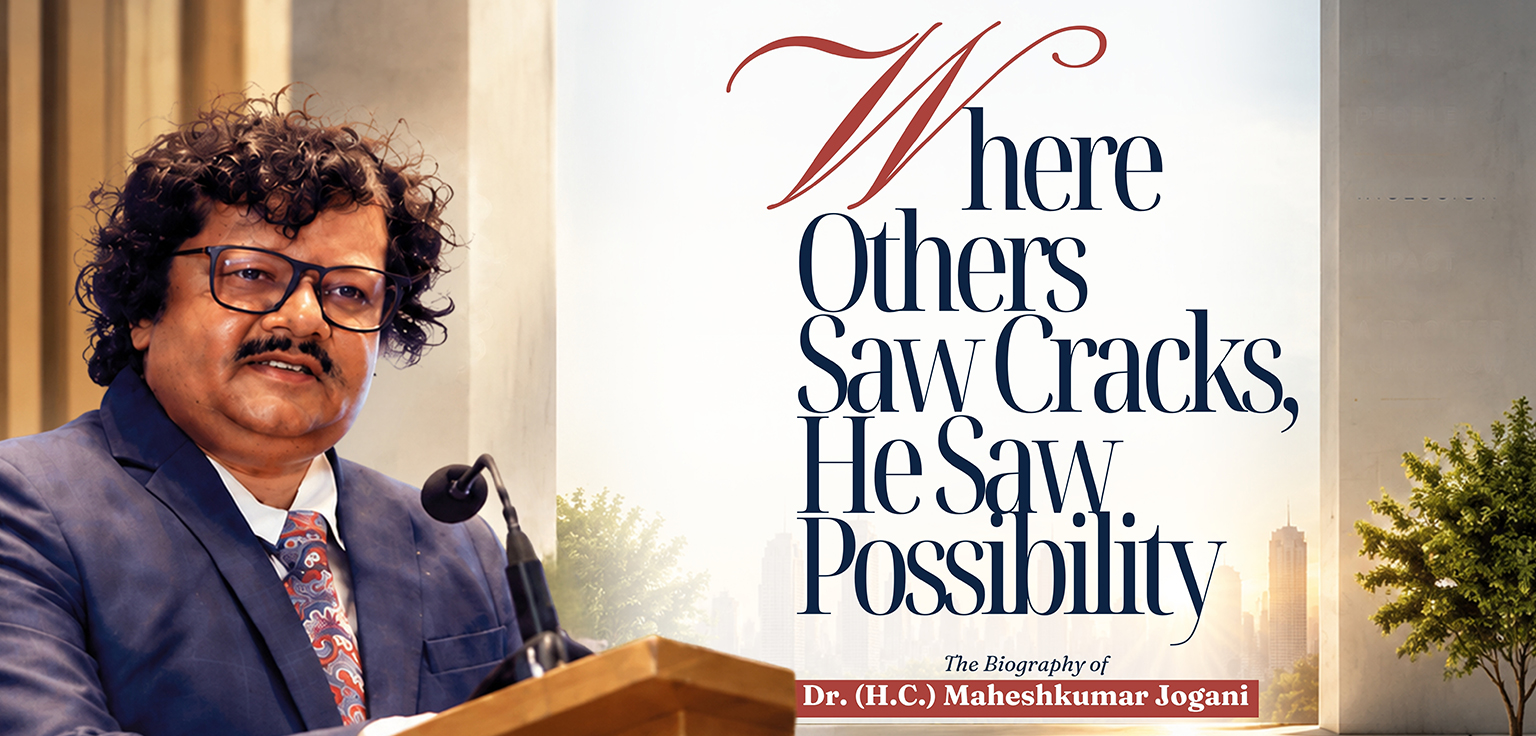
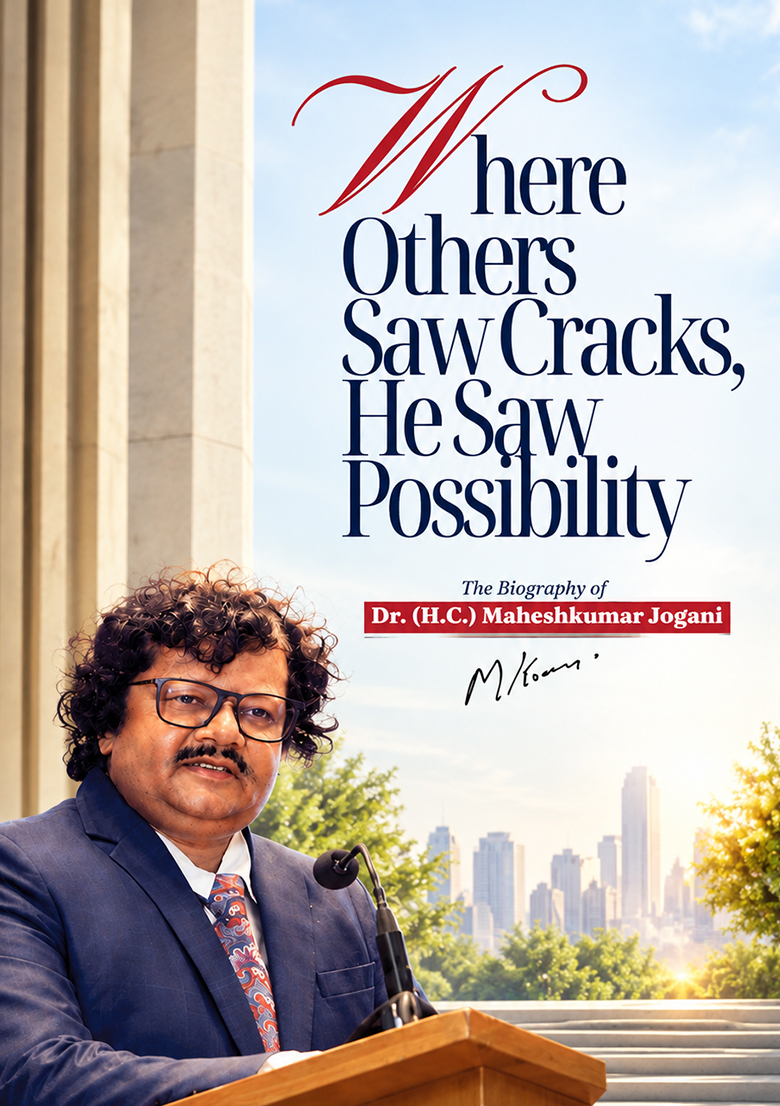
“Every problem has an answer, revealed through curiosity, patience, and persistence.”
Introduction
Dr. Maheshkumar Jogani’s life is a story of curiosity turning into discipline, discipline turning into expertise, and expertise gradually finding its place in innovation. His journey began in Gujarat, where he grew up in a modest family environment and developed an early habit of looking beyond the obvious. Mathematics and science came naturally to him, but what mattered more was the way he approached them. He wanted to know how things worked, why they worked, and what could be done differently when a problem had no easy answer.
That questioning nature stayed with him through school and later through engineering education in Surat. Academic success gave him confidence, while science fairs and early experiments gave direction to his interests. Even in those formative years, recognition did not matter as much as the satisfaction of creating, testing, observing, and learning. The first signs of the researcher he would later become were already visible in that willingness to spend time understanding things in detail.
After graduating in engineering, he made a choice that would shape the rest of his life. Instead of following the more conventional path available to many engineers of his generation, he moved closer to research. Working under Professor M.D. Desai exposed him to material science, environmental science, laboratories, technical problem solving, and a wider world of academic and professional thought. Those years gave him more than experience. They gave him a way of seeing engineering as a discipline that could respond directly to real problems.
Over time, Dr. Maheshkumar developed a specialized professional identity around material science, reinforcement, crack control, and construction technology. What began as research gradually expanded into consulting, entrepreneurship, manufacturing, invention, training, and intellectual property. His work addressed practical concerns within Indian infrastructure, where he saw recurring problems not simply as limitations but as opportunities to create better solutions.
This outlook became central to his professional growth. He developed specialized work in reinforcement, pursued patents, built manufacturing activity, and continued working in a field that remained highly specialized. Among the areas that became important to him were concrete fiber, reinforcement fabrics, basalt reinforcement, and cementitious compositions. His work increasingly reflected one guiding principle: innovation should not remain expensive, distant, or inaccessible. It should remain useful and relevant to real needs.
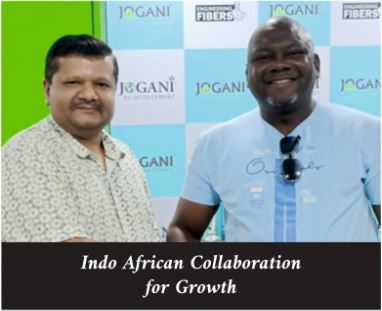
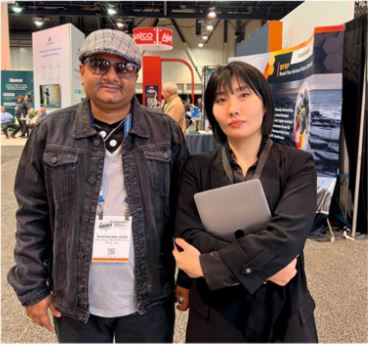
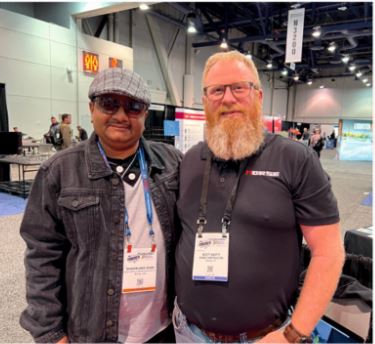
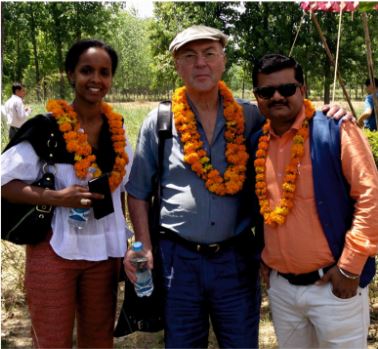
His professional horizons expanded not just through study, but through the people he met across continents. Conversations with specialists from varied fields deepened his understanding of how engineering, sustainability, and global responsibility are intertwined. These interactions also broadened the way he viewed his own work and its wider relevance.
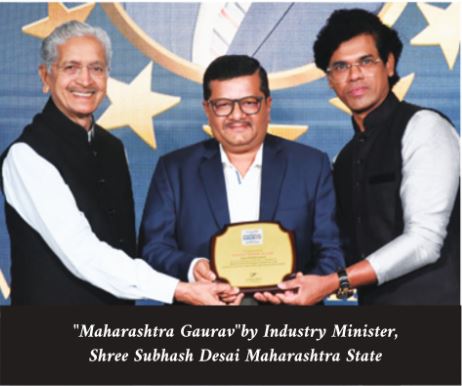
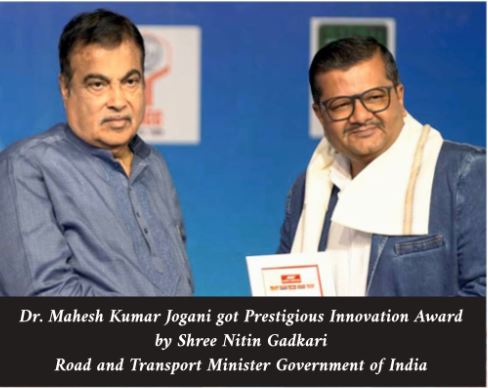
Recognition gradually followed his sustained work in research, innovation, and reinforcement engineering. Yet the purpose of Dr. Maheshkumar’s story is not found only in awards or professional titles. It lies in the persistence behind the work, the patience required by research, the influence of mentors, the support of family, the lessons drawn from failure, and the belief that meaningful progress begins when knowledge is used with purpose.
His journey continues with that same sense of inquiry. The questions have become larger, the field has widened, and the responsibilities have grown, but the instinct remains familiar: to understand deeply, to keep learning, and to search for solutions that can serve both people and the future.
"A Curious Mind in a Modest Beginning"
Phase 1: A Curious Mind in a Modest Beginning
Long before engineering, patents, laboratories, or technical conferences became part of his life, Dr. Maheshkumar Jogani was a boy growing up in Gujarat with an unusual interest in understanding ordinary things. He did not simply accept that something worked. He wanted to know what made it work, what happened inside it, and why it behaved in a particular way. Questions came naturally to him, especially when they involved mathematics or science. Looking back at those years, he could recognize that this habit of examining things closely had been present from the beginning.
His family lived with limited resources, and education carried real importance within the household. His father worked hard to ensure that his children could continue studying. Both Dr. Maheshkumar and his brother benefited from that commitment. His brother later became a lawyer practicing in Gujarat, while Dr. Maheshkumar found himself increasingly drawn toward science and technical subjects. Their father did not have the kind of formal scientific education his son would later receive, yet he possessed his own experimental instinct. Dr. Maheshkumar remembered him carrying out informal work in agriculture and developing special varieties. Years later, he would sometimes wonder whether his own tendency to experiment had, in some way, come from watching that natural curiosity at home.
Schooling in those years was very different from the environment many children experience today. Private schools were not the common choice they later became, so Dr. Maheshkumar studied in a government school in Surat. He did not remember himself as someone drawn strongly toward sports or public activities. His attention usually went elsewhere. He preferred spending time on projects, reading scientific ideas and understanding how things operated. Mathematics and science quickly became his favorite subjects.
A teacher named Mansukh Naria became particularly important during those early school years. He noticed Dr. Maheshkumar’s interest and began taking him to science fairs and competitions. That encouragement gave the young student somewhere to place his curiosity. Instead of keeping questions inside the classroom, he could build projects, test ideas, present them, and see how others responded.
Science fairs soon became memorable occasions. Dr. Maheshkumar began winning prizes for his school, and each successful participation gave him another reason to continue. He later remembered that these achievements made him something of a hero within the school. For a boy who did not consider himself especially sporty or publicly inclined, scientific competitions offered a different kind of recognition. He could be noticed for the very thing he enjoyed doing most.
Among those memories, one prize remained especially vivid. At one science fair, he received ₹111. At the time, that amount felt substantial to him. The kite festival was close, and the young Dr. Maheshkumar knew exactly what he wanted to do with his prize money. He spent it on kites.
“The richest opportunity is not always the one that pays more, but the one that leaves more to learn.”
Phase 2 : Engineering Became a Way of Thinking
Entering Government Engineering College, Surat, gave Dr. Maheshkumar Jogani a more structured space for the kind of thinking that had always interested him. Engineering suited the way his mind worked. In his view, technical education was not limited to completing prescribed coursework. He was interested in the mechanism behind what he studied.
That habit became increasingly important during his college years. Whenever an opportunity appeared during vacations, he preferred to spend the time assisting professors or working with industry on projects. He took on supporting roles and observed how technical work was carried out beyond regular classes. These experiences brought him closer to practical investigation and gradually made research feel less like an academic activity and more like a possible professional direction.
He did not yet have the position or resources to lead major work of his own. Much of what he was doing involved assisting others, watching carefully, completing assigned tasks, and understanding the process around a project. That position suited him. He was willing to learn from people who had greater experience and to spend time on details that others might have considered routine. Each project allowed him to see another side of engineering beyond examinations and textbooks.
By the time he completed his engineering, one thing had become increasingly clear. His interest was not confined to securing an engineering qualification and moving immediately into a conventional role. He had developed a genuine attraction toward research. He wanted to remain near work where questions were still open and where a technical problem had to be examined before an answer could be found.
That preference came at a time when many engineering graduates around him were looking toward established career options. Government employment, in particular, offered a recognized and financially attractive path. Several of his contemporaries moved into government departments and would later hold senior positions. Dr. Maheshkumar was aware of that route. He was also aware that choosing research might not provide the same immediate financial comfort.
Once he graduated, however, there was still the practical need to find employment. He began looking for a job in Surat. During this period, an opportunity emerged that would become one of the most important professional developments of his life.
At the National Institute of Technology, Surat, a highly experienced academic named Professor M.D. Desai was working in fields that included material science and environmental science. He was also associated with consulting work and maintained professional connections extending beyond India.
“Great mentorship leaves more than knowledge behind; it teaches a mind how to search for answers independently.”
Phase 3 : Learning Beside a Master of Research
Working with Professor M.D. Desai changed the scale at which Dr. Maheshkumar Jogani began to understand engineering. Until then, he had been a student who enjoyed technical detail and practical investigation. Under Professor Desai, he saw what happened when scientific knowledge was applied to problems that carried real consequences for institutions, industries, and public systems.
Professor Desai was deeply involved in material science and environmental science and was connected with universities and professional circles beyond India. His work required frequent travel, including visits to the United States and Europe. As his assistant, Dr. Maheshkumar was no longer learning only from books or isolated projects. He was observing how an experienced researcher approached difficult questions, spoke with specialists, examined evidence, and worked toward solutions that had to function outside an academic setting.
The years that followed became an extended period of learning. Dr. Maheshkumar spent roughly seven to eight years working closely with him. During that time, he travelled with Professor Desai, visited research laboratories, encountered universities in different countries, and came into contact with people whose work represented different areas of science and engineering. The exposure was broad, but what stayed with him most was the discipline behind serious research.
He also saw Professor Desai working as a consultant to the Government of Gujarat. These assignments gave Dr. Maheshkumar the opportunity to sit in discussions where senior officials brought forward practical problems that required technical understanding. He watched as a complicated issue was studied carefully and then moved toward a workable answer. That experience made a lasting impression on him. Research was no longer something abstract. He could see, directly, that good technical work could move from a laboratory or discussion room into decisions that affected society.
This period also brought him closer to the deeper patience demanded by research. Results did not always come quickly. Many ideas failed. Some had to be tested repeatedly. Frustration was part of the work, and Dr. Maheshkumar learned early that failure could not be treated as an exception. In his own words, research often meant accepting that most attempts would not succeed at first.
There were moments when repeated failure affected him personally. In his younger years, he could become frustrated when an experiment refused to produce the expected result. Professor Desai himself was known for being demanding and sharp in his reactions. Dr. Maheshkumar remembered that intensity clearly. Years later, he could even recognize a similar tendency in himself, admitting that he too sometimes became irritated when things seemed unnecessarily basic or poorly thought through. He did not present this as a strength. He regarded it as a part of his personality that required awareness.
At the same time, Professor Desai gave him something far more valuable than technical training. Dr. Maheshkumar came to see him as a father figure in professional life. The relationship went beyond employer and assistant. He remembered being treated like a son. That closeness made the lessons more personal, because they were carried not only through instruction but also through trust.
Professor Desai introduced him to a way of working that combined scientific seriousness with practical usefulness. He also connected him with companies and professional networks that later became important in Dr. Maheshkumar’s own career. Those relationships were not handed to him as ready-made opportunities. They grew from years of association attached to Professor Desai.
Note of Thanks
This biography carries the gratitude of Dr. Maheshkumar Jogani toward the people who stood beside him at different stages of his life and gave him the confidence to keep moving forward.
His deepest thanks belong to his family. From his father, he learned that responsibility is not a burden. It is a quiet promise kept every single day. His wife has remained a steady part of his life while pursuing her own work as a professional commercial artist, and his children continue to give him both pride and motivation as they build their own futures.
Sincere gratitude also holds for the teachers and mentors who influenced the direction of his thinking. Mansukh Naria encouraged his scientific interest during his school years and opened the door to science fairs, competitions, and early confidence in experimentation. Professor M.D. Desai later became one of the most important people in his professional life, offering guidance, trust, discipline, exposure, and opportunities that continued to matter long after those years of close association. Professor M.S. Shetty broadened his professional horizons. His introduction to the World of Concrete brought new perspectives and deepened his engagement with the field.
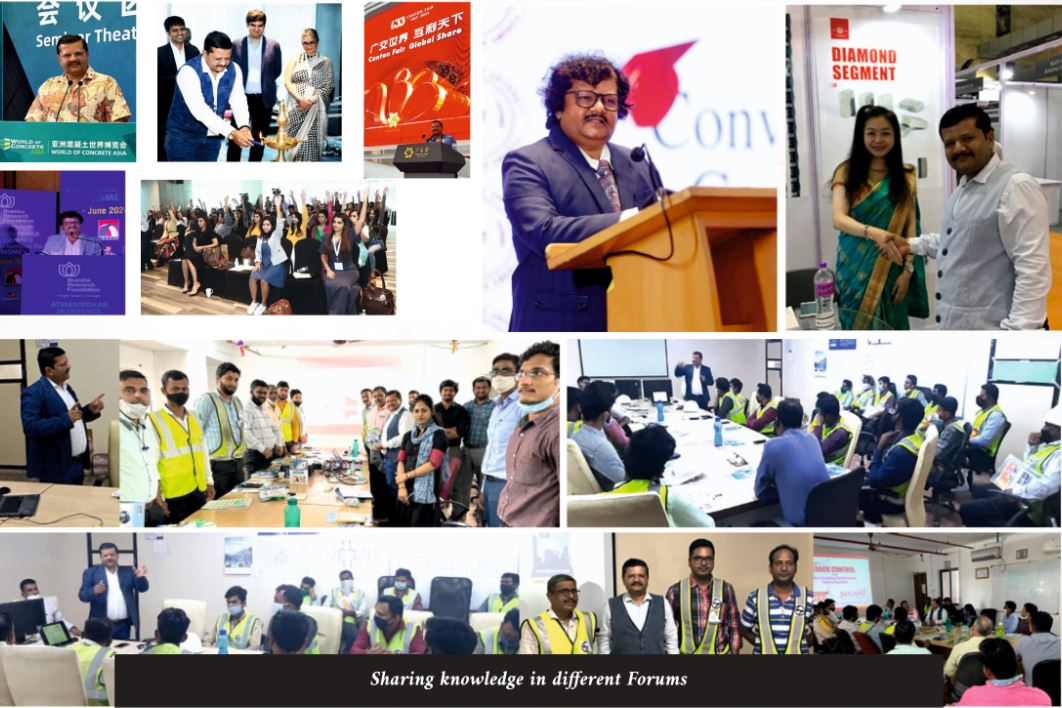
He remains equally thankful to the young engineers, interns, colleagues, friends, and professionals with whom he has exchanged knowledge over the years. He has always believed that learning becomes more valuable when it is shared, and many of those interactions have taught him as much as he has taught others.
Dr. Maheshkumar’s thanks also extend to every person who trusted his ideas, supported his work, encouraged his research, and gave him the space to continue creating. For him, progress has never belonged to one person alone. It has always been connected with the people who believed, guided, questioned, supported, and learned alongside him.
thanks,
– Dr. (H.C.) Maheshkumar Jogani