
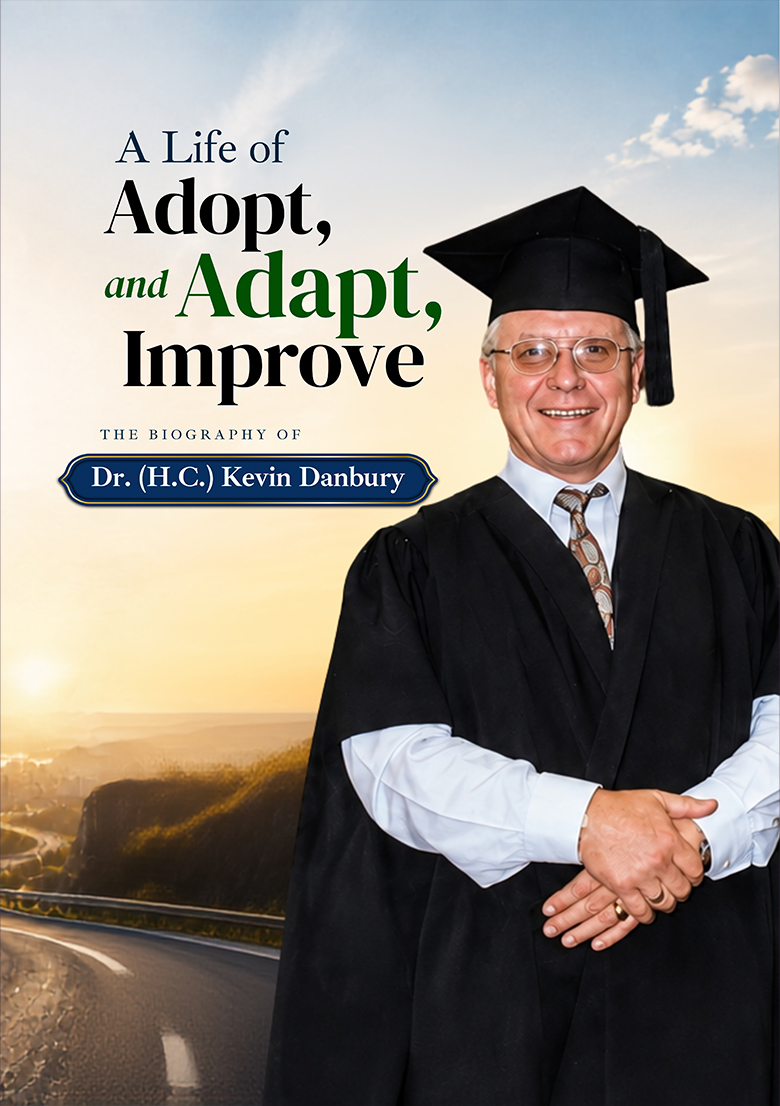
"His true qualification was not written on a certificate. It was written in every process he refined, every system he built, and every person he quietly elevated."
Introduction
The journey of Dr. Kevin Danbury is a study in persistence, practical intelligence, and the determination to keep moving beyond the limits others might accept. His life did not begin with the advantages of a carefully planned academic path or a clearly defined professional destination. It began with work, learning, adaptation, and the steady conviction that ability could be developed if he was prepared to put himself to the test.
Born in Woodstock, Oxfordshire, in 1951, he grew up in England and left school at fifteen without a formal school qualification. What followed was not an ending to education, but the beginning of a different kind of learning. A year of pre-apprenticeship training at Witney Technical College led to an apprenticeship as a toolmaker at Pressed Steel Fisher. Those early technical years gave him something that would remain central throughout his life: confidence in learning through doing. He became familiar with engineering not from a distance, but through tools, machinery, measurement, precision, and the discipline of understanding how things were made and how they work.
Even in those early years, however, his world was beginning to expand beyond the workshop. Through the American Institute for Foreign Studies, he became involved in helping visiting American students find their way around Oxford. Later, he travelled to the United States and spent three months working at a summer camp, where he encountered new people, new surroundings, and activities far removed from everyday life in England. These experiences widened his perspective at a time when his professional life was still taking shape.
By 1971, he was ready for a much larger change. Hearing that qualified toolmakers could emigrate to South Africa through a subsidised programme, he applied and made the move. He arrived as a press toolmaker, but remaining in one role was never likely to satisfy him. He moved into measurement, maintenance, hydraulics, pneumatics, precision inspection, and increasingly responsible positions. One interview captured his attitude perfectly. Asked what he knew about several technical areas, he admitted that he knew nothing. When asked why he should still be considered, his answer reflected the confidence that would define much of his career: he believed he could learn faster than he could be taught. He was given the opportunity, and he proved the point.
That willingness to step into unfamiliar territory gradually moved him from technical work into quality leadership. He taught himself Afrikaans, challenged established workplace assumptions, and accepted responsibilities that placed him in difficult situations. At Nissan Motor Corporation, he moved into the position of Chief Inspector, Quality of the body shop and later took wider responsibility for the metal finishing department which doubled his responsibilities. His approach was demanding because his belief in quality was equally demanding. He was not interested in accepting poor performance simply because it had become normal. If another manufacturer could produce a better vehicle using comparable materials, processes, and people, he saw no convincing reason why his own organization should settle for less.
"The moment learning became part of his nature, every unfamiliar situation became another place from which to grow."
Phase 1: From Woodstock to the Workshop
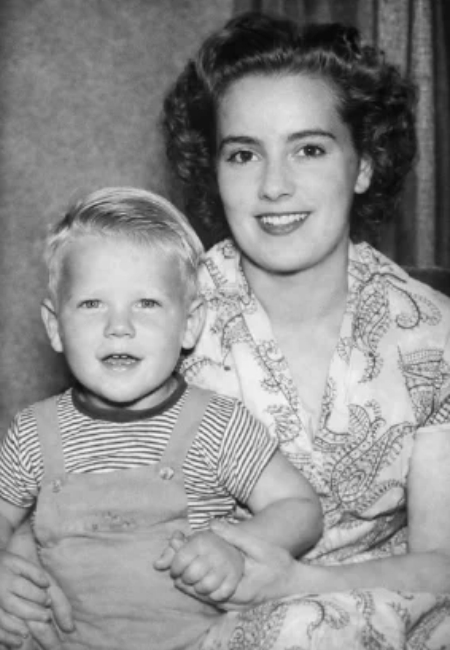
Dr. Kevin Danbury was born on 22 May 1951 in Woodstock, Oxfordshire, and spent his early years in England at a time when education and employment followed very different patterns from those familiar today. His school experience was practical rather than academic in direction. He attended what was then known as a secondary modern school, the kind of institution that would later become part of the comprehensive system. At fifteen, he left school without any particular formal qualification. In those years, leaving school without a certificate was not unusual, and for him it did not become a limitation that defined what he could eventually achieve. Instead, the next stage of his life began almost immediately through technical training.
He spent a year undertaking pre-apprenticeship training at Witney Technical College. The move from school into a technical environment suited the way he learned. Rather than depending entirely on classroom theory, he was entering a world where knowledge had to be applied through tools, measurements, materials, and physical results. That period prepared him for an apprenticeship at Pressed Steel Fisher, where he trained as a toolmaker. It was an occupation that demanded precision, patience, and a practical understanding of how individual components contributed to the performance of a much larger system.
His early qualifications reflected that technical foundation. In 1968, he received a First Year Certificate in Engineering Crafts, achieving First Class results in both written work and practical mechanical engineering. He later attended Oxford College of Further Education, where his progress in mechanical engineering continued. In 1970, he passed the Part Two Certificate in Mechanical Engineering Craft Practice with credit, and in 1971 he completed the Mechanical Engineering Craft Studies Part Three examination, which included tooling processes. These certificates belonged to the beginning of a professional journey that would eventually move far beyond the workshop, but their importance lay in giving him an exacting understanding of practical engineering from the ground up.
"If he did not know how to do something, that was never the end of the conversation. It was simply the point where learning began."
Phase 2 : Forty Pounds and a New Continent
In 1971, Dr. Kevin made a decision that changed the direction of his working life. He had heard that qualified toolmakers could emigrate to South Africa through a programme subsidised by the South African government. The cost to him was approximately forty pounds. For a young tradesman looking beyond the limited prospects he saw around him in England, the opportunity was difficult to ignore. He applied, was accepted, and travelled to South Africa as a qualified toolmaker. What he carried with him was a practical trade. What he would discover there was how far that trade could take him when combined with curiosity, confidence, and a refusal to stop learning.
He arrived in Pretoria to work for Datsun-Nissan Motor Company as a press toolmaker. His first encounter with the workplace also gave him an amusing early lesson in the difference between an advertisement and reality. The recruitment material had described a fully air conditioned tool room. On arrival, he discovered that the expression meant something rather different from what he had imagined. One door stood open on one side, another stood open on the other, and the air simply blew through the building. He could laugh about it later, but it was an early reminder that new surroundings had to be accepted as they actually were, not as they had been presented.
The practical realities did not discourage him. He settled into the work and began doing what would become characteristic of him throughout his career. He watched, learned, and looked for the next skill he could acquire. Toolmaking had given him a valuable entry point into manufacturing, but he had little interest in allowing one qualification to become the boundary of his professional identity.
His next progression took him into work as a Layout Technician, where his responsibilities involved the physical measurement of automotive metal pressings using three dimensional measuring equipment. The work required another level of precision. Instead of concentrating primarily on making tooling, he was now examining whether manufactured components met the required physical dimensions. It expanded his understanding of the relationship between tooling, production, measurement, and the final quality of a component.
"If the standard could be better, then accepting less was never a comfortable option for him."
Phase 3 : The Promotion He Was Not Supposed to Get
The opportunity that moved Dr. Kevin from technical expertise into visible leadership did not arrive neatly. It came in the form of a vacancy for Chief Inspector of the Body Shop, a role positioned three grades above his existing level. Under the company’s normal promotion policy, no employee was expected to move more than two levels at a time. On paper, that should have been enough to make the position unrealistic. For him, however, the question was not whether the move was conventional. It was whether he could do the job.
By that point, he had already accumulated a practical understanding of automotive manufacturing that went well beyond one function. He knew press tooling, understood body components, had worked with measurement systems, and had developed confidence in inspection. The body shop was not an abstract environment to him. It was part of the same manufacturing world he had been learning from different angles for years. When the vacancy appeared, he saw the position as a natural next challenge rather than an impossible promotion.
He applied and spoke first with the relevant manager. His technical background made the conversation easier than the grade difference might have suggested. As a press toolmaker, he understood how the body parts were produced. He was then asked to introduce himself to the General Manager, which led to an interview lasting approximately thirty minutes.
The conversation seemed to be going well until the General Manager expressed regret. He told Dr. Kevin that he appeared to be the ideal candidate but that there was one serious problem. A large number of employees in the body shop were Afrikaans speaking, and the concern was that they might not respond well to someone unable to communicate with them in their language.
For many applicants, that objection would have ended the discussion. For him, it did not. He calmly explained that there was no problem at all and offered to continue the interview in Afrikaans. He had taught himself the language and was able to communicate fluently enough to remove the final objection to his candidacy. The moment changed the conversation immediately. The General Manager had already indicated that he regarded him as the best person for the position. The language issue had been presented as the barrier. Once that barrier disappeared, the decision became much harder to avoid.
Note of Thanks
For Dr. Kevin, gratitude is closely connected with learning. Across his journey, he has watched people carefully, observed how they approached responsibility, and carried forward the methods he believed worked well. Just as importantly, he learned from situations that showed him what should be done differently. Both kinds of experience helped shape the way he thinks, works, and leads.
He remains appreciative of the people who were willing to give him an opportunity before every answer was already in place. Some trusted his ability to learn unfamiliar work. Others gave him responsibility for areas that needed structure, improvement, or stronger direction. Those opportunities allowed him to test himself, build knowledge through experience, and develop the confidence to take responsibility for difficult outcomes.
His thanks also extend to the many people he has worked beside, trained, advised, and developed. Several have remained in contact long after their formal working relationship ended, continuing to seek his view when faced with professional decisions or problems. For Dr. Kevin, those continuing connections carry particular meaning because they show that development does not end when a job title changes or a project is completed.
He is equally grateful for the organisations, colleagues, auditors, suppliers, trainees, and professionals who challenged his thinking over the years. Every demanding situation gave him something to examine, improve, or understand more deeply.
Above all, Dr. Kevin values the trust that allowed him to contribute. Whether that trust came through responsibility, a difficult assignment, a request for advice, or the simple willingness to listen, he recognises its importance.
His appreciation is therefore directed towards everyone who became part of that continuing exchange of knowledge, challenge, and improvement.
thanks,
– Dr. (H.C.) Kevin Danbury