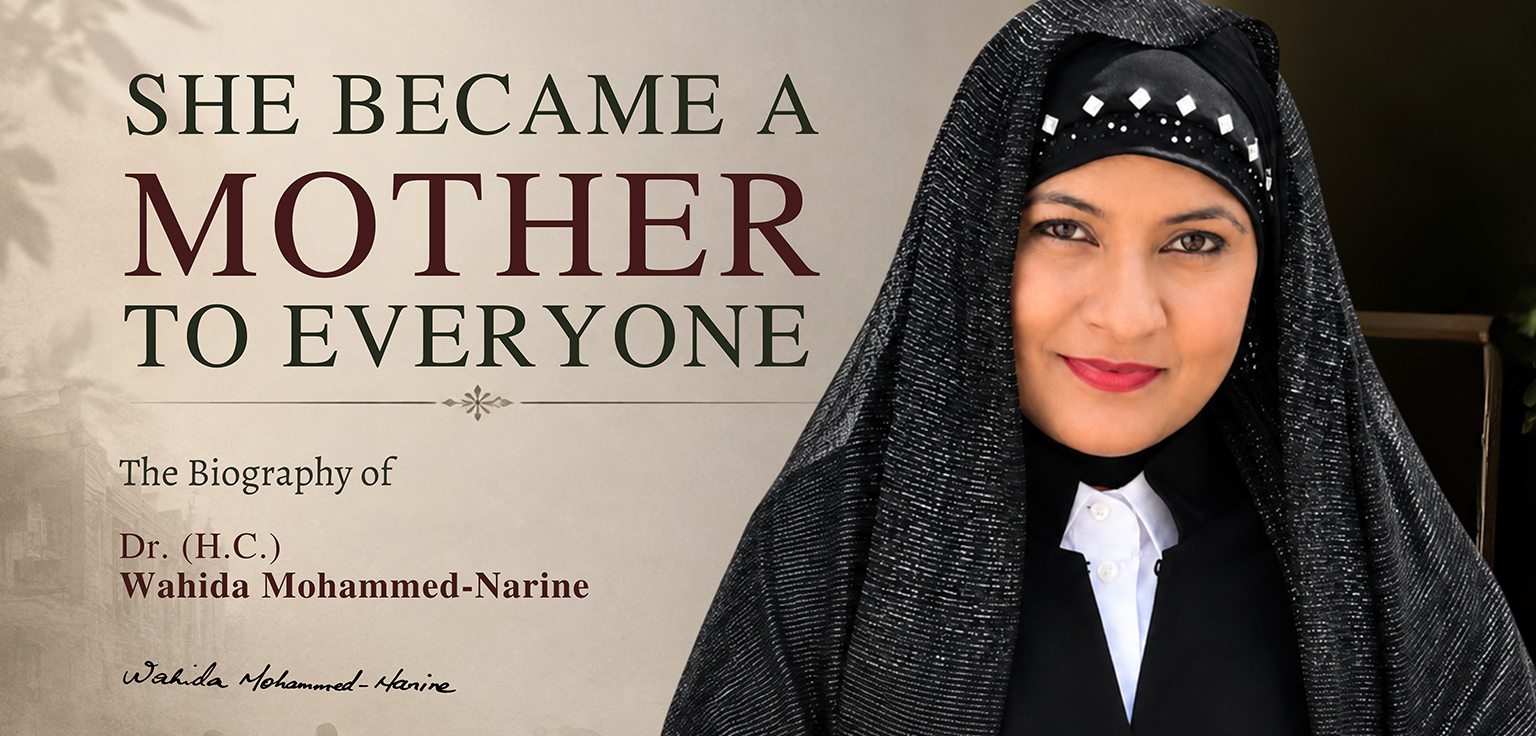
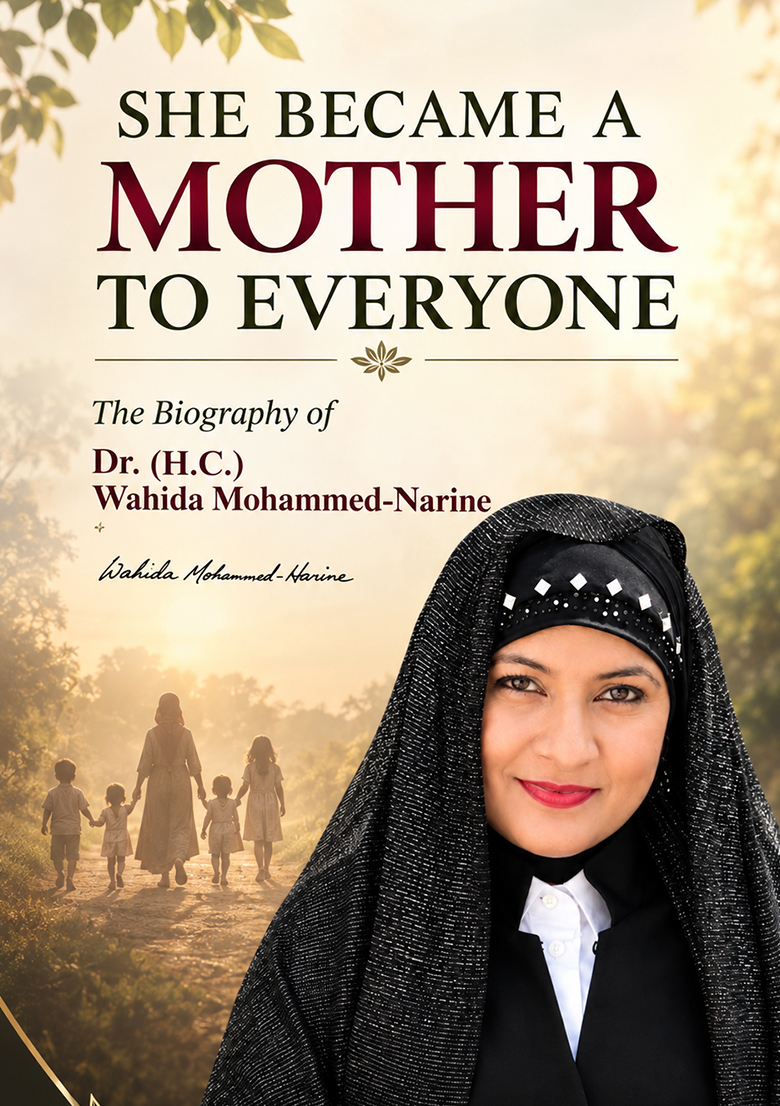
"Enjoy this life, but think also of the good you will leave behind. To be called a mother to everyone is one of the proudest things I could ever hear, because it means people felt cared for."
Introduction
There are lives that can be understood through positions, qualifications and awards. The life of Dr. Wahida asks for a different measure. Her story is better understood through responsibility. Responsibility to family, to children, to education, to faith, to institutions, and to people who needed something she was capable of giving. What makes her journey distinctive is not simply the number of roles she has carried but the way those roles have continuously crossed into one another. The accountant remained present in the educator. The teacher remained present in the principal. The student remained alive in the leader. And beneath all of them remained a woman who found it difficult to see knowledge as something meant to be kept only for herself.
Her professional life eventually became deeply rooted in education, with almost thirty-seven years in the field. Over time, the classroom expanded into responsibilities as a department head, vice principal and principal, yet those changes in title never entirely removed her from the concerns that first shaped her teaching. Whether looking at the progress of a single child or examining the performance of an entire institution, she developed a habit of noticing gaps and asking what could be done about them. That habit would become one of the strongest threads running through her professional life.
Her education reflects the same refusal to remain inside one narrow field. Her learning moved through accounting, education, special education, Islamic studies and advanced academic work. She completed studies connected with accounting and professional examinations, teacher training, special education and higher education, while continuing to work. Academic success accompanied that persistence. Academic excellence accompanied her bachelor’s studies, while her master’s programme associated with the University of New Brunswick in Canada reflected another period of strong academic performance. Her pursuit of doctoral study added another layer to a life in which formal learning and practical experience were rarely separated.
What distinguished her approach was the manner in which learning returned to practice. Research was not valuable to her simply because it could be discussed. It mattered when it solved something. Educational theory became useful when it helped a struggling student. Leadership became useful when it improved a system. Technology became useful when it allowed teachers, parents and administrators to see more clearly what was happening with a child.
Her contribution also extended beyond conventional school leadership. Religious education became another area in which she chose to build rather than merely participate. Following a period of reflection in 2008, she began considering how she might reach children through Islamic education. Her involvement eventually extended to educational writing, including work connected with Arabic textbooks and further book projects.
Recognition eventually followed. Yet public recognition sits beside another kind of legacy that is harder to place on a certificate. Former students progressed into scholarships, academic achievement and national sporting recognition. Parents, students and colleagues responded to her not only as an administrator, but as someone whose presence had become personal to the community around the school.
Even as retirement approached, Dr. Wahida was thinking less about leaving than about what would remain. That understanding captures much of her life. Dr. Wahida has spent decades learning how to carry responsibility, but her deeper achievement has been learning how to transfer it. To students. To teachers. To family. To teams. To the next generation. Her biography is therefore not only about how far she travelled. It is about how many pathways she tried to leave open behind her.
“I was never the eldest, but somehow I was the one they trusted to handle things. Responsibility taught me courage before I knew to call it courage.”
Phase 1: There Was Someone Who Believed She Could Do It
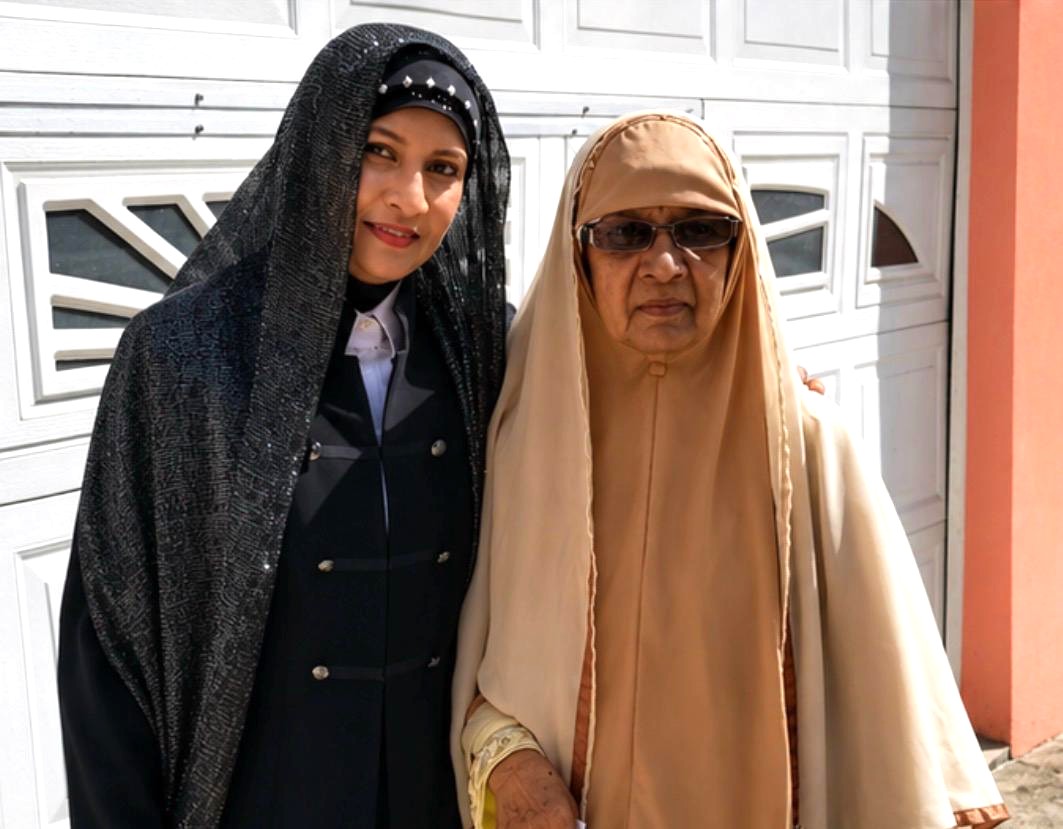
Long before leadership entered her life as a position, it existed quietly inside the home where Dr. Wahida grew up. Her earliest years unfolded in Rio Claro, surrounded by an extended family in a household that included her parents, her siblings and her grandfather. There were seven children in the family, and life was not always comfortable. What the household may have lacked in ease, however, it made up for in effort. Work was visible. Responsibility was visible. The children did not have to be told that keeping a family moving required sacrifice because they could see it happening around them.
Her mother, Khatija Mohammed, stood at the centre of much of that effort. She planted produce and cared for animals as part of what she did to help send her children to school. She was also a disciplinarian who expected them to do well. Her affection did not remove expectation from the home. She wanted progress for her children and believed that education mattered. Years later, one of the things Dr. Wahida remembered most clearly was her mother’s belief that, among her children, she was capable of doing well. Those words remained important because they came at a time when Dr. Wahida herself had not yet fully seen what might be possible for her.
There was another influence in the household that shaped her in a different way. Her grandfather, Solomon Madath, did not merely tell her to become responsible. He trusted her with responsibility before she had reason A mother’s belief that helped shape her path to think of herself as unusually capable. Among the siblings, he considered her brave. She herself could not fully explain why he saw that quality so strongly in her, yet his confidence was expressed through what he allowed her to handle.
He involved her in his affairs. He had her open an account with him and placed her name on it. His business matters became things she helped conduct. These were not grand declarations about preparing a future leader. They were ordinary acts of trust within a family, but they gave a young girl something valuable. She learned what it felt like to have another person depend upon her judgement. She learned that responsibility was not simply a task given to someone older. It could be carried by the person who was willing to take it seriously.
Her grandfather also gave her early lessons about money that reached beyond saving. When he planted something and wanted to share it with neighbours, she saw generosity accompanying hard work. When something was sold, he might give her a small amount, and she learned to save what came into her hands. Money therefore entered her understanding in two ways at once. It had to be managed carefully, but it could also be used to help someone else. She also cared for her grandfather when he was ill, taking him to the doctor, attending to his needs during the nights and early morning and ensuring that he was comfortable in his last years of life. This trait continued over the years as she took care of several senior relatives, the last being her father, Shido Mohammed, who passed away in her hands. Something she will never forget. That combination would stay with her for years, although its beginnings were remarkably simple.
Her father, the late Shido Mohammed, was another part of the family structure that placed responsibility close to her. There came a period when he was not working. Her grandfather assisted the household, while her mother continued doing what she could through planting, produce and caring for animals. As circumstances changed, Dr. Wahida found herself trying to help as well. She was not stepping into responsibility because she was the eldest child. In fact, she was not the eldest. Responsibility had attached itself to her for another reason. Her family trusted her to act.
“Sometimes you do not need to know the whole road. You only need to recognise when where you are standing is no longer enough.”
Phase 2 : Briefcase That Changed the Direction of Her Life
At sixteen, Dr. Wahida reached one of those moments that can seem ordinary while it is happening and yet quietly redirect an entire life. She had completed her first examination and stepped into work rather than moving immediately along a clearly defined academic path. She found employment in a parlour, helping with selling during the day. There was no carefully prepared plan waiting for her. She did not yet know precisely what profession she wanted or where further study might take her. What she knew was simpler. She wanted to continue learning.
So she began arranging her days around both work and education. She worked in the morning and returned to school in the afternoon, adding subjects and trying to create another opportunity for herself. The decision was practical rather than dramatic. She was earning while studying, moving forward without having the certainty of knowing exactly where the road would lead. She did not need to see the complete destination before taking the next step.
One morning, however, that determination acquired a sharper purpose. She was standing near the parlour when she noticed a young woman on her way to work. The woman was neatly dressed and carrying a briefcase. Dr. Wahida recognised her. They had once been classmates. The sight immediately created a comparison she could not ignore. She remembered how well she herself had performed in school, regularly placing near the top of her class, and suddenly became aware of the difference between where that former classmate was going and where she herself was standing.
It was not resentment that followed. It was recognition. She looked at her own circumstances and thought, in essence, that she could do better.
That private admission became an important turning point. There was no guarantee attached to it, no promise that returning to education would be easy, and no certainty that effort would produce immediate results. Yet something had changed. Education stopped being merely something she wished she had continued. It became something she was prepared to reclaim through her own effort.
From then on, work and study became companions rather than competing choices. She began taking additional subjects and continued finding ways to educate herself while earning. Her efforts meant travelling for miles late in the night to early in the morning or even walking back from school due to limited resources for taxi fares or food. Some days she went without dinner. At that stage, she still did not possess a fixed picture of her future. Her progress came from movement rather than certainty. One course opened the possibility of another. One completed subject gave her confidence to attempt the next. She gradually learned that not knowing the final destination did not mean she had to remain still.
There was a particular independence in the way she approached education. She worked to finance her own return to learning. Instead of waiting for ideal circumstances, she worked with the circumstances available to her. That pattern would remain visible throughout her life. When something mattered enough, she looked for a way to make it possible.
“I never thought teaching would become my life. I only walked up that hill because my mother reminded me that there were blessings in teaching children.”
Phase 3 : The Hill That Led Her Away from Accounting
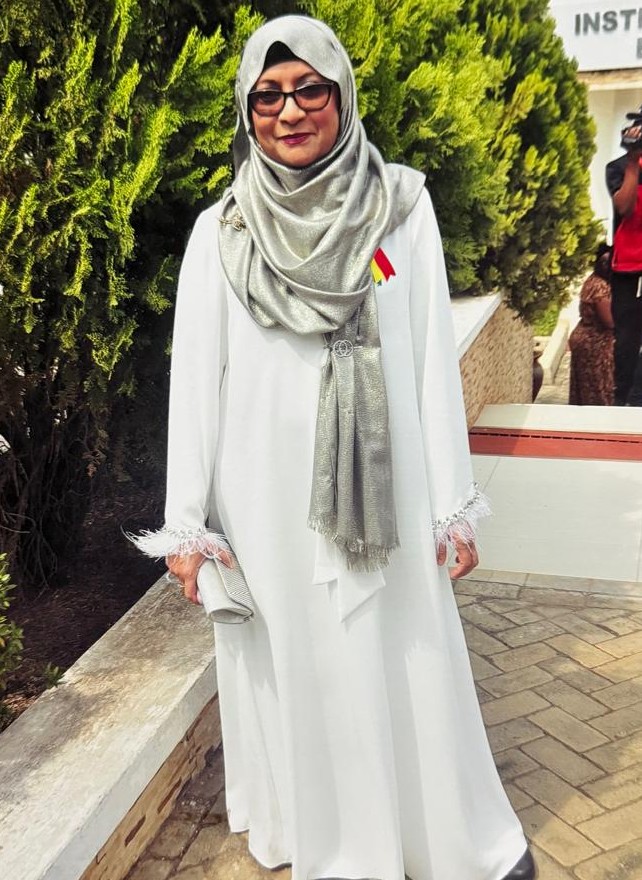
Once Dr. Wahida had made the decision to continue learning, her interests began to take a clearer shape. The business world drew her attention first. She entered accounting school and studied typing, shorthand and accounts, subjects that gave practical direction to the determination she had already developed. Numbers suited her. She discovered that she was good at accounting, and that discovery encouraged her to continue rather than treating the training as another short course completed along the way. She progressed into advanced accounts, partly because she had begun teaching her classmates. Her passion for accounting was ignited, causing her to begin looking for the next level at which she could strengthen what was becoming a genuine professional ability.
That next step took her to the San Fernando Technical Institute, where she pursued accounting technician studies for two years. Her training continued through the Association of Accounting Technicians, alongside professional accounting examinations in areas such as information analysis, audit, taxation and managerial finance. What had started with typing, shorthand and basic accounts had gradually become a serious professional direction. There was discipline in the progression. She did not simply discover something she was good at and stop there. She kept moving deeper into it, building technical knowledge that would remain useful long after her career eventually turned toward another profession.
Accounting also gave Dr. Wahida access to working life beyond the small jobs with which she had begun. While continuing her professional studies, she obtained employment with BPAMOCO. She worked there for a couple of years and regarded accounting as part of her professional identity. At that point, teaching was not the obvious destination waiting at the end of the road. Her qualifications and experience were moving her naturally toward finance, and another employment opportunity at Petrotrin gave her yet another reason to imagine that her future might remain in that world.
Life, however, presented several possibilities at once. She had her work in accounting, an opportunity connected with Petrotrin, and an opening in teaching. The decision was not made by comparing titles or asking which path sounded more impressive. Distance became part of the conversation at home. Reaching BPMOCO required three taxis. Travelling to Petrotrin in San Fernando also meant another journey involving three taxis. The school, by comparison, was nearby. She could simply walk up the hill. Her mother, Khatija Mohammed, looked at those realities with the practical concern of a parent and urged her daughter toward the option closer to home.
Yet Khatija Mohammed offered more than an argument about convenience. She spoke to her daughter about the blessings attached to teaching children. The school was a Muslim institution where the faith was part of the education being given to students, and that mattered in the advice she offered. What Dr. Wahida heard from her mother was not a promise that teaching would be easier, more prestigious or more rewarding financially. It was an understanding that educating children carried a value beyond employment itself. That perspective would eventually become deeply meaningful to her, although she did not feel it immediately.
Note of Thanks
For Dr. Wahida, looking back across a life shaped by responsibility, education and service also means acknowledging the people whose presence gave her strength in different ways. At the heart of that gratitude is her mother, Khatija Mohammed, whose guidance, discipline and belief in her abilities remained deeply significant. She is equally thankful for her siblings and especially her brother, Jumadeen Mohammed, whose support accompanied important parts of her journey and whose presence remained meaningful as their lives continued through education and service.
Her gratitude extends lovingly to her children, Shanaz and Fareez. They are part of the life that existed beyond professional responsibilities and achievements. Shanaz, in particular, became someone Dr. Wahida could always count on when it came to demanding tasks. Her son, Fareez, also occupies an equally precious place in the family whose progress and presence have been central to her life.
At her side is her husband, David Narine, whose support was especially valued as her responsibilities increased. His willingness to help where his own expertise could be of assistance gave Dr. Wahida another source of solace in a demanding professional life. She also has sincere appreciation for her friend Rekha Rampersad and her husband Ray and son Sarvesh, whose assistance, companionship was conversation, shared outings and the simple comfort of having someone nearby when she needed a trusted friend.
There is also a place of gratitude for those who are no longer with her but whose influence remains. Her late father, Shido Mohammed, remains part of the family story that shaped her, while her grandfather, Solomon Madath, will always have a special place in her heart for awakening her courage and confidence.
More than simply people to thank, these names represent the human foundation upon which Dr. Wahida’s journey is built, each one offering support, belief, companionship or love in a way she continues to value deeply.
thanks,
– Dr. (H.C.) Wahida Mohammed-Narine