“A true leader does not stand above people, he stands beside them and guides them forward. When you remember your people, they remember you with honour.”
Introduction
The life of Dr. Maurice Rudranauth Gajadhar is a blend of discipline, dedicated service, entrepreneurship, and an unrelenting love for his nation. The persistence, knowledge, bravery, and high degree of responsibility that he possessed made it possible for him to achieve what he did. He demonstrated an exceptional amount of inner strength for someone born not to privilege. His early years in his birthplace of Skeldon, located in the Berbice region of Guyana, began on the 17th of January 1964. He balanced the concept of seeing life from various perspectives while growing up. His mother was a Muslim, his father a Hindu, and a Christian influence was present in the family. This unique upbringing, coupled with the small home he grew up in, taught him to see beyond the various divisions of society. The combination of these home influences taught him to nurture the heart that he would soon have to carry before the world.
He knew what it meant to live with limitations, to see a small home challenged by certain things, and to understand that comfort was never guaranteed. His mother’s generosity was another strong influence. He kept the values of hard work, humility, frugality and respect for others. Additionally, wherever possible, he offered support to those in need. He explained that his mother’s habit of giving, even when there was little in the home, remained deeply rooted in him. His father’s discipline added another foundation, teaching him that responsibility had to be carried seriously.
Education became one of the first organized structures in his life and he attended Skeldon Scots Primary, Skeldon Anglican Primary, and Skeldon Line Path Secondary School. He returned to Skeldon Line Path Secondary School as a teacher after he finished his secondary examinations. He wanted to go to university, but he could not afford it. This became a turning point in his journey. In 1983, he started working at the Customs & Excise Department, and during this time his self-discipline and willingness to learn shaped him into a substantial public servant.
His time at Customs shaped him. He was later transferred to the main airport and rose from trainee customs officer to Assistant Director within ten years. The promotion was due to his excellence in the workplace, a high level of patience and a detailed understanding of the systems in the Customs Service. He became familiar with the workings of customs and airline systems, as they operated in the same environment. When he finally moved to the Aviation Sector in 1994, he did so with the full confidence that he understood the business of Customs movement and the regulations that governed the movement of airline services.
From there, his journey entered a wider professional field. He became associated with American Trans Airlines, Guyana Airways 2000, and eventually New Timehri Handling Services Inc. His leadership helped shape the company into one of Guyana’s most important aviation service institutions. Under his direction, it grew into a major ground handling company with more than three hundred employees, supporting many international carriers and handling a large share of airport traffic. This achievement was not only business growth. It represented employment, skill development, reliability, and contribution to Guyana’s aviation image.
At the same time, Dr. Maurice continued to expand into other areas of enterprise. His association with Rudisa International began in 1994, and over the years, it connected him with business interests involving distribution, motor operations, real estate, and property development. His time as Managing Director of Rudisa Motor Company (Guyana) Inc. further demonstrated his ability to work across sectors without losing focus. Whether in aviation, corporate enterprise, or public service, he carried the same principle. Work had to be done properly, with seriousness, accountability, and humanity.
“I grew up among different faiths, and that taught me to appreciate every religion and every person.”
Phase 1: The House Where Differences Lived Together
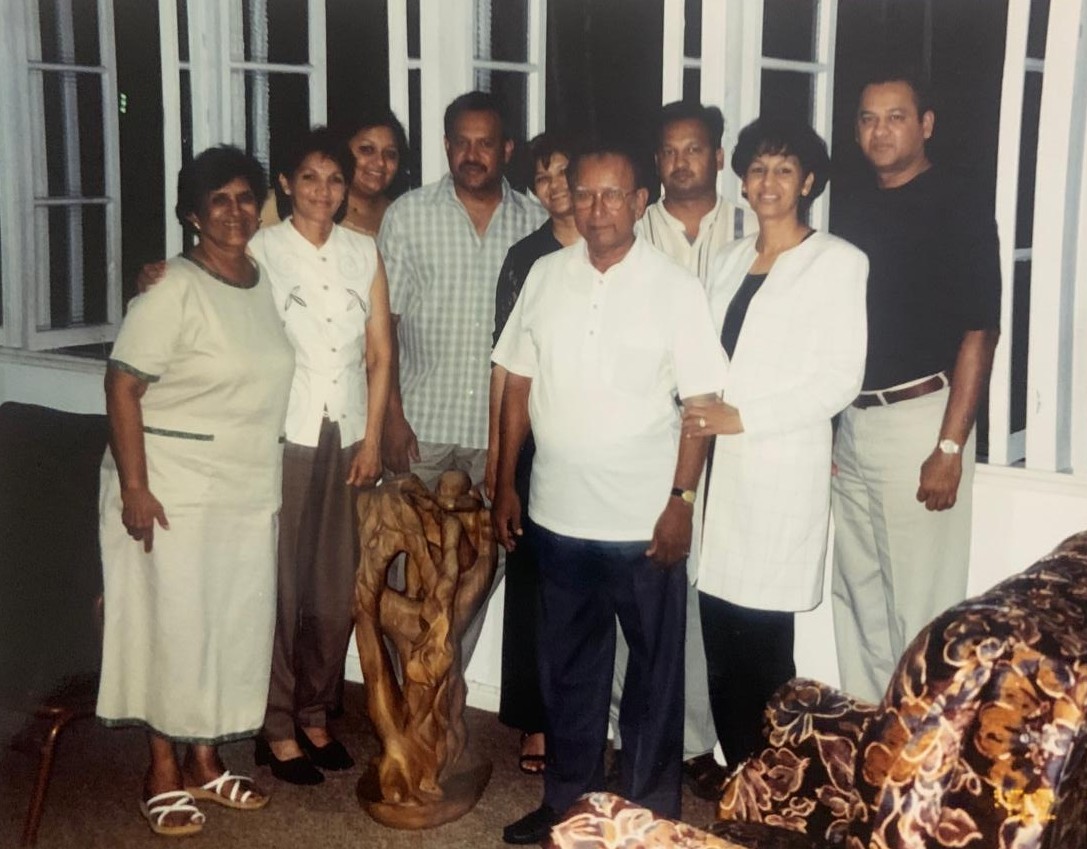
The life of Dr. Maurice began on 17 January 1964 in Skeldon, in the Berbice region of Guyana. Long before titles, boardrooms, public duties, and national recognition became part of his journey, he was a child shaped by a home unlike many others around him. His earliest world was not defined by wealth or privilege but by faith, courage, family complexity, and the quiet strength of people who made difficult choices with conviction.
His parents, Ragnauth Gajadhar and Imambani Gajadhar, were from different religious backgrounds. His father was from a Hindu family, his mother from a Muslim background. At the time of their marriage in 1950, this union was not easily accepted. There was social weight and emotional consequence. Yet his father chose love and commitment. He went ahead with the marriage even if it meant standing apart from the expectations of his own family.
His father had come from a respected family, one connected with education, responsibility, and social standing. In the world from which he came, family members held positions such as doctors, postmasters, and a headmistress. These were respected roles, and the family carried a certain sense of status. But the choice to marry the woman he loved came with its own social challenges.
For Dr. Maurice, that part of his family’s history was a quiet lesson in courage, conviction and dignity in standing by one’s choices. It taught him that sometimes life asks a person to move forward with faith, even when the road is not easily accepted by others.
His mother’s background carried its own story of hardship and simplicity. She was a Muslim woman whose family roots reached back to Uttar Pradesh. She lived a life that was far from comfortable or socially easy. She could not read or write, and she had known responsibility from an early stage of life. She also worked in the cane fields, while his father served as a bookkeeper in the sugar estate in Skeldon. Their lives were different, yet their marriage brought together two worlds that society had tried to keep apart.
Because of this union, the family’s religious identity became beautifully layered. His parents found their way through Christianity, and Dr. Maurice grew up surrounded by the presence of Hindu, Muslim, and Christian traditions. His father’s relatives were Hindu. His mother’s relatives were Muslim. The family also observed Christian occasions such as Easter and Christmas. He attended Muslim festivals, Hindu 04 festivals, and Christian celebrations. In a country where communities carried their own practices and histories, his own home became a living example of coexistence.
This early exposure did not confuse him. It widened him. It taught him to see people before labels, values before divisions, and kindness before identity. The faiths around him were not distant ideas from books or formal teachings. They were present in relatives, gatherings, prayers, festivals, food, customs, and everyday life. He saw difference not as something to fear, but as something to understand. This became one of the strongest foundations of his personality. Later in life, when he supported people across communities, religious organisations, orphanages, and institutions, that sense of inclusion was not newly learned. It had been planted in childhood.
“When you know struggle yourself, you learn not to look down on anyone else’s struggle.”
Phase 2 : The Roof That Taught Him Resilience
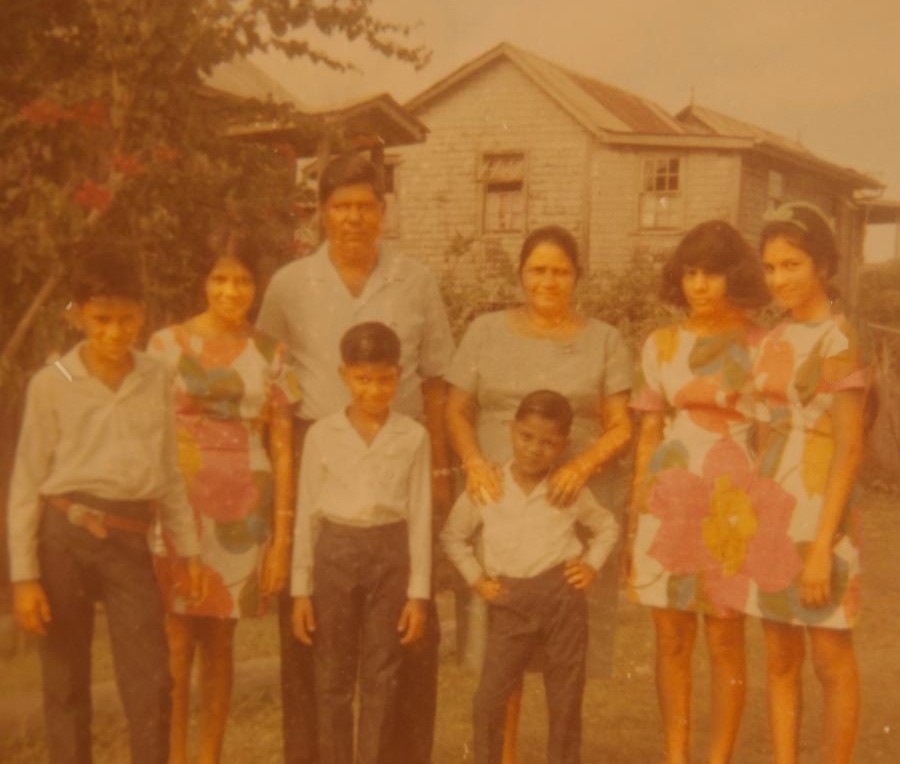
Dr. Maurice’s formative years were defined by experiences that never left him, long after childhood had passed. He did not grow up with ease surrounding him. He did not come from a home where comfort was certain or where opportunity waited neatly in front of him. He grew up seeing life as it was, simple, demanding, and often difficult. Yet the beauty of his beginning was that it did not close his mind or harden his heart. It gave him a clearer understanding of people, struggle, effort, and responsibility.
He remembered those early days with honesty. He was not born with a golden spoon, and he never tried to present his life as though he was. There was a small farm, and as a child he carried baskets of bananas on his head, walking through the streets to sell them. For many, such a memory may have been remembered only as hardship. For Dr. Maurice, it became something larger. It taught him the value of work before position, effort before comfort, and dignity before recognition. It also taught him that nothing earned honestly is ever small.
Those walks with baskets of bananas were not merely about helping at home. They became an early training in endurance. A child who learns to carry weight learns more than the weight itself. He learns balance, patience, observation, and self respect.
He learns to look at people, speak to them, face rejection, and continue moving. In those streets, long before he would sit in rooms of decision and responsibility, Dr. Maurice was already learning how people live, how families manage, and how struggle quietly shapes character.
His home carried its own lessons. The house was small with holes in the roof, he remembered. When rain came, his father had to move the bed from one section of the house to another. This image remained with him, not because it was dramatic, but because it was real. It showed him that life can change direction suddenly, even inside one’s own home. It taught him that comfort should never be taken for granted. It also taught him that families survive not by complaining about what they don’t have, but by adapting, persevering and moving on together.
His early circumstances formed his later outlook on money. He learned to be cautious, not careless. He knew the importance of being frugal with finances, not because frugality was merely a habit, but because he had seen the cost of waste. Every dollar mattered in a home where resources were limited. Every decision mattered. Every act of spending carried thought. That discipline did not leave him as life expanded. It remained part of the way he saw responsibility, business, and service.
Respect was another value formed in those years. Dr. Maurice understood that no person should be measured only by what they own. He had seen enough of humble living to know that hardship does not reduce anyone’s worth. This awareness helped him recognise people beyond status. It later influenced the way he spoke about employees, communities, and those who came from difficult circumstances. His life taught him that respect is not something to demand from others while withholding it from them. Respect must be given if it is to be received.
His mother, Imambani Gajadhar, played a powerful role in shaping that part of him. Her kindness was uncomplicated, straightforward, and human. If someone came asking for food or water, she believed they should be helped. Even when there was not much in the home, she found a way to give. Her compassion was not based on abundance. It came from the heart. This kind of giving left a quiet mark on Dr. Maurice, because it showed him that generosity does not begin when life becomes easy. Sometimes it begins when a person understands difficulty well enough to recognise it in another.
“Teaching was never only about salary for me. It was a stepping stone that helped me move forward.”
Phase 3 : From Student Desk to Teacher’s Chair
For Dr. Maurice, education was never simply a route toward employment. It was one of the earliest doors through which he began to understand discipline, effort, and the quiet power of guidance. His childhood had already taught him the value of work and humility, but school gave structure to those values. It placed him in an environment where learning, attention, and responsibility became part of his daily rhythm.
His educational journey began in Skeldon, the same place that held the earliest memories of his life. He attended Skeldon Scots Primary, then Skeldon Anglican Primary, before continuing at Skeldon Line Path Secondary School. These institutions formed the academic foundation of a young boy who had already seen life’s difficulties closely. School gave him a space where ambition could take shape, even if the path ahead was still uncertain. It allowed him to see that knowledge could widen the world for a person, even when personal circumstances were limited.
He furthered his education through study and discipline at the Skeldon Line Path Secondary School where his academic foundation was laid with GCE and CXC qualifications in seven subjects, a testament to his commitment to learning at a time when education was serious business and required self motivation. For Dr. Maurice these were not just certificates. They were proof that effort could bring about movement and that a young person from a humble background could still prepare himself for a meaningful future.
After exams, his journey took a special turn. He returned to the same secondary school as a teacher, working from 1981 to 1982 at Skeldon Line Path Secondary School. It was one of the more important times in his life, when he transitioned from being a student in the classroom to being responsible for students in the same environment. That transition was very meaningful. It demonstrated that education had helped him develop but it had also given him the ability to help others learn.
Dr. Maurice’s first real experience of responsibility outside himself came when he began to teach at an early age. It required patience, clarity and discipline. It required that he stand before students and project himself confidently. It also exposed him to the influence a teacher can have on young minds. Though his time in teaching was not the final destination of his career, it gave him something that would remain useful throughout his life. It taught him that leadership begins with the ability to guide.
At this stage of life, Dr. Maurice had his own hopes for further education. After teaching he had intended to go to university. It was a natural ambition for a man who valued learning and who had already proved himself in the academic world. Yet life did not unfold exactly as planned. Financial limitations made it difficult for him to continue to university at that time. This was a turning point, but it did not become an end point. He accepted the reality before him and looked for another way to move forward.
Note of Thanks
This note of gratitude is extended with the utmost respect to all who have played a role in the life and journey of Dr. Maurice Rudranauth Gajadhar. His story has been shaped by family, work, service, guidance, trust, and the numerous relationships that gave purpose to every responsibility he undertook.
Dr. Maurice says he owes his late parents, Ragnauth Gajadhar and Imambani Gajadhar, for the values they instilled in him that stayed with him through every stage of life. Their discipline, simplicity, courage and compassion became the silent foundation on which his character was built. The lessons he received from them continued to guide him in work, service and the manner in which he treats people.
He remains thankful for the presence of his wife, Fareeda Gajadhar, who has been a constant source of support through a life of demanding responsibilities. Her support has been part of the strength behind his public and professional commitments. He also holds love and gratitude for his daughter, Rabeena Hossain, and for the family whose name and values he has carried with dignity.
This gratitude also extends to his employees, colleagues, partners, and the many people who have worked with him across aviation, business, public service, and national institutions.
He is also thankful to Guyana, the country that shaped him and gave purpose to his service. His commitment has been linked to its people, institutions, and progress through every responsibility.
thanks,
– Dr. Maurice Rudranauth Gajadhar