“If you want to discover what is in the ocean, you have to have the courage to leave sight of the shore.”
Introduction
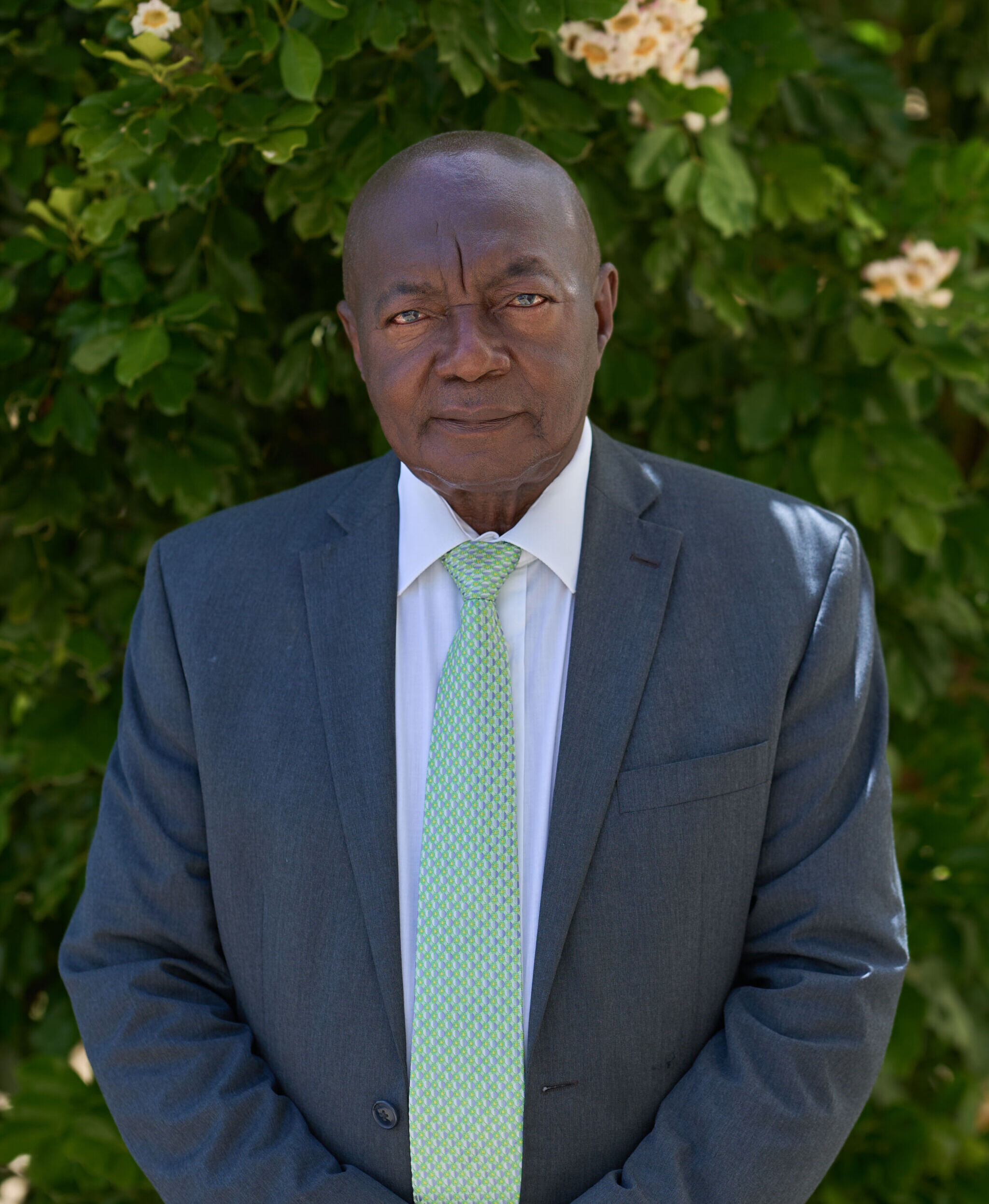
There is something fitting about this thought in the life of Dr. Rawlinson. He has never been particularly interested in allowing age, convention or a completed chapter to tell him that the journey should become smaller. Even in his seventies, he sees life as something active, something that continues to invite thought, movement and possibility. That outlook can be traced through the choices he made whenever circumstances placed a boundary in front of him.
His first serious exposure to finance came through work at the Government Treasury, where reconciliation introduced him to the practical relationship between public accounts and commercial banks. At the same time, he studied privately, strengthening himself in mathematics, accounting and economics because he already knew the direction in which he wanted to move.
The established foreign banks did not immediately open their doors to him. Rather than allowing silence to settle the matter, he carried his application personally to Sir Edmund Lawrence at the newly established St. Kitts-Nevis-Anguilla National Bank. When asked why he wanted to enter banking, his answer was strikingly ambitious: he wanted to be able to replace him one day. The remark drew laughter, but it revealed something that would remain constant in Dr. Rawlinson. He was not afraid to state where he hoped to go, even while standing at the beginning.
Banking gave him an opening, but he refused to treat that opening as the final destination. After several years of work, he took study leave without pay, worked while attending university and completed his higher education. When he returned, he made it clear that he had not studied simply to resume exactly what he had been doing before. He wanted management responsibility.
That ambition carried him from St. Kitts to Nevis, where he took charge of a branch. It was one of several moments in which preparation and opportunity met at the right time. The pattern became familiar. He would work, learn, reassess and then decide whether the next stage required a deeper commitment or a different direction.
Seven gradually became part of the way he understood those turning points. He began thinking in seven year cycles, using them as moments to reconsider his work. If something remained meaningful and rewarding, he could renew his commitment. If not, he was prepared to move. It became a personal signal to examine whether he was still growing.
Education continued beside his career rather than behind it. Professional banking studies, accounting examinations and postgraduate learning were pursued while his responsibilities were increasing. Dr. Rawlinson developed the habit of studying privately, researching what he needed to understand and preparing himself without waiting for learning to become convenient.
“I grew up knowing hard work, but I also understood what my father was telling me: learn, advance, and give yourself another way forward.”
Phase 1: Where Ambition First Took Root
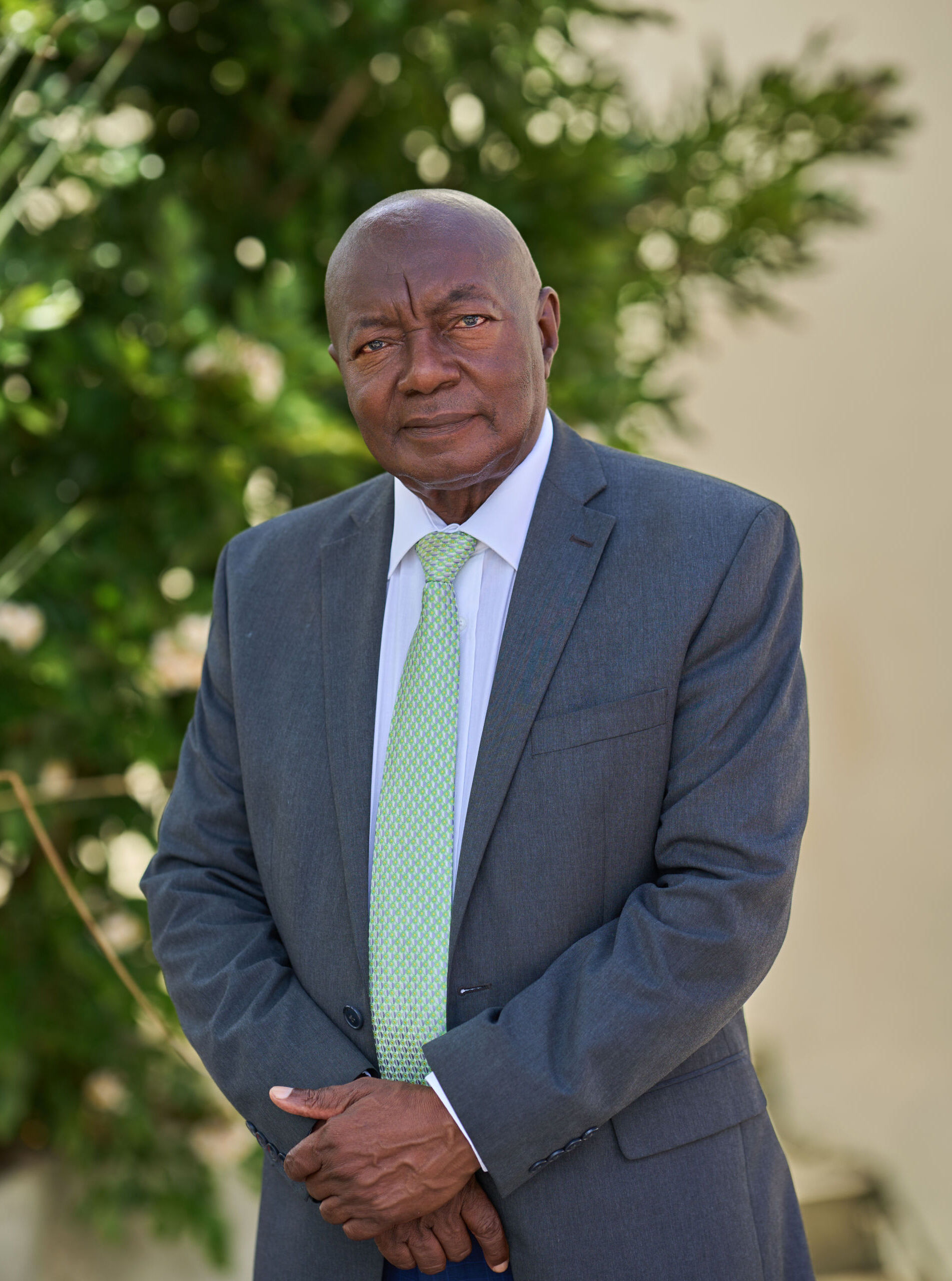
Long before banking, boardrooms, financial strategy or development projects became part of his life, Dr. Rawlinson learned what responsibility felt like in its most physical form. He grew up in a family of ten children in an environment where work was not something reserved for adulthood. It was woven into daily life from an early age. His father, Charles Isaac, worked in agriculture, and the children grew up around the demands of the farm. For Dr. Rawlinson, those demands were not distant memories observed from the side. They were part of his own routine.
By the time he was around six years old, the day could begin with work involving cattle and the preparation of ground provisions for market. Milking was not simply a task performed once and forgotten. The cattle had to be tended, milk had to be distributed, and the work returned again later in the day. The rhythm of responsibility was constant. Morning began early, often around five o’clock, because there were things to complete before school. After classes ended in the afternoon, the cycle resumed. The cattle had to be tied again and made ready for the next morning.
For a child, that kind of routine could easily have made school seem secondary. In his home, it was the opposite. No matter how much work had to be done, getting to school remained essential. Charles Isaac repeatedly made the purpose of education clear to his children. He was working hard and expected them to help, but he did not want that same physical burden to define their entire lives. His message was direct: he was sending them to school so that they could learn, advance and avoid being confined to the kind of labour he knew so well.
Dr. Rawlinson understood that message more deeply as he grew older. Education was not presented to him as an abstract ideal or something pursued simply for status. It represented a practical route towards a different future. The farm showed him what hard labour demanded. School showed him that another path might be possible. The two experiences existed beside each other, and together they formed his earliest understanding of ambition.
His younger years were already marked by ambition, but that ambition grew from circumstance rather than comfort.He knew what it meant to come from a poor environment while still wanting more from life. There were no shortcuts hidden in that situation. The family knew work. They knew discipline. They knew that if progress was going to come, it had to be pursued.
The experience was shared across the household, and the emphasis on education left a visible mark on the family. Two of his brothers later earned doctoral degrees, one in biochemistry from McGill University in Montreal, Canada, and another in construction engineering who went on to live in London. To Dr. Rawlinson, their accomplishments belonged to the same early lesson their father had tried to impress upon them: use education to move beyond the limitations surrounding you.
His parents’ thinking was especially important because the environment around them offered few easy alternatives. The wider society still carried the long shadow of plantation labour and the sugar industry. For many people, hard physical work was not merely a phase. It was the expected pattern of life. Dr. Rawlinson grew up close enough to that reality to understand why education mattered so much to his parents.
“Sometimes the person who changes your life is the one who sees something in you before you have learnt to see it yourself.”
Phase 2 : The Teacher Who Refused to Let Him Drift
For Dr. Rawlinson, school was not simply the place where lessons were taught. It became the setting in which someone outside his family looked at a group of restless boys and saw possibility where they themselves had not yet learned to see it. That person was Donald McLachlan, the headmaster of the primary school Dr. Rawlinson attended as a child.
Those school years were not without their difficult moments. He and some of the boys around him could be troublesome. They were young, energetic and not yet certain where life was taking them. In their surroundings, leaving school did not always open into a wide range of choices. Many young people moved towards the sugar factory or learnt one of the practical trades available at the time. Electrical work, carpentry, motor mechanics and welding were among the familiar directions. For boys who had not yet developed a clear idea of their future, those routes were easy to imagine because they were already visible around them.
Donald McLachlan saw something different. Instead of accepting that the boys would simply follow the usual path, he intervened. His message was firm. He could see ability in them that they did not yet recognise in themselves. He told them that they were not going to leave school merely to enter the factory or drift into whatever opportunity happened to appear first. He wanted them to stay, continue learning and give themselves the chance to discover what they were capable of becoming.
That intervention remained with Dr. Rawlinson long after childhood ended. At the time, he may not have fully understood what the headmaster was protecting him from or preparing him for. Young people rarely see the full meaning of such moments while they are living through them. What mattered was that an adult in authority had taken enough interest to interrupt a predictable course. Donald McLachlan did not simply tell the boys to behave. He redirected them. He enrolled them in a special programme developed by the Education Department known as the College of Preceptors (CP), which served as a step towards the GCE.
The headmaster’s influence came at a stage when education could easily have been abandoned for work. Schooling followed the British educational structure, and students progressed through examinations such as the GCE O Levels and A Levels. Continuing required discipline and a willingness to remain in the classroom while other routes into employment were already available. The decision to stay with education therefore carried practical consequences. It meant postponing immediate work in favour of preparing for something that had not yet taken shape.
There was no grand professional plan already written in his mind. He was not yet thinking in terms of banking, management, finance, consulting or national development. Those chapters belonged to a future he could not yet see. At this point, the important change was more basic. He began moving from uncertainty towards direction. The school environment gave structure to that movement, while Donald McLachlan supplied the push that kept him from stepping away too soon.
The headmaster became the person who stabilised the boys and pointed them towards a better direction. The choice of the word “stabilised” says a great deal. It suggests that the value of the intervention was not limited to academics. The boys needed someone to hold their attention long enough for their own potential to become visible.
“When he asked why I wanted to work in the bank, I told him, ‘I want to be able to replace you one of these days.’”
Phase 3 : Knocking on the Door of Opportunity
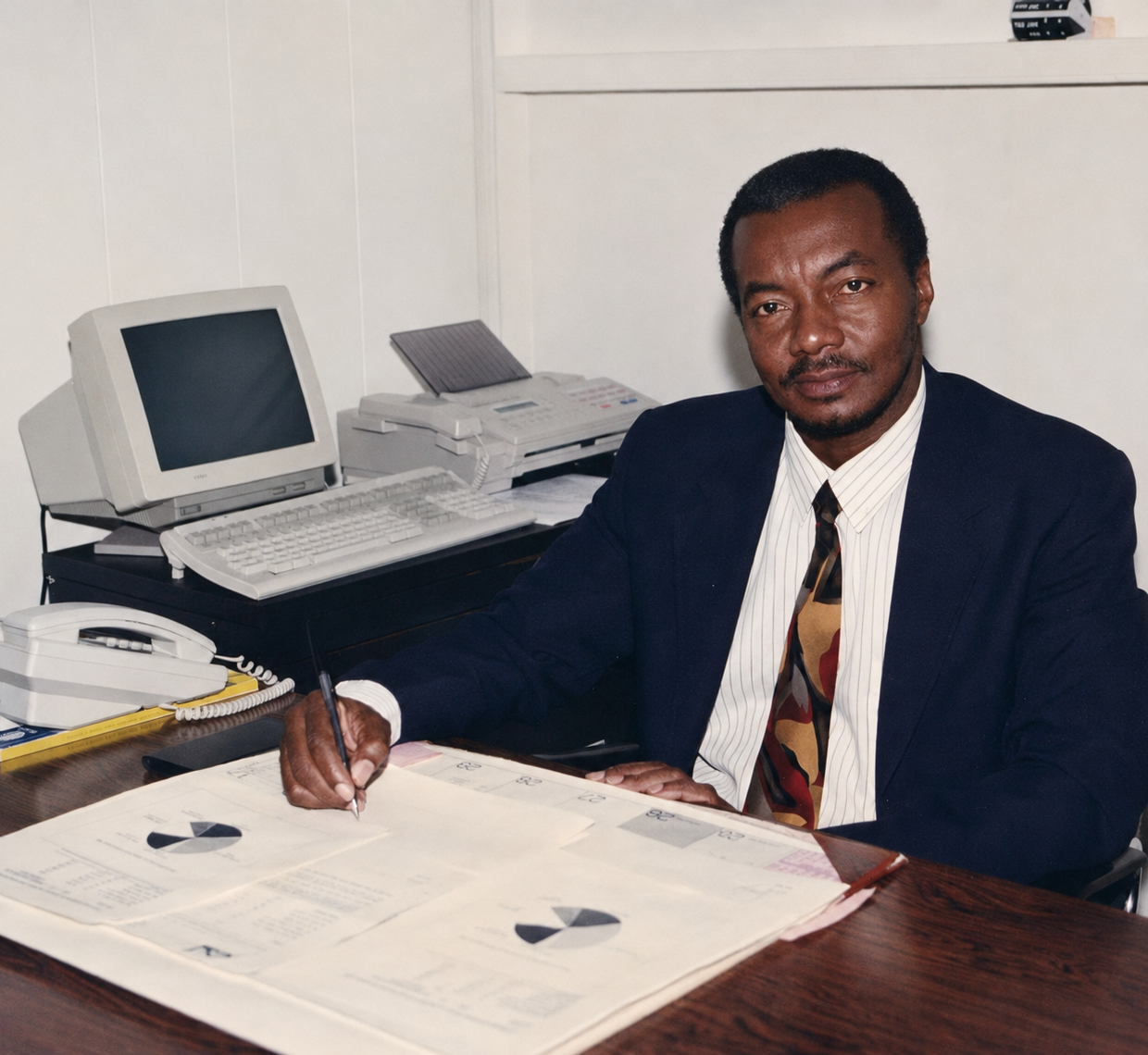
When Dr. Rawlinson left school and stepped into working life, his first destination was not a bank. It was the Government Treasury, an environment that would quietly introduce him to the financial world before he had any formal place within it. His responsibilities included reconciliation work, which required him to compare and account for financial records connected with the Treasury’s banking activities. At the time, two of the main institutions involved were Barclays Bank and the Royal Bank of Canada.
The work gave him an early look at how banks functioned from the other side of the counter. He was dealing with financial statements, balances and the practical movement of money through institutional systems. It was not yet the career he wanted, but it brought banking close enough for him to begin understanding what the profession involved.
Rather than waiting for the job itself to prepare him, he began preparing himself. Outside his regular responsibilities, Dr. Rawlinson pursued private studies in mathematics, accounting and economics. The subjects were chosen with purpose. He was gradually positioning himself for the world of commerce. There was already a distinction forming between simply having employment and deliberately preparing for a particular field. He had a job, but he was thinking beyond the job.
The foreign banks operating locally carried a reputation for being difficult places to enter unless an applicant was known or came from a family with substantial business connections. Dr. Rawlinson did not have that advantage. He nevertheless applied to the institutions that interested him. The responses were polite but unproductive. His applications were acknowledged, and nothing further happened.
The establishment of the National Bank changed the situation, but Dr. Rawlinson did not approach it passively. He did not place an application in the mail and wait to see whether someone might eventually respond. One afternoon, he carried it himself.
What followed was brief, but it became one of the defining stories of his entry into banking. Sir Edmund Lawrence asked him why he wanted to work in the bank. Dr. Rawlinson’s answer was not cautious.
He told him that he wanted to be able to replace him one day. It was the kind of response that could have been considered overly ambitious from a young applicant asking for an opportunity. Sir Edmund Lawrence laughed. They shook hands, Dr. Rawlinson handed over the application, and he left. Within a day or two, he received a call inviting him back. That was his entrance into banking.
The importance of the moment was greater than receiving another job. For Dr. Rawlinson, it represented entry into a world that had previously seemed difficult to access. He had come from the countryside into the city and secured a place in banking at a time when such opportunities were not automatically available to someone from his circumstances.
Note of Thanks
As Dr. Rawlinson looks across the many chapters of his life, his gratitude rests with those whose presence gave strength, patience and direction to the journey. Among them, Vernareen Isaac holds a deeply personal place. Through forty three years of marriage, she has remained beside him. With the humour that comes naturally to him, Dr. Rawlinson acknowledges that he has not always been the easiest person to live with. That acknowledgement makes his appreciation for her patience and companionship all the more sincere.
His gratitude also extends to Teacher Donald McLachlan, whose influence came much earlier but remained meaningful throughout his life. At an age when Dr. Rawlinson and the boys around him had not yet recognised their own potential, Teacher Donald McLachlan saw something worth guiding. His belief gave direction at a formative time and left an impression that continued long after the school years had passed. For Dr. Rawlinson, such guidance deserves to be remembered because a timely word of confidence can alter the course of a young life.
Dr. Rawlinson also extends his sincere appreciation to Sir Edmund Lawrence for giving him the opportunity to enter the banking profession. That opening became an important turning point in his professional journey and provided the space from which his long career in banking could begin.
Dr. Rawlinson also expresses heartfelt gratitude to Cayon and Green Valley, the communities that helped raise him and formed an important part of his early life. He remains deeply grateful for his children, as well as for his brother and his sisters, whose presence and place in his life have remained meaningful throughout his journey.
For Dr. Rawlinson, gratitude is ultimately about recognising that progress is never entirely individual. His story may carry his name, but its pages also hold the presence of those who stood beside him, believed in him and shared portions of the road.
thanks,
– Dr. (H.C.) Rawllinson Alexander Isaac