

“I take people as they come. You have to meet people where they are, and if you want to help them, you have to understand where they are coming from.”
Introduction
There are professions that can be described by a title, and there are callings that are better understood through the lives they touch. Dr. Clarivet’s work belongs to both. Her responsibilities have carried formal names within public health, HIV prevention, patient navigation, community outreach, and health education, yet the essence of what she does is more personal. She helps people understand what is happening to them, recognize what choices remain available, and reach care without feeling diminished by the circumstances that brought them there.
That ability rests on more than training. It comes from the unusual combination of discipline and openness that has marked her life. She learned responsibility early, but she did not allow responsibility to harden into judgement. She grew up around firm expectations, yet adulthood taught her that fear rarely produces the kind of understanding people need. The result is a style of service that is direct without being cruel, compassionate without becoming vague, and practical without losing sight of emotion.
Dr. Clarivet speaks about serious matters in language that belongs to ordinary life. She does not hide behind distance when a conversation requires honesty. Her natural humor can make a difficult subject less intimidating, while her candor reassures people that they are speaking with someone who will neither pretend nor condemn. This quality has allowed her to form trust across differences of age, language, race, identity, health status, and circumstance. It has also made her a dependable presence among colleagues who understand that community care rarely fits neatly inside office hours.
Her life joins two places that formed her differently. Panama gave her the sounds of an enormous family, the abundance of a backyard filled with food, and the closeness of grandparents whose authority was inseparable from affection. New York demanded speed, adaptation, self-possession, and the ability to navigate cultures layered upon one another. One place taught her belonging. The other taught her movement. Between them, she developed the flexibility to enter unfamiliar settings without abandoning the values with which she had begun.
The route into her profession was not the route she originally imagined. Early academic ability moved her forward quickly, while financial and immigration realities complicated the education she hoped to pursue. Work arrived before a settled career plan. Then a seemingly ordinary interaction revealed a capacity that another person recognized before she had named it for herself. What began as an opportunity to speak with young people about health gradually became the central work of her adult life.
Nearly three decades in community-based care have shown her both the progress of public health and the human pain that statistics can conceal. She has watched treatment improve, language change, and prevention become more accessible. She has also witnessed the damage caused by stigma, isolation, misinformation, and the absence of support. These experiences did not leave her untouched. Some followed her home. Some forced her to accept the limits of what one person can do. Others confirmed that a timely conversation can alter the direction of a life.
Away from professional responsibilities, she has carried another demanding role with equal seriousness: motherhood. Raising a son required endurance of a different kind, one measured in journeys between work and home, school years, court decisions, discipline, laughter, worry, and the daily labor of keeping a young person safe. Her pride in the man he is becoming does not erase the difficulty of the road. It gives that difficulty meaning.
“The family is one of nature’s masterpieces.”
Phase 1: Sundays Beneath the Mango Trees

Dr. Clarivet was born on 24 December 1973 in Panama, the daughter of Shirley Maritza Isidore and Alfredo Morrel Hamilton. Her mother was only fourteen when she gave birth, so childhood placed them in an unusual relationship. To the little girl, her mother could seem like an adult version of a Barbie doll. To her young mother, she was perhaps a smaller doll to dress, carry, and take along. There was affection in that closeness, but there was also a practical need for the wider family to help.
Her mother continued her education through night school. At times, Dr. Clarivet went with her, becoming part of the effort by which, a very young woman completed school while raising a child. Her grandparents provided the steadier center of daily life. Moving between her mother and their home did not feel like entering the care of strangers. They had always been present, and their household offered a world large enough to absorb her completely.
Panamanian schools operated through different daily shifts, and her mother used the hours available to continue studying. Sometimes the little girl accompanied her and became, in the affectionate way they remembered it, a small trophy carried into the classroom. Holidays and summer periods could return Dr. Clarivet to her mother’s care, while the grandparents remained the constant home to which she could move without fear. The arrangement was not conventional, but within an extended family it became workable.
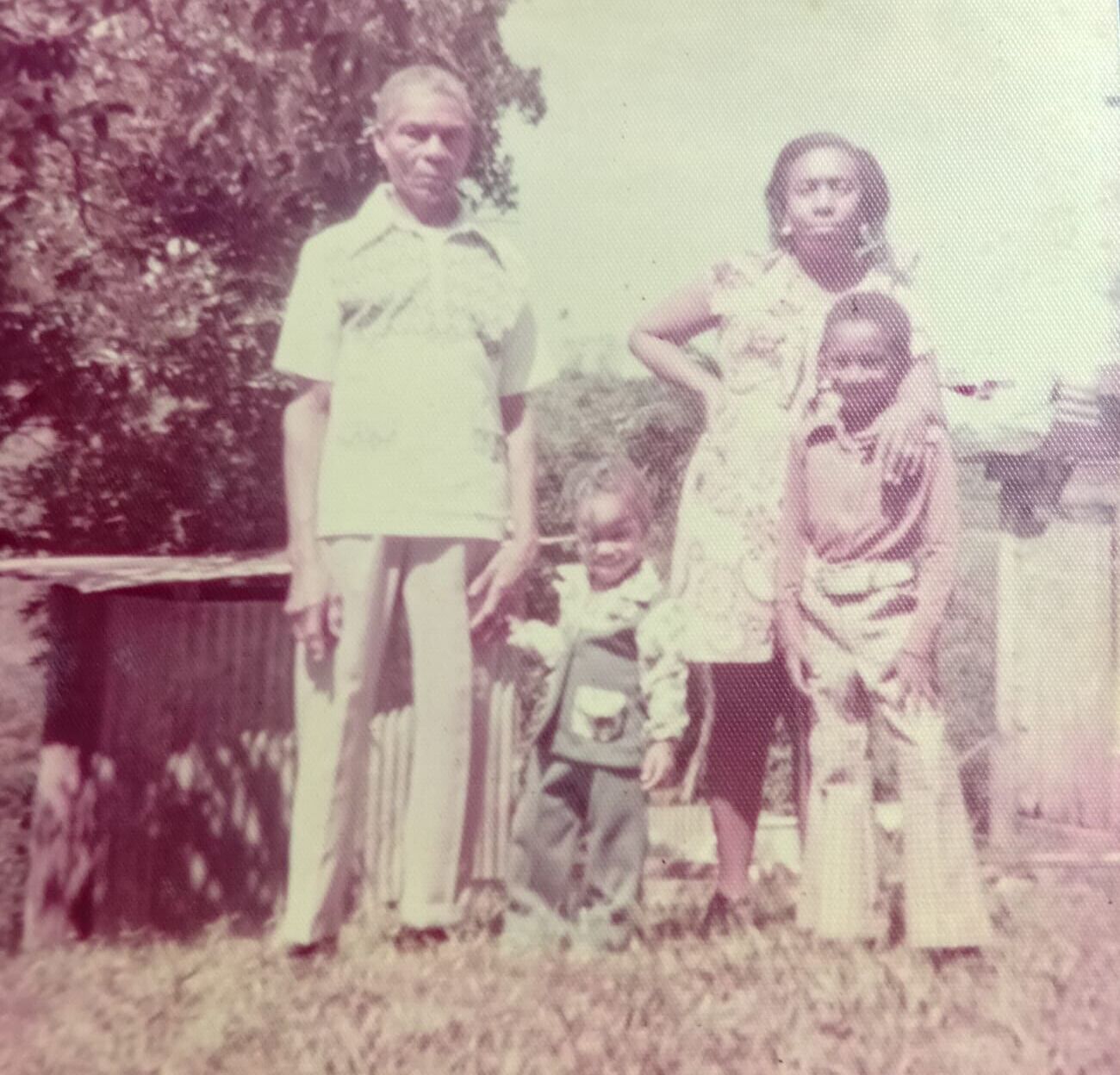
The family itself seemed almost endless. There were uncles, aunts, cousins, and generations of relatives, more than one hundred and fifty people by her recollection. Sundays gave that abundance a regular shape. On Saturday, she helped her grandmother clean the house and prepare the furniture because everyone knew what the next day might bring. Sometimes her grandmother cooked. Sometimes each arriving household carried food. Two or three Sundays a month, and especially on birthdays or Mother’s Day, the home filled with conversation while the children took possession of the yard.
For Dr. Clarivet, those gatherings meant freedom. She and her cousins climbed mango and coconut trees, reached among the thorny branches of lemon trees, ran, and played until the day felt too short. The backyard was filled with fruits and vegetables, and she enjoyed picking whatever her grandparents needed. Her grandfather fished and took her with him. She learned to catch fish, clean them, and remove the scales without fear, although adulthood produced a comic reversal. Years later, the sight of a fish head would make her recoil.
She was the only grandchild raised continuously in that house, a distinction she understood more deeply as she grew older. Her grandmother had ten children of her own, yet still made the child beside her feel specially included. Dr. Clarivet accompanied her to the market, helped prepare her dresses, and combed her hair before they went out. Clothing was washed by hand until a washing machine entered the household when she was about ten. These tasks joined affection with usefulness. Even protection had a practical shape. If an uncle moved to punish her, her very short grandmother placed herself between them and firmly ordered him to leave the child alone.
She was a tomboy long before she understood the word. Softball, soccer, marbles, and yo-yos interested her more than dolls. One doll, sent from the United States by an uncle for her Christmas Eve birthday, remained carefully displayed on the bed. She assumed dolls were meant to be admired rather than handled. When she was finally allowed to play with one, she dismantled it with astonishing efficiency. The head, arms, and legs ended up in different places, the clothes disappeared, and the face acquired her experimental version of makeup. Only then did the family begin teaching her how to comb a doll’s hair and change its dresses.
“Not everything that is faced can be changed, but nothing can be changed until it is faced.”
Phase 2 : A Quinceañera Interrupted, a New Life Begun
The United States invasion of Panama in December 1989 divided Dr. Clarivet’s life into a clear before and after. She was approaching fifteen, the age at which a girl in her culture might expect a quinceañera, but political upheaval displaced the celebration. In 1990, her mother sent her to the United States ahead of her. She arrived carrying English, family connections, and the confidence of a bright student, yet none of those things could make the separation easy.
The celebration lost in Panama was partly answered by the culture she entered. In the United States, sixteen rather than fifteen carried special importance, so family members and school friends marked her sweet sixteen. The substitution could not restore the interrupted year, but it allowed joy to return without pretending the disruption had never occurred. Gradually, other relatives also made their way north, widening the family presence around her.
The first sight of New York impressed her with tall buildings and unfamiliar colors. Once she reached the family home in Brooklyn, wonder gave way to longing. She sat by the window and prayed that her mother would come for her, even while understanding that Panama was far away and that no sudden reunion was possible. Her mother would follow approximately a year later. Until then, a teenager already separated from the grandparents and maternal relatives she knew best had to learn a new household, city, and pace.
Her aunt , whom the girls called “Mommy Auntie,” raised her daughter and two nieces together. She was strict, organized, and deeply protective. Her rules could feel almost military, but they created a dependable boundary around adolescence. The girls learned to cook complete meals, bake, shop from a grocery list, manage laundry, and respond quickly when rain threatened clothes drying on the backyard line. Independence existed, though always inside limits their aunt could see.
On Saturdays, she might leave them at the laundromat and return when the washing should be finished. Sundays could include church in the morning, choir, and a film later in the day, with collection times calculated so precisely that wandering elsewhere was hardly possible. She knew where the girls were, what they were doing, and when they should return. Dr. Clarivet did not always enjoy the restrictions, but she later recognized how much of her own strength and discipline had been built within them.
Brooklyn required other adjustments. The family lived on the second floor of a three-family townhouse, with the landlord below and another tenant above. Neighbors from Jamaica and Haiti spoke forms of English that initially sounded unfamiliar. The city itself was louder, faster, and more crowded than Panama. Although Dr. Clarivet already spoke English, American speech moved differently. English as a Second Language classes helped her understand the educational system and settle into its expectations.
School also demanded toughness. She had experienced bullying in Panama, where girls sometimes beat her up, and the problem did not vanish in New York. Small and very slim, she encountered students whose size astonished her. One threw a chair at her. Her aunt repeatedly visited the school, warning teachers and administrators that her niece could not be left unprotected. The rule was clear: tell the teacher first. If adults did nothing, self-defense became another matter. Dr. Clarivet tried to avoid retaliation, determined not to repeat the cycle she had already known.
“Life is either a daring adventure or nothing.”
Phase 3 : Two Years Ahead, Yet Searching for Her Road

As a child in Panama, Dr. Clarivet had imagined becoming an astronaut, a flight attendant, or a pilot. These ambitions became amusing once she admitted that both heights and aeroplanes frightened her. In New York, her ideas changed. She noticed unfairness and wanted a profession through which she could help people confront it. Lawyers on television and in films appeared capable, persuasive, and purposeful. The law began to seem like the right destination.
After high school, she enrolled in a paralegal program, believing it might provide a practical first step towards becoming an attorney. The classroom introduced a new kind of difference. As a Black Latina, she often felt visually alone among white classmates, including lighter skinned Latino students. When participants were asked why they had come and what they wanted to accomplish, her answer was uncomplicated: she wanted to help people.
The few months she spent there were stimulating and demanding. There was extensive writing, and she enjoyed the seriousness of being asked to define a mission for herself. At the same time, the age gap that had begun in high school continued. Moving so quickly through the grades had placed her in adult environments before she had accumulated the financial security or legal status that many older students took for granted.
Ability was not the problem. Money, immigration status, timing, and the speed of change in family life were harder to overcome. She was not yet a citizen and remained a temporary resident. Tuition was expensive, and Aunt was supporting the household through her work with Blue Cross and Blue Shield. Dr. Clarivet completed less than a semester before the strain became too much. She did not abandon the idea of education because it lacked value. She stepped away because too many barriers had gathered at once.
The family then lost its Brooklyn home and moved to Long Island. The contrast felt almost absolute. Brooklyn had been congested and loud and observed by neighbors who always seemed to know what was happening. Long Island felt quieter, more private, and closer to the country. The family now lived in a single-family house rather than on one floor of a building shared with other households. The move gave them space, but it also added another transition to a young life already moving faster than expected.
Work offered immediate clarity. A county program hired high school seniors to clean parts of the city and paid approximately ten dollars an hour. The days could run from nine in the morning until five or six in the evening. For a teenager, a full week produced a check impressive enough to make employment feel rewarding in a way college bills did not. The program taught her the satisfaction of earning, showing up, and seeing a task completed.
The check also changed the scale of what felt possible. College presented costs she could not yet solve, while employment offered an immediate exchange between effort and reward. That contrast did not make work more important than education, but it made work more urgent. At sixteen or seventeen, urgency often decides the next step before a long-term plan has time to mature.
Note of Thanks
Dr. Clarivet offers her deepest thanks to God for blessing her life, watching over her, and allowing her to remain present through every difficulty she has survived. Her gratitude does not deny the pain of those experiences. It recognizes the mercy she finds in continuing to wake, work, love, and serve.
She thanks Samira Lopez-Johnson, the mentor whose attention at Burger King redirected a young woman’s future. By recognizing intelligence, warmth, and professional promise before Dr. Clarivet could see the full shape of that promise herself, she opened the first door into public health and continued to affirm what might still be achieved.
She also honors Katelin Thomas, the supervisor who gave her twenty-five meaningful years within work she came to love. Good supervision can shape not only performance, but a person’s experience of an entire profession. The support, trust, and opportunities offered across those years remain an important part of her gratitude.
To her uncle, Rene Isidore, she gives thanks for becoming the father figure she needed. His readiness to respond, his support with Nathaniel, and his dependable presence gave family responsibility a living form.
Finally, she thanks Nathaniel, her son and “mini me.” Mother and son have endured difficult seasons, argued, laughed, learned, and remained together. He is the gift that changed the meaning of her responsibility and the person whose progress continues to make every sacrifice worthwhile. Her thanks belong to all who helped her stand, but these names hold a particularly enduring place within the life she has built.
thanks,
– Dr. (H.C.) Clarivet Iliana Isidore