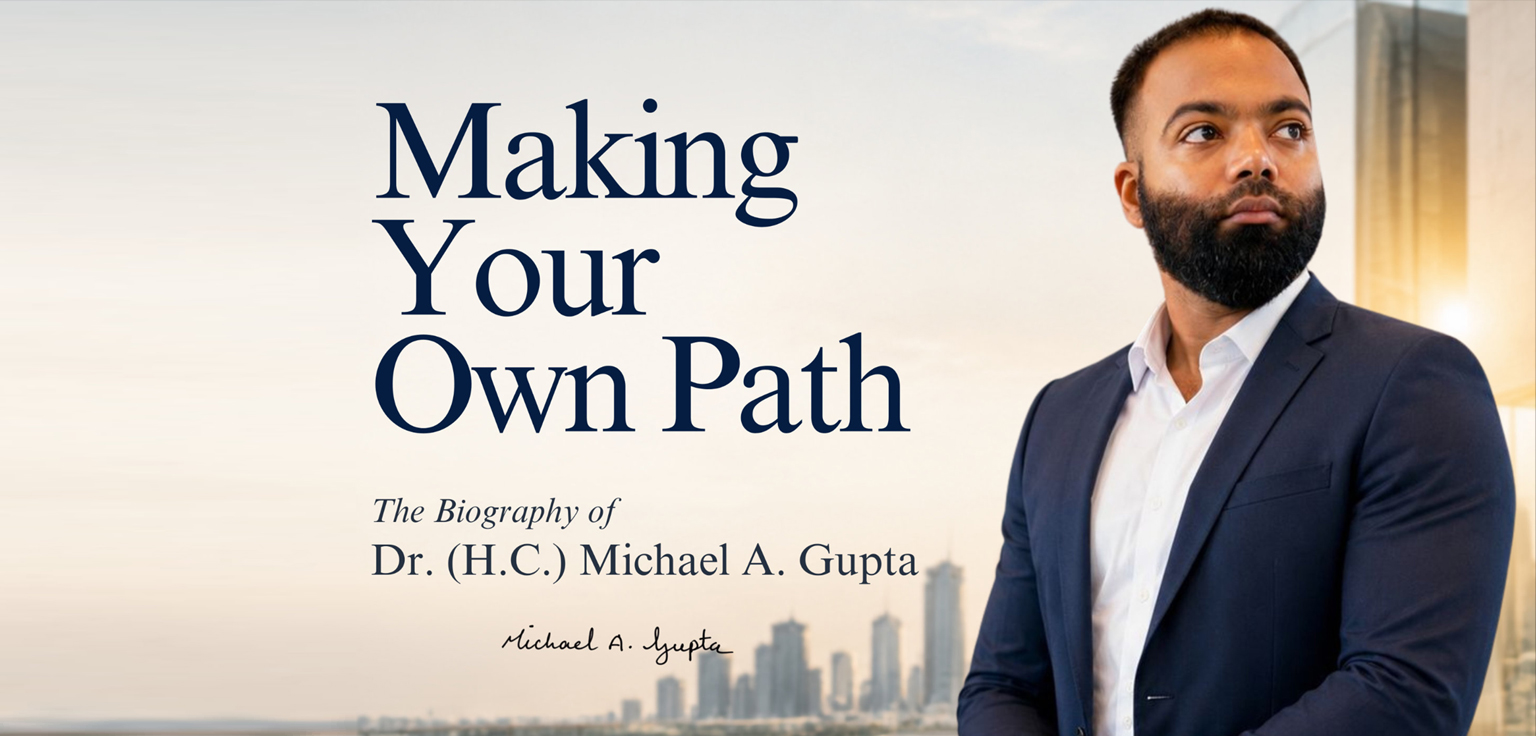
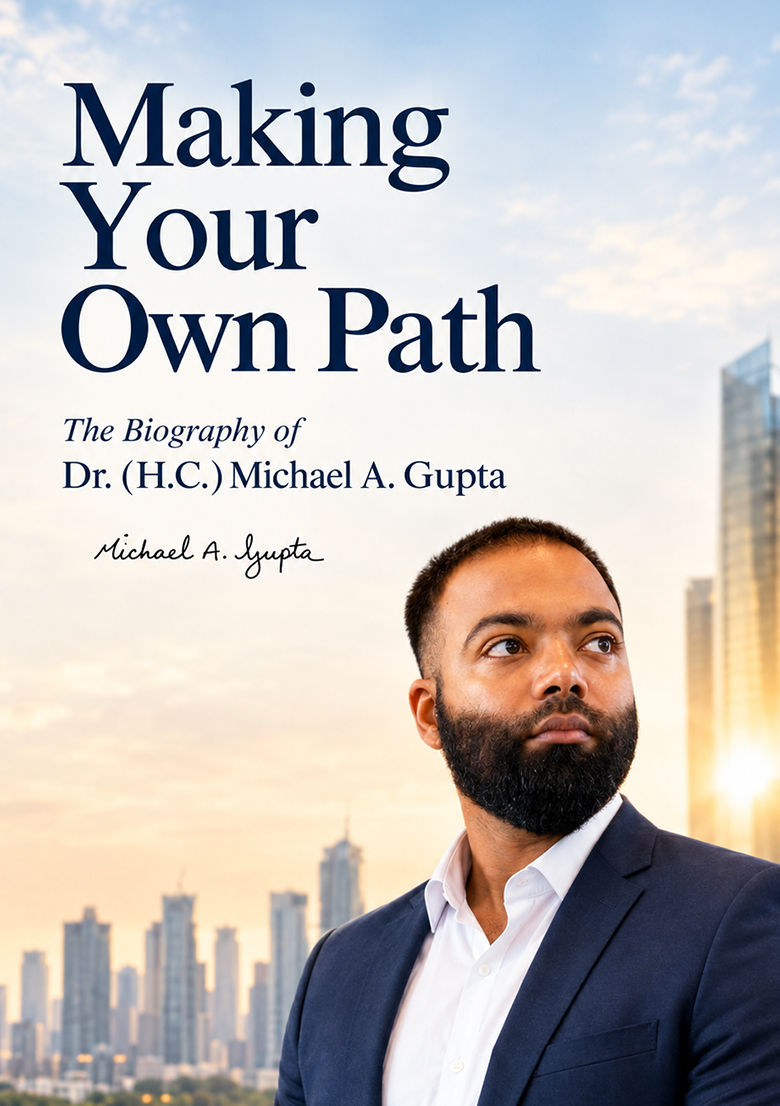
“My integrity comes before everything else. My word is my honour, and I remain committed to what I promise.”
Introduction
The day begins early for Dr. Michael Adrian Gupta. At five in the morning, before meetings, calls, operational questions, or decisions begin competing for his attention, he makes time for his health. Thirty to forty five minutes at the gym offer a disciplined opening to a day that will soon belong to many people. When he returns home, he showers where a lot of the creative ideas came from and spends a little time with his children as they prepare for school.
By eight, the household is moving. He drops his sons at school before making his way to the office. That part of the morning connects two responsibilities that he does not treat as rivals. He is a father before he enters the workplace, and he carries the same sense of personal accountability into the hours that follow.
At the office, his attention turns first to information. He speaks with his management team, receives updates, offers input, and examines the work currently being handled. When required, he consults team matters within the operation. Pending responsibilities are discussed, calendars are reviewed, and approaching events are considered. Questions lead to follow up questions because he does not regard an update as complete merely because it has been delivered. He wants to understand where the work stands and what must happen next.
These discussions often continue from nine in the morning until noon or one in the afternoon. Lunch generally occupies the hour between one and two. Afterward, he returns to the office for additional meetings, implementation work, and conversations with anyone scheduled to see him. Depending on the demands of the day, professional responsibilities may continue until five or six in the evening.
He usually reaches home between six thirty and seven. The shift that follows is deliberate. The executive who has spent the day considering tasks, personnel, and operations returns to being fully present as a husband and father. He plays with his sons, watches a series with them at times, and pays attention to anything his family may need. The evening is not treated as leftover time. It is another part of his responsibility.
This rhythm offers a revealing entrance into his character. His life is filled with movement, yet that movement is rarely unstructured. Health, family, leadership, review, implementation, and rest each have a place. The routine does not remove uncertainty from business, but it gives him a steady base from which to meet it.
He is responsible for enterprises operating in areas that demand very different forms of judgment. Construction requires technical coordination and dependable execution. Security demands discipline, trust, and accountability. Distribution depends upon customer awareness, product decisions, and commercial relationships. Real estate requires long term vision and the confidence to commit resources before the outcome is fully visible. Moving among these responsibilities calls for more than enthusiasm. It requires the ability to adjust without losing direction.
“Well done is better than well said.”
Phase 1: Where Work Was the Family Language
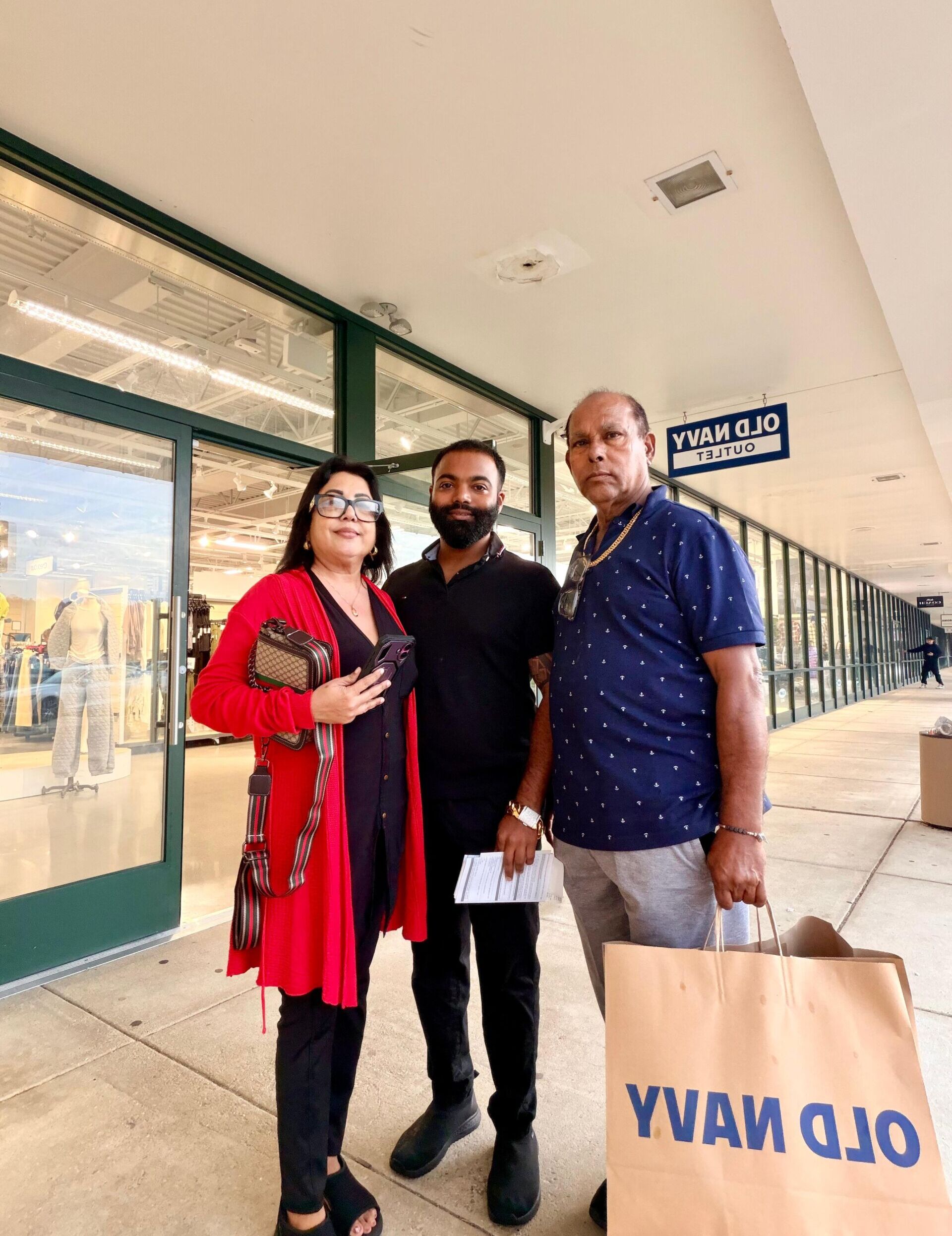
Work entered the life of Dr. Michael Adrian Gupta long before he understood it as a profession. In his childhood home, it was part of the family’s ordinary rhythm. His parents did not merely speak about effort or independence. They demonstrated both through the way they conducted their lives.
His mother, Eunice Gupta, and his father, Toolaprashad Gupta, were involved in business and travelled in pursuit of it. Their journeys took them to the United States and Suriname, where they purchased goods before returning to supply local businesses in Guyana. Their work required movement, negotiation, customer awareness, and the willingness to keep going beyond the convenience of home.
As a young boy, he sometimes accompanied them when his aunt was unavailable to care for him. Those journeys placed him close to the mechanics of commerce. He saw goods being selected, conversations being handled, and customers being approached. He watched how a product had to be carried beyond its point of purchase before it could become useful to someone else.
His mother stood at the commercial heart of the family’s activities. Her strength was sales. She understood how to take a product to the customer and how to communicate its value. Her determination left a deep impression on her son. He absorbed the idea that business required alertness, confidence, and the ability to recognise an opening before it disappeared.
From his father came another form of preparation. Toolaprashad was the head of the household and a steady source of discipline. He cared about the direction in which his son’s character developed. His guidance encouraged Dr. Michael to remain away from habits and choices that could have pulled him towards a harmful path. The lesson was larger than obedience. It was about becoming accountable for the kind of man he would eventually be.
His father also possessed practical knowledge of construction. Although the professional influence of that experience would become clearer later, its presence during childhood helped normalise the idea of building things through skill and effort. Work was not distant or mysterious. It happened through hands, decisions, tools, relationships, and repeated responsibility.
Whenever his parents travelled without him, his maternal aunt, Elizabeth Sukhlal, became the dependable adult at the centre of his days. Their absences could continue for weeks, and she ensured that he remained cared for throughout them. She provided food, made certain he had clothing, helped him reach school, and assisted with his homework. Her role was not occasional. She helped create continuity when the demands of business took his parents away.
“Nothing in life is to be feared, it is only to be understood.”
Phase 2 : Nine Years Old in a High School Classroom
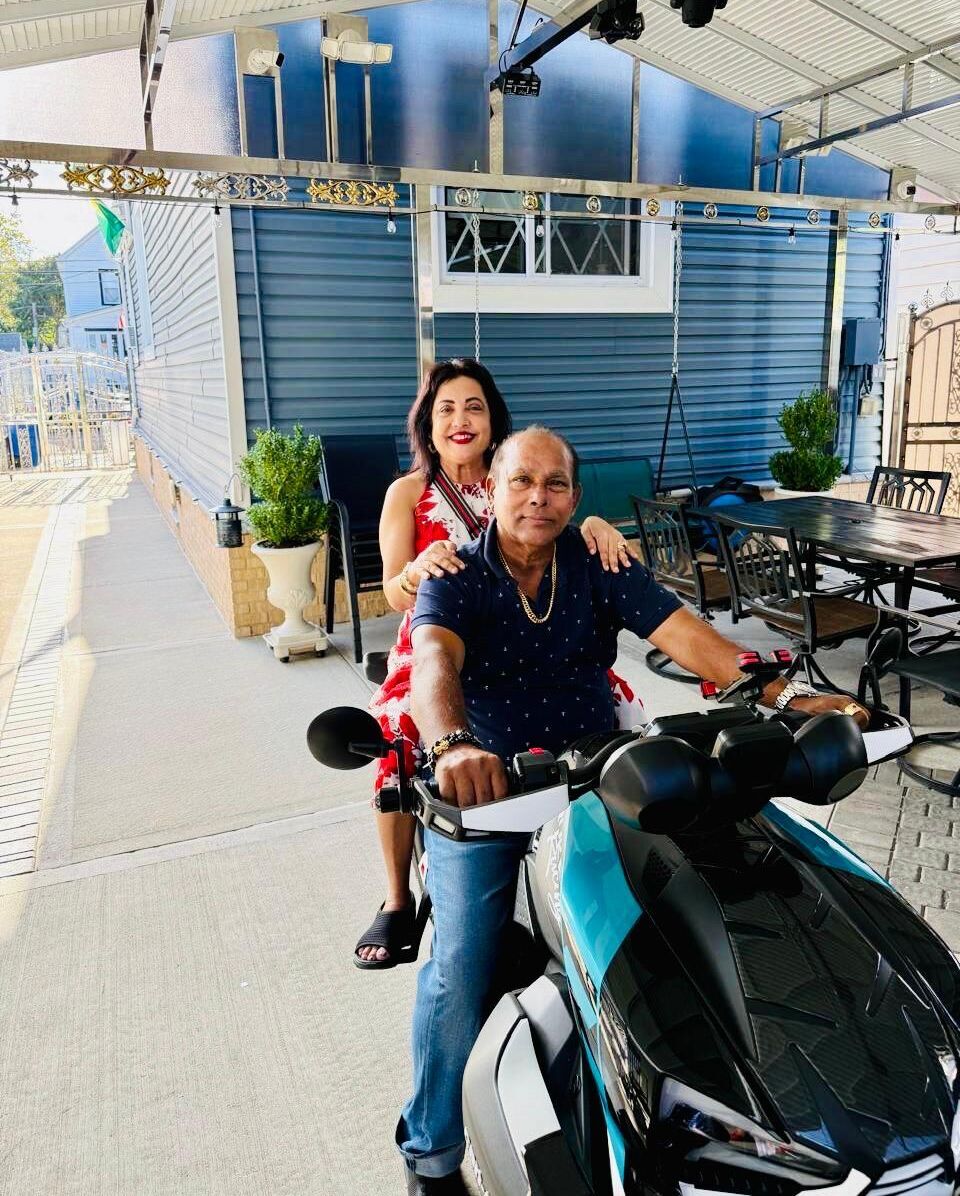
Curiosity appeared early in Dr. Michael’s life. During nursery and primary school, he was the child who asked questions, examined what was placed before him, and resisted remaining unnoticed. His interest in understanding the world was accompanied by a strong competitive instinct. Even at a young age, he wanted his work to carry distinction.
His primary education did not continue along an ordinary route. While attending a public institution, he experienced tensions and occasional fights with classmates. His father decided that a different environment would serve him better and removed him from the school. The decision brought his primary education to an early close and placed him on a far more unusual path.
At Eight years old, Dr. Michael entered high school at RVC Private School. In Guyana, students generally begin high school at around twelve or thirteen. He entered approximately three years earlier, surrounded by classmates who were older and further advanced in their educational development.
The change could easily have made him feel permanently behind. At that time, reading was not yet one of his strengths. He described himself as a late reader and believed that he truly began learning to read when he reached high school. At nine, he was therefore facing two demands at once. He had to master a fundamental skill while keeping pace in an environment intended for older students.
Rather than allowing the gap to define him, he responded with effort. Progress did not arrive as a dramatic transformation completed in a single moment. He learned, improved, and pushed himself until he was no longer simply surviving among older classmates. Gradually, he reached the top of his class.
His competitiveness became visible in assignments and projects. He did not enjoy presenting the expected answer in the expected manner. He searched for ideas that others had not considered and took satisfaction in being the first or only student to produce something different. Standing out gave him a sense that his effort had made an impact.
The desire to shine was not limited to recognition. It encouraged him to think independently. Each unusual project gave him another opportunity to trust his own ideas. Each examination he passed weakened the assumption that his age should determine what he was capable of completing.
By thirteen, he was prepared to sit ten subjects through the Caribbean Examinations Council. These examinations represented the concluding academic test of his high school years and an important threshold for students across the Caribbean. He completed all ten subjects at an age when many students were only beginning secondary education.
“Education is the most powerful weapon which you can use to change the world.”
Phase 3 : The Youngest Seat in Computer Science
At fourteen, when most young people were still moving through high school, Dr. Michael entered the University of Guyana. Once again, he became the youngest person in his class. The setting had changed, but the familiar challenge remained. He had to learn among older students without allowing age to reduce his confidence.
The choice of computer science was strongly influenced by his mother. Eunice saw that the world was developing rapidly and believed that knowledge of computers would become increasingly important. Her decision was practical and forward looking. She wanted her son to receive an education connected to the direction in which society was moving.
Computer science offered a different expression of the curiosity that had drawn him towards science. It required attention to systems, logic, and the relationship between individual parts. The subject may not have answered every question he once held about matter, gravity, or the universe, but it preserved his interest in understanding how things function.
He began at the Tain Campus of the University of Guyana. The experience demanded maturity beyond his years. His classmates had generally reached university through a more conventional timeline, while he arrived directly from an accelerated secondary education. He could not depend upon age based expectations to protect him. The work had to be completed according to the same standard required of everyone else.
In 2012, he completed an Associate of Science in Computer Science. He was a little over fifteen. The qualification marked another unusually early academic achievement, but it also represented the first stage of a longer university journey.
The bachelor’s programme he needed was not available in Berbice. Continuing therefore required him to leave the familiar surroundings of the Tain Campus and move to Georgetown. The transition carried educational and personal significance. It placed him in the capital and required him to navigate a wider environment while completing a more demanding level of study.
He continued at the Turkeyen Campus of the University of Guyana. The move did not alter the discipline with which he approached his education. If anything, the larger setting placed greater responsibility upon him to remain focused. The degree required sustained work, and his age continued to make him unusual within the faculty.
Computer science trained him to look at problems structurally. A system could be examined, a weakness identified, and a solution designed through a sequence of deliberate steps. That habit of thought would later appear far beyond technology. He would repeatedly encounter industries in which something was absent, inefficient, expensive, or inaccessible and ask how a better arrangement might be created.
The university years did more than provide academic knowledge. They placed him in spaces where independence became necessary. He was no longer only the accelerated student whose achievements were measured by examinations. He was beginning to make decisions about how he wanted to work, how he wished to support himself, and what kind of professional future would satisfy him.
He did not imagine himself settling comfortably into a routine simply because he possessed a degree. The prospect of remaining within an eight to four job did not appeal to him. He wanted the freedom to pursue ideas under his own conditions and to discover what he could create through his own initiative.
Note of Thanks
At the close of this journey, Dr. Michael Adrian Gupta offers sincere gratitude to the people whose support enabled his ambitions to become lived realities.
He extends special thanks to his team. Ideas may begin within one mind, but an enterprise can grow only when other people accept responsibility for executing them. Their effort, patience, and daily commitment have helped turn his vision into functioning organisations.
His gratitude goes to his mother, Eunice Gupta, whose commercial instinct gave him his earliest understanding of business. Her ability as a salesperson showed him how confidence, effort, and customer awareness could create opportunity.
He thanks his father, ToolaPrashad, for shaping his character, providing firm direction, and demonstrating the practical knowledge associated with construction. His father’s presence helped him understand responsibility and encouraged him to remain on a principled path.
He also acknowledges his brother, Mark Gupta. Although their adult relationship changed, the adventures, practical lessons, and companionship of childhood remain valuable parts of his life.
His appreciation extends to his maternal aunt, Elizabeth Sukhlal, whose care supported him whenever his parents travelled. Her attention to his schooling and everyday needs gave him continuity during important formative years.
He feels deep gratitude towards Keon Smith, his business coach, whose guidance played an important role in shaping his approach towards entrepreneurship. Keon encouraged him to aim higher, pushed him to go beyond his own expectations, and helped him recognise the importance of building businesses with discipline, purpose, and the right principles. His mentorship provided valuable perspective during Dr. Michael’s growth as an entrepreneur and strengthened his commitment to doing things the right way.
Above all, he thanks his wife, Ferial Pestano-Gupta, for the emotional support she has given him. Her presence has accompanied the private side of a demanding professional journey.
Each of these individuals contributed something different. Together, they helped create the foundation upon which Dr. Michael continues to build.
thanks,
– Dr. Michael Adrian Gupta