“When you are passionate about something, you learn everything you can about it, even if you cannot yet afford to pursue it.”
Introduction
The journey of Dr. Faith Shari Ramos has never belonged to one narrow definition of achievement. It cannot be contained entirely within nursing, business ownership, residential care, or community leadership because each of those areas represents only one expression of a much longer formation. Her life has moved through changing countries, cultures, responsibilities, and professions, yet the direction beneath those changes has remained remarkably consistent. She has repeatedly moved toward situations in which people needed steadiness, organisation, understanding, or care.
She once described her life as being “all over the place.” The phrase was spoken with honesty rather than complaint. From a distance, the path may appear to turn in several directions. A closer view reveals that those directions eventually converged. The skills required in one setting became useful in another. Lessons gained through hardship were not left behind when conditions improved. They remained available, ready to be used whenever another person faced a difficulty she recognised.
Her character was not formed by waiting for certainty. Many of her most consequential decisions were made while life was already full. She did not have the luxury of separating education, employment, family, and survival into convenient stages. They frequently existed at the same time, competing for the same hours and demanding the same limited energy. Progress depended on coordination, self-discipline, and the ability to remember that a period of difficulty would not last forever.
There is a quiet realism in the way she understands service. Compassion, in her experience, must be accompanied by sound judgement. Wanting to help people is essential, but the work also needs structure, financial responsibility, appropriate assessment, trained employees, reliable procedures, and attention to changing requirements. Without those foundations, good intentions can become unsustainable. She learned to approach responsibility with what she calls a compassion hat and a business hat. One keeps the human being visible. The other ensures that the ability to serve does not disappear through poor management.
That balance is central to her leadership. She does not treat care as sentiment alone, nor does she reduce it to a transaction. She understands that vulnerable people require warmth, but they also depend on consistency. Families need reassurance, while employees need guidance. Residents deserve to be known as individuals, while the homes supporting them must remain safe, organised, compliant, and financially secure. Her work grew from recognising that all these truths could exist together.
The strength behind her progress has often been practical rather than dramatic. It is visible in the decision to keep studying after exhaustion overcame a carefully planned night of preparation. It appears in her willingness to accept responsibility when others hesitated. It can be found in her habit of learning about an opportunity before she could afford to pursue it and in her readiness to ask questions when experience alone was not enough.
“Education is the most powerful weapon which you can use to change the world.”
Phase 1: The School That Made the World Familiar
Long before professional titles entered her life, Dr. Faith was learning how to live among people whose backgrounds were different from her own. Her school in the Philippines brought together students connected with various cultures and countries. Different accents, habits, and ways of communicating were part of ordinary life rather than occasional encounters. She did not have to study diversity from a distance because she experienced it daily.
Her high school years were spent in a boarding-school environment. Living and studying there required a measure of independence, but she did not respond by withdrawing into herself. She stayed busy. Participation became one of the ways she made the environment feel familiar, and the school offered many opportunities for her to become involved.
Sport held an important place in those years. She joined the volleyball team and took part in basketball and intramural activities. At a time when American bases were still present in the Philippines, students participated in sporting events connected with them. These occasions widened the range of people with whom she interacted and added another dimension to the multicultural setting already surrounding her.
Her involvement did not remain limited to being a participant. She also coached boys’ soccer. Taking responsibility for a team required her to communicate clearly, observe how individuals responded, and remain comfortable in a guiding role. She did not describe leadership as something she was formally seeking. She became involved because she enjoyed participating and wanted to contribute.
Music, movement, and educational outreach also formed part of school life. During one of her later school years, she travelled with a singing and dancing group to another school. The group conducted presentations and shared teaching and dancing activities with the students there. At the time, it was one more experience within an already active childhood. Years later, that visit would unexpectedly connect with an important relationship in her adult life.
As she grew older, she worked in the school store so that she could have additional resources and remain helpful. The decision reflected a pattern that would continue for decades. When something was needed, she was willing to work for it. She did not wait for ideal circumstances before finding a practical way to move forward.
The Philippines also shaped her through its everyday culture. She remembers a society in which people were closely connected and naturally involved in one another’s lives. Care was rarely treated as the concern of one individual alone. Community awareness formed part of normal behaviour, and people noticed when someone needed assistance.
“The best way out is always through.”
Phase 2 : 1992, One Step at a Time in an Unfamiliar Country
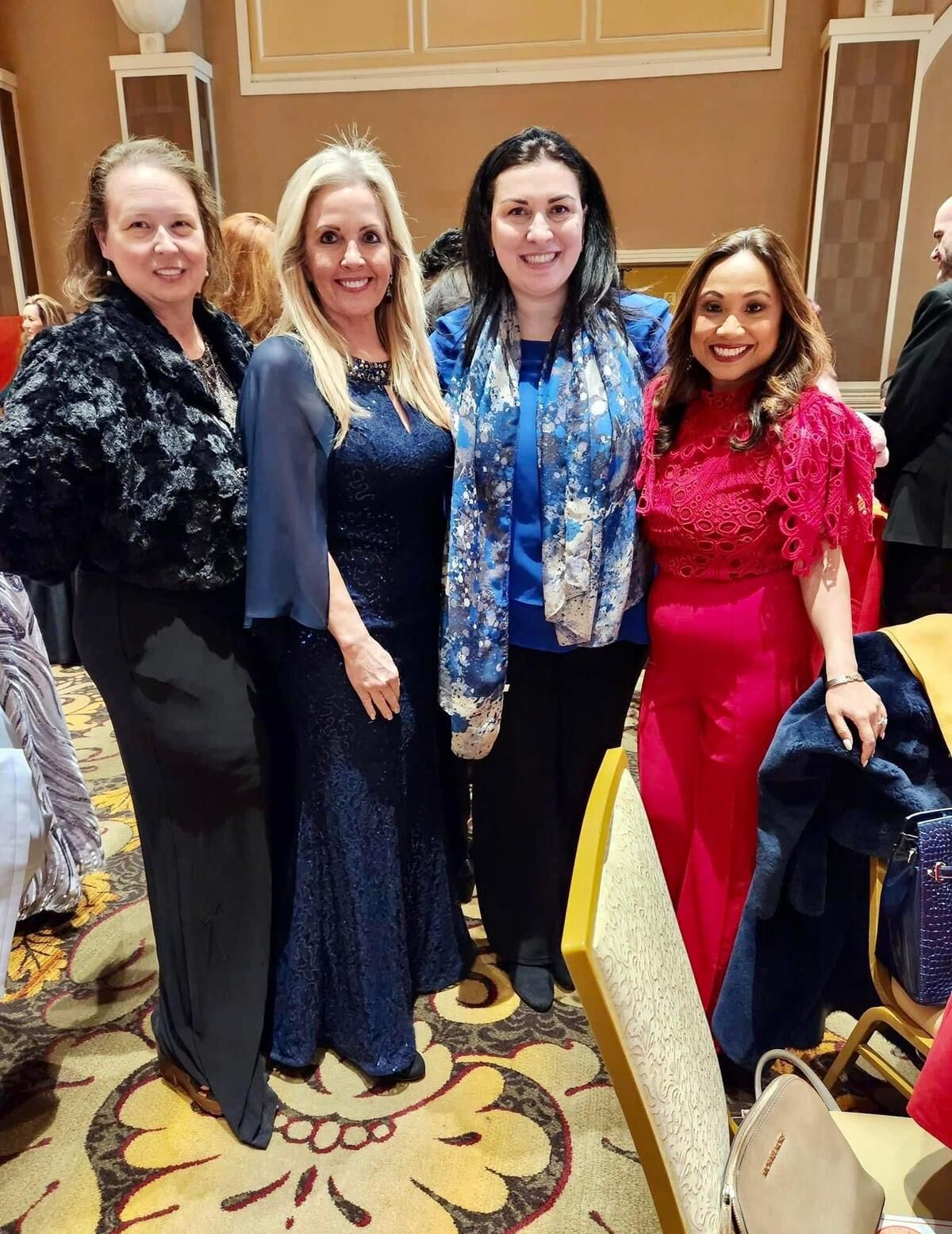
In 1992, after completing school, Dr. Faith came to the United States. The move placed an ocean between her and the people, routines, and cultural understanding that had shaped her. Her parents remained in the Philippines, and many of the friendships familiar to her were also left behind.
The relocation demanded more than geographical adjustment. She entered a society where people communicated differently and where the boundaries surrounding private life were far more pronounced. Behaviours that represented normal concern in one country could be interpreted with suspicion in the other.
She often explained the contrast through a simple example. In the Philippines, when a vehicle stopped because of trouble, people nearby would usually approach and offer assistance. Their involvement would be expected and appreciated. In the United States, an unfamiliar person approaching a stranded vehicle might cause the driver to lock the doors, contact the police, and ask the stranger to stay away.
The example revealed a much wider difference. In the community she had known, people were interconnected. Information travelled naturally, neighbours participated in one another’s lives, and help could arrive without a formal request. In the new environment, a person might live beside someone without ever truly knowing them.
Learning these boundaries was not easy. Cultural adjustment rarely comes with written rules, and much of it must be understood through experience. She gradually learned when concern would be welcomed, when distance was expected, and how American social relationships were formed. Some friendships and acquaintances did not survive that learning process. Misunderstandings became part of the cost of adaptation.
The emotional challenge was equally demanding. She had arrived without the immediate presence of family, and the technology that later made international communication simple did not yet exist. There were no mobile phones through which she could reach loved ones at any hour or see their faces within seconds. Distance felt more complete because contact required greater effort.
Those first years became a period of intense self-examination. She had to look within herself and find a reason to continue when familiarity was absent. The process was not described in grand terms. It was a matter of reaching inward, locating enough strength for one more step, and then finding another after that.
“You must do the thing you think you cannot do.”
Phase 3 : A Family Built Before Certainty
The beginnings of Dr. Faith’s family life carried an unexpected connection to the Philippines. During her final school years, she had travelled with a group that presented singing, dancing, and teaching activities at another school. She did not know that someone associated with that school would later become part of her life in the United States.
After arriving in America, she met different people through work and social life. The man she would marry eventually recognised the school her group had visited. He remembered the visiting students who had conducted activities there, even though they had not knowingly met one another at the time. Their paths had crossed indirectly before either understood that the encounter would ever matter.
She married at eighteen, when she was almost nineteen. Her decision reflected the reality of being young and alone in a new country. Without relatives nearby, establishing a family offered a form of companionship and partnership during a period when managing everything independently felt overwhelming.
Communication with her parents was straightforward. She sent them a letter informing them that she was going to marry. The exchange belonged to a different era, one in which significant news travelled across distance without instant calls, video conversations, or continuous updates.
The marriage gave her a partner during part of the difficult adjustment to life in America. She recognised that having someone beside her helped her move through a period in which she was still learning how to support herself and establish a future.
At twenty-one, she became a mother. Her daughter was born in 1997, and her son followed in 2000. Motherhood did not arrive after education and career had been neatly completed. It entered while those parts of life were still uncertain.
When the children were born, she had not finished college. She was working, caring for them, and trying to save enough money to return to school. The responsibilities were practical and immediate. Young children needed time, attention, food, comfort, supervision, and consistency, regardless of what ambitions their mother was still carrying.
Note of Thanks
Dr. Faith offers her deepest gratitude to Stephanie and Jacob, the two people she wished to thank above everyone else.
Their place in her life cannot be measured through professional language. They were present at the centre of the years when work, education, financial responsibility, and family life demanded more than seemed available. Their existence gave those demands a purpose beyond immediate survival.
She remains grateful for the encouragement their presence brought into her life. They inspired her to improve her circumstances, complete her education, and continue building a future when daily responsibilities could easily have caused ambition to be postponed indefinitely.
Her daughter and son did not enter a life in which every answer had already been found. They grew alongside their mother’s efforts to create stability, develop a profession, and discover the kind of service she was meant to provide. In doing so, they became inseparable from the meaning of her progress.
Every qualification, leadership responsibility, and organisation came later. The role of mother came first. It gave personal weight to the difficult years and transformed advancement into an act of care.
Her thanks therefore return to them with simplicity and sincerity. She is grateful that they gave her a reason to expect more from herself and to believe that temporary hardship could lead to a stronger life.
Stephanie and Jacob remain the most personal part of a journey often described through work and service. Behind every public responsibility stands the private love of a mother whose children encouraged her to keep moving forward.
thanks,
– Dr. (H. C.) Faith Shari Ramos