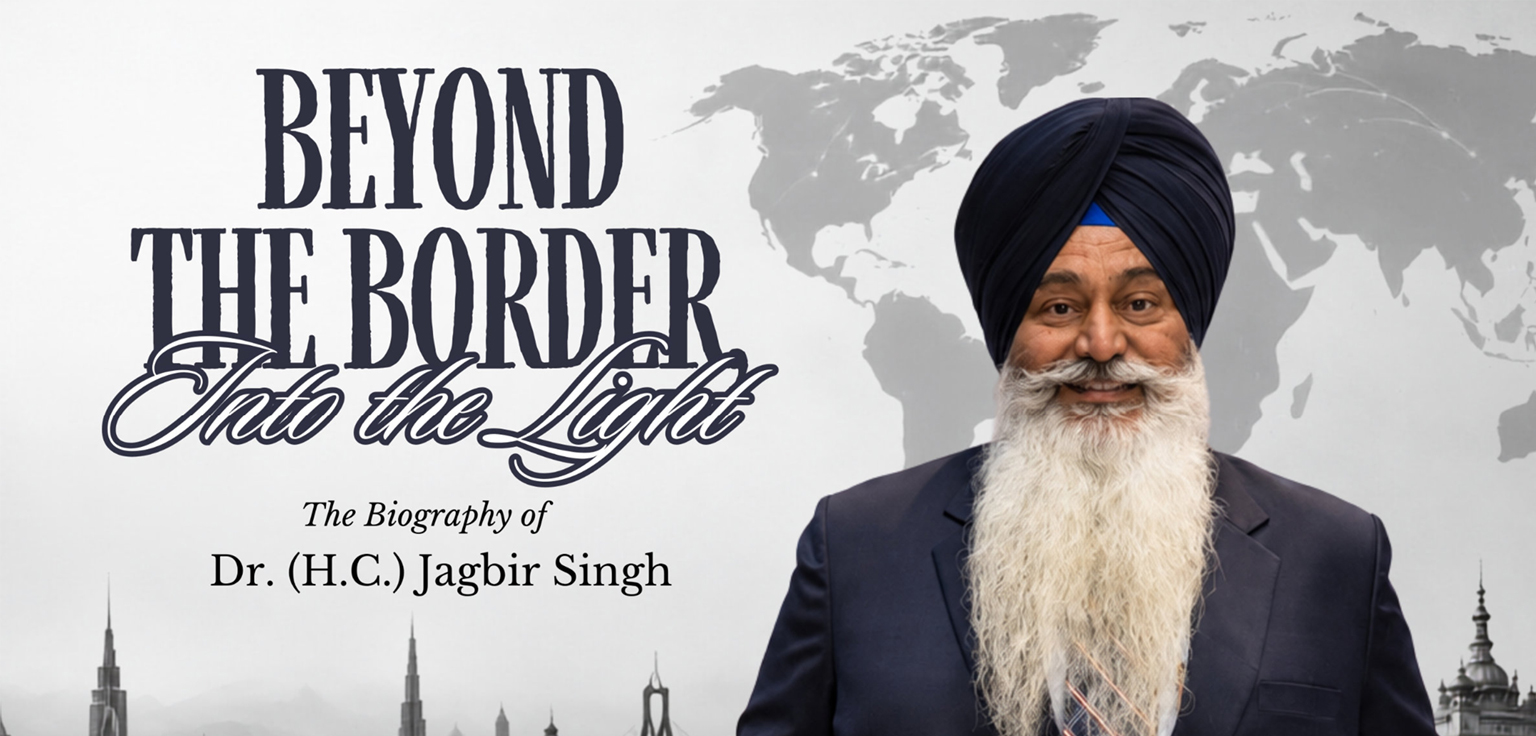
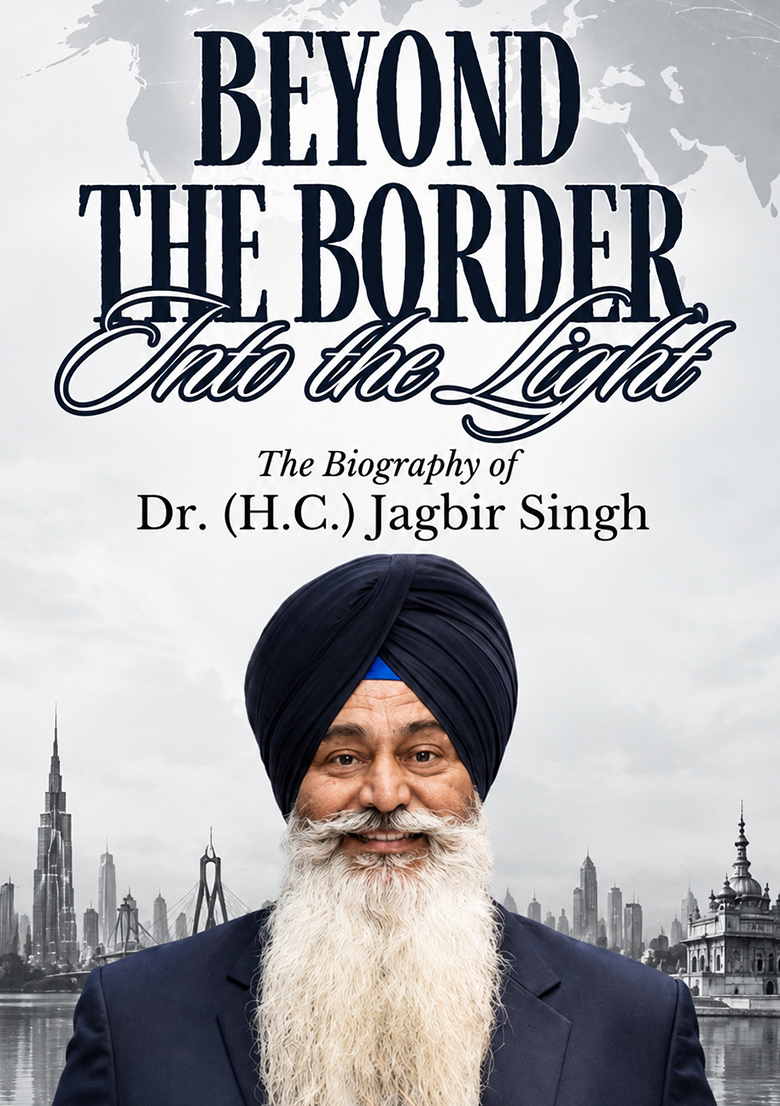
"I crossed oceans to find myself, only to realize that my true purpose was waiting right where I began, in the eyes of children who deserved a chance."
Introduction
Every life worth remembering is shaped by choices. Some are carefully mapped out, plotted with precision and intent. Others arrive unannounced, carried in by unexpected moments that quietly reroute everything. The journey of Dr. Jagbir Singh contains both kinds in equal measures. It is the story of a man who met opportunity with humility, faced change with courage, and steadily turned personal dreams into a lifelong mission of serving society through education.
But what truly sets his journey apart is not the places he went to or the titles he gathered. It is the why behind each decision. At several crossroads, he could have chosen the easier road, the one lined with comfort, stability, or conventional success. Yet again and again, he leaned toward something larger than himself. His life quietly proves that fulfilment rarely lives in the corner office or the biggest bank balance. More often, it hides in the chances we create for others to rise.
Along the way, Dr. Jagbir Singh absorbed the rigor of technical education, navigated the pressures of industry, opened his mind to international exposure, and shouldered the weight of entrepreneurship. Each phase added a new layer to his understanding, teaching lessons that no classroom or workplace could fully contain. But he never treated these as isolated achievements. Slowly, intentionally, he stitched them all together into one broad vision, a vision rooted in learning, character, and community.
One of the most striking threads in his life is his willingness to start over. Not out of restlessness, but out of conviction. Whenever he sensed that a different path could create deeper impact, he did not cling to comfort. He stepped forward. Those moments were rarely easy. They demanded resilience, faith, and the nerve to trade certainty for purpose. Whether he was adapting to unfamiliar surroundings or embracing roles he had never imagined, he showed that real growth begins right where comfort ends.
Education became the canvas on which his deepest beliefs found expression. For him, learning was never about memorizing facts or chasing grades. It was about building confidence, nurturing values, feeding curiosity, and preparing young people to meet the world with honesty and purpose. That belief gradually widened into a mission that touched not just students, but their families and entire communities.
What follows is not simply a timeline of Dr. Jagbir Singh’s life. It is a look into the moments that shaped his thinking, the people who steered his direction, the trials that tested his spirit, and the principles that held firm through every season of change. His story reminds us that true success is not measured by what we accumulate, but by the lives we strengthen along the way.
So consider this biography an invitation. An invitation to walk beside a man whose journey reflects persistence, quiet leadership, and an unshakable belief that meaningful education can transform individuals, families, and generations. It is a story of purpose slowly finding its path, and of one life becoming a quiet source of light for many others.
"The border village gave me no shortcuts, but it gave me something better. It gave me grit, humility, and the quiet strength to keep walking when the path was unclear."
Phase 1: Where the Border Forged a Dream
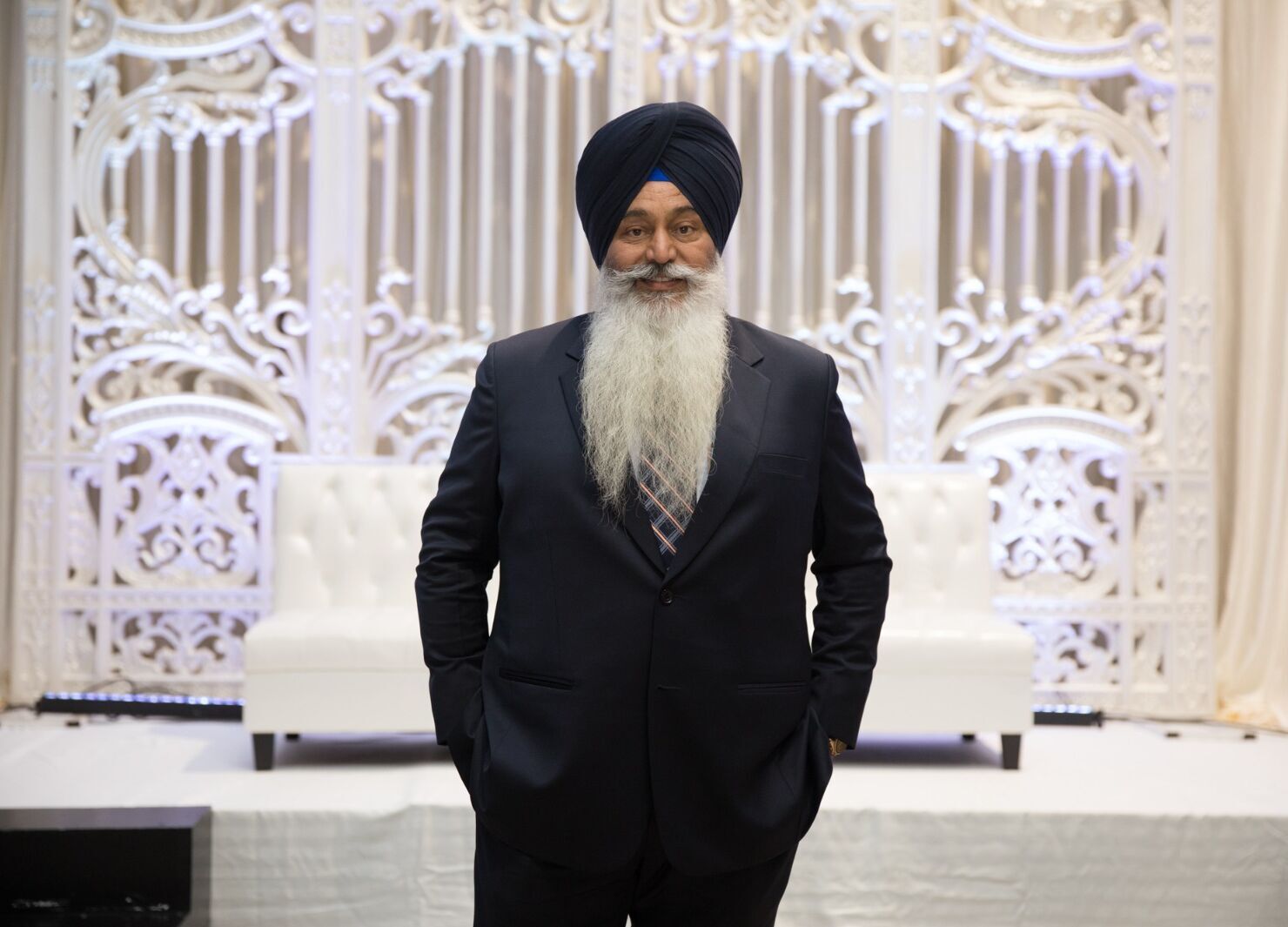
The story of Dr. Jagbir Singh begins in Nangal Sohal, a remote village tucked just a few kilometers from the India Pakistan border in Punjab region. This was not a place of easy comforts or grand beginnings. But it had something else, something deeper. It carried a quiet strength, a raw authenticity that would silently shape the man he was to become. Growing up so close to the border meant that discipline, awareness, and resilience were not abstract ideas from textbooks. They breathed in with the morning air. They were part of daily life. The land, the people, the unpolished rhythm of village existence – his first classroom was not a school, but the dawn itself, each morning the sacred prayers floated through the air, settling into his spirit; all of it gave him an early, instinctive understanding of effort, duty, and belonging.
His family was the first and most unshakeable foundation. His father, Sardar Randhir Singh, served as the Sarpanch of the village and was widely respected for his social work. Through him, young Jagbir learned what it truly meant to stay connected to people, to carry responsibility not as a burden but as a privilege.
His mother, Smt. Dawinder Kaur, was a homemaker whose quiet presence held everything together. Her care was not loud or performative. It was steady, patient, and deeply felt. She gave the home its warmth and its moral compass. In that environment, values did not need to be preached. They were simply living, day after day, in small, unspoken ways.
Childhood in a village like Nangal Sohal brought him intimately close to the realities of rural life. There was no neat separation between learning and labor, between school and home. The rhythm of the fields, the expectations of family, the tight embrace of community, all of it became part of his early education. These surroundings taught him something crucial: progress is never built alone. It comes through shared effort, mutual support, quiet discipline, and the willingness to keep moving even when the road ahead is unclear.
His schooling began in a private school, where formal learning first introduced him to a world of structure beyond his home. Later, he completed his Class 10 under the Punjab School Education Board from a government school. Those years gave him an academic base, but more importantly, they strengthened his ability to adapt. He was not raised in a world where opportunities were handed out freely. Whatever came his way had to be spotted, respected, and earned through his own effort.
After Class 10, he moved to another city with a relative to continue his education. For a young boy from a border village, this was no small step. It required adjustment, quiet courage, and a willingness to step beyond the familiar. He completed his Class 12 from Baring Union Junior Christian College, again under the Punjab School Education Board. The experience opened his eyes to a different academic atmosphere and expanded his view of the world beyond his village.
Once his examinations were over, he returned home and began helping his parents with farming. This period was not a pause without purpose. It placed him back in touch with the land and the life he had come from. Working in the fields after completing his studies reflected the natural sense of responsibility he carried toward his family. It also showed something deeper: he did not consider any work too small when it was tied to duty. Yet, beneath that ordinary routine, his future was quietly waiting for direction.
"I learned early that recognition follows sincere effort. But more than rank or reward, I valued the discipline that came from mastering something with my own hands.”
Phase 2 : Engineering a Future Beyond Expectations
After the formative years of village life and schooling, Dr. Jagbir Singh stepped into a world that demanded precision, discipline, and technical strength. His selection of the Central Institute of Plastic Engineering and Technology marked a major shift in his journey. Until then, his life had been shaped by family values, rural responsibility, and the dream of pursuing engineering. Now, that dream had found a defined path. The field of plastic engineering was still emerging in India, and entering it required not only academic interest but also the courage to move with changing times.
At the institute, he pursued a Diploma in Plastic Mould Technology. The course introduced him to machines, tools, mould-making, and the technical processes behind plastic production. It was a demanding environment, but it suited his natural seriousness toward learning. He did not approach education casually. For him, technical study was not only about earning a qualification; it was about mastering a skill that could create real value in industry. Every machine, every design, and every process became part of a larger education that sharpened his mind and strengthened his confidence.
His performance reflected his commitment. After completing the three-year programme, he received a Rank Certificate, an honor given to only the top ten students across India. This recognition was not merely an academic achievement. It affirmed that the boy who had come from Nangal Sohal had the ability to compete at a national level. More than pride, it gave him reassurance. It showed him that sincere effort, when placed in the right direction, could open doors far beyond the boundaries of his early surroundings.
With that confidence, he continued his technical growth through a Post Diploma in Plastic Mould Designing. This was a significant step because the early 1990s were a period when design technology was still developing rapidly. He began learning AutoCAD, engineering design, and programming, areas that were new and valuable at the time. These skills expanded his understanding from manufacturing to design, allowing him to see not only how things were made, but also how they were imagined, planned, and shaped before production began.
This phase strengthened both his technical foundation and his professional identity. He was no longer only a student with ambition. He was becoming a skilled young man with specialized knowledge, prepared to enter the working world. His journey had begun to move from learning into application, from classrooms into industry, from possibility into practice.
His first major professional opportunity took him to Gurugram, where he joined a plastic machine company connected with Maruti. For many young professionals, such an opportunity would have been seen as a secure beginning. It placed him inside a recognized industrial environment and gave him exposure to corporate working life. Yet, within a few days, he realized that the workplace did not suit him. The environment was filled with heavy smoke, and the atmosphere made him deeply uncomfortable. Rather than complain or force himself to continue in conditions that affected his well-being, he chose to step away.
"Canada gave me success, but it also gave me space to listen. And in that silence, I heard a voice asking me to return and serve where I was most needed."
Phase 3 : A New Country, Closer to Purpose
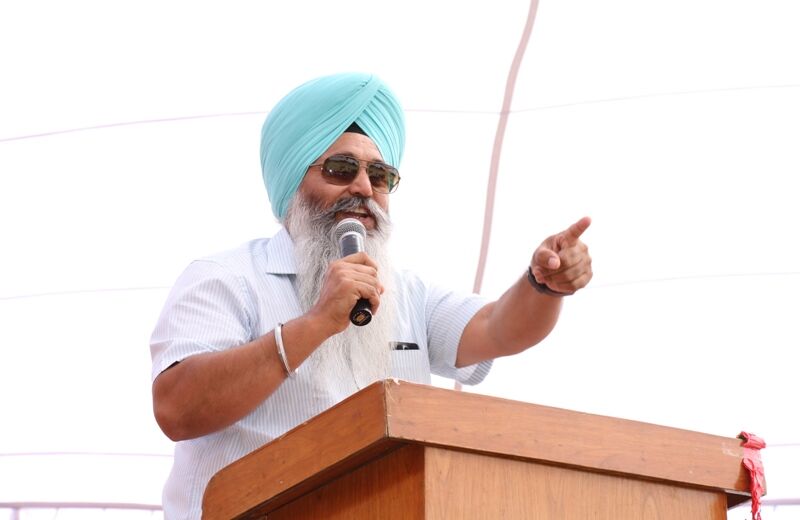
When Dr. Jagbir Singh migrated to Canada in 1997, life opened before him with uncertainty, possibility, and a new kind of challenge. Leaving familiar surroundings behind was not merely a change of place. It was a test of patience, confidence, and inner clarity. Like many who arrive in a new country, he found himself surrounded by practical choices. There were easier ways to begin earning, including options like trucking or taxi driving, but he did not want to step away from the education and technical training he had worked so hard to build.
He remained committed to his field. For him, engineering was not just a qualification from the past; it was a discipline that still deserved a future. He wanted his knowledge to be useful, not forgotten. That decision showed the seriousness with which he viewed his own learning. He was not chasing quick comfort. He was searching for a path that would honor his preparation and allow his skills to serve real industry.
In Canada, he continued to learn while also working. He joined evening classes at Sheridan College and studied for nearly two years, completing CNC Programming and Mastercam programming. Those evenings were not easy. They demanded energy after long days, discipline in a new land, and faith that every added skill would bring him closer to the right opportunity. Yet he carried himself with focus. He understood that growth often asks for sacrifice before it offers stability.
That commitment eventually led him to Canadatum Molds Limited in Toronto, where his professional journey found a stronger direction. There, he worked in machining programming and CNC systems, applying his technical knowledge in a demanding industrial environment. This was the kind of work that connected his education with practice. It gave him not only employment, but also the satisfaction of using his expertise meaningfully.
His work was valued. He became known as a capable and dependable employee, the kind of professional an organization does not want to lose. When the time later came for him to move on, the company requested him not to leave. That response reflected the trust he had earned through his ability, sincerity, and consistency. It also showed that he had successfully built himself in a country where he had once arrived as a newcomer.
Yet even while his professional life was progressing, something deeper was unfolding within him. From a young age, he had carried the desire to become a teacher. Engineering had given him a career, but education continued to call his spirit in a different way. Over time, especially after becoming a father, this inner calling became stronger. He began thinking about what kind of learning environment his children should receive and what kind of values should accompany their education.
When his daughter was still young, he started looking for a place where she could learn not only academics, but also Punjabi, community values, mother tongue, and spiritual understanding. He wanted his children to remain connected to their roots even while growing up in Canada. This concern was not limited to his own family for long. It gradually widened into a larger question about children of the community and the kind of cultural grounding they needed.
Note of Thanks
Gratitude is one of the quietest yet strongest emotions in the journey of Dr. Jagbir Singh. As he looks back on the many turns his life has taken, he recognises that no achievement, decision, or dream could have stood firmly without the love and support of those who walked beside him.
His deepest thanks go to his beloved wife, Ravinder Kaur, whose support remained constant through some of the most important decisions of his life. She stood with him through uncertainty, change, and new beginnings, offering strength when the road ahead was unfamiliar. Her patience and presence became an essential part of the vision he carried forward.
He is also profoundly thankful to his two daughters and son, whose lives reminded him of the true meaning of education, values, and responsibility. Their presence brought purpose to many of his decisions and helped deepen his understanding of what children need in order to grow with confidence and character.
He also extends heartfelt gratitude to his family members, whose encouragement, trust, and silent sacrifices remained part of his foundation. Every step of his journey carried the strength of those relationships, whether near or far.
This note of thanks is not merely a formal expression. It is a sincere acknowledgement that behind every life of service stands a circle of love, patience, and belief. For Dr. Jagbir Singh, his journey has always been supported by family, strengthened by faith, and guided by the desire to create something meaningful for others.
thanks,
– Dr. (H.C.) Jagbir Singh