

“Sometimes life deals a hand you cannot play. You put the cards down, reshuffle, and deal again.”
Introduction
The life of Dr. Abdelaziz has never followed a single, predictable direction. It has moved through childhood loss, family separation, military responsibility, technical discovery, professional change, and personal renewal. Every experience asked something different of him. Some demanded patience, others required courage, and many forced him to grow before he felt ready. He did not emerge from those moments untouched. He carried their lessons forward, allowing each one to influence the way he approached responsibility, relationships, service, and change.
Born in 1975 at Jacobi Hospital in the Bronx, New York, he entered a hardworking family within a modest neighbourhood where people knew one another closely. His mother worked at a local department store, while his father operated his own business. The community surrounding him had an informal sense of care. A neighbour might prepare his lunch after school, while the local store owner knew that his mother would settle the cost of his snacks at the end of the week. There was little access to expensive entertainment, so childhood depended on imagination. Tag, hide and seek, board games, music, comic books, and time with friends filled his days.
That familiar world changed when his mother died while he was eight. Childhood could no longer remain free from adult concerns. He helped care for his sister, went to his father’s workplace after school, completed homework while assisting with work, and returned home late enough to continue studying into the night. Cooking, washing clothes, schoolwork, and family responsibilities each had their allotted time. The routine was difficult, yet it taught him that responsibility could not always wait for age. Boxing, judo, jujitsu, and Chinese martial arts gave him a place to recover his balance.
Education offered another kind of freedom. He attended PS 48, CS 61, Satellite Schomburg Academy, and later an Islamic school (Sister Clara Muhammed Highschool) in Queens, Newyork. He studied in gifted and honors classes and found learning natural and enjoyable. A physical science teacher, Mr. Wojek, awakened his fascination with the hidden order of the world. Ideas such as inertia, photosynthesis, astronomy, physics, and the Milky Way showed him that ordinary life contained systems most people rarely stopped to notice. This inquisitive nature ultimately proved advantageous throughout a professional journey centered on technical innovation and troubleshooting.
After high school, Dr. Abdelaziz entered security work. He served at Toys R Us before moving through assignments connected with Gap, Banana Republic, and Old Navy. The work was not highly paid, yet he respected it because it was honest. His uncle’s service in the Marine Corps had fascinated him since childhood, and a friend later encouraged him to speak with a recruiter. A strong ASVAB score opened the decision further. He realized that if he was already working in security, he could direct that experience toward national security. In 1997, he joined the United States Marine Corps.
His first military role was as a field radio operator. From there, he entered data communications, multichannel systems, frequency management, and telephone communications. After serving in the Marine Corps, he continued through the Army National Guard, spending much of that service on active duty. Training at Camp Lejeune and deployments to Afghanistan and Kuwait tested his endurance. Within the 113th Sustainment Brigade, Chief Warrant Officer Alan Rhodes became an important technical mentor. Their deployment to Kuwait in 2010 strengthened a professional relationship that continues even after retirement.
“We could not afford video games, so we learned to create our own entertainment.”
Phase 1: The Bronx Block That Raised Him
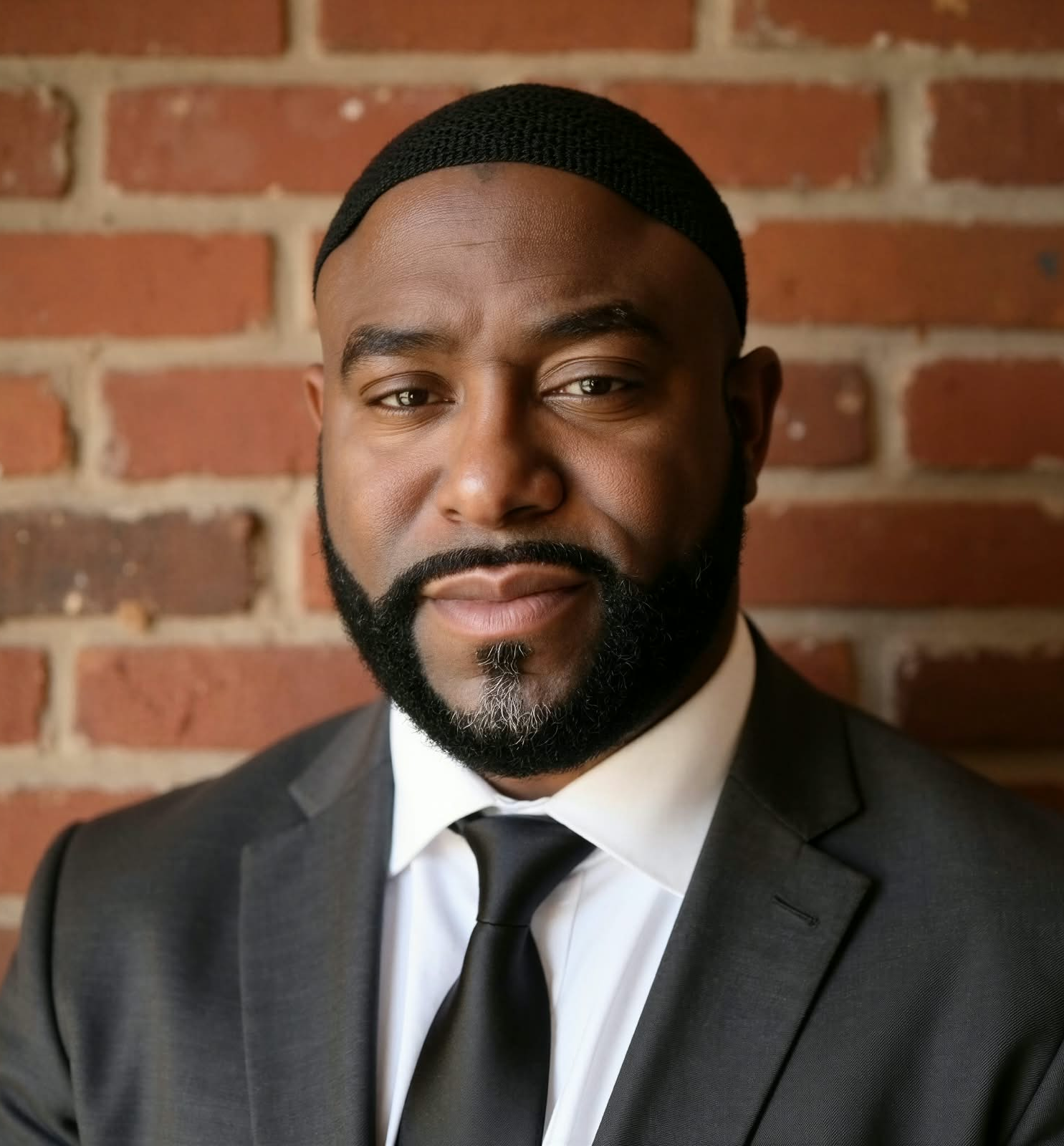
Long before military service, technical systems, and professional responsibilities entered his life, Dr. Abdelaziz was a child of the Bronx. He was born in 1975 at Jacobi Hospital in New York. The neighborhood where he grew up was not wealthy. He described it plainly as a low-income area where families lived with limited means, and expensive comforts were rarely available. Yet it did not erase familiarity. People knew the faces around them, recognized the children in the streets, and understood something about the lives unfolding behind nearby doors.
His parents were hard-working people whose days were shaped by responsibility. His mother worked at a local department store, while his father owned and operated his own business. Their work meant that family life often had to adjust around demanding schedules. When Dr. Abdelaziz returned from school, his mother might still be at work. He learned early that care did not always appear through constant physical presence. Sometimes it appeared through arrangements quietly made so that a child would be fed, watched over, and able to continue his day safely.
The store downstairs became part of that arrangement. Its owner knew him, and he knew the owner. His mother would arrange for him to collect snacks during the week and settle the cost afterward. He did not need to explain himself each time he entered. That simple understanding reflected the kind of community in which he was raised. Trust had grown through familiarity, and people remained aware of one another. It was not unusual for a neighbor to prepare lunch for him after school. He could eat, complete his homework, and then go outside to play until his mother returned shortly before sundown.
The Bronx of his childhood felt like a small community held inside a much larger city. Everybody seemed to know everybody. The neighbor, the store owner, the other children, and the working parents were connected through ordinary routines. No formal promise had to be announced for people to look out for one another. Their actions carried the message. For a young boy whose parents worked hard, those relationships brought continuity to the hours between school and home.
Childhood entertainment required very little money. Dr. Abdelaziz and his friends played tag and hide and seek, turning time outdoors into their own source of amusement. There were no mobile phones shaping their attention, and video games were not something they could readily afford. Rather than allowing that absence to leave their days empty, they created their own fun. They found ways to stay active, challenge one another, and remain engaged with the people directly in front of them. Looking back, he remembers it as a simpler time.
Board games gave them another reason to gather. Music brought opportunities to dance, while trips for pizza or to the cinema became enjoyable occasions whenever they were possible. The value of those moments did not depend on how much they cost. Their importance came from being shared. A board game could occupy an afternoon, a song could change the mood of the room, and an argument between friends about a fictional hero could continue with complete seriousness until everyone had defended a favorite.
“There was a time for school, a time for work, and a time to protect whatever remained of childhood.”
Phase 2 : The Boy Who Could Not Be Only a Child
When Dr. Abdelaziz was eight years old, the familiar rhythm of his childhood changed with the death of his mother. Her absence brought grief into a life that had previously been filled with school, friends, games, and the ordinary comfort of knowing that both parents were present. He was still young enough to need protection from adult responsibilities, yet circumstances did not allow that protection to last. His father became responsible for raising him and his sister, while he began carrying duties that no child expects to inherit so early.
The change was not gradual. Dr. Abdelaziz felt that he had to become several people at once. He remained a son and a student, but he also became a dependable brother and a source of care within the household. He helped look after his sister while trying to understand his own loss. There was little opportunity to pause and decide whether he felt prepared. The needs around him were immediate, and he responded to them as best a child could.
By the age of nine, his daily responsibilities resembled those of a young adult. After finishing school, he would go directly to his father’s workplace. He helped with the work while completing his homework whenever time permitted. This routine continued for five or six days each week. He often remained there until around eight in the evening, then returned home and continued studying until ten or eleven at night. The hours were long, especially for someone who was still learning how to manage school, family, and the emotions he carried quietly.
He noticed the difference between his life and the lives of other children. Some could return home on a cold day and spend the evening playing. He had work waiting for him. Others could experience childhood without thinking seriously about cooking, washing clothes, or helping care for a younger sibling. His time had already been divided among responsibilities. There was a time to study, a time to work, a time to cook, a time to wash clothes, and a time to take care of himself. Every duty had its place because leaving one undone would affect someone else.
What he surrendered was not his ambition. His father remained deeply concerned about his development and wanted him to build a meaningful future. What Dr. Abdelaziz lost was the ability to be entirely carefree. He could still enjoy moments with friends, yet he could not live as though nothing depended on him. Childhood continued, but it had to exist alongside the awareness that his contribution mattered at home and at work.
Martial arts became one of the places where he could recover a sense of peace. The physical discipline gave him a way to focus his energy and remain connected to himself. Time with friends also helped preserve something of the childhood that responsibility had narrowed. Those moments did not erase the demands waiting for him, yet they created balance within a difficult routine.
That balance became important because Dr. Abdelaziz did not want hardship to define every part of his youth. He understood that work had its time, just as friendship and enjoyment had theirs. Neither could replace the other. Responsibility without relief would have become exhausting, while enjoyment without responsibility was no longer possible. He learned to move between the two, accepting that his life required both.
“I cannot undo what has been done, but I can still improve what comes next.”
Phase 3 : A Separation Time Could Not Repair
At sixteen, Dr. Abdelaziz faced a family separation that left consequences far beyond the moment in which it occurred. His father’s marriage to his stepmother ended, and his youngest sister was taken away from the family soon afterward. She was still an infant, approximately eleven or twelve months old, with no understanding of the decisions being made around her. What may have appeared to others as the end of an adult relationship became, for the children involved, the beginning of a much longer absence.
His stepmother moved away from the Bronx with the baby. Dr. Abdelaziz believed she may have gone to Atlanta, though the family did not know her location with certainty. There was no reliable address, no clear destination, and no simple way to restore contact. He, his father, and his other sister were left without a relationship with the youngest child in the family. The separation affected all of them, though each would eventually carry it differently.
They searched for her, but their efforts did not bring her home. Dr. Abdelaziz remembered the frustration of looking without knowing where to direct the search. He also believed that some people knew where she had gone but chose not to share the information. That silence made the separation harder to understand. It meant that the family was not only dealing with distance but also with the knowledge that an answer might have existed somewhere beyond their reach.
At sixteen, he did not have the freedom or resources of an adult. He had no money to travel, no confirmed location to visit, and no authority to reverse the decisions made by the adults involved. He was also trying to manage his own life at an age when he was still developing. Even with the responsibilities he had carried since childhood, he could not take control of a situation that depended on information and choices unavailable to him.
Time passed, and his youngest sister grew into an adult with children of her own. The absence that began before she could form memories became part of the way she understood her family. From her perspective, the older brother she had not known had failed to look for her or come to bring her back. That belief contributed to an estrangement that continued into adulthood. Dr. Abdelaziz developed and maintained good relationships with two of his siblings, while the relationship with his youngest sister remained distant.
Being blamed for something he could not control was painful. He knew that, at sixteen, he had not possessed the means to find her. Still, he did not dismiss her feelings or describe the situation as though her response had developed without cause. He understood that she had also lived through a traumatic separation. Her conclusions were shaped by the information available to her and by years spent without contact with her father and siblings.
Note of Thanks
Dr. Abdelaziz Ellis would like to thank his family and friends who supported him along his journey. Their encouragement helped him to persevere through changing responsibilities, strenuous service, professional transitions, and times that required patience for progress to be made. Each person played a different role, and their support has helped him to become the man he is today.
He is thankful to his family for giving his efforts a personal meaning. They made him more resolved to be dependable, to work for success, and to create a legacy beyond professional achievement. They saw the demands on his time, especially during his military service, and their place in his life continued to emphasize the importance of perseverance.
He also acknowledges his friends, who provided tremendous support during the most crucial time. Some friends opened new avenues, while others helped him translate intentions into actions. These may have been small gestures, but they factored into decisions that shaped his future.
Dr. Abdelaziz is just as thankful to those who passed on technical knowledge, provided mentorship, and had confidence in his ability to learn. Their mentorship helped him understand systems he was not familiar with, gave him confidence, and helped him identify the professional direction that best matched his strongest interests.
He is grateful to every family member and friend who believed in him, who trusted in his growth, and who stood by him when the burden of responsibility became heavy. Their faith in him continues to be part of his story.
thanks,
– Dr. Abdelaziz Ellis