"Do not go where the path may lead, go instead where there is no path and leave a trail."
Introduction
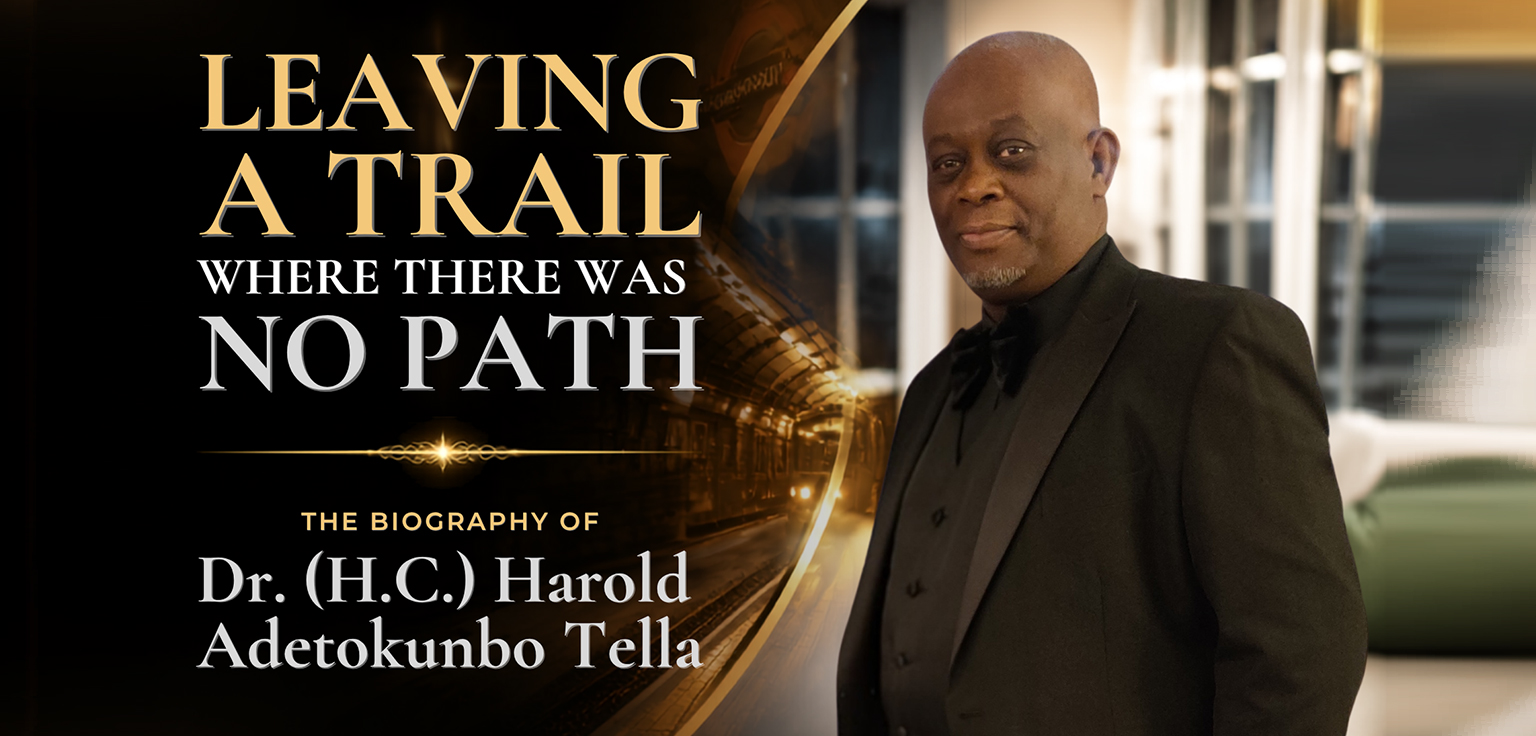
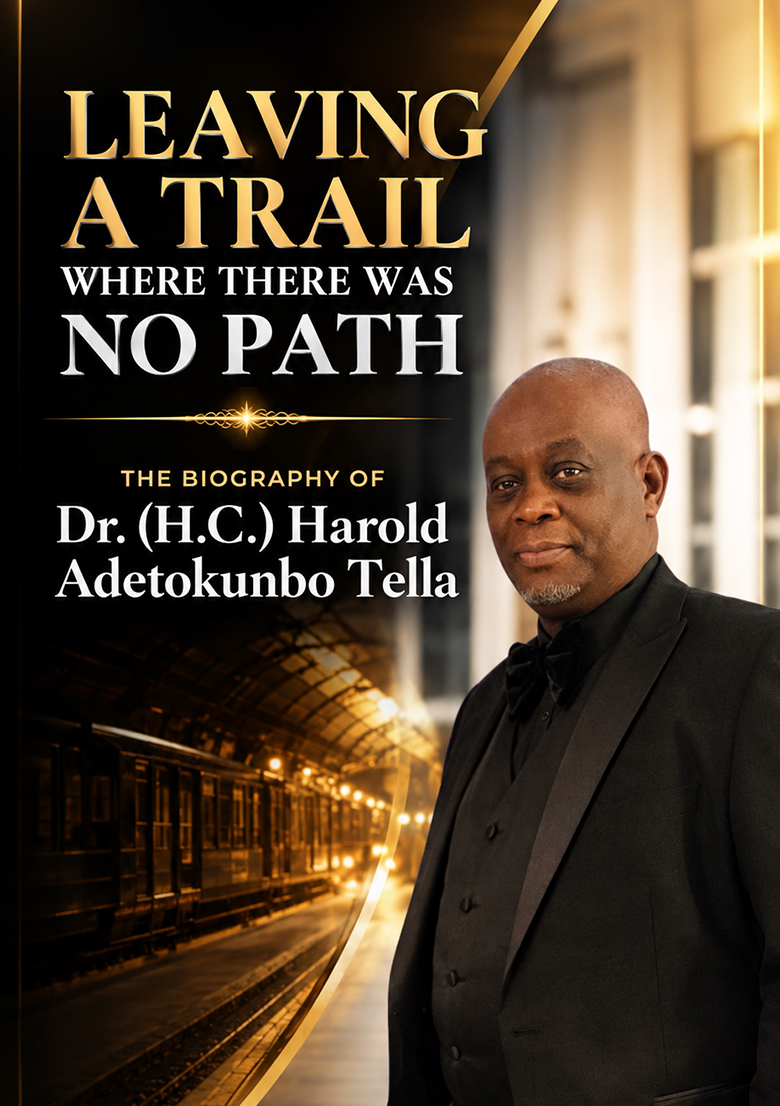
The life of Dr. Harold Adetokunbo Tella is a journey shaped by discipline, public service, resilience, family values, and a lifelong respect for learning. Born on 2nd August 1964 in London, his story began within a family environment that placed strong emphasis on education, hard work, good character, and responsibility toward the community. These early values, given to him by his parents, Mr. Roderick Adeyinka Tella and Mrs. Veronica Yeside Tella, became the foundation upon which he built his personal and professional life.
From a young age, Dr. Harold carried an inquisitive mind. He enjoyed learning and was interested in a wide range of subjects, including languages, sciences, humanities, and sports. His school years in Holloway, London, gave him exposure to both academic discipline and practical life lessons. While his childhood had moments of happiness and ordinary joys, his adolescence also tested him deeply. A difficult period away from parental support, including a short time of homelessness, taught him resilience, self belief, and the importance of having people who stand beside others in challenging seasons. Rather than allowing hardship to define him, he allowed it to strengthen his compassion and understanding.
Education remained one of the strongest anchors of his life. After completing his school education, he pursued a BTEC Diploma in Civil Engineering Studies at Westminster College, London, earning a distinction, before completing a Bachelor of Science degree in Building from Brighton Polytechnic. These years helped him understand the value of careful study, collaboration, and practical application. The guidance he received from Mr. Webb, one of his mentors, reinforced a lesson that stayed with him throughout life: learn properly, avoid shortcuts, and understand things deeply.
His professional journey began in the construction sector with Lovell Construction Ltd., where he gained experience through a management graduate scheme in roles such as site engineer, quantity surveyor, site planner, and site manager. This early exposure gave him practical insight into projects, planning, and responsibility.
In 1993, his career took a significant turn when he joined London Underground Ltd., beginning a long and impactful journey in public transportation. Starting as a Train Guard on the Northern Line and later becoming a Train Driver on the Piccadilly Line, he learned the operational realities of railway service from the ground level.
Over more than three decades, Dr. Harold grew into a respected leader within London Underground Ltd. and Transport for London. His roles included Duty Manager Train, Line Standards Manager, and Train Operations Manager across several lines and locations. His work involved staff leadership, safety auditing, training, coaching, mentoring, incident investigation, stakeholder engagement, conflict resolution, operational delivery, and budgetary responsibility.
Among his notable contributions were training arrangements for the Heathrow Terminal 5 extension, support during recovery after the July 2005 London bombings, preparation for the London 2012 Olympics, and involvement in the 4LM Train Modernisation Project. He also led his team through training connected with the introduction of the new Sub-Surface Railway rolling stock and the implementation of the automatic signalling system.
"Education is the most powerful weapon which you can use to change the world."
Phase 1: Roots of Character, Family Values, and Early Learning
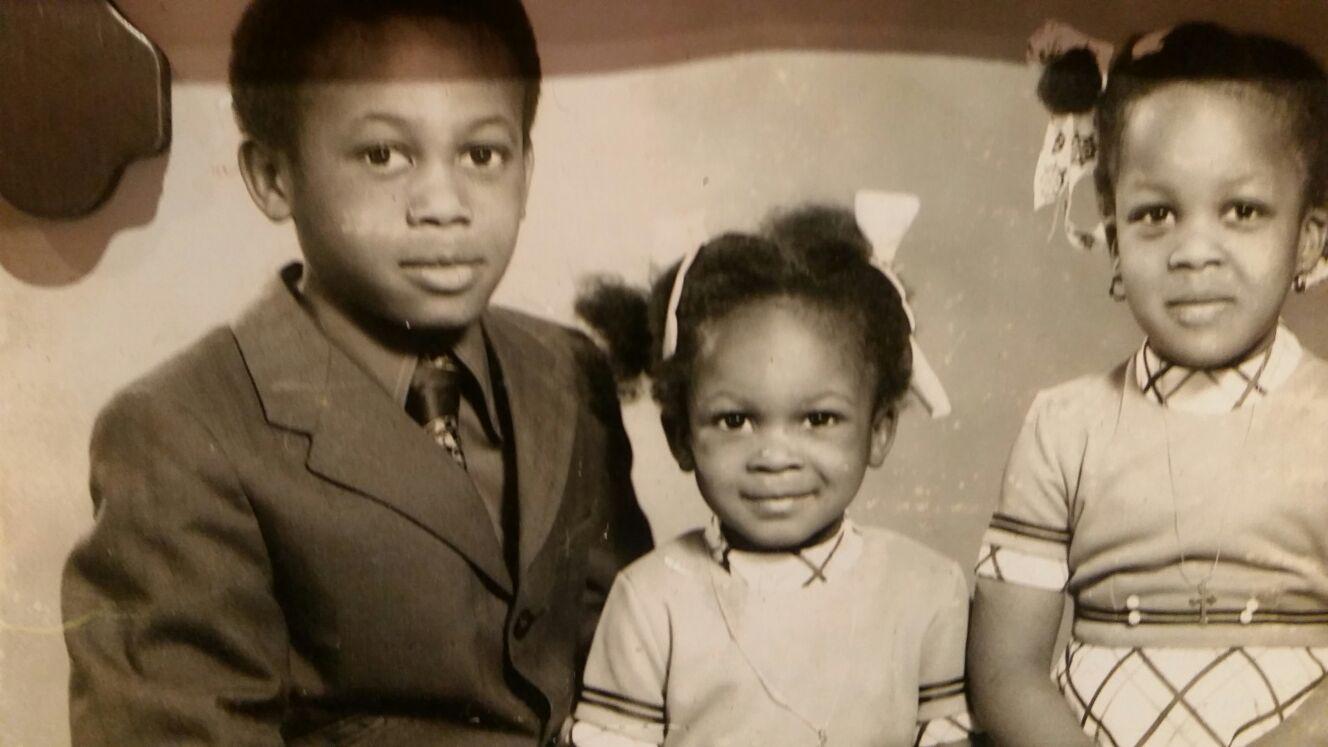
The life journey of Dr. Harold Adetokunbo Tella began on 2nd August 1964, in London, where the earliest foundations of his character were formed within a home that valued discipline, learning, responsibility, and human goodness. From the beginning, his story was not shaped by luxury or excess, but by the steady presence of values that would remain with him throughout his life. He grew up understanding that a person’s strength is not measured only by what he possesses, but by what he learns, how he treats others, and how willing he is to contribute to the world around him.
He was born to Mr. Roderick Adeyinka Tella and Mrs. Veronica Yeside Tella, parents whose influence would become deeply rooted in his thinking and conduct. They brought up their children with care, effort, and sincerity, giving them not only the necessities of life but also something far more lasting. They gave them a moral direction.
They taught them the value of education, the importance of working hard, the need to be a good person, and the responsibility of being available to support one’s community. These teachings did not arrive as formal lessons alone. They came through daily life, through example, through family expectations, and through the quiet discipline of a home where values mattered.
As the first son among three children, with two younger sisters, Dr. Harold grew up with a natural sense of responsibility. He was not alone in his childhood, yet he carried the position of the elder sibling with an awareness that gradually shaped his personality. His sisters came after him, one six years younger and the other nine years younger, and that family structure placed him in a role where care, observation, and responsibility became part of his growing years. He later carried pride in being their big brother, not as a title of authority, but as a position of affection and duty. That early family bond gave him an understanding of support that would later extend beyond the home into his career, community service, mentoring, and public life.
His childhood was, in his own reflection, a happy one. It was filled with the simple and memorable experiences that make early life meaningful. He enjoyed football, bike riding, and the ordinary activities that bring energy and freedom to childhood. These moments gave him more than recreation. They gave him early lessons in movement, friendship, discipline, and shared joy. Sports were present in his life from an early age, and although their deeper meaning would unfold more clearly in later years, the seed was already there. Childhood play helped him experience teamwork, effort, competition, and the pleasure of learning through activity.
At home, there was always something to be done, and Dr. Harold and his sisters were expected to help one another. Their parents taught them the value of honest work, supporting family, helping others, and remaining mindful of the needs of their community. These daily expectations planted the earliest seeds of community involvement in him.
His parents demonstrated these principles through their own actions, regularly volunteering within their local community and church. His father, in particular, modelled an unwavering commitment to helping others, sometimes even missing Dr. Harold’s school events because someone needed his assistance. Although those absences were noticeable during childhood, they revealed the depth of his father’s dedication to service. This example taught Dr. Harold that helping others often requires personal sacrifice, a lesson he continued to practise throughout his life at work, within the community, and among family and friends.
"Out of difficulties grow miracles."
Phase 2 : A Young Mind Tested by Distance, Discipline, and Resilience
The growing years of Dr. Harold Adetokunbo Tella carried both the promise of learning and the weight of early responsibility. After the warmth of childhood, life gradually began to show him that growth does not always arrive through comfort. Sometimes, it comes through questions, pressure, loneliness, and the quiet courage required to continue when circumstances are not easy. His school years became one such defining stage. They introduced him not only to books, subjects, and examinations, but also to independence, resilience, and the strength that a young person discovers when life unexpectedly asks him to stand firm.
He began his high school journey in Holloway, London, entering that stage of life at the age of eleven and continuing through until he was eighteen. Those years were not ordinary years of schooling alone. They were years in which his mind opened widely to different areas of knowledge. He was an inquisitive child, studious by nature, and interested in many things beyond the basic expectations of school life. He liked to learn, and that simple quality became one of the early signs of the person he would become. His interest was never limited to one subject or one direction. He was drawn to languages, sciences, humanities, and the broader world of ideas that school placed before him.
This variety of interest showed that Dr. Harold was not merely trying to pass through school. He was trying to understand. He carried within him the curiosity of a student who wanted to explore how things worked, how people thought, and how different fields of study could widen the mind. His educational years gave him a structure, but his own desire to learn gave that structure meaning. He did not treat learning as a narrow ladder, but as a field of discovery. Even at that young age, there was already a sense that knowledge could take him somewhere, not only professionally, but personally.
Alongside academics, sport remained an important part of his school life. He played football for the school and also took part in badminton and athletics. These activities gave him a different kind of learning. The classroom taught him discipline through study, while sport taught him discipline through practice, cooperation, and effort. On the field or court, a young person learns that ability must be shaped by commitment, that teamwork matters, and that success often depends on preparation. These lessons were not separate from the rest of his life. They became part of the wider education that shaped his thinking and behaviour.
His school journey led him toward strong academic outcomes. He completed ten GCE O Levels and one A Level, with the subjects reflecting the breadth of his learning. His general education included Mathematics, English Language and Literature, Physics, Chemistry, Biology, History, Geography, Engineering Drawing, and Geology. These subjects created a foundation that was both scientific and humanistic, practical and reflective. They also showed a young mind willing to engage with different kinds of knowledge. The range itself was important because it gave him the ability to think across more than one discipline.
Yet behind this academic progression, his life also carried an emotional challenge that would mark him deeply. During his early years, his parents moved overseas to Nigeria, while he remained in England with an uncle.
At such an age, the absence of parents was not a small matter. A young person may continue going to school, attending classes, and carrying books, but inside, the need for family presence remains powerful. For Dr. Harold, this period became one of the most difficult tests of his adolescence. The home where he stayed did not give him the kind of parental support he needed. Instead of being encouraged fully in his studies, he faced difficulties that distracted him from education.
"Education is the most powerful weapon which you can use to change the world."
Phase 3 : Education as an Anchor and the Lessons of Independent Growth
For Dr. Harold Adetokunbo Tella, education was never merely a formal path of certificates, subjects, and examinations. It became an anchor, a discipline, and a way of building confidence in the face of life’s uncertainties. The values placed before him in childhood gradually found shape in his academic journey, where curiosity had to be matched with effort, and ambition had to be supported by patience. In this phase of his life, he began to understand that learning was not only about moving from one institution to another. It was about becoming more aware, more capable, and more prepared to contribute meaningfully wherever life would place him.
Initially, Dr. Harold wanted to follow his father’s professional path as a civil engineer. His father helped him understand the idea of legacy by speaking about the projects in which he had been involved, including bridges and airports. These structures showed him that professional work could continue serving people long after its completion. This understanding strengthened his interest in civil engineering and encouraged him to pursue an education connected to the built environment.
After completing his school years, Dr. Harold moved forward with a clear interest in the built environment and civil engineering. He joined Westminster College, London, where he pursued a BTEC Diploma in Civil Engineering Studies between 1982 and 1984. This was an important step because it marked his movement from broad school learning into a more focused area of study. Civil engineering required discipline, technical understanding, attention to detail, and the ability to think practically. It was not a field that allowed careless thinking. Every drawing, measurement, plan, and concept carried purpose. Through this course, he began developing the technical mindset that would later support his professional life.
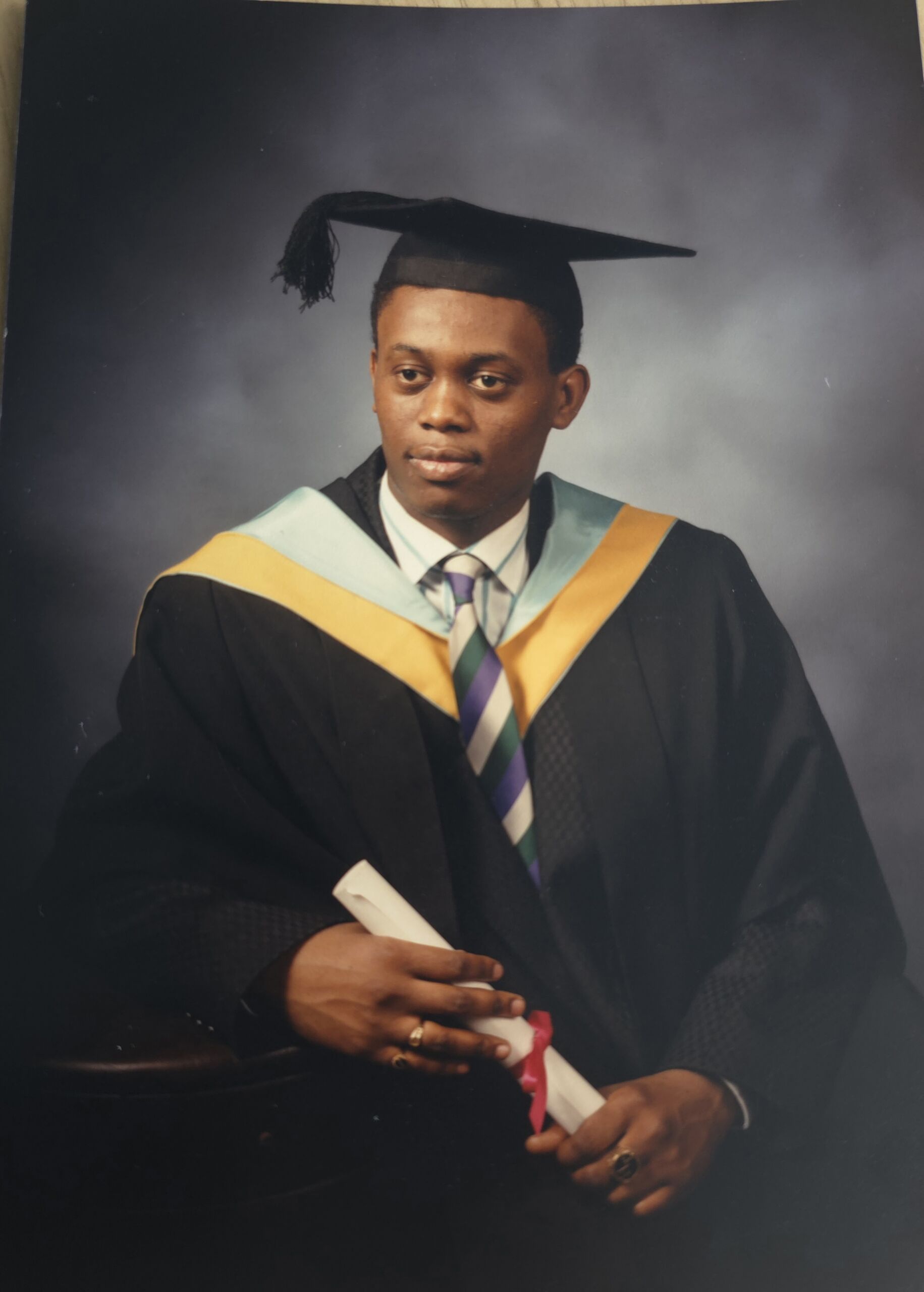
His performance at Westminster College reflected his seriousness. He completed the diploma with Distinction, a result that showed both ability and commitment. For a young man shaped by the belief that education should be respected, this achievement carried meaning beyond the grade itself. It confirmed that discipline could produce results.
It also strengthened his confidence that he could enter demanding spaces and succeed through effort. The distinction was not the end of his educational ambition. Instead, it became a stepping stone toward the next stage.
With the intention of moving further into the field of civil engineering and building, he continued his studies at Brighton Polytechnic, now known as the University of Brighton. From 1984 to 1988, he pursued a Bachelor of Science degree in Building, following an approved sandwich programme. This stage opened his world further. University life gave him more than academic instruction. It taught him to think for himself, to collaborate with people around him, and to develop skills through shared work. It helped him see how wide the world was and how differently people approached work, study, interests, and life.
For Dr. Harold, university became a place of intellectual growth and personal formation. It was here that he learned that knowledge is not absorbed passively. It has to be questioned, tested, discussed, and applied. Working with others allowed him to understand that every person brings a different method, a different strength, and a different way of seeing a problem. This experience became important because his later career would require him to work across teams, departments, and responsibilities. The seeds of collaboration were being strengthened during these academic years.
Note of Thanks
Dr. Harold Adetokunbo Tella expresses his heartfelt gratitude to all those who have supported, guided, and strengthened him throughout his personal and professional journey. He offers sincere thanks to Amlay for the support and assistance provided in bringing this honourable recognition and biography process forward with care.
Dr. Harold also expresses his profound gratitude to his parents, Mr. Roderick Adeyinka Tella and Mrs. Veronica Yeside Tella, whose values, guidance, and example laid the foundation for his character, faith, work ethic, and commitment to serving others. Their influence has remained an enduring presence throughout every stage of his life.
He remains deeply grateful to his beloved wife, Omonike, whose presence, encouragement, and companionship have been a constant source of strength through the years. He also extends his warm appreciation to his children, Nathan and Naomi, who continue to bring pride, purpose, and meaning to his life. As a father, he cherishes the bond they share and the opportunity to guide, support, and remain present for them.
Dr. Harold also thanks his sisters for allowing him the privilege of being their big brother and for being part of the family foundation that shaped his life. He acknowledges his entire family with respect and affection, remembering the values, support, and love that have remained with him across different stages of his journey.
He extends special appreciation to his pastors, Douglas Goodman and Erica Goodman, whose leadership, mentorship, spiritual guidance, consistency, and faithfulness over more than three decades have played an important role in strengthening his faith and supporting his spiritual journey.
Above all, he gives thanks to his Creator, God and Jesus, for grace, guidance, protection, and strength throughout his life.
thanks,
– Dr. Harold Adetokunbo Tella