
“I never wanted a pulpit. I just wanted to be there for people. On the bus, in the church, or on a quiet street. That was my ministry. Showing up.”
Introduction
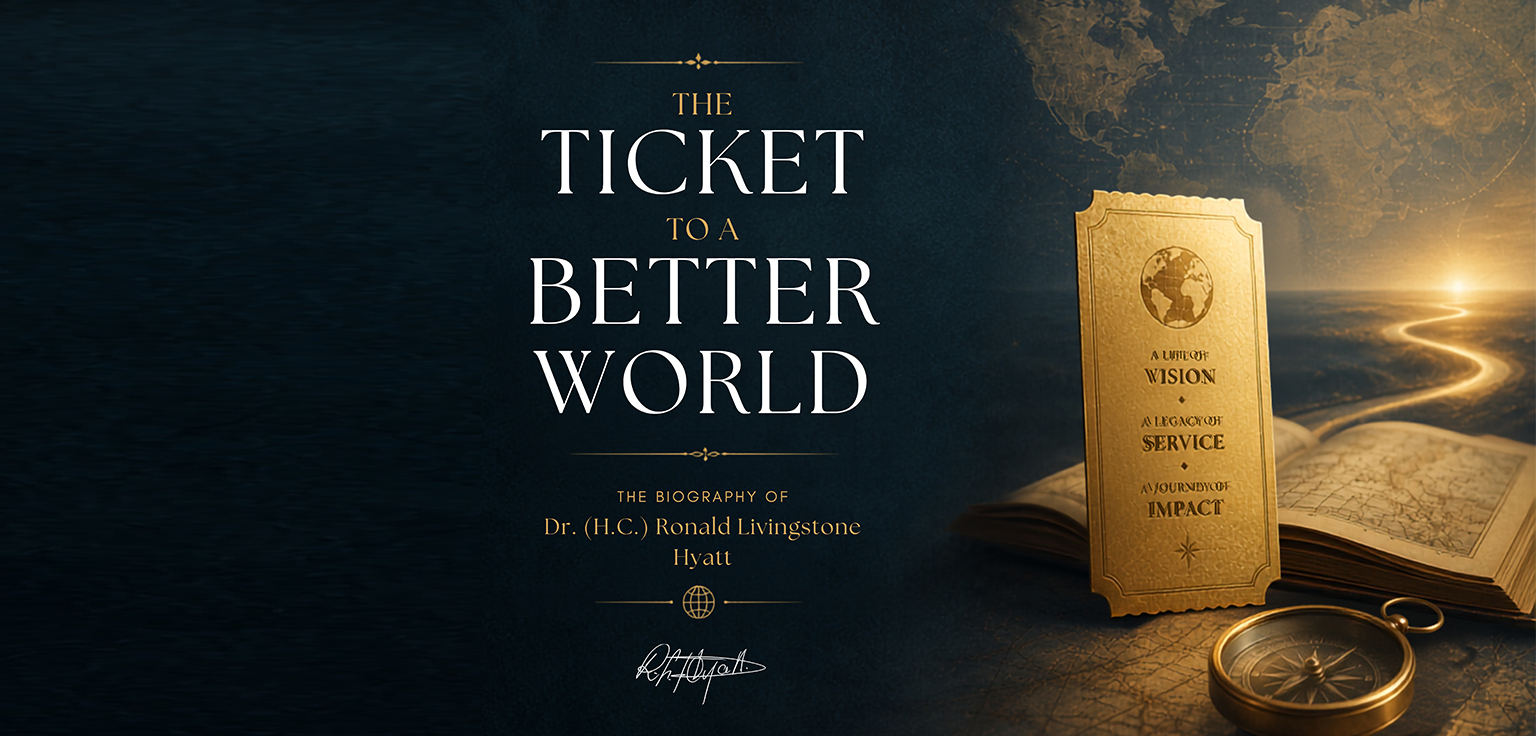
Dr. Ronald Livingstone Hyatt is not a man who seeks recognition. Yet his life journey tells a different story. It is a quiet story, but a powerful one. It is shaped by faith, perseverance, and a deep dedication to others. He has impacted his family, his community, and the many people who have crossed his path over the years. His story is not about fame or grandeur. It is about a life lived with purpose, humility, and love. It is a life that has touched more hearts than any title or award ever could.
Dr. Hyatt was born in the parish of Trelawny, Jamaica. His roots were grounded in the lessons of his parents, Amos Hyatt and Louise Kerr. His childhood was filled with values that would guide him forever: hard work, resilience, and a deep faith instilled in him from a very young age. His mother worked as a domestic worker. His father was a small farmer. Together, they taught him integrity, dedication, and how to care for others. These were not just words in their home. They were how the family lived. Those principles became part of Dr. Hyatt’s character. They shaped the man he would eventually become.
As a young man, he completed his formal schooling at the age of fourteen and a half. Having entered school at the age of six and a half, this marked the completion of his early education. But he never gave up on the hope of a better life. He learned shoemaking. Later, he found himself drawn to the world of insurance. That was his first real step into professional life. But his true calling would not come until much later. And when it arrived, it changed the course of his journey in ways he never could have predicted.
At the age of 22, his path led him to the United States. He worked on farms, including for the Green Giant brand. Later, he moved to Ohio, where his resilience was tested again and again. He was never truly alone on this journey. He carried a quiet determination to build a better life and a hope for a brighter future. But his path did not end there. At 23, he moved to the United Kingdom. He experienced firsthand the trials of immigrant life. The struggle of settling into a new country. The sting of racial discrimination that so many faced in those early years. Yet these struggles did not break him. They only strengthened his resolve.
A defining moment came in 1965 when he began working as a bus conductor with London Transport. For the next 28 years, he covered 17 different routes, demonstrating his commitment and adaptability on the job. He faced challenges both on and off the buses. The job was far from easy, and occasionally it was even dangerous. But his warm heart, his strong work ethic, and his commitment to kindness earned him the respect of colleagues and passengers alike. He was not just a conductor. He was part of the community. He helped guide people, offered a smile, and shared the journey with anyone who needed a friend. His work was never simply about punching tickets or managing a bus. It was about connecting with people, sharing small stories, and offering service with genuine humility.
But Dr. Hyatt’s ministry was what truly defined his life. For over 30 years, he served as a licensed minister in the Church of God of Prophecy. His influence reached far beyond any pulpit. His ministry was one of presence. He did not just preach from a distance. He actively engaged with everyone around him. His commitment to helping others, to lifting up his community and those in need, showed up in everything he did. His ministry was built on actions, not just words. And those actions spoke louder than any sermon ever could. The people he served were not simply members of a congregation. They were a community he loved deeply. His faith and his dedication to that community became the bedrock of his life.
“Before a man can stand tall, he needs strong roots. Mine were planted in Jamaica, in the love of a mother and father who taught me that hard work and faith are the same thing.”
Phase 1: Roots That Hold Fast
Dr. Ronald Livingstone Hyatt’s journey began in the quiet parish of Trelawny, Jamaica. But his story cannot be captured by a simple list of dates and events. It was shaped by small, everyday moments. By the land where he was born. And most of all, by the love and dedication of his parents, Amos Hyatt and Louise Kerr.
From a young age, it was clear that Dr. Hyatt would not follow the conventional path of many others. He grew up in a household where love, faith, and hard work came first. He learned integrity and selflessness simply by watching his parents. His father, Amos, was a small farmer. He worked tirelessly on the land to provide for his family. The work was demanding, but Amos always made sure his children understood the value of hard work and the importance of keeping their commitments. From him, Dr. Hyatt learned that success is not something handed to you. It is earned through persistence, effort, and care.
His mother, Louise Kerr, worked as a domestic helper. It was a profession that often went unnoticed, but it was every bit as demanding as farming. Louise showed Dr. Hyatt that even the smallest acts could make a difference. Her kindness, patience, and dedication to her work became lessons he carried with him all his life. She taught him that a person’s worth is not defined by their job or their place in society. It is defined by the love and respect they show to others. Louise also planted a deep faith in him. She always guided him back to the teachings of Christianity, and those teachings became the foundation for his life’s purpose.
Among the many lessons he received from his mother, one remained especially meaningful throughout his life. She taught him not to hold bitterness or resentment toward others. She reminded him that if she or anyone else possessed something he did not have, he should not allow jealousy or ill feelings to enter his heart. Her words taught him the importance of humility, gratitude, and respecting what others had. She also shared another powerful lesson with him: if someone did one good thing for him and ninety-nine things that were wrong, he should still remember the one good deed. These simple but profound words from his mother became a guiding principle, teaching him forgiveness, kindness, and the ability to recognise the good in people despite difficulties.
Growing up in Jamaica, Dr. Hyatt was surrounded by the island’s natural beauty. The vibrant culture, together with his parents’ example of resilience and faith, gave him the tools he needed to face whatever life would throw at him. But life in rural Jamaica was not easy, even with all that beauty. Financial struggles were constant. Yet Dr. Hyatt never saw them as something that would hold him back. He viewed them as challenges to be met head on, with strength and determination.
At the age of six, he entered elementary school. His schooling was foundational in many ways, and he quickly became known as a bright, eager student. But his early education was not without difficulties. The island’s school system was often underfunded, and resources were scarce. Still, that did not discourage him. He absorbed everything he could, setting the stage for his future success. Even with limited opportunities, he was determined to learn. He knew that knowledge would give him the keys to a better future.
“Just because you have to leave school doesn’t mean you stop learning. Life has its own classroom, and its lessons stay with you forever.”
Phase 2 : When the Path Takes a Turn
Dr. Ronald Livingstone Hyatt grew up in the rural parish of Trelawny, Jamaica. His beginnings were humble. His father, Amos Hyatt, worked a small farm. His mother, Louise Kerr, worked as a domestic helper. Money was scarce, but the family had something else in abundance. They had character. And that character would stay with Dr. Hyatt for the rest of his life.
From his parents, he learned a simple truth. Perseverance matters. When life gets hard, you keep going. That lesson was not taught in words alone. He watched his father rise early and work late. He watched his mother serve others with patience and kindness. These were not abstract ideas. They were the fabric of everyday life.
He started school at Dunvale Elementary. He was a bright boy, especially good at math and reading. His teachers noticed. His classmates noticed too. Dr. Hyatt left school at the age of fourteen and a half. This marked the end of his formal schooling. He had entered school at the age of six and a half.
He could have let that moment defeat him. Many would have. But Dr. Hyatt did not. Instead, he learned a trade. His father arranged for him to learn shoemaking. It was not a job he loved, but it was a job that kept him moving forward. His father believed in self-sufficiency, and that belief rubbed off on Dr. Hyatt. He learned patience. He learned craftsmanship. And he learned to do what needs doing, even when it isn’t what you dreamed of.
Still, something tugged at him. He wanted more. Not just for himself, but for others. He had a quiet sense that his life was meant for something bigger than making shoes. So he looked for other opportunities.
Eventually, he found his way into the world of insurance. It was not a grand entry. The work was ordinary. But it was a real job, a professional step, and it felt right. For the first time, he was building something that looked like the future he had imagined.
Looking back, those early struggles were not wasted. They taught him how to bend without breaking. They taught him that failure is not final. They taught him faith, because without faith, he would have had no reason to keep going. His parents had planted those seeds, and now those seeds were starting to grow.
“Shoemaking wasn’t my dream, but it taught me my hands could build something. Every small step prepared me for the next.”
Phase 3 : Stepping Stones, Not Stumbling Blocks
The years after Dr. Hyatt left school were a time of quiet change. He was fourteen and a half when his formal schooling came to an end, marking the official completion of his education at that stage. For many young people in his situation, that moment might have felt like a dead end. But he did not see it that way. He refused to give in to disappointment. Instead, he looked for whatever opportunity might come next. His father, Amos, was a steady presence during this time. He encouraged Dr. Hyatt to learn a trade, something practical that would give him stability and the means to stand on his own two feet.
Shoemaking became the first real skill Dr. Hyatt learned. It was not a profession that sparked any deep passion in him. But it served a greater purpose. His father believed strongly in self-reliance, and that belief left a lasting mark on Dr. Hyatt. He took to the craft with seriousness, understanding that every skill he picked up was a small step toward a better future. He may not have found joy in the careful, repetitive work of making shoes, but he learned patience. He learned craftsmanship. And those lessons would shape him for the rest of his life.
Even while shoemaking kept his hands busy, a quiet longing stayed with him. He knew, deep down, that he was meant for something more than this. Shoemaking was not a long-term answer. It was a bridge to somewhere else. Even as a young man, he felt the pull of a larger purpose. That desire was not just ambition. It was about making a difference. He wanted to contribute to the lives of others. He understood that life had to be about more than just earning a wage. There had to be growth, both personal and professional.
That deep yearning eventually led him to the world of insurance. The shift was not dramatic. He did not walk into a grand new career overnight. It was a thoughtful decision, made step by step. Insurance work felt more professional. For the first time, Dr. Hyatt felt like he was building a foundation that could support the life he had always pictured. The transition took time, and it was not easy. But it marked the beginning of a fresh chapter. The insurance industry gave him not just financial stability, but also a chance to use his skills in a more intellectual and professional setting. For the first time, he felt that his work was pointing him toward a future that matched the hopes he had quietly carried for so long.
This phase of Dr. Hyatt’s life is really about adaptability. He learned how to pivot when circumstances changed. He learned how to make the most of whatever opportunity came his way. Shoemaking had kept him moving forward, but insurance gave him the professional outlet he had been searching for. Still, the transition was not simple. Moving from a trade he had learned out of necessity to a professional career required real mental and emotional strength. He had to learn new skills. He had to adjust to a different kind of work environment. He had to understand the rhythms of an entirely new industry. But the qualities he had developed as a shoemaker, patience, resilience, and a willingness to learn, all proved useful. They helped him navigate unfamiliar territory and gave him the foundation he needed to succeed.
During those years, Dr. Hyatt began to discover more about himself. As he adapted to his new role, he also started to understand the deeper values that would guide him for the rest of his life. Self-sufficiency had been taught to him from an early age, and it remained a cornerstone of his character. But as he grew in his new career, he also realized the importance of service. That value would come to define much of his later work. It became clear to him that he was not just working to make a living. His true fulfillment came from making a difference in the lives of others.
Note of Thanks
Dr. Hyatt wishes to express his deepest gratitude to everyone who has played a part in his journey and in the making of this biography.
First and foremost, his heartfelt thanks go to his beloved wife, Rita Hyatt. Her love and support have never wavered. For over 66 years, she has been the quiet foundation beneath all of his work. Their partnership has weathered many storms, and it stands as a living testimony to shared faith, resilience, and mutual commitment. Without Rita’s steady encouragement, Dr. Hyatt could never have given himself so fully to ministry and service.
He is also profoundly grateful to his parents, Amos Hyatt and Louise Kerr. They shaped his character from the very beginning. Among the many values his mother shared with him, her teachings about gratitude, forgiveness, and seeing the good in others remained deeply rooted in his heart throughout his journey. The values they lived by, self-sufficiency, integrity, and service, became the blueprint for his life. Their teachings did not just influence how he approached his work. They taught him how to treat people with kindness and humility.
He also wishes to acknowledge the early mentors who helped guide his spiritual path. He remembers Jarrett with particular gratitude. Jarrett’s counsel and encouragement helped him learn to trust in God and to pursue his calling in ministry. The lessons Jarrett shared have remained a steady light throughout his life and work.
Special thanks are also due to those who introduced him to the Lord when he was young. They opened a door for him that changed everything. Their care and support allowed him to embrace faith early on, and that faith carried him through every trial he would later face. Without their quiet influence, he might never have found his way to a life of service.
Finally, Dr. Hyatt extends his gratitude to everyone who has walked alongside him through the years. His family, his congregation, his friends, and the countless individuals he had the privilege of serving. Without their trust, their belief in him, and their willingness to share their struggles, he could not have accomplished what he did. His legacy is not built on his efforts alone. It is rooted in the relationships he built and the lives he was allowed to touch through his faith and his service.
thanks,
– Dr. (H. C.) Ronald Livingstone Hyatt